




The most acidic compound among the following is:
A) Phenol
B) Ethanol
C) $3,5 - $ dinitrophenol
D) $4,4 - $ methoxyphenol
Answer
 Verified
591.3k+ views
Hint: To determine the most acidic compound we will have to see that if an electron withdrawing group is present or not. The electron withdrawing group makes a phenol more acidic as it will stabilize the phenoxide ion by the delocalization of the negative charge and also due to the inductive effect.
Complete answer:
We know that phenols will be more acidic than ethanol because the phenols after losing a proton will form a phenoxide ion. This negative charge present on the phenoxide ion will undergo resonance and is therefore very stable.
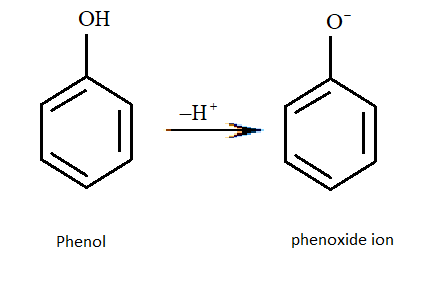
But here we need to see which of the following three types of phenols is most acidic.
So, we know that we determine the strength of an acid by the presence of electron withdrawing groups and also the position at which the groups are attached to the phenol.
Nitro group is an electron withdrawing group and shows both the effects i.e., the M-effect (mesomeric effect) also known as resonance and the I-effect or the inductive effect. The resonance effect causes the nitro group to withdraw electrons from the ortho and para positions. By inductive effect also it withdraws electrons but this effect is weaker than the resonance effect.
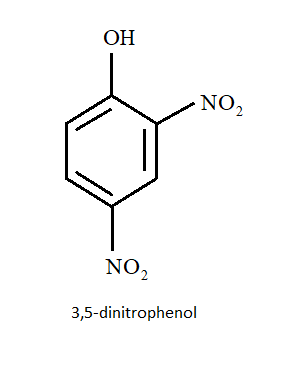
Nitro group by negative inductive effect withdraws electrons in the following order:
$Ortho > meta > para$
Hence, the correct answer option is (D) i.e. Hydrogen gas.
Note: Ortho nitrophenol is less acidic than para nitrophenol because of the intermolecular hydrogen bonding which makes the loss of proton very difficult. So, para nitrophenol is more acidic. On the other hand, the nitro group on increasing the acidity of phenol will decrease its basicity which means that nitrogen present in the nitro group will become less basic.
Complete answer:
We know that phenols will be more acidic than ethanol because the phenols after losing a proton will form a phenoxide ion. This negative charge present on the phenoxide ion will undergo resonance and is therefore very stable.
But here we need to see which of the following three types of phenols is most acidic.
So, we know that we determine the strength of an acid by the presence of electron withdrawing groups and also the position at which the groups are attached to the phenol.
Nitro group is an electron withdrawing group and shows both the effects i.e., the M-effect (mesomeric effect) also known as resonance and the I-effect or the inductive effect. The resonance effect causes the nitro group to withdraw electrons from the ortho and para positions. By inductive effect also it withdraws electrons but this effect is weaker than the resonance effect.
Nitro group by negative inductive effect withdraws electrons in the following order:
$Ortho > meta > para$
Hence, the correct answer option is (D) i.e. Hydrogen gas.
Note: Ortho nitrophenol is less acidic than para nitrophenol because of the intermolecular hydrogen bonding which makes the loss of proton very difficult. So, para nitrophenol is more acidic. On the other hand, the nitro group on increasing the acidity of phenol will decrease its basicity which means that nitrogen present in the nitro group will become less basic.
Recently Updated Pages
Master Class 12 Business Studies: Engaging Questions & Answers for Success

Master Class 12 Chemistry: Engaging Questions & Answers for Success
Master Class 12 Biology: Engaging Questions & Answers for Success
Class 12 Question and Answer - Your Ultimate Solutions Guide
Master Class 11 English: Engaging Questions & Answers for Success
Master Class 11 Social Science: Engaging Questions & Answers for Success
Trending doubts
Which are the Top 10 Largest Countries of the World?
Draw a labelled sketch of the human eye class 12 physics CBSE
The end of compass needle which points towards north class 12 physics CBSE
Differentiate between homogeneous and heterogeneous class 12 chemistry CBSE
In order to find out the different types of gametes class 12 biology NEET_UG
Why is the cell called the structural and functional class 12 biology CBSE