




Lycopodium is
a) Heterosporous
b) Homosporous
c) Water firm
d) Both Band C
Answer
 Verified
614.7k+ views
Hint: Lycopodium is a genus of creeping cedars or ground pines. They come under the class of tracheophytes with the same kind of spores. Lycopodium is of great benefit as it is used as an herb.
Complete answer:
Homosporous is a condition in which a plant produces only a single type of spore. Lycopodium is a flowerless plant and has a needle like a leaf present. The leaf is the microphylls. The sporangia produce the only homospory on the upper surface of the leaf blade in the sporophylls which are arranged in the cone-like strobilus at the end of the stem. Lycopodium usually reproduces asexually by spores. They also have an underground sexual stage where they produce gametes.
Additional information:
- Heterosporous is a condition in which different types of spores are produced. The spores differ in size and shape greatly. The small spore is the male gametophyte and the large spore is the female gametophyte. All the seed-bearing plants are heterosporous in nature. This condition in plants is known as heterospory.
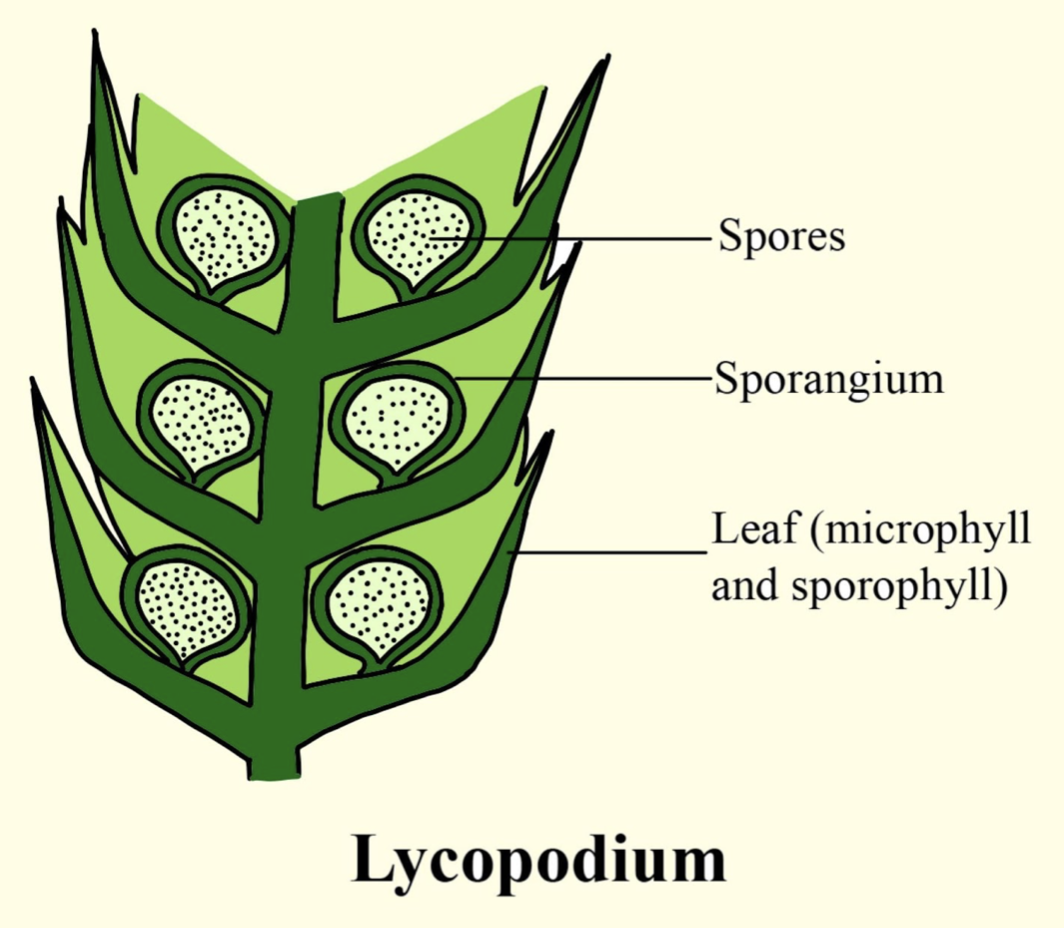
- Homosporous is a condition where only one type of spores is produced. They occur only in the bryophytes and lower pteridophytes. The spores are morphologically similar. They can be bisexual or unisexual. The spores may germinate to produce either both male and female gametophyte. This condition of producing only one kind of spore is called homospory.
The answer is ‘(b) Homosporous’.
Note: Lycopodium plant is of great economic value. It is used to cure diarrhea, dysentery, gout, and rheumatism. It is also used in homeopathic medicines for liver and urinary related diseases. It is also beneficial in dementia disorder.
Complete answer:
Homosporous is a condition in which a plant produces only a single type of spore. Lycopodium is a flowerless plant and has a needle like a leaf present. The leaf is the microphylls. The sporangia produce the only homospory on the upper surface of the leaf blade in the sporophylls which are arranged in the cone-like strobilus at the end of the stem. Lycopodium usually reproduces asexually by spores. They also have an underground sexual stage where they produce gametes.
Additional information:
- Heterosporous is a condition in which different types of spores are produced. The spores differ in size and shape greatly. The small spore is the male gametophyte and the large spore is the female gametophyte. All the seed-bearing plants are heterosporous in nature. This condition in plants is known as heterospory.
- Homosporous is a condition where only one type of spores is produced. They occur only in the bryophytes and lower pteridophytes. The spores are morphologically similar. They can be bisexual or unisexual. The spores may germinate to produce either both male and female gametophyte. This condition of producing only one kind of spore is called homospory.
The answer is ‘(b) Homosporous’.
Note: Lycopodium plant is of great economic value. It is used to cure diarrhea, dysentery, gout, and rheumatism. It is also used in homeopathic medicines for liver and urinary related diseases. It is also beneficial in dementia disorder.
Recently Updated Pages
Master Class 12 Business Studies: Engaging Questions & Answers for Success

Master Class 12 Chemistry: Engaging Questions & Answers for Success
Master Class 12 Biology: Engaging Questions & Answers for Success
Class 12 Question and Answer - Your Ultimate Solutions Guide
Master Class 11 English: Engaging Questions & Answers for Success
Master Class 11 Social Science: Engaging Questions & Answers for Success
Trending doubts
Which are the Top 10 Largest Countries of the World?
Draw a labelled sketch of the human eye class 12 physics CBSE
Differentiate between homogeneous and heterogeneous class 12 chemistry CBSE
Differentiate between Pyramid of energy and pyramid class 12 biology CBSE
Why is the cell called the structural and functional class 12 biology CBSE
Draw the diagram of the pyramid of energy Explain In class 12 biology CBSE