



Class 9 Social Science NCERT Solutions Chapter 3 PDF
The Big Questions
Question 1. What is the composition of the atmosphere?
Answer: The Earth’s atmosphere is made up of a mixture of gases, water vapour, and dust particles. Nitrogen forms about 78% of the atmosphere, while oxygen makes up nearly 21%.
Smaller quantities of gases such as argon (0.93%), carbon dioxide (0.04%), helium, neon, krypton, xenon, ozone, and hydrogen are also present. Water vapour, which varies between about 0.1% and 0.4%, is important for the formation of clouds and rainfall. Dust particles also influence several weather-related processes.
Question 2. How do the different layers of the atmosphere affect the planet Earth?
Answer: Each layer of the atmosphere performs a different function and contributes to the protection of Earth and the conditions necessary for life.
Question 3. What is the mechanism of monsoon?
Answer: The monsoon develops mainly because land and water heat and cool at different rates. During summer, the land becomes hot faster than the surrounding seas, creating a low-pressure area over the land. The oceans remain relatively cooler and develop higher pressure. As a result, moisture-filled winds from the Indian Ocean, Arabian Sea, and Bay of Bengal move towards the Indian landmass and bring widespread rainfall.
During winter, the pattern changes. The land cools more rapidly than the oceans, so winds generally move from the land towards the sea. Some of these winds cross the Bay of Bengal, collect moisture, and bring rainfall to places such as Tamil Nadu, Andhra Pradesh, and parts of Karnataka. This regular seasonal change in wind direction forms the basic mechanism of the monsoon.
Question 4. How can we reduce our carbon footprint?
Answer: A carbon footprint refers to the total amount of greenhouse gases released because of our activities. We can lower our carbon footprint by following environmentally responsible habits in everyday life.
Steps to reduce the carbon footprint are:
Save energy: Turn off lights, fans, and electrical appliances when they are not required and choose energy-efficient appliances.
Use renewable energy: Prefer cleaner energy sources such as solar, wind, and hydropower wherever possible.
Choose eco-friendly transport: Walk, cycle, carpool, or use public transport instead of depending on private vehicles for every journey.
Plant more trees: Trees absorb carbon dioxide and help improve the quality of the air.
Reduce, reuse, and recycle: Reduce waste and recycle materials such as paper, plastic, glass, and metals.
Follow sustainable habits: Carry reusable bags, avoid unnecessary single-use plastics, and select environmentally friendly products.
Conserve water: Use water carefully because pumping, supplying, and treating water also require energy.
Let’s Explore
Question 1. Find out other categories of wind based on speed and their common effects, and share your findings in class.
Answer: Winds can be grouped according to their speed and strength. A breeze is a light and gentle wind and usually creates comfortable weather. Stronger winds can make walking difficult and may carry away loose or lightweight objects. A gale is much more powerful and can break branches or damage structures.
Storms usually involve very strong winds, often together with rain, and may interrupt normal activities. Cyclones have extremely powerful winds and can cause serious damage to houses, crops, trees, roads, and other infrastructure. In general, the possible damage caused by wind increases as its speed becomes greater.
Question 2. Describe in your own words how monsoon affects the lives of the people around you.
Answer: The monsoon influences people’s lives in many important ways. Its rainfall is especially valuable for agriculture because it provides water for sowing and growing crops. The rains also refill rivers, reservoirs, ponds, wells, and underground water sources. After the intense summer heat, monsoon showers often make the weather cooler and more comfortable.
However, very heavy rainfall can also create difficulties such as waterlogging, traffic jams, flooding, and damage to houses and other property. Therefore, the monsoon is extremely important for farming and water availability, although excessive rainfall can also cause serious problems.
Question 3. My Carbon Footprint
Step 1: My Daily Habits
Tick the options that best describe you.
A. Transport
I usually walk/use a cycle. (Low impact)
I use public transport/carpool. (Medium impact)
I travel by private car even for short distances. (High impact)
I take flights more than twice a year. (Very high impact)
B. Electricity Use
I always switch off electrical appliances (lights, fans, etc.) when not in use. (Low impact)
I sometimes forget to switch off electrical appliances (lights, fans, etc.). (Medium impact)
I leave electrical appliances (lights, fans, etc.) on frequently. (High impact)
C. Water Use
I use water judiciously, for example, just one bucket of water for bathing. (Low impact)
I sometimes waste water (leaving the tap running/ more buckets of water for a bath/long showers). (Medium impact)
I rarely think about saving water. (High impact)
D. Waste and Plastics
I reuse, recycle, and avoid single-use plastics. (Low impact)
I sometimes use disposable plastics (bottles/bags/ straws). (Medium impact)
I often throw away plastic and do not recycle. (High impact)
Step 2: Score Yourself
Low impact choices = 1 point
Medium impact choices = 2 points
High impact choices = 3 points
Very high impact choices = 4 points
Now add up your total score: _________ points
Step 3: My Climate Action Pledge
Think about two simple changes you can make to reduce your score, and write them down below.
1. ______________________________________
2. ______________________________________
Answer: This is a self-assessment activity. Students should complete it on their own by examining their daily habits, calculating their score, and identifying two practical changes they can make to reduce their carbon footprint.
Think About It
Question 1. Can you imagine what would happen if there were no atmosphere? Discuss your thoughts with your friends and teachers.

Answer: Without an atmosphere, life as we know it could not survive on Earth. There would be no oxygen-rich air for living organisms to breathe and no atmospheric protection from harmful solar radiation. Temperatures would vary greatly, with extremely hot conditions during the day and very cold conditions at night.
Liquid water would also be difficult to maintain on the Earth’s surface, creating major problems for plants, animals, and humans. In addition, meteors would not burn up in the atmosphere and could directly strike the surface. Therefore, the atmosphere is essential for maintaining suitable conditions for life and protecting our planet.
Question 2. You might have noticed that sometimes the wind is so strong that it is difficult to walk against it. Can you think of some other times when strong winds have caused problems for you?
Answer: Strong winds can disturb many everyday activities. For example, while returning from school during very windy weather, it may become difficult to walk normally, and bags or other belongings have to be held firmly. Loose papers, clothes, and dust may be blown around, reducing visibility and making travelling uncomfortable.
Strong winds may also break tree branches and block roads, leading to traffic problems. In severe storms, electricity supply can also be affected if power lines or poles are damaged. Such experiences show how powerful winds can interfere with transportation, safety, electricity, and normal daily routines.
Question 3. Hindustani Classical music associates certain ragas with specific seasons. Find out which ragas are connected to each season with the help of your elders and teachers.
Answer: Hindustani classical music traditionally connects several ragas with particular seasons because their melodies are believed to express the feelings and atmosphere associated with different times of the year. Raga Basant and Raga Bahar are commonly associated with spring. Raga Megh, Megh Malhar, and Miyan ki Malhar are linked with the rainy season. Raga Hemant is associated with early winter, while Raga Deepak is traditionally connected with summer. Through their musical mood and expression, these ragas represent different seasonal experiences.
Let’s Recall
Question 1. How is nitrogen useful for plants? Remember that you learnt this in the chapter ‘The Invisible Living World: Beyond Our Naked Eyes’, in your Grade 8 Science textbook.
Answer: Nitrogen is an important nutrient needed for the proper growth of plants. It is required for making proteins, chlorophyll, and several other essential substances. Although the atmosphere contains a large quantity of nitrogen, plants cannot directly absorb atmospheric nitrogen.
Certain microorganisms present in the soil convert nitrogen into forms such as nitrates that plants can absorb through their roots. In this way, nitrogen supports healthy plant growth and contributes to better crop development.
Let’s Analyse
Question 1. Note down the weather report from a local newspaper for two weeks and observe the changes occurring in the weather.
Answer: I recorded the local weather conditions for a period of two weeks. During the first week, the temperature remained around 38°C to 42°C, with mostly clear skies and hot winds. During the second week, cloud cover increased, and the area experienced light to moderate rainfall on several days.
The temperature then decreased to approximately 30°C to 35°C, while humidity increased. Stronger winds were also noticed before some periods of rainfall. These observations show that weather can change regularly because of variations in temperature, rainfall, humidity, cloud cover, and wind conditions.
Classroom Discussion
Question 1. To what extent did natural factors cause these floods compared to human activities?
Answer: Natural conditions were an important cause of the floods. Very heavy monsoon rainfall, together with western disturbances, increased the flow of rivers such as the Satluj, Beas, Ravi, and Ghaggar, causing them to overflow.
At the same time, human-related factors increased the severity of the disaster. Poorly maintained or ageing embankments, construction close to riverbanks, the accumulation of silt in rivers and reservoirs, and delays in issuing warnings made the situation worse. Therefore, natural factors triggered the flooding, while several human activities contributed to greater damage.
Question 2. Do you think better planning could have reduced the damage? How?
Answer: Yes. Effective planning and disaster-management measures could have reduced the impact considerably. River embankments should be inspected and repaired regularly, while excessive silt should be removed from rivers and reservoirs. Construction in areas that are highly vulnerable to floods should also be controlled.
Accurate forecasting and timely flood warnings would give people more time to move to safer places. These measures could help reduce the loss of lives, crops, homes, and other property.
Question 3. What are the guidelines for the management of floods according to the National Disaster Management Authority (NDMA)?
Answer: According to the NDMA, effective flood management requires a combination of preparedness and preventive measures. These include strengthening flood forecasting and early-warning systems, maintaining embankments and proper drainage, restricting unsafe development in flood-prone areas, preparing evacuation plans, and educating people about appropriate safety measures. Together, these steps can help minimise loss of life and property during floods.
Question 4. What role can students/youth play in helping with disaster preparedness?
Answer: Students and young people can make an important contribution to disaster preparedness. They can share correct safety information, participate in awareness programmes, and encourage others to follow official instructions during emergencies.
They can also assist elderly people, young children, and persons with disabilities during evacuation, as well as support relief activities where appropriate. Responsible participation by young people can strengthen community preparedness and help reduce the effects of disasters.
Questions and Activities
Question 1. What is the atmosphere? Explain its composition with the help of a pie diagram.
Answer: The atmosphere is the layer of gases surrounding the Earth, held close to the planet by gravity. It provides the air required by living organisms, protects the Earth from harmful solar radiation, and helps maintain suitable temperatures for life.
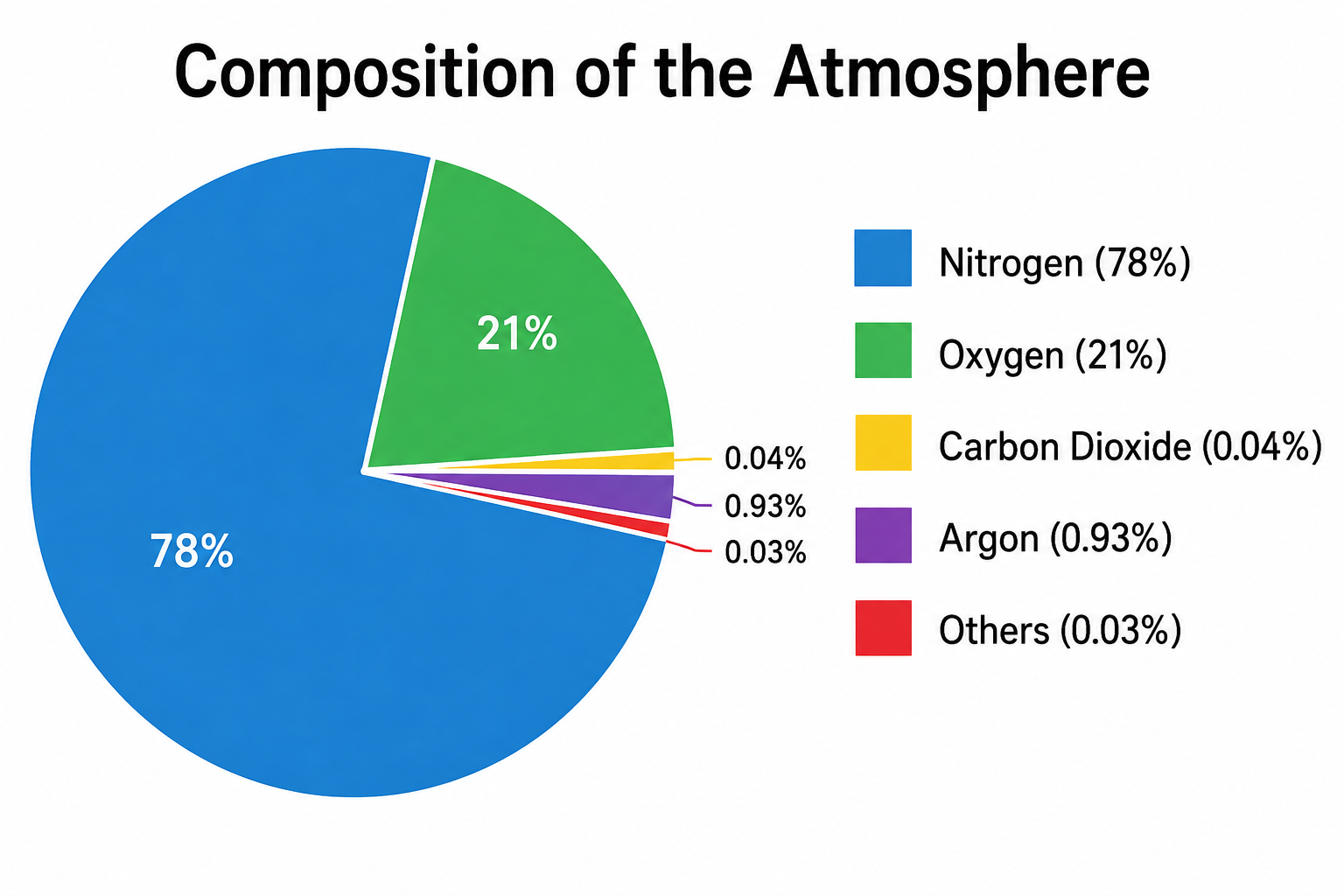
The pie diagram of atmospheric composition can be explained as follows:
Nitrogen – 78%: It is the largest component of the atmosphere.
Oxygen – 21%: It is the second-largest component and is essential for respiration and the survival of most living organisms.
Argon – 0.93%: It is present in a comparatively small amount.
Carbon dioxide – 0.04%: It occurs in a very small proportion but plays an important role in natural processes.
Other gases – about 0.03%: These include helium, neon, krypton, xenon, ozone, and hydrogen.
Water vapour – about 0.1% to 0.4%: Its amount varies, and it plays a major role in cloud formation and rainfall.
Dust particles: These tiny particles also contribute to atmospheric and weather processes.
Question 2. Draw a labelled diagram of the structure of the atmosphere.
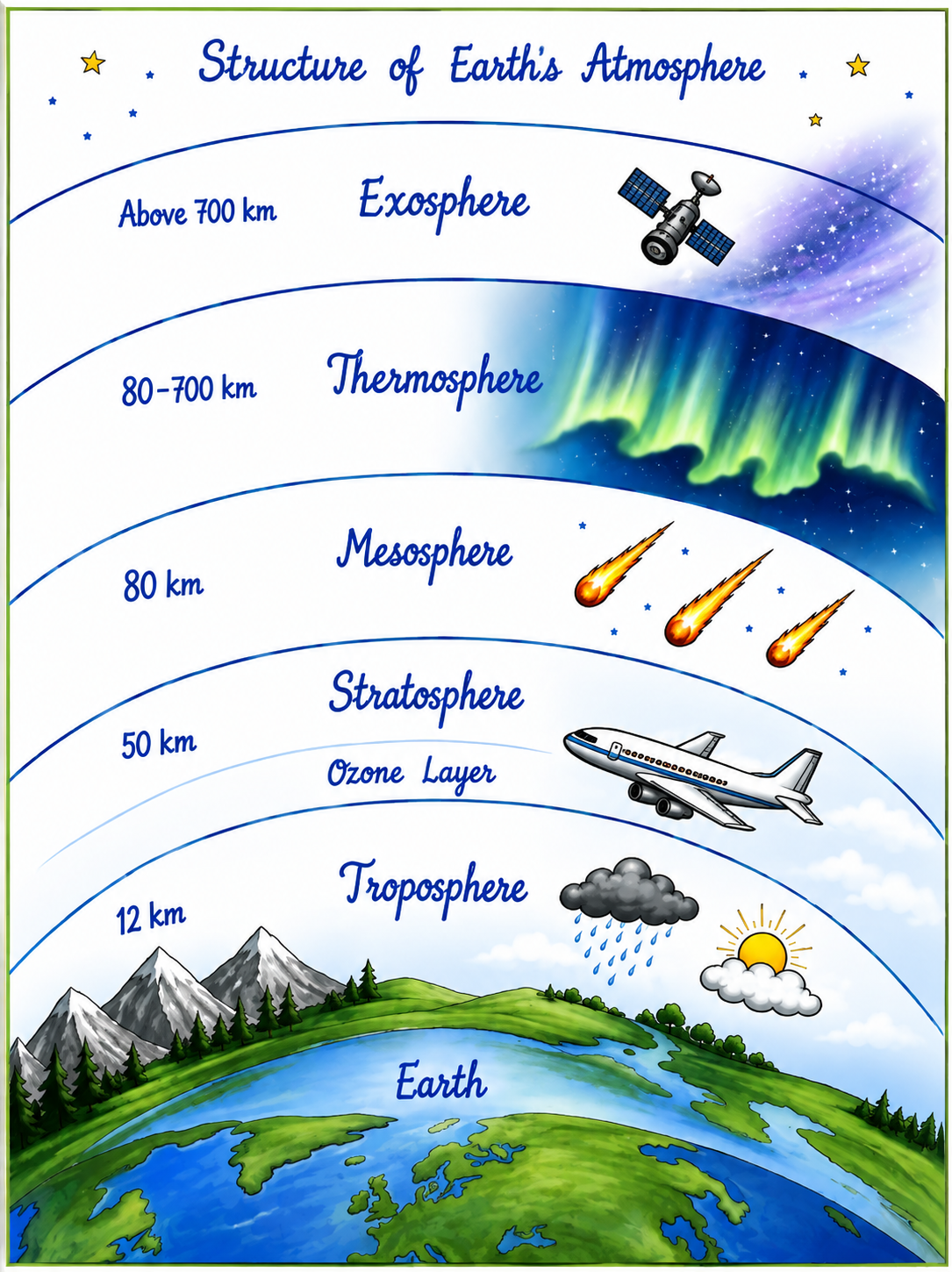
Answer: The atmosphere is divided into five major layers, one above another, beginning from the Earth’s surface. These are the troposphere, stratosphere, mesosphere, thermosphere, and exosphere. A labelled diagram should show these layers in the correct order and indicate that temperature and air density change with increasing altitude.
Question 3. Which are the four main seasons of India?
Answer: The Indian Meteorological Department (IMD) recognises four major seasonal periods in India:
1. Winter Season (December to Early April) This season generally has lower temperatures and cool, dry weather. December and January are among the coldest months. Parts of north-western India may experience fog and frost, while snowfall occurs in the Himalayan region.
2. Summer or Pre-monsoon Season (April to June) Temperatures rise considerably during this period, producing hot and mostly dry conditions. April is generally very hot in western and southern parts of India, while May is often the hottest month in northern India. Temperatures in many inland areas may range from around 32°C to 40°C.
3. Monsoon or Rainy (Advancing Monsoon) Season (June to September) The humid south-west monsoon winds dominate this season and provide a major share of India’s annual rainfall. The monsoon begins withdrawing from northern parts of the country around the beginning of October, while southern areas continue to receive rainfall.
4. Post-monsoon (Retreating Monsoon) Season (October to November) During this period, the monsoon gradually retreats from India. In north-western regions, October and November generally have clearer skies and less cloud cover.
Question 4. Why do you not feel the pressure of the atmosphere?
Answer: We normally do not notice atmospheric pressure because the pressure exerted by the surrounding air is balanced by the pressure produced by the fluids and gases inside our body. Atmospheric pressure acts on us from all directions, while our body produces an outward pressure that balances it.
Since these forces are normally balanced, we do not feel the enormous weight of the atmosphere. However, changes in pressure may become noticeable under unusual conditions, such as while travelling to high-altitude regions or going deep underwater.
Question 5. In which layer of the atmosphere do aeroplanes fly and why?
Answer: Aeroplanes generally travel through the lower part of the stratosphere because this region has comparatively stable atmospheric conditions. Most clouds, storms, and strong weather disturbances occur below it in the troposphere.
The air in the stratosphere is also thinner, which reduces air resistance and can help aircraft travel more efficiently. These conditions make flights smoother and generally reduce turbulence compared with the lower atmosphere.
Question 6. Distinguish between the following:
(a) The troposphere and stratosphere
(b) The south-west monsoon and north-east monsoon
Answer: The differences are explained below:
(a) The troposphere and stratosphere
(b) The south-west monsoon and north-east monsoon
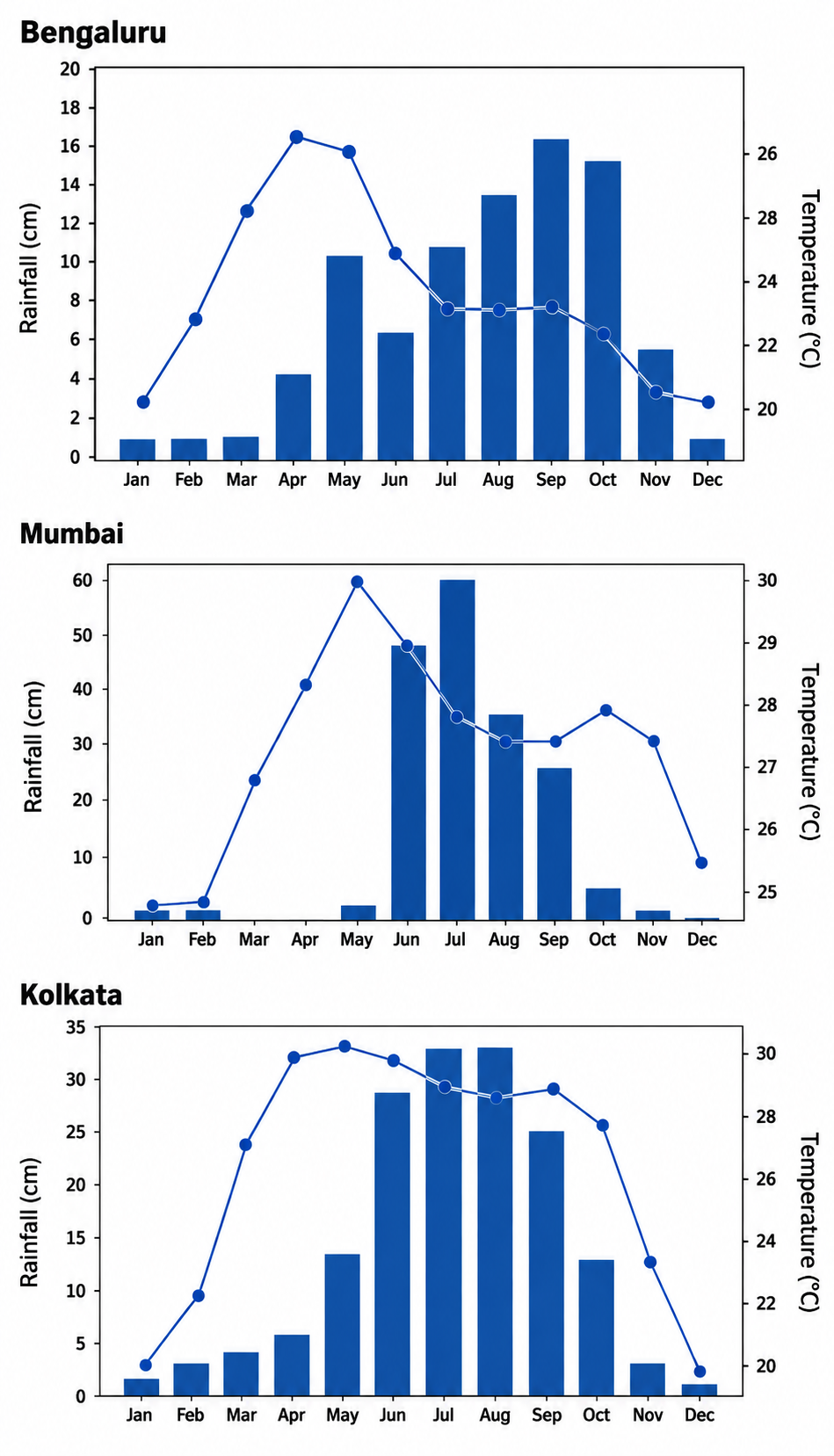
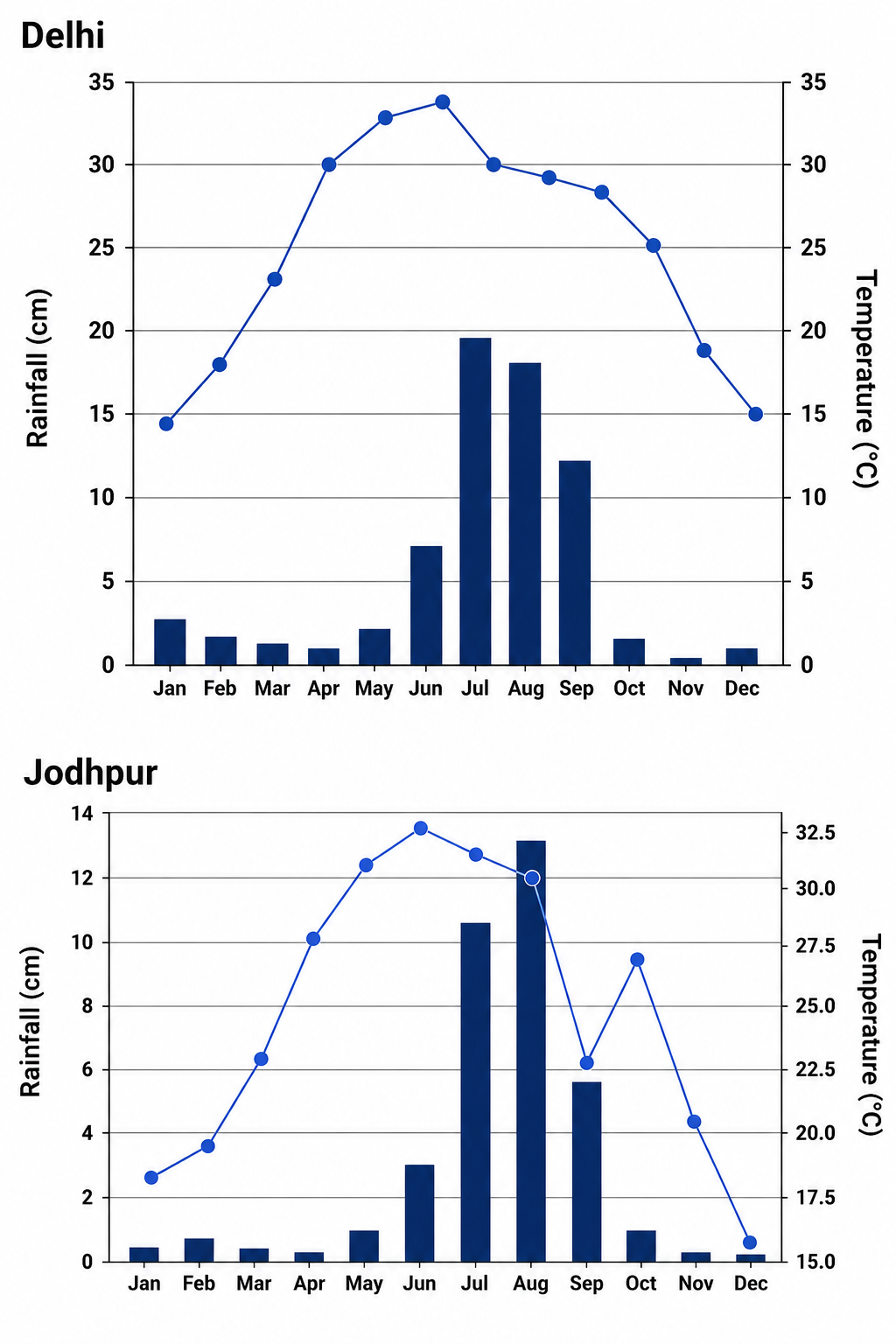
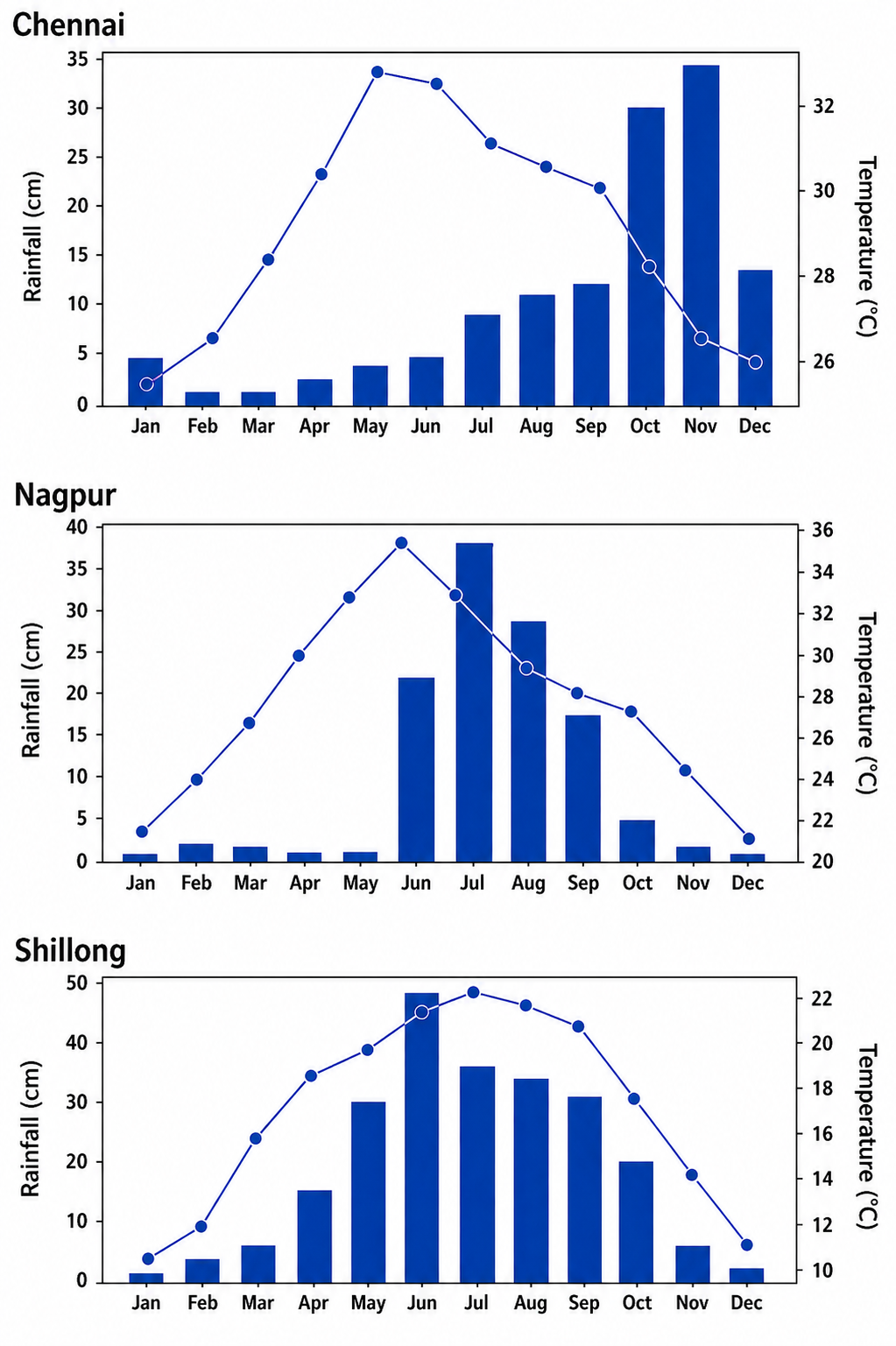
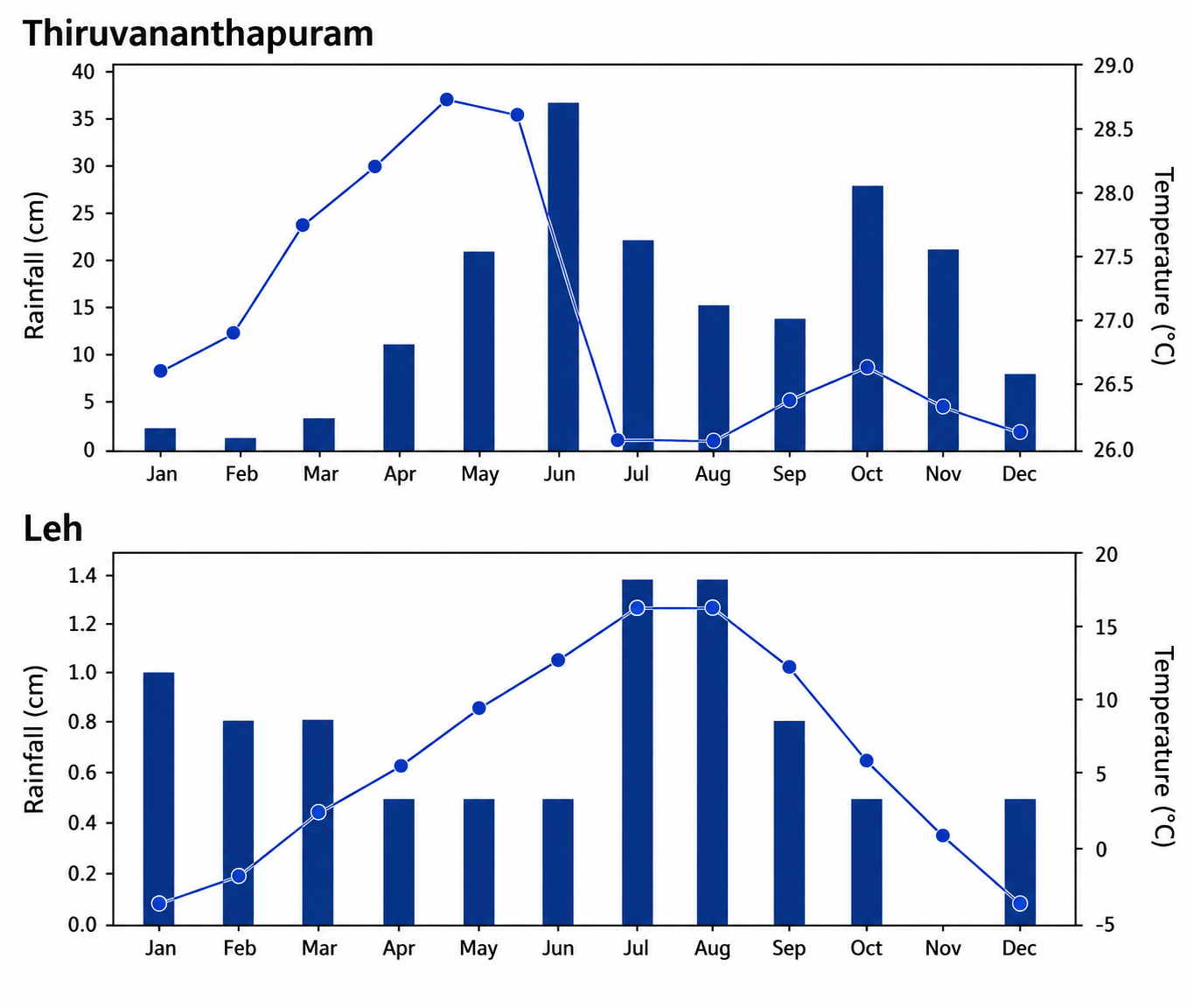
Question 7. Do it yourself: The table (below) shows the average monthly temperatures and rainfall amounts for 10 representative stations. Study these figures on your own and convert them into ‘temperature and rainfall1 graphs. The visual representations will help you grasp their similarities and differences at a glance. One such graph (Fig. below) is already prepared for you. See if you can arrive at some broad generalisations about our diverse climatic conditions.
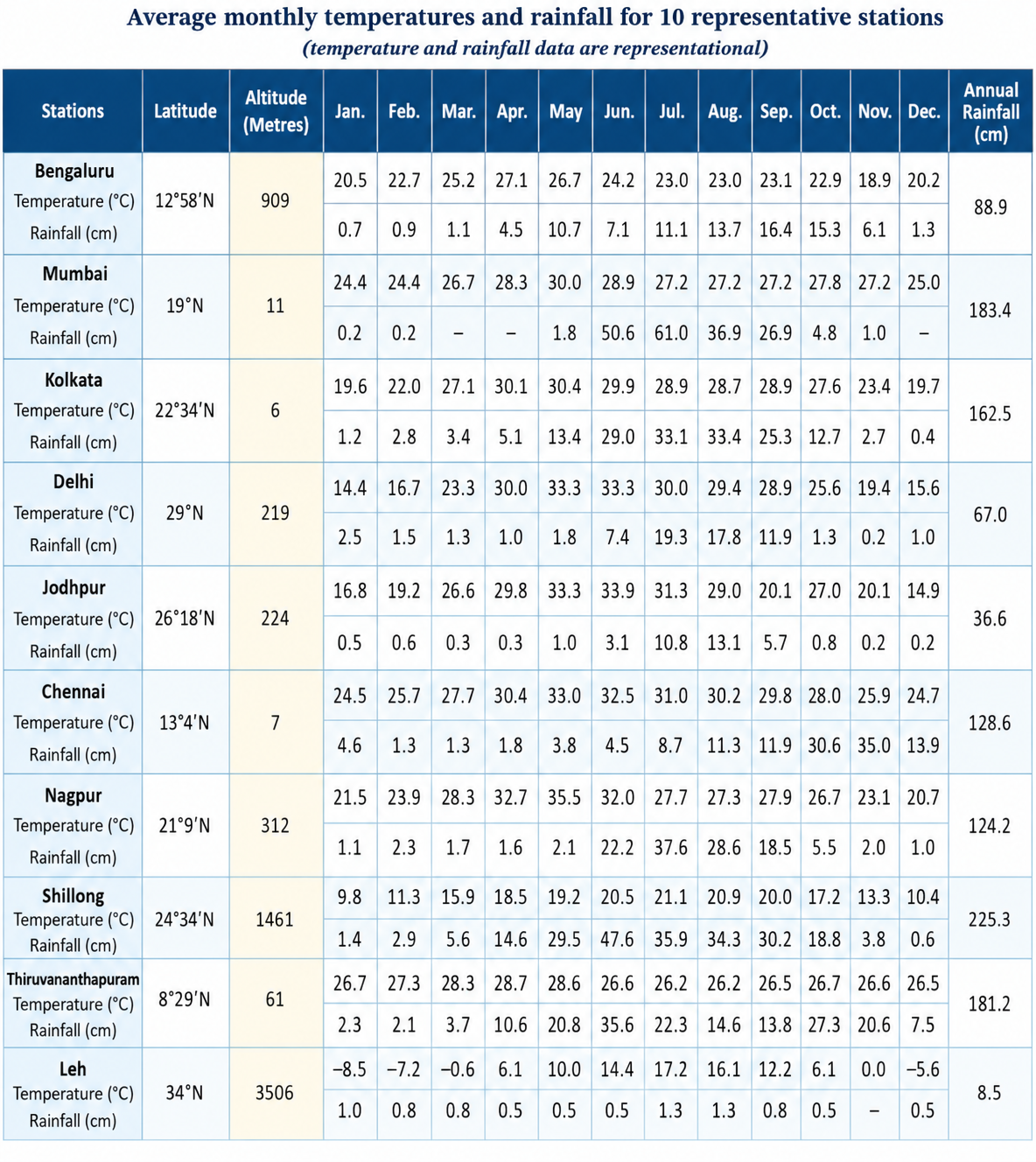
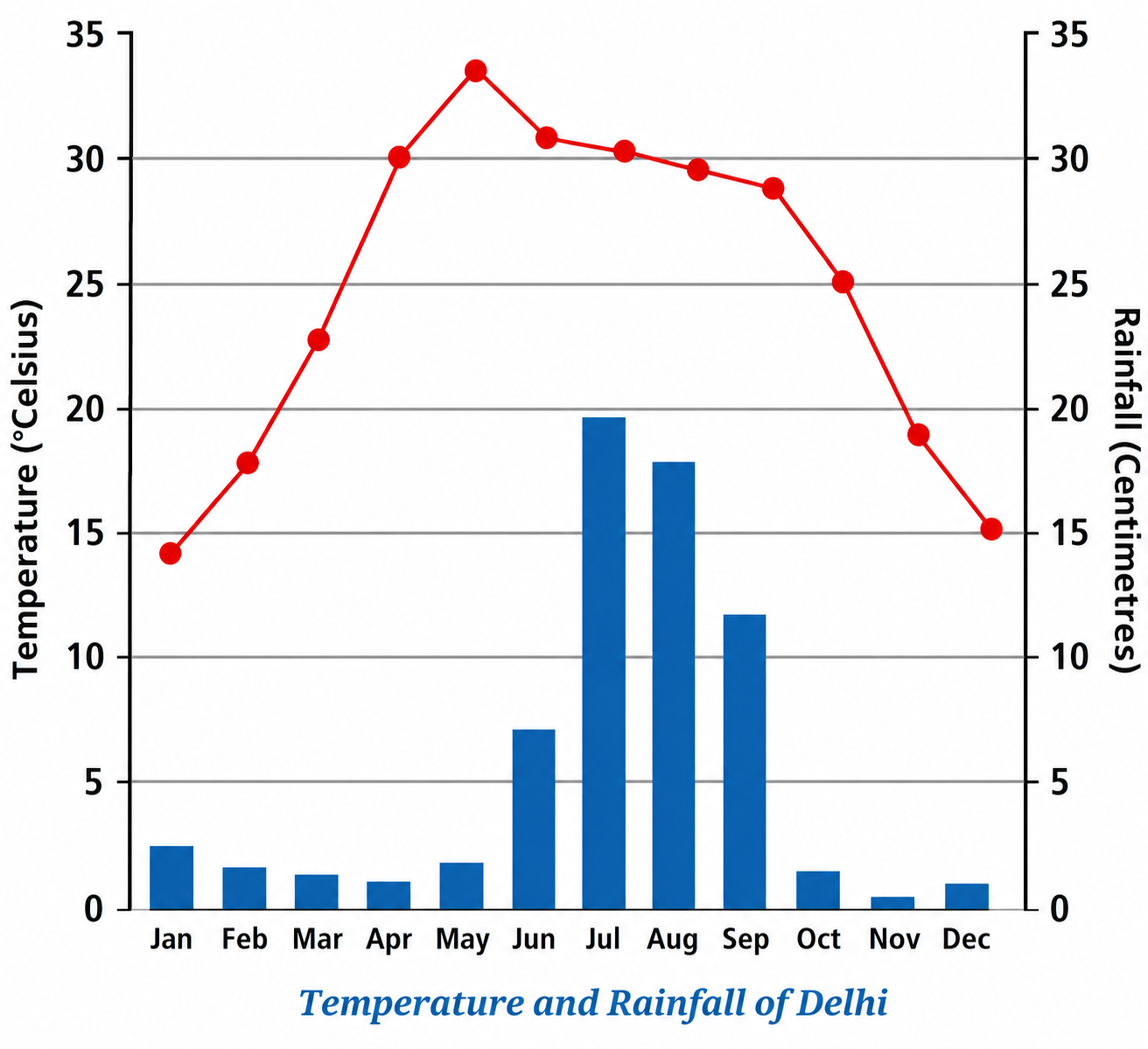
Answer: Using the temperature and rainfall information provided in the table, students can prepare graphs for all 10 stations. The graphs make it easier to compare seasonal temperature variations and rainfall patterns and to understand the climatic differences among various regions of India.
Question 7.1. Now look at the given Table again. Re-arrange the 10 stations according to their distance from the equator.
Answer: Based on their latitudes, the 10 stations can be arranged from the closest to the equator to the farthest as follows:
Thiruvananthapuram (8°29’N)
Bengaluru (12°58’N)
Chennai (13°4’N)
Mumbai (19°N)
Nagpur (21°9’N)
Kolkata (22°34’N)
Shillong (24°34’N)
Jodhpur (26°18’N)
Delhi (29°N)
Leh (34°N)
Question 7.2. Find out:
(a) Two stations with the most extreme climate.
(b) Two stations influenced by retreating monsoons.
(c) The two hottest stations in the months of (i) February (ii) June.
Answer:
(a) Two stations with the most extreme climate
Jodhpur and Leh show highly extreme climatic conditions because both places experience a considerable difference between summer and winter temperatures.
(b) Two stations influenced by retreating monsoons.
Chennai and Thiruvananthapuram are influenced by the retreating monsoon. These places receive considerable rainfall during October and November.
(c) The two hottest stations in the months of
(i) February
Thiruvananthapuram – 27.3°C
Chennai – 25.7°C
(ii) June
Delhi – 33.3°C
Jodhpur – 33.9°C
Question 7.3. Now find out:
(a) Why does Shillong experience more rainfall than Kolkata?
(b) Why does Delhi receive more rainfall than Jodhpur?
Answer:
(a) Shillong receives much more rainfall because of its location in the Khasi Hills. Moist winds from the Bay of Bengal are forced to rise when they encounter the hills. As the air rises, it cools and produces heavy rainfall. Kolkata lies mainly in the plains and therefore receives less rainfall than Shillong.
(b) Delhi receives more rainfall because the south-west monsoon winds influence it more effectively. Jodhpur lies in the dry region of Rajasthan, and the orientation of the Aravalli Range does not strongly obstruct the monsoon winds. As a result, less moisture is forced upward, and Jodhpur receives comparatively lower rainfall.
Question 7.4. Now think about why
(a) Thiruvananthapuram has an equable climate?
(b) Chennai has more rainfall only after the fury of the monsoon is over in most parts of the country?
(c) Leh has moderate precipitation almost throughout the year.
Answer:
(a) Thiruvananthapuram lies close to the sea. The Arabian Sea reduces extreme changes in temperature by keeping nearby areas cooler during hot periods and warmer during cooler periods. Therefore, the city experiences a relatively equable climate throughout the year.
(b) Chennai receives a large part of its rainfall during the north-east or retreating monsoon, especially in October and November. During this period, winds crossing the Bay of Bengal collect moisture and bring rainfall to the Coromandel Coast.
(c) Leh is situated in a high-altitude cold desert and lies in the rain-shadow region of the Himalayas. Moisture-bearing winds have difficulty reaching the area. Therefore, Leh receives only a small amount of precipitation, distributed across different periods of the year.
Question 7.5. Despite these differences across regions, can you observe any substantial evidence to conclude that the monsoons provide a very strong framework, lending overall climatic unity to the whole country?
Answer: Yes. The monsoon creates a strong sense of climatic unity across India even though individual regions differ greatly in temperature, rainfall, and seasonal conditions. A large part of the country depends on seasonal monsoon winds for rainfall.
Agricultural activities, water supplies, reservoirs, rivers, and many aspects of everyday life are closely connected with the arrival and performance of the monsoon. Thus, despite India's climatic diversity, the monsoon acts as an important common factor linking different regions of the country.
Question 8. Collect pictures of houses and clothing of people from different regions of India. Examine whether they reflect any relationship with the climatic conditions or the relief of those regions.
Answer: Pictures of houses and traditional clothing from various regions of India show a clear connection between the way people live and the climate and relief of their surroundings.
1. Rajasthan (Hot and Dry Desert Region)
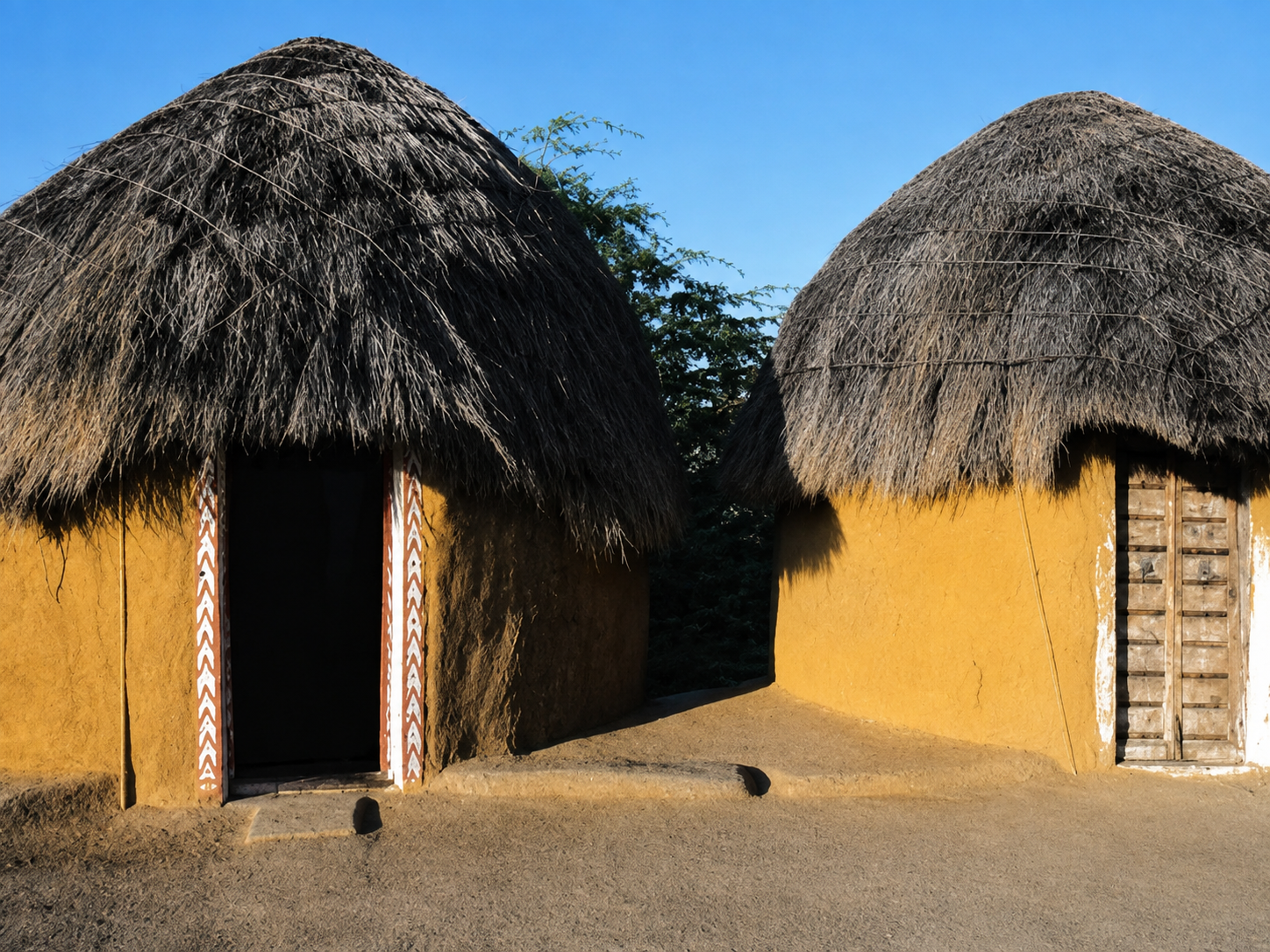
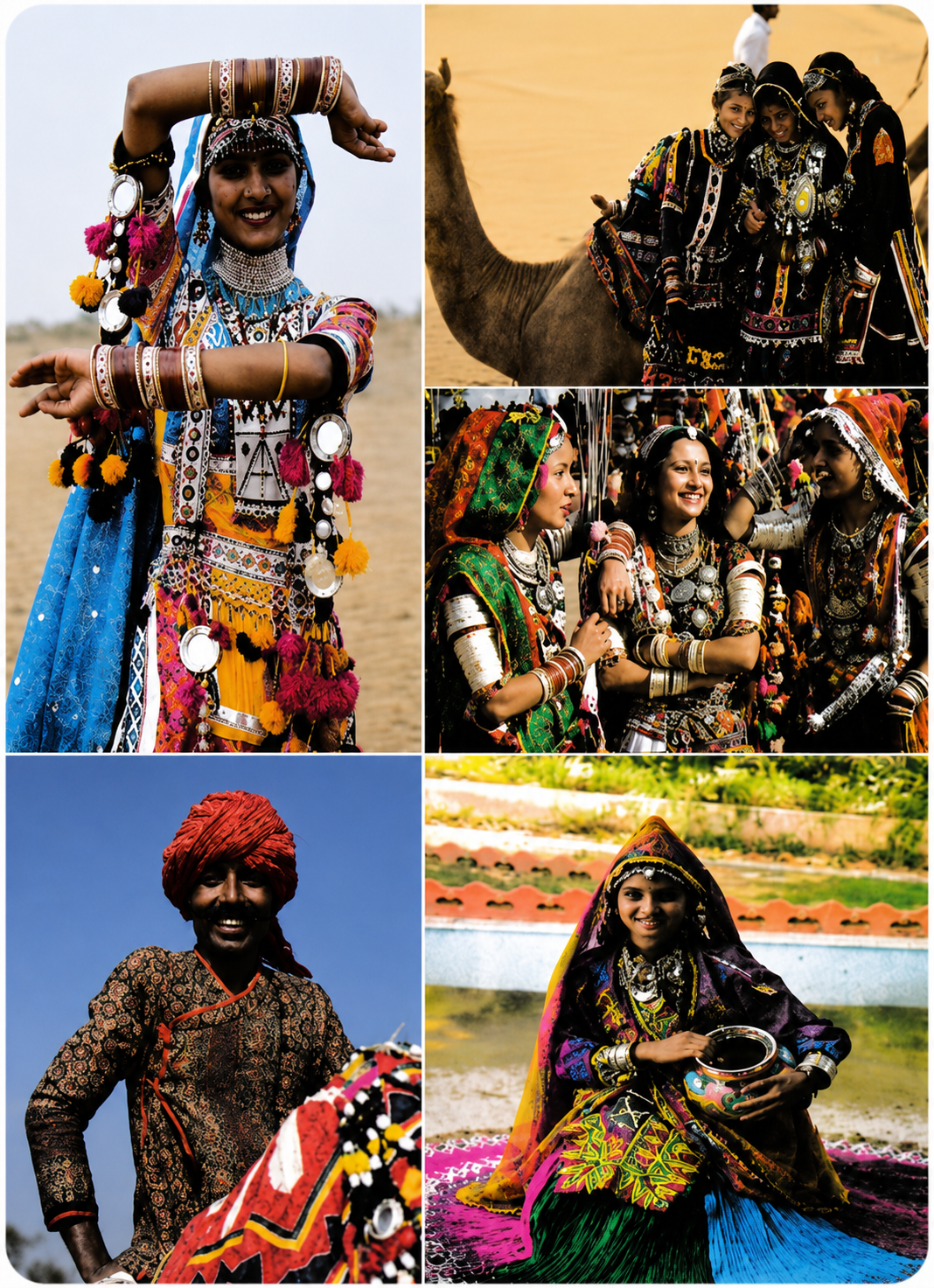
In Rajasthan, traditional houses often have thick walls and small windows, which help keep the interiors cooler and protect people from hot winds and dust. Loose and light cotton clothing is commonly worn because it is suitable for the dry and extremely hot climate.
2. Himachal Pradesh (Mountainous and Cold Region)
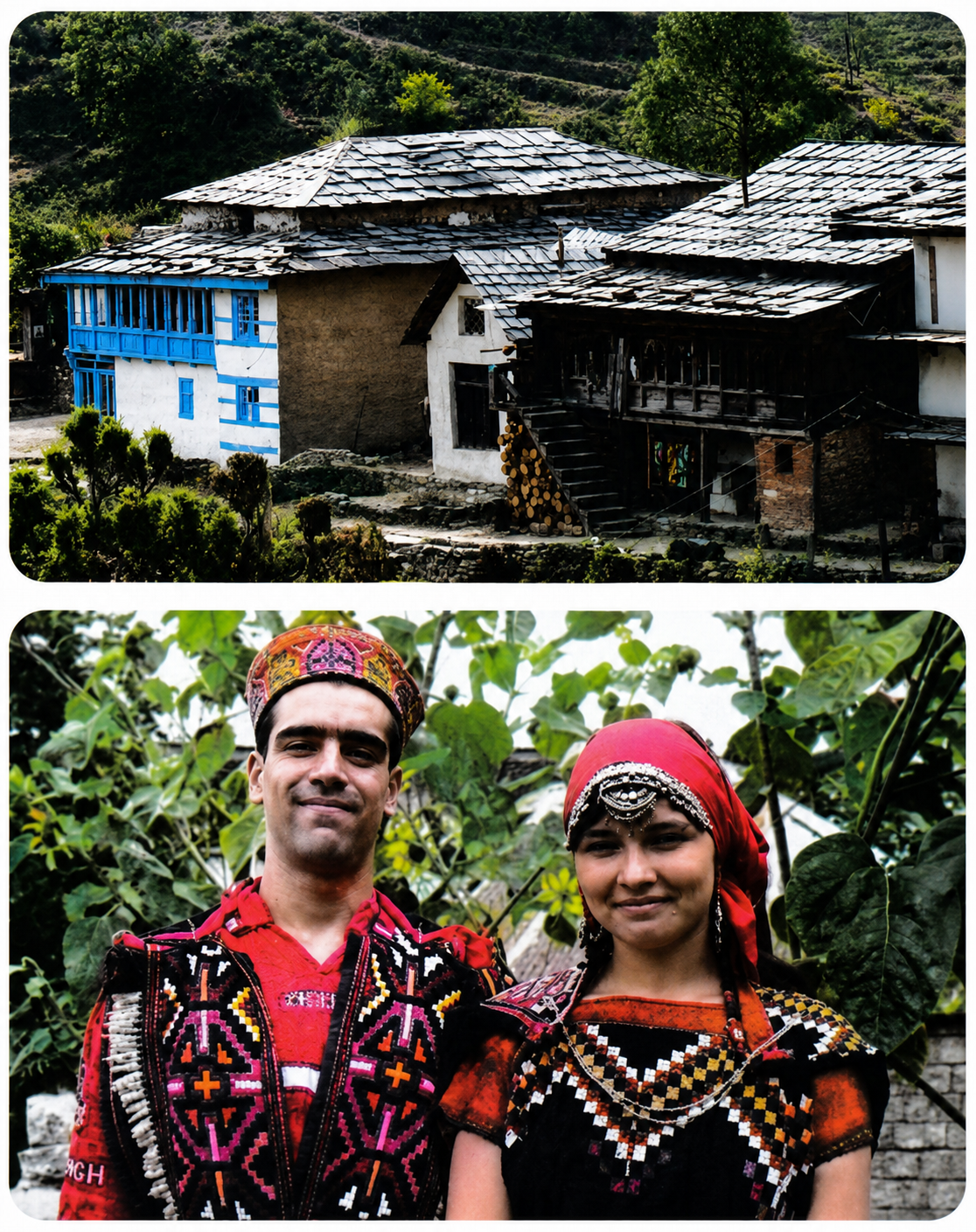
In Himachal Pradesh, houses are commonly built using materials such as wood and stone. Sloping roofs allow rainwater and snow to move off easily instead of accumulating on the roof. People usually wear warm woollen clothes to protect themselves from the low temperatures.
3. Kerala (Hot, Humid, High Rainfall Region)

Traditional houses in Kerala commonly have sloping tiled roofs, which help rainwater drain quickly during periods of heavy rainfall. Light cotton clothes are suitable for the region because the weather remains warm and humid for much of the year.
4. Assam (Heavy Rainfall Region)
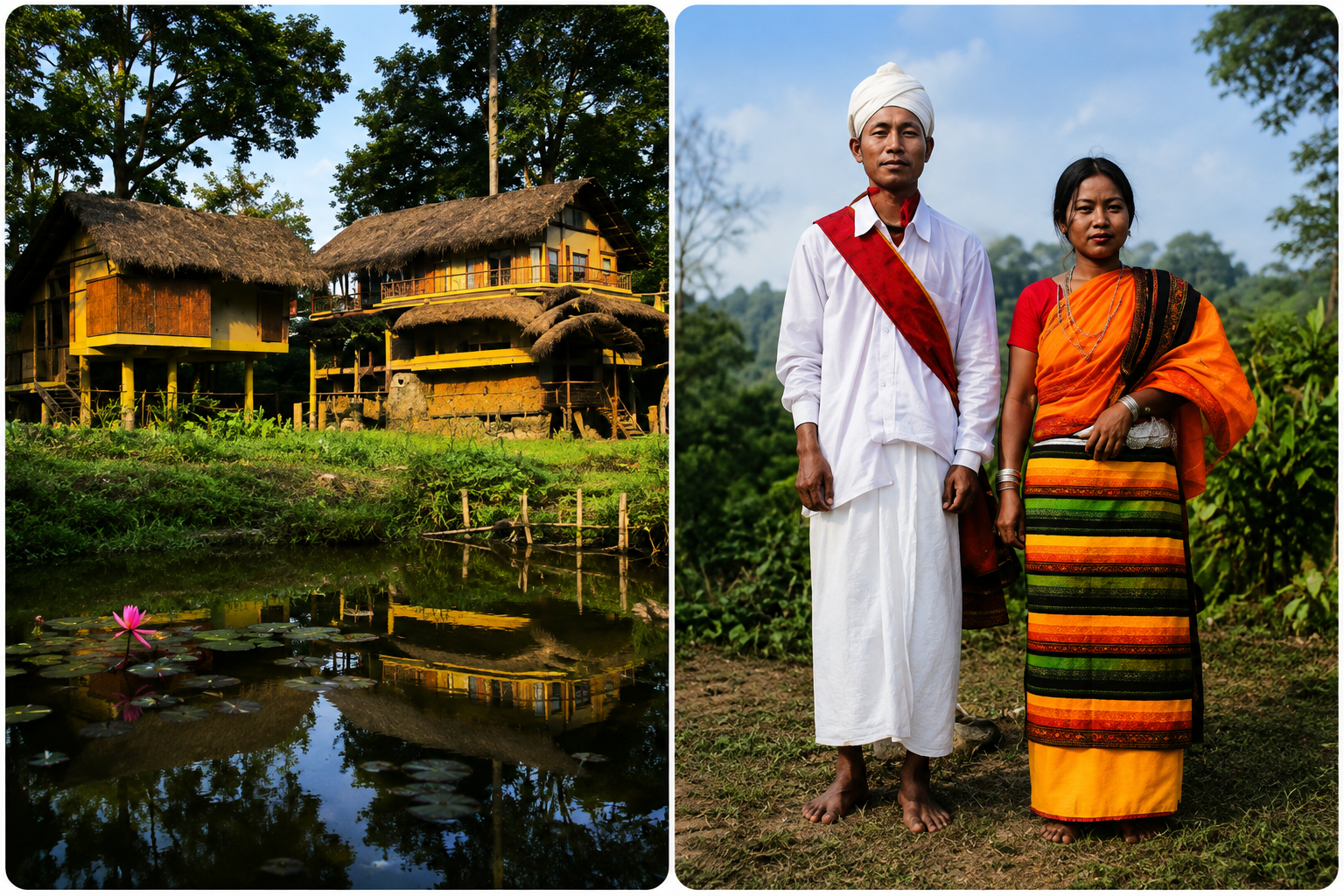
In flood-prone areas of Assam, some houses are constructed on raised platforms or stilts so that floodwater does not easily enter the living area. Light and comfortable clothing is generally suitable for the warm and humid conditions.
5. Ladakh (Cold Desert Region)

Traditional houses in Ladakh are often constructed using stone, mud, and other locally available materials that help retain warmth during extremely cold weather. People wear thick woollen clothing to protect themselves from severe winter temperatures.
Key Takeaways from Class 9 Atmosphere and Climate
The Class 9 Atmosphere and Climate Solutions simplify key concepts such as atmospheric layers, winds, monsoons, rainfall, and India’s climatic variations.
Students can use the Atmosphere and Climate Class 9 NCERT PDF and Atmosphere and Climate Class 9 Questions and Answers for quick revision and clearer exam preparation.
Related Study Materials for Class 9 Social Science Chapter 3 Atmosphere and Climate
Chapter-Wise NCERT Solutions for Class 9 Social Science (Understanding Society India and Beyond Part 1)
Related Study Material for Class 9 Social Science
FAQs on NCERT Solutions for Class 9 Social Science Chapter 3 Atmosphere and Climate 2026-27
1. What are the main topics covered in Class 9 Atmosphere and Climate?
The chapter covers the composition and layers of the atmosphere, temperature, air pressure, winds, moisture, rainfall, monsoons, seasons, and variations in the climate of different parts of India.
2. How can Class 9 Atmosphere and Climate Solutions help with revision?
These solutions help you check your textbook answers, understand difficult geographical concepts, and identify the important points that should be included while writing answers in exams.
3. What is the difference between weather and climate in Class 9 Social Science?
Weather describes the atmospheric conditions of a place over a short period, while climate refers to the general pattern of weather observed in a region over a long period.
4. Which atmospheric layers should Class 9 students learn for Chapter 3?
Students should know the five major layers
Troposphere
Stratosphere
Mesosphere
Thermosphere
Exosphere
along with their altitude, characteristics, and importance.
5. Where can I find Atmosphere and Climate Class 9 Questions and Answers?
Students can use the chapter-wise solutions from Vedantu to practise Atmosphere and Climate Class 9 Questions and Answers, especially the textbook exercises, activities, and analytical questions.
6. Why is the monsoon important for India?
The monsoon provides a major share of India's rainfall and directly affects agriculture, water resources, rivers, reservoirs, and several everyday economic activities.
7. Why does Chennai receive rainfall during the retreating monsoon?
Chennai receives significant rainfall during the retreating monsoon because the north-east winds cross the Bay of Bengal, pick up moisture, and bring rain to the southeastern coast.
8. How can students use a Class 9 Atmosphere and Climate PDF for preparation?
A Class 9 Atmosphere and Climate PDF can be useful for quick revision when students want to revisit important answers, compare their responses, and study the chapter away from the textbook.
9. Is the Atmosphere and Climate Class 9 NCERT PDF useful for exam preparation?
Yes. The Atmosphere and Climate Class 9 NCERT PDF can help students refer to the original chapter content, activities, diagrams, and questions while preparing answers and revising concepts.
10. How should I prepare for Class 9 Social Science Chapter 3?
Begin with the NCERT chapter, understand the atmospheric layers and monsoon mechanism, practise the climate-based questions, and revise important data, comparisons, and diagrams before attempting sample papers.
