




How to Write Stepwise Answers & Diagrams for Parallel and Intersecting Lines
5.1 Across the Line
NCERT In-Text Questions (Page 107)
1. Can two straight lines intersect at more than one point?
Solution:
No, two straight lines can meet at only one point.
If they are parallel, they will never meet.
And if two lines seem to intersect at more than one point, then they are actually the same line.
2. Is this always true for any pair of intersecting lines?
Solution: Yes. When two lines cross each other, they form four angles at the point where they intersect.
The angles that lie directly opposite each other are called vertically opposite angles, and these angles are always equal in measure.
Figure it Out (Page 108)
1. List all the linear pairs and vertically opposite angles you observe from
Figure:
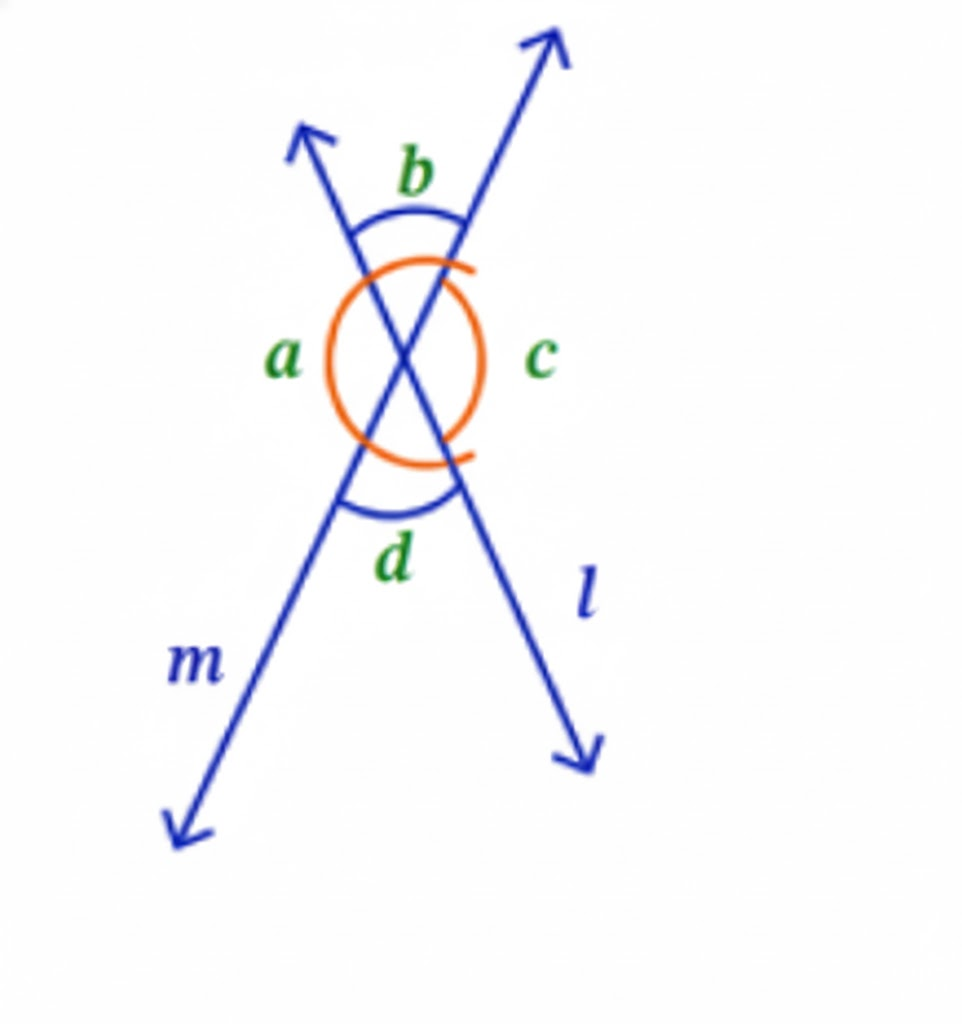
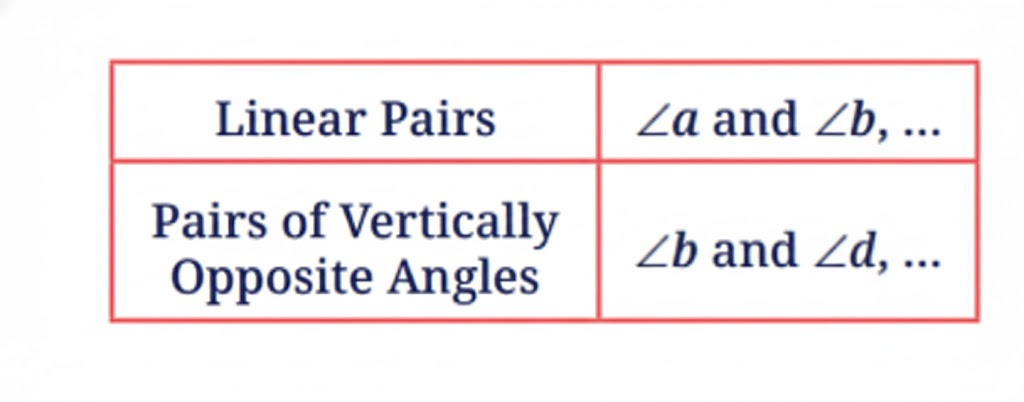
Solution:
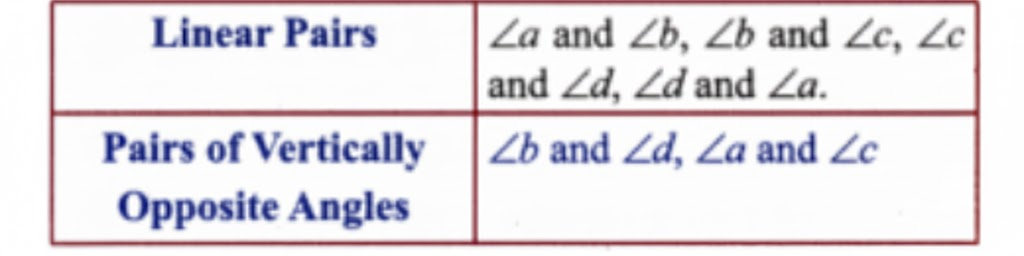
5.3 Between Lines
NCERT In-Text Questions (Pages 109-110)
Observe Figure and describe the way the line segments meet or cross each other in each case, with appropriate mathematical words (a point, an endpoint, the midpoint, meet, intersect) and the degree measure of each angle.
For example, line segments FG and FH meet at the endpoint F at an angle of 115.3°.
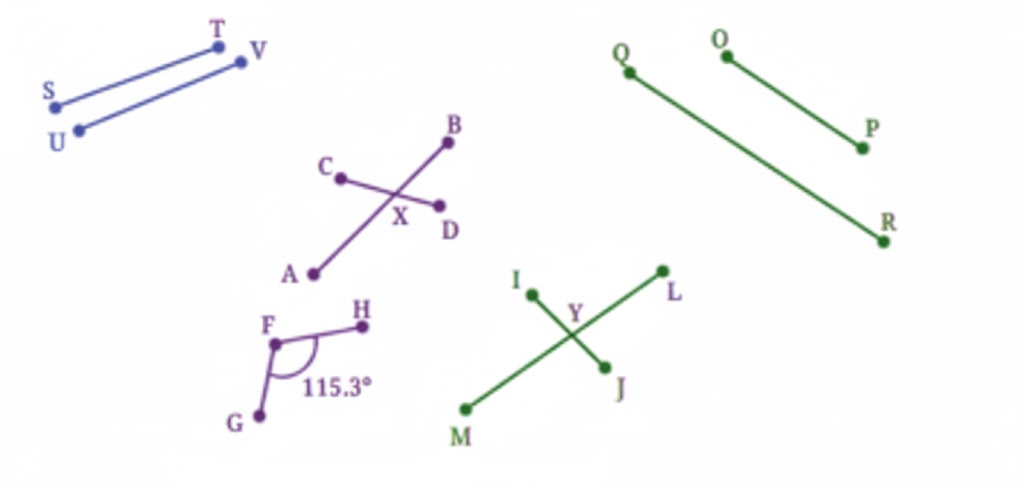
1. Are line segments ST and UV likely to meet if they are extended?
Solution:
If two lines are not parallel, they will eventually intersect at some point when extended.
Therefore, the line segments ST and UV are likely to meet upon extension, since they are not parallel.
2. Which pairs of lines appear to be parallel in the Figure below?
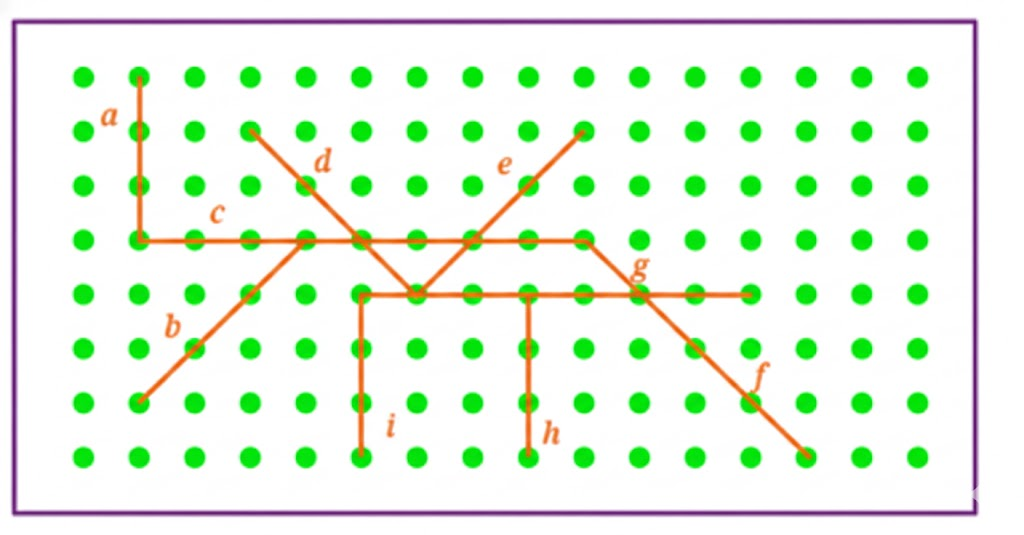
Solution:
Two lines are considered parallel if they never intersect at any point.
From the given figure:
Lines a, i, and h are parallel to one another.
Line c is parallel to line g.
Line d is parallel to line f.
Line e is parallel to line b.
Figure it Out (Pages 113-114)
1. Draw some lines perpendicular to the lines given on the dot paper in the Figure.
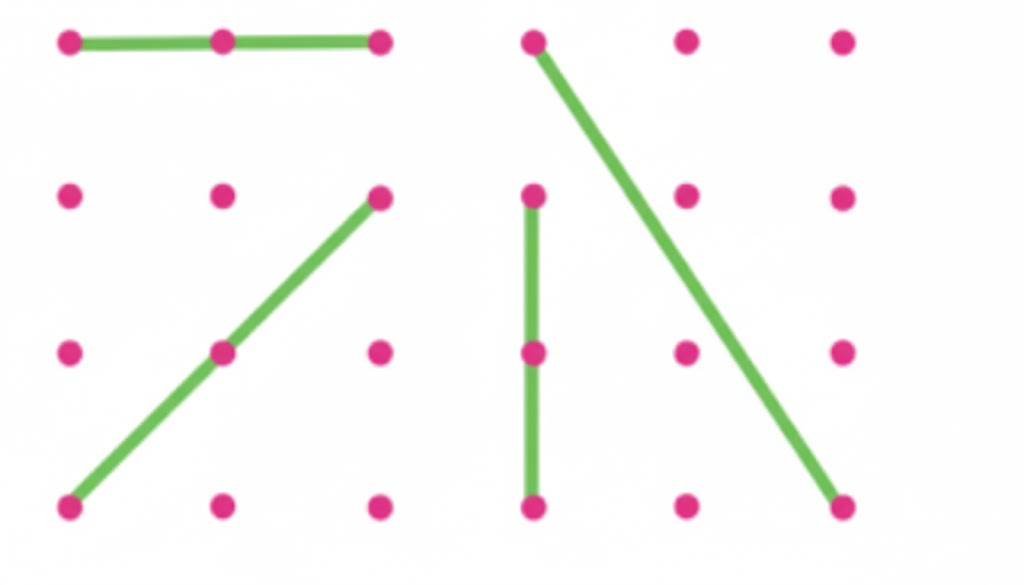
Solution:
Students should do it themselves.
2. In the given figure, mark the parallel lines using the notation given above (single arrow, double arrow, etc). Mark the angle between perpendicular lines with a square symbol.
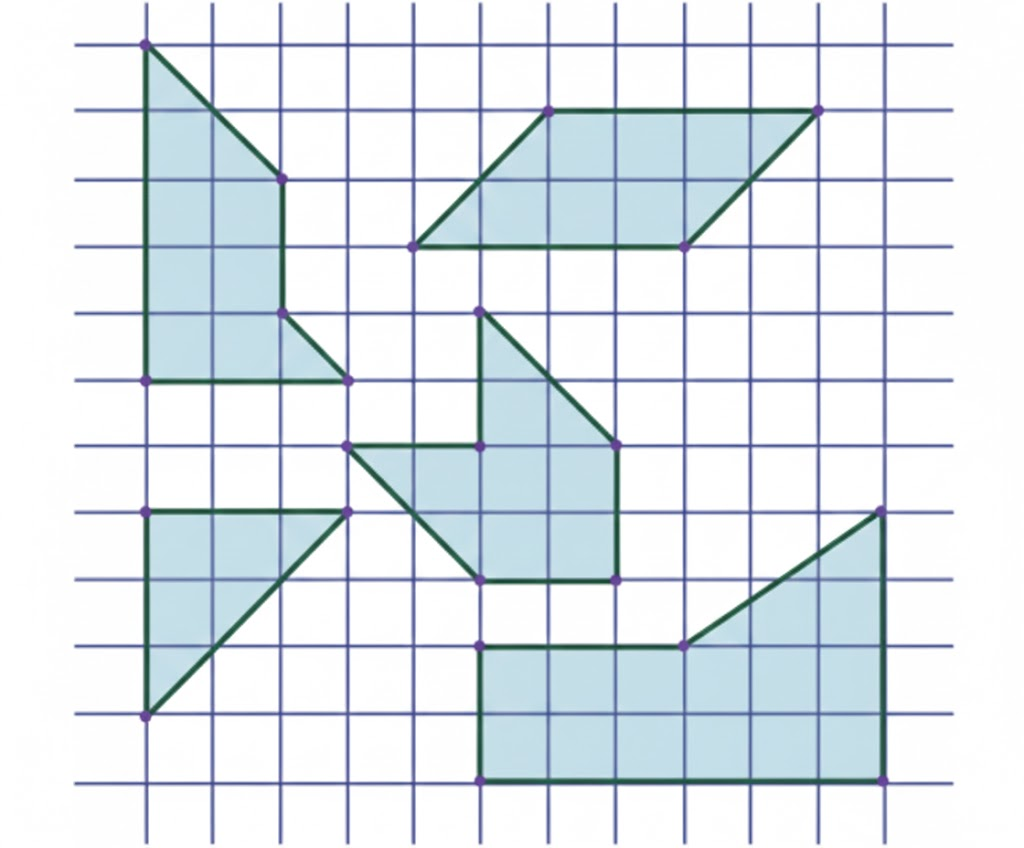
(a) How did you spot the perpendicular lines?
(b) How did you spot the parallel lines?
Solution:
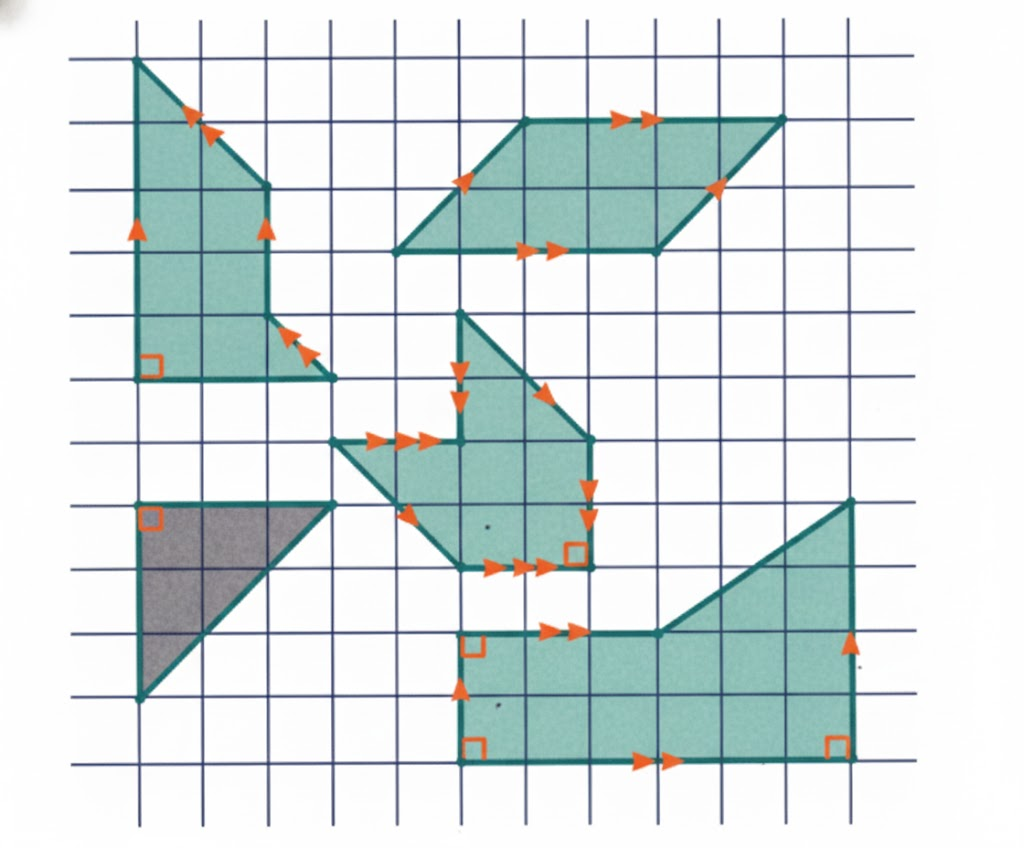
(a) To identify perpendicular lines in a figure, look for lines that meet and form a right angle (90°).
(b) To identify parallel lines, look for lines that never intersect, no matter how far they are extended.
3. In the dot paper following, draw different sets of parallel lines. The line segments can be of different lengths but should have dots as endpoints.
Solution:
Students should do it by themselves.
4. Using your sense of how parallel lines look, try to draw lines parallel to the line segments on this dot paper.
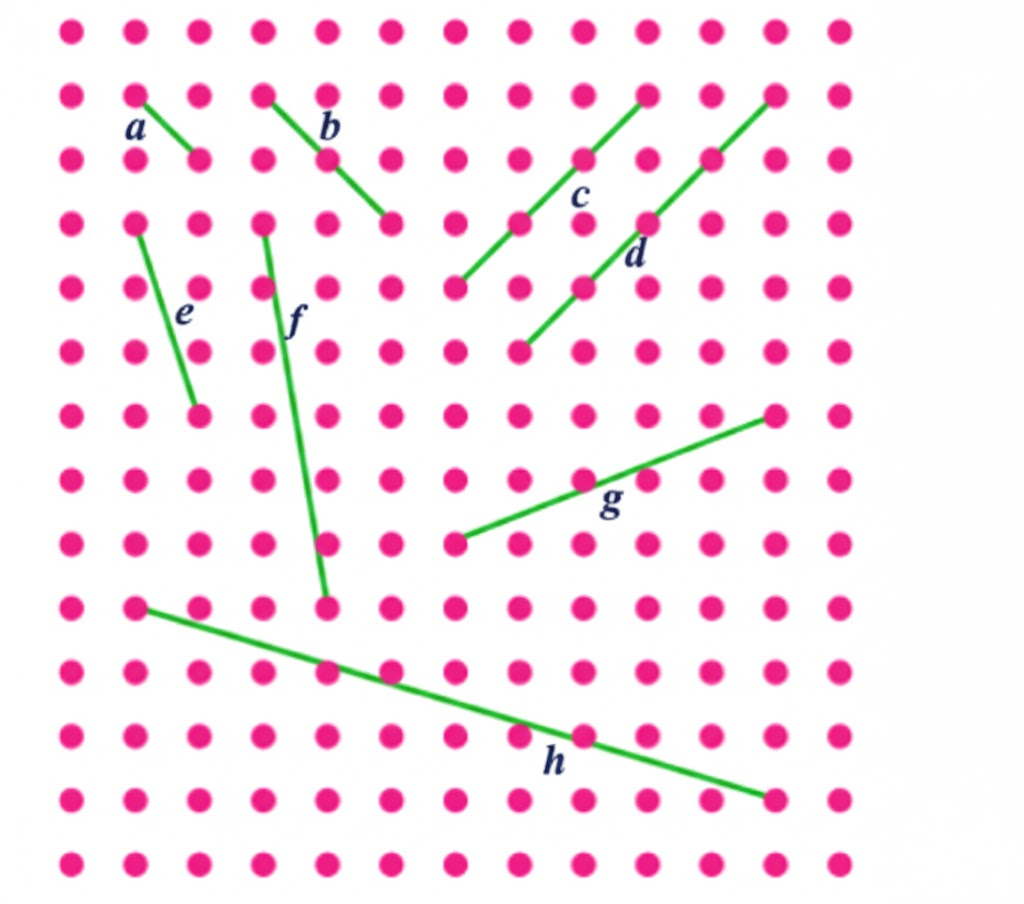
(a) Did you find it challenging to draw some of them?
(b) Which ones?
(c) How did you do it?
Solution:
(a) – (c) Students should do it by themselves
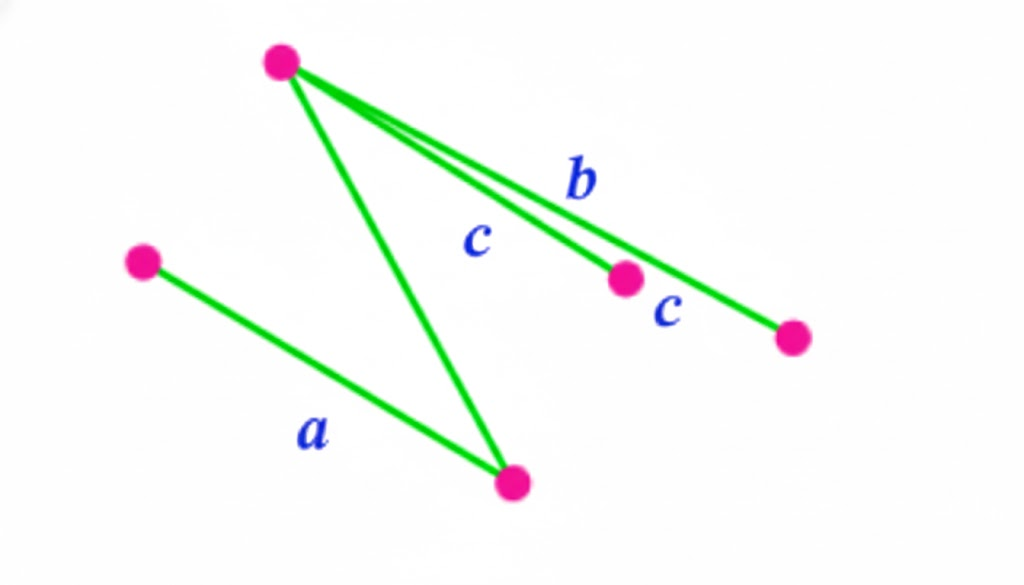
5. In the figure, which line is parallel to line a—line b or line c? How do you decide this?
Solution:
In the given figure, line a is parallel to line c because they remain the same distance apart at all points and will never meet, even if extended indefinitely.
Figure it Out (Page 119)
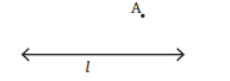
1. Can you draw a line parallel to l that goes through point A? How will you do it with the tools from your geometry box? Describe your method.
Solution:
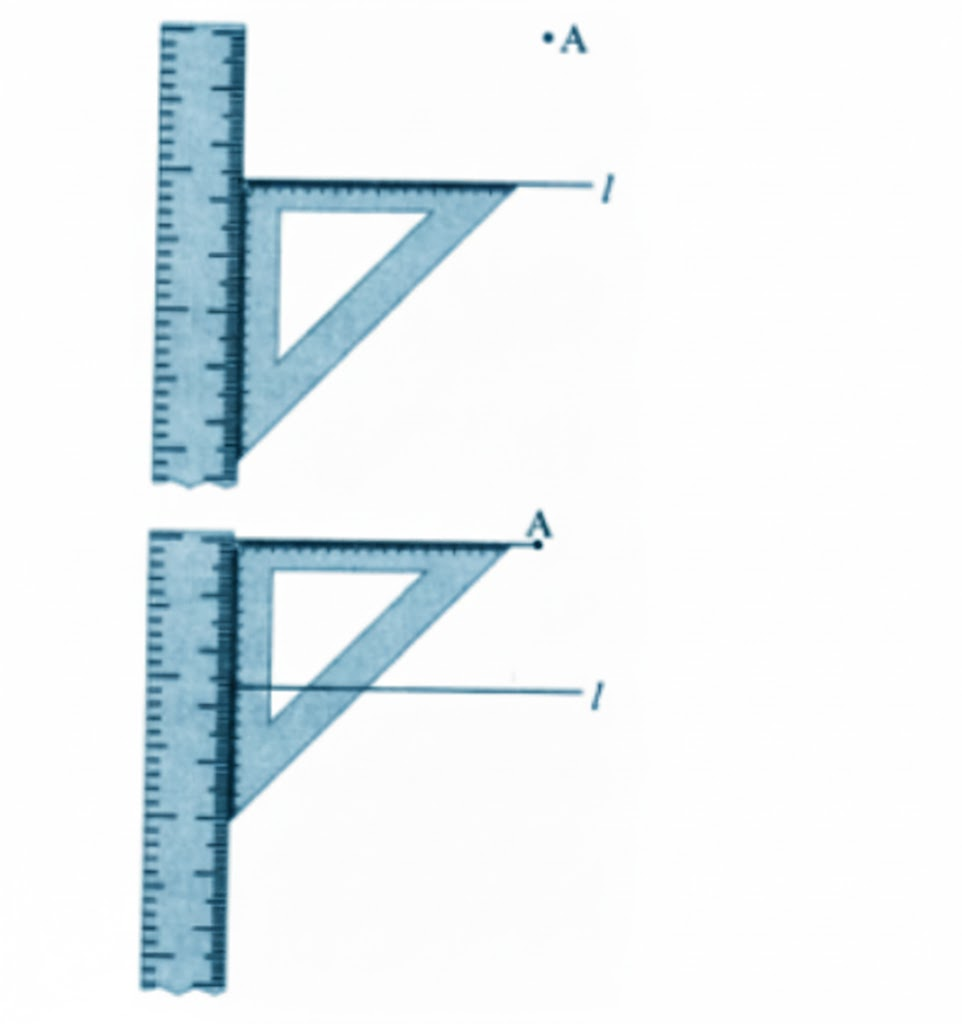
Required tools: A ruler, set-squares (right-angled triangles), and a pencil.
Steps:
Place the set square so that one of its edges aligns with line l.
Hold the ruler firmly against the other edge of the set square to keep it steady.
Slide the set square along the ruler without changing its angle, until its edge reaches point A.
Draw a line through point A along the edge of the set square.
This newly drawn line is parallel to line l and passes through point A.
Making Parallel Lines through Paper Folding
NCERT In-Text Questions (Page 120)
Let us try to do the same with paper folding.
For a line l (given as a crease), how do we make a line parallel to l such that it passes through point A?
We know how to fold a piece of paper to get a line perpendicular to l.
Now, try to fold a perpendicular to l such that it passes through point A.
Let us call this new crease t.
Now, fold a line perpendicular to t passing through A again.
Let us call this line m.
The lines l and m are parallel to each other.
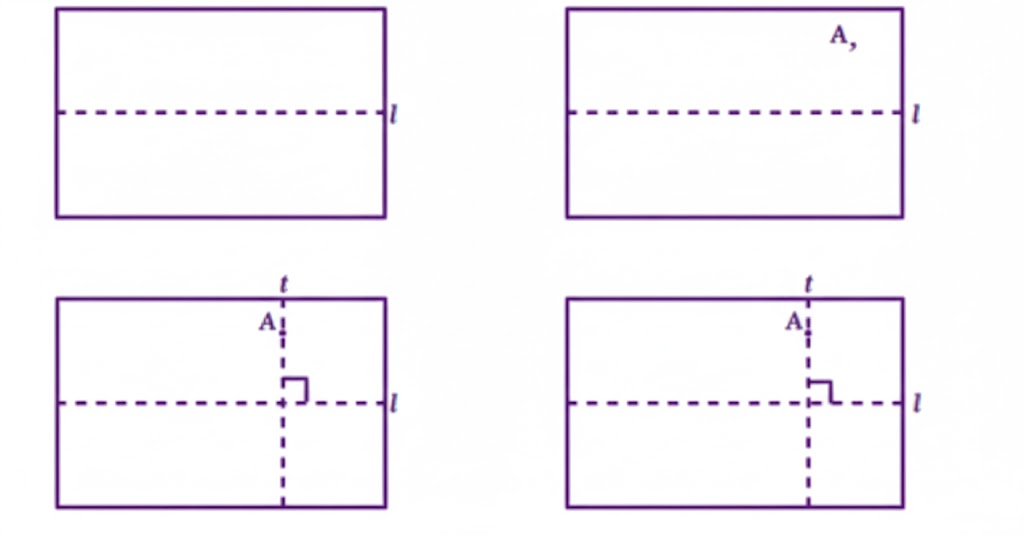
Why are lines l and m parallel to each other?
Solution: Line t is perpendicular to line l, and line m is also perpendicular to line t.
When two lines are perpendicular to the same line, they become parallel to each other.
Therefore, lines l and m are parallel because both are perpendicular to line t.
Figure it Out (Pages 123-125)
1. Find the angles marked below.
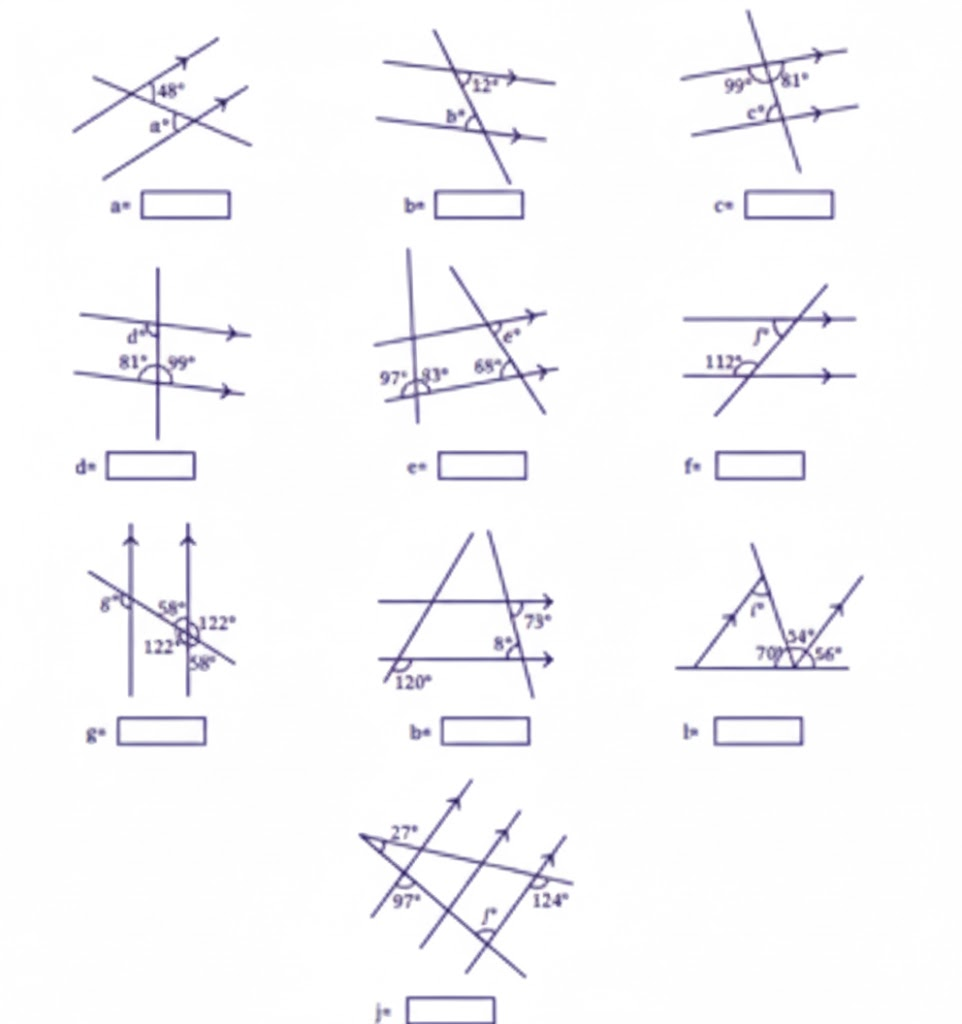
Solution:
Alternate interior angles formed when a transversal cuts parallel lines are always equal.
So, a = 48°.
Similarly, alternate angles are equal for the next pair as well.
Therefore, b = 52°.
Interior angles on the same side of a transversal always sum to 180°.
So, 180° – 99° = 81°, which means c = 81°.
The sum of the interior angles on the same side of the transversal always adds up to 180°.
So, 180° – 81° = 99°. Therefore, d = 99°.
Alternate interior angles formed when a transversal cuts parallel lines are always equal.
So, e = 69°.
Interior angles on the same side of a transversal sum to 180°.
Thus, 180° – 132° = 48°, so f = 48°.
Corresponding angles formed by a transversal intersecting parallel lines are equal.
Therefore, g = 122°.
Alternate interior angles are equal, so:
h = 15°
i = 54°
j = 97°
All these values follow directly from angle relationships in parallel-line geometry.
2. Find the angle represented by a.
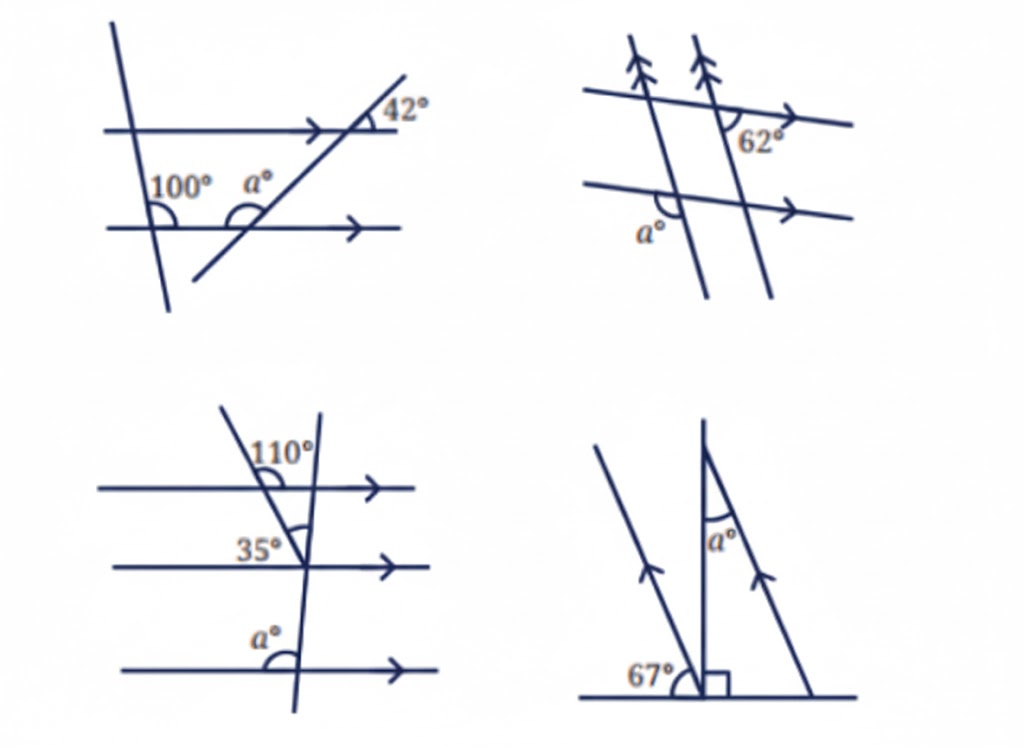
Solution:
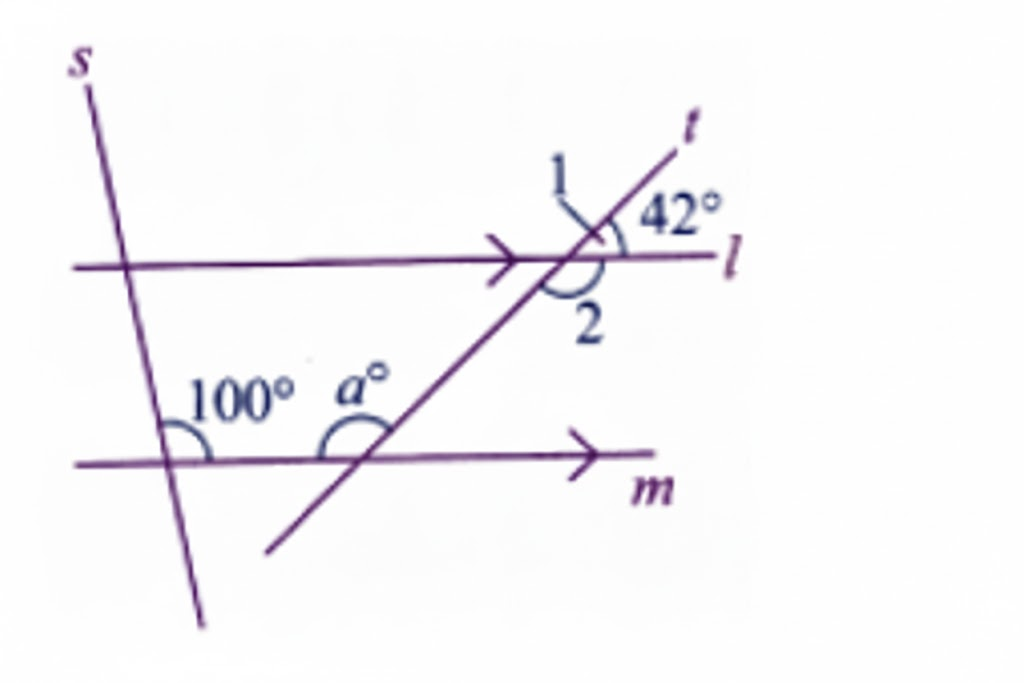
∠1 is given as 42°.
Since ∠1 and ∠2 form a linear pair, their measures add up to 180°.
So, ∠2 = 180° – 42° = 138°.
Lines l and m are parallel, and t is a transversal.
Therefore, ∠2 and angle a are alternate interior angles, which are always equal.
Thus, a = 138°.
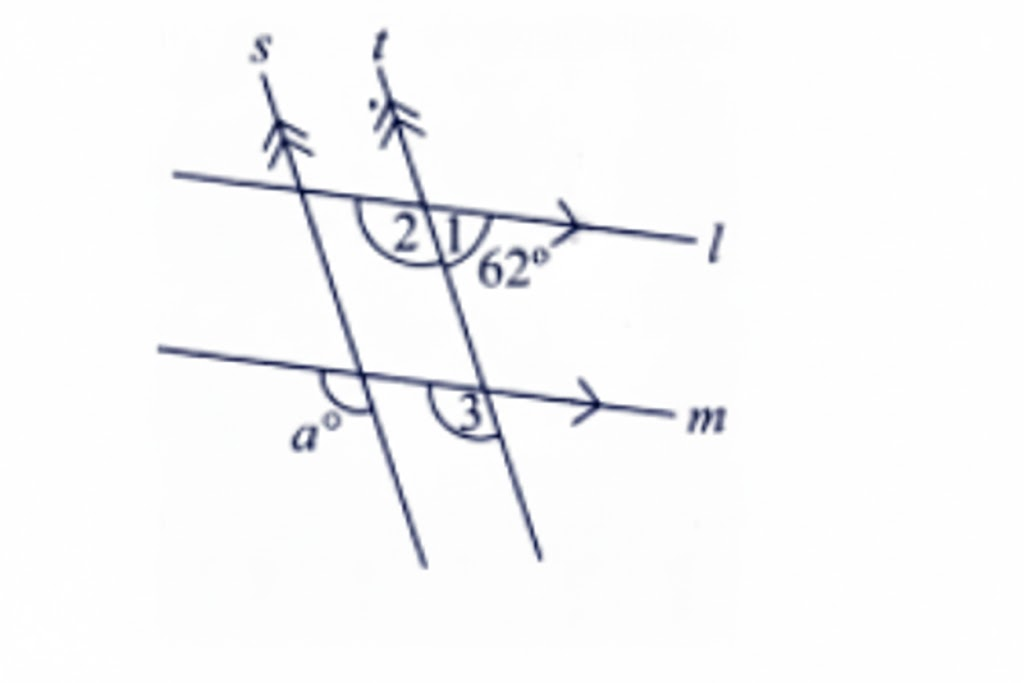
Angle ∠1 is 62°, and since ∠1 and ∠2 form a linear pair, their sum must be 180°.
So, ∠2 = 180° – 62° = 118°.
Next, ∠2 and ∠3 are corresponding angles, and because lines l and m are parallel and t is a transversal, corresponding angles are equal.
Thus, ∠3 = 118°.
Finally, ∠3 and angle a are also corresponding angles, as lines s and t are parallel with m acting as the transversal.
Therefore, a = 118°.
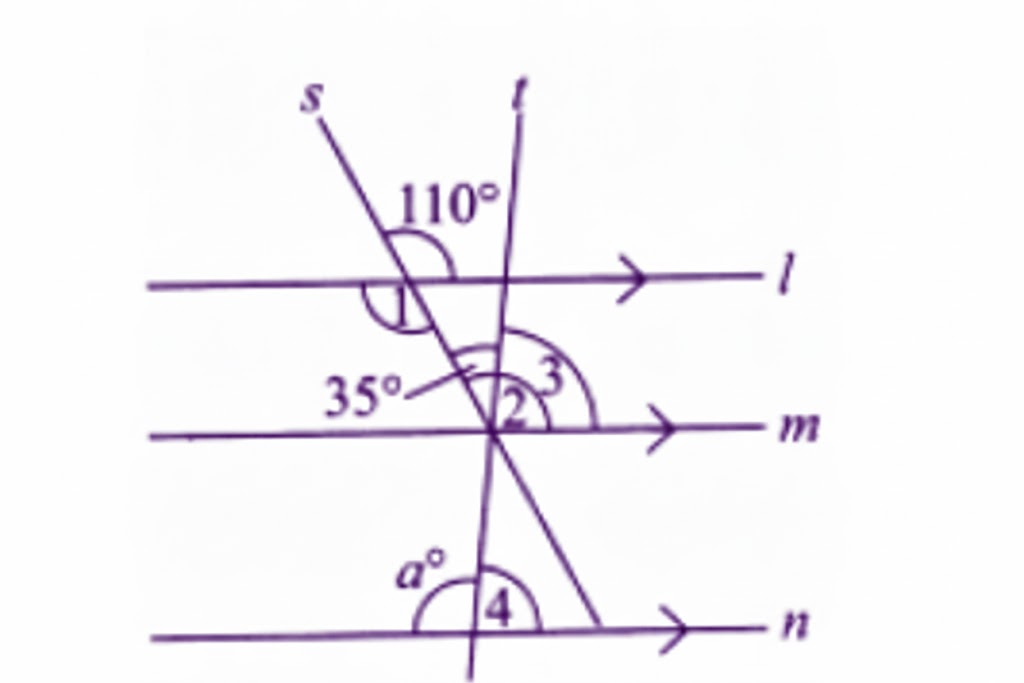
Lines s and l intersect, so ∠1 is a vertically opposite angle to the given 110°.
Thus, ∠1 = 110°.
Since lines l and m are parallel and s is a transversal,
∠1 and ∠2 are corresponding angles, so:
∠2 = 110°
Now,
∠3 = ∠2 – 35° = 110° – 35° = 75°
Next, lines are arranged such that ∠3 and ∠4 are corresponding angles, so:
∠4 = 75°
Finally, angle a forms a linear pair with ∠4, so their sum is 180°.
Thus,
a = 180° – 75° = 105°.
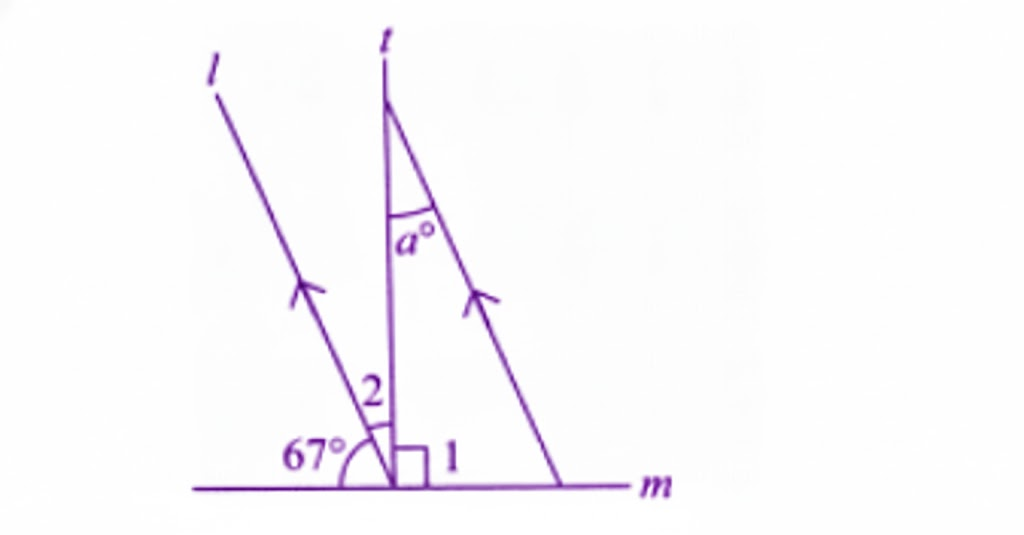
Using the fact that angles on a straight line add up to 180°, we get:
∠1 + ∠2 + 67° = 180°
Since ∠1 = 90°,
∠2 = 180° – 67° – 90° = 23°
Because lines l and t are parallel, ∠2 and angle a are alternate interior angles, which are equal.
Therefore, a = 23°.
Question 3.
In the figures below, what angles do x and y stand for?
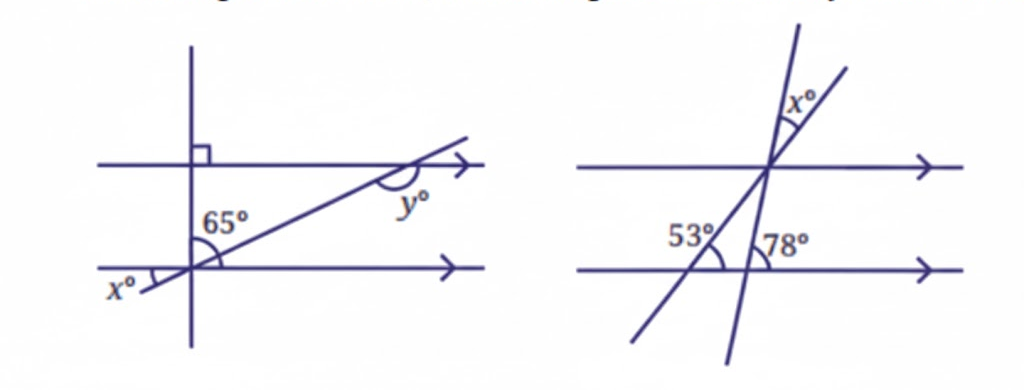
Solution:
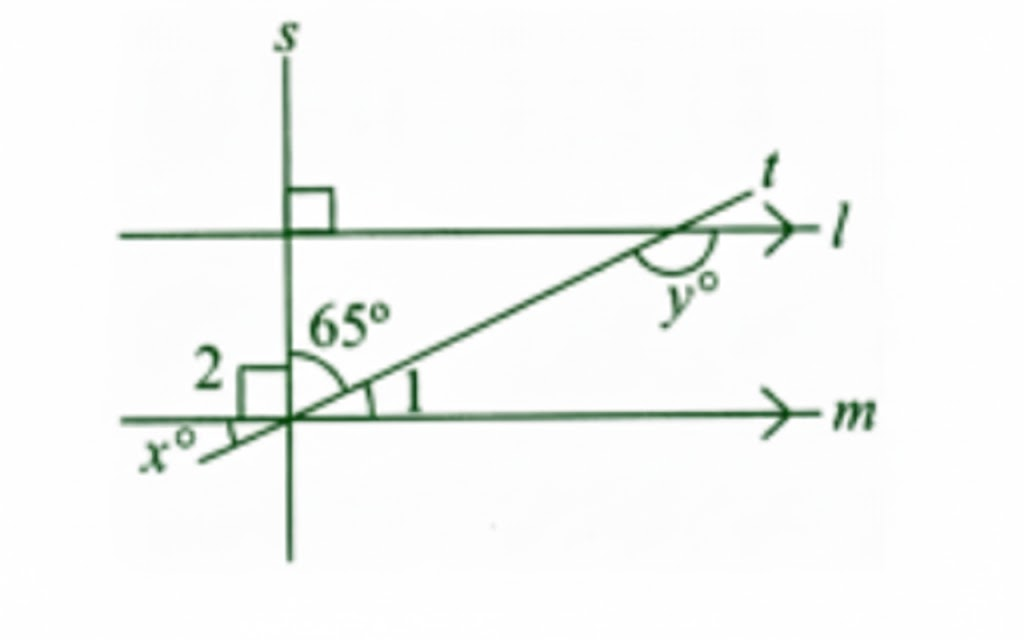
Since lines l and m are perpendicular,
∠2 = 90°.
Using the linear-pair relationship on the straight line:
∠2 + 65° + x° = 180°
So,
x = 180° – 90° – 65° = 25°
Lines t and m intersect, so ∠1 and x° are vertically opposite angles.
Thus,
∠1 = x = 25°
Now, lines l and m are parallel and t acts as a transversal.
So, angle y corresponds to the angle formed by ∠2 + 65°, giving:
y = 90° + 65° = 155°
Therefore,
x = 25° and y = 155°.
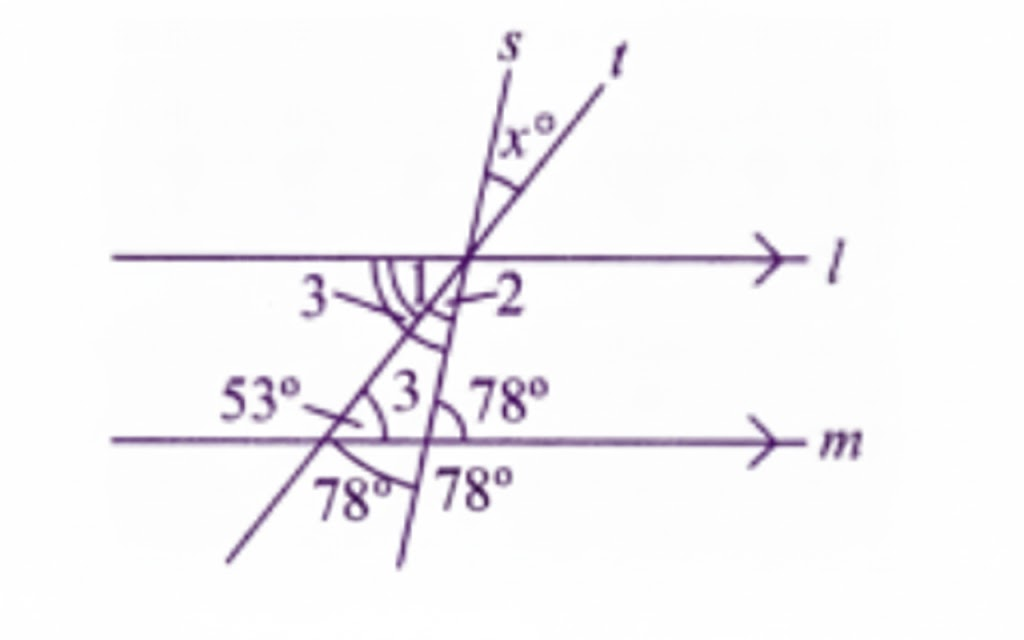
Since lines l and m are parallel and s is a transversal,
∠3 is an alternate interior angle, so:
∠3 = 78°
Also, with t as a transversal to the same parallel lines,
∠1 is another alternate angle, so:
∠1 = 53°
Now,
∠2 = ∠3 – ∠1 = 78° – 53° = 25°
Lines s and t intersect, so ∠2 and angle x are vertically opposite angles, which are equal.
Thus,
x = 25°.
Question 4.
In Figure, ∠ABC = 45° and ∠IKJ = 78°. Find angles ∠GEH, ∠HEF, ∠FED.
Solution:
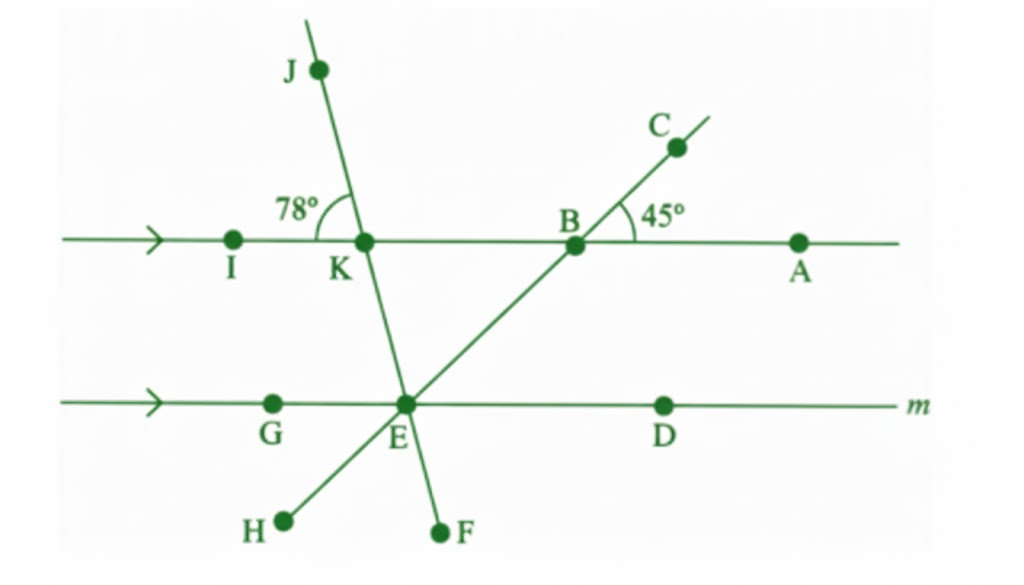
Line segments IA and HC intersect at point B.
So, ∠ABC and ∠KBE are vertically opposite angles, giving:
∠ABC = ∠KBE = 45°
Similarly, line segments JF and IA intersect at point K.
Thus, ∠IKJ and ∠BKE are vertically opposite angles:
∠IKJ = ∠BKE = 78°
Since ∠KBE corresponds to ∠GEH,
∠GEH = 45° (corresponding angles).
Likewise, ∠BKE corresponds to ∠FED,
so ∠FED = 78°.
Now, angles ∠GEH, ∠HEF, and ∠FED lie on a straight line.
Therefore,
∠GEH + ∠HEF + ∠FED = 180°
So,
∠HEF = 180° – 45° – 78° = 57°.
Question 5.
In the Figure, AB is parallel to CD, and CD is parallel to EF. Also, EA is perpendicular to AB. If ∠BEF = 55°, find the values of x and y.
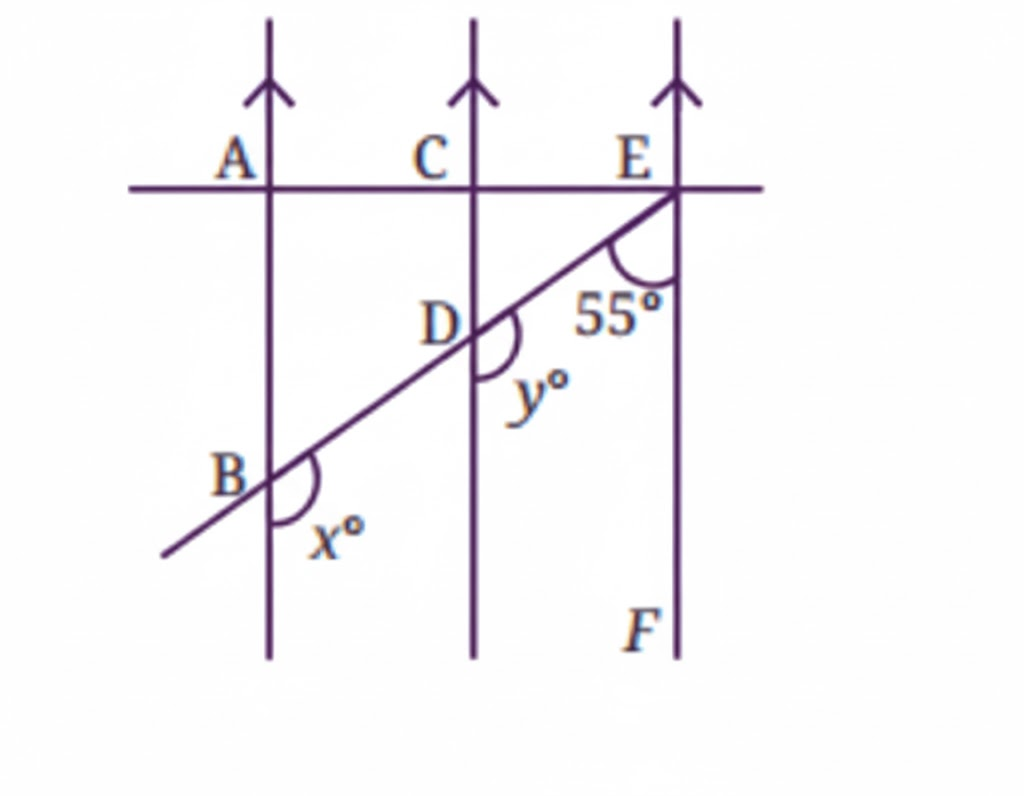
Solution:
Since AB ∥ CD and CD ∥ EF, it follows that AB ∥ EF.
Now, with EF ∥ CD and DE acting as a transversal,
the interior angles on the same side must add up to 180°:
y + 55° = 180°
So,
y = 125°
Next, since AB ∥ CD and BD is a transversal,
angles x° and y° are corresponding angles, and therefore equal:
x = y = 125°
Question 6.
What is the measure of angle ∠NOP in the given figure?
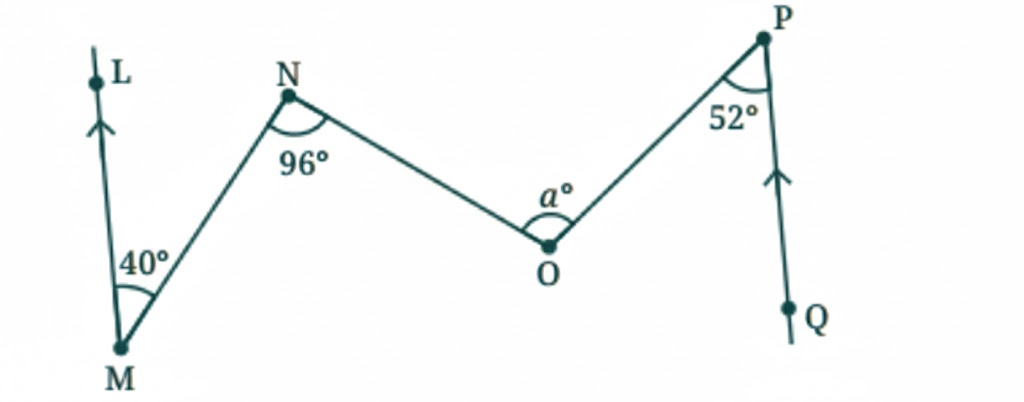
[Hint: Draw lines parallel to LM and PQ through points N and O]
Solution:
Draw a line RS through N, which is parallel to line LM, and line TU through O, which is parallel to line PQ.
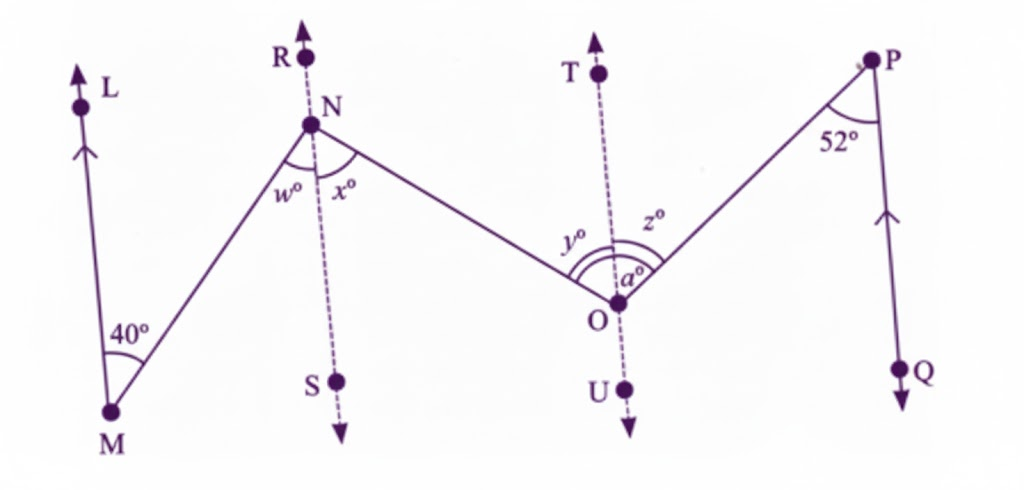
∠LMN = ∠MNS because they are alternate interior angles.
So,
w = 56°
Given: ∠MNO = 96°
Angles w° and x° lie on a straight line with ∠MNO, so:
w + x = 96°
56° + x = 96°
x = 96° – 56° = 40°
Now, RS ∥ TU, and NO is a transversal.
So, ∠SNO and ∠NOT are alternate interior angles, hence:
y = x = 40°
Next, TU ∥ PQ, and OP is a transversal.
So, ∠TOP and ∠OPQ are alternate angles:
Given ∠OPQ = 52°,
So,
z = 52°
Finally,
a = y + z
= 40° + 52°
= 92°
Parallel Illusions
NCERT In-Text Questions (Page 125)
There do not seem to be any parallel lines here. Or, are there?
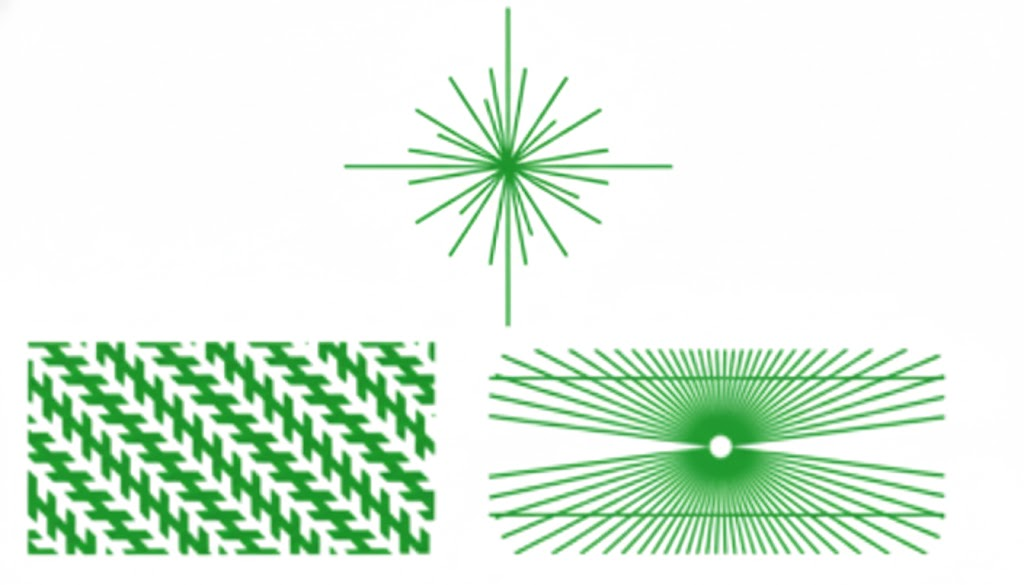
What causes these illusions?
Solution:
(a) At first glance, the image may look like a confusing arrangement of lines pointing in many directions, making it seem as if none of the lines are straight or parallel. But a closer observation reveals that the vertical lines are actually perfectly straight, evenly spaced, and parallel to one another.
The other lines in the picture spread out like spokes of a wheel, slanting outward and meeting at a central point. These slanted lines are not parallel. Because of how they tilt and intersect with the vertical lines, our eyes get tricked into thinking that the vertical lines are bending or slanting.
This effect is called an optical illusion. The angled lines create a false sense of distortion, and the strong focal point at the centre pulls our attention toward it, making it harder to focus on the perfectly parallel vertical lines.
(b)
At first glance, this pattern seems to be full of slanted or zigzag lines, and the bold black shapes create a distracting background. Because of this, the horizontal white lines appear tilted or uneven. But if we focus only on the white spaces, we notice that the horizontal white lines are actually parallel to one another.
The reason they do not look parallel is because the strong, slanted black shapes break the continuity of the white lines. These shapes interfere with our visual perception and trick our brain into thinking that the lines are shifting or sloping. This is an example of an optical illusion, where the surrounding shapes distort how we interpret the actual straight and parallel lines.
(c)
When we first look at this image, it may seem like no lines are parallel. The shape looks curved, the lines appear bent, and everything seems to be pulled toward the centre. However, the two horizontal lines at the top and bottom are actually perfectly straight and parallel.
This is another classic optical illusion. The many diagonal lines radiating from the centre—similar to the spokes of a wheel—create a false sense of depth. These radiating lines distort the background, making our brains perceive the horizontal lines as curving inward. The illusion is so strong that the ends of the lines appear tilted, even though they are not.
If we place a ruler along the horizontal lines, we can confirm that they are indeed straight and parallel—the illusion simply tricks our eyes into seeing a curve where none exists.
Understanding Parallel and Intersecting Lines
Mastering the concepts of parallel lines and intersecting lines is key to scoring well in Maths exams. With a clear understanding and regular practice, you can easily solve all related questions.
This chapter helps students identify corresponding, alternate, and vertically opposite angles in various diagrams. Paying attention to these angle relationships will make geometry problems much simpler for you.
Practice using NCERT solutions for Class 7 Maths Chapter 5 to enhance your problem-solving skills. Focus on important theorems and drawing neat diagrams to boost your confidence and exam scores.
FAQs on NCERT Solutions For Class 7 Maths Chapter 5 Parallel & Intersecting Lines - 2026-27 Free PDF Download (Login Required)
1. What are NCERT Solutions for Class 7 Maths Chapter 5: Parallel and Intersecting Lines?
NCERT Solutions for Class 7 Maths Chapter 5: Parallel and Intersecting Lines provide fully solved, stepwise answers for all textbook exercises, helping students master key concepts.
Main features include:
- Detailed solutions for every question in Chapter 5
- Clear definitions of parallel lines, intersecting lines, and related terms
- Diagrams and labelling tips for accurate answers
- Aligned to the 2026–27 CBSE syllabus for Class 7 Maths
- Free, downloadable PDF format for offline study
2. How do stepwise NCERT Solutions help Class 7 students score better in Maths exams?
Stepwise NCERT Solutions ensure students write answers in a manner that matches the CBSE marking scheme, leading to higher scores.
Benefits include:
- Allocation of marks for each step
- Increased clarity and logical flow in answers
- Higher chances of securing full marks
- Helps avoid missing out on steps or keywords
- Makes revision easier using clear solutions
3. Are diagrams and definitions compulsory in Class 7 Maths Chapter 5 answers?
Yes, including neat diagrams and precise definitions is essential for scoring full marks in Chapter 5.
Best practices:
- Always draw and label diagrams for questions involving lines, points, or angles
- Start answers with correct definitions where required
- Use geometrical conventions for lines and points
- Diagrams help in visual understanding and attract step marks
4. Where can I download the NCERT Solutions for Class 7 Maths Chapter 5 PDF?
You can easily download the free PDF of Class 7 Maths Chapter 5 NCERT Solutions from trusted educational websites.
Steps:
- Look for the download button on the solutions page
- Choose the 2026–27 syllabus
- PDF includes exercise-wise, stepwise answers for offline study
5. What are the most important definitions and formulae from Class 7 Maths Chapter 5?
The crucial definitions and formulae from Chapter 5 include:
Key terms:
- Parallel Lines: Lines that never meet, even if extended infinitely.
- Intersecting Lines: Lines that cross at exactly one point.
- Transversal, Angle Pairs: Alternate, corresponding, and interior angles.
- Basic formulae relate to angle sums formed by these lines.
Remember to write these accurately for full marks.
6. How can I revise Class 7 Maths Chapter 5 Parallel and Intersecting Lines quickly before exams?
Quick revision of Chapter 5 is possible by focusing on key concepts, diagrams, and step-by-step solved questions.
Revision plan:
- Day 1: Revise definitions and basic concepts
- Day 2: Practice exercise-wise solutions and diagrams
- Day 3: Solve important questions and take mock tests
- Use flash notes and summary tables for quick recall
7. Which questions from Class 7 Maths Chapter 5 are most likely to appear in CBSE exams?
CBSE exams often include questions from definitions, simple construction, and application of properties in Chapter 5.
Likely question types:
- Define parallel and intersecting lines
- Identify angles formed by a transversal
- Draw and label diagrams
- Prove lines are parallel using angle properties
- Name pairs of parallel and intersecting lines from a given figure
8. How should Class 7 students write long answers for Parallel and Intersecting Lines to maximise exam marks?
For long answers, structure your solution with definitions, labelled diagrams, and stepwise explanations.
Tips for full marks:
- Start with a clear definition
- Use a neat, labelled diagram
- Explain each step logically and in the order asked
- Highlight key terms (like parallel lines, transversal, etc.)
- Conclude with the required statement (e.g., reasons or proof)
9. Are NCERT Solutions enough for Class 7 Maths exams?
NCERT Solutions provide a strong foundation as they cover all textbook questions in a CBSE-aligned manner.
To score even better:
- Complete all NCERT textbook exercises
- Practice extra questions and previous year papers
- Use exemplar problems for higher-order thinking
- Revise definitions, formulae, and diagrams regularly
10. Do examiners award partial marks for correct steps even if the final answer is wrong?
Yes, as per CBSE marking scheme, partial marks are awarded for all correct steps shown, even if the final answer is incorrect.
Tips:
- Always show all steps clearly
- Use correct mathematical reasoning
- Write formulae and working wherever needed
- This ensures you get marks for your process, not just the final answer
11. What topics does Chapter 5 Parallel and Intersecting Lines cover in Class 7 Maths?
Chapter 5 covers the basic properties, definitions, and differences between parallel and intersecting lines.
Main topics:
- Parallel lines, intersecting lines
- Drawing and identifying lines in figures
- Properties of angles formed by transversals
- Real-life examples and application-based problems
12. How do you label diagrams in Class 7 Maths Chapter 5 for full marks?
Labelling diagrams accurately is crucial for scoring well in Maths Chapter 5.
Checklist:
- Draw straight lines using a ruler
- Name lines (like AB, CD) and points clearly
- Mark angles if required
- Use correct geometric conventions
- Keep diagrams clean and clear for examiner readability
