



Exercise-wise NCERT Answers for The Travellers II Class 5 Maths
NCERT Textbook Page 42
Making Sums Equal
In each of the following, there are two groups of numbers. Look carefully at the numbers in each group and their sums. Interchange pairs of numbers between the two groups to make their sums equal. Try to do this using the least number of moves. You could write each number on a small piece of paper.
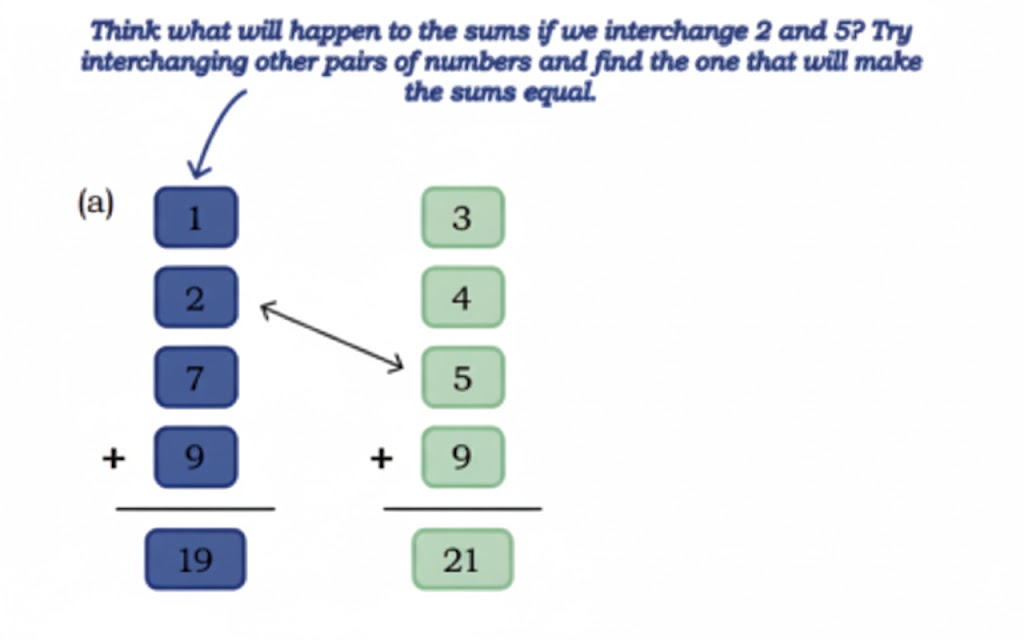
Solution:
The sum of the numbers on the left side is
1+2+7+9=191 + 2 + 7 + 9 = 191+2+7+9=19.
The sum of the numbers on the right side is
3+4+5+9=213 + 4 + 5 + 9 = 213+4+5+9=21.
The difference between the two sums is
21−19=221 - 19 = 221−19=2.
To make the sums equal, the left side needs to increase by 1 and the right side needs to decrease by 1.
So, we interchange the numbers 2 and 3.
After interchanging:
Left side sum = 1+3+7+9=201 + 3 + 7 + 9 = 201+3+7+9=20
Right side sum = 2+4+5+9=202 + 4 + 5 + 9 = 202+4+5+9=20
(b)
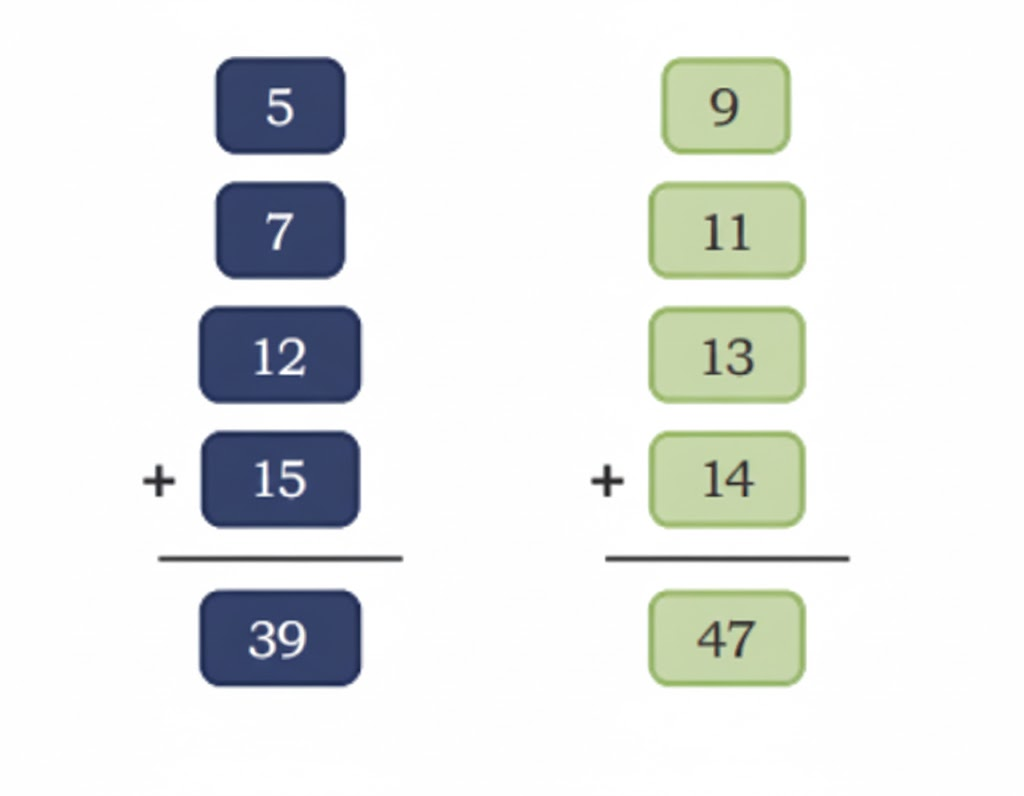
Solution:
The total of the numbers on the left side is
5+7+12+15=395 + 7 + 12 + 15 = 395+7+12+15=39.
The total of the numbers on the right side is
9+11+13+14=479 + 11 + 13 + 14 = 479+11+13+14=47.
The difference between the two sums is
47−39=847 - 39 = 847−39=8.
To balance the sums, the left side must increase by 4 and the right side must decrease by 4.
So, we interchange the numbers 7 and 11.
After swapping:
Left side sum = 5+11+12+15=435 + 11 + 12 + 15 = 435+11+12+15=43
Right side sum = 9+7+13+14=439 + 7 + 13 + 14 = 439+7+13+14=43
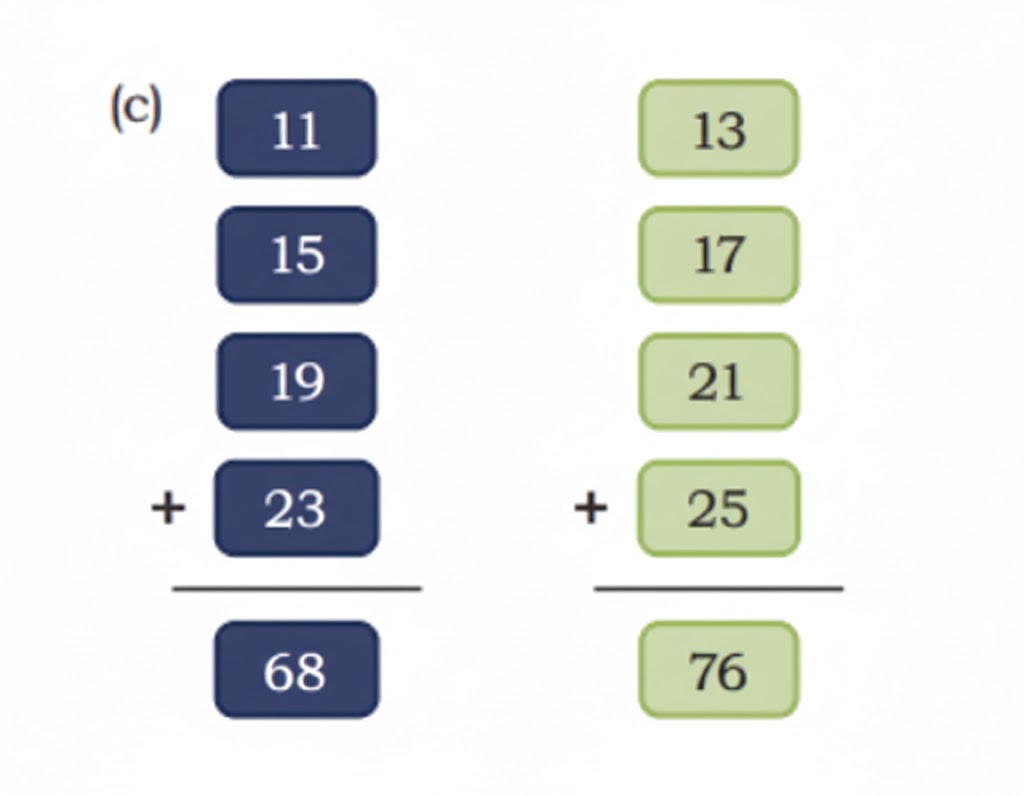
Solution:
The difference between the two sums is
76−68=876 - 68 = 876−68=8.
So, interchange 11 with 13 and 15 with 17 to make the sum on both sides equal to 72.
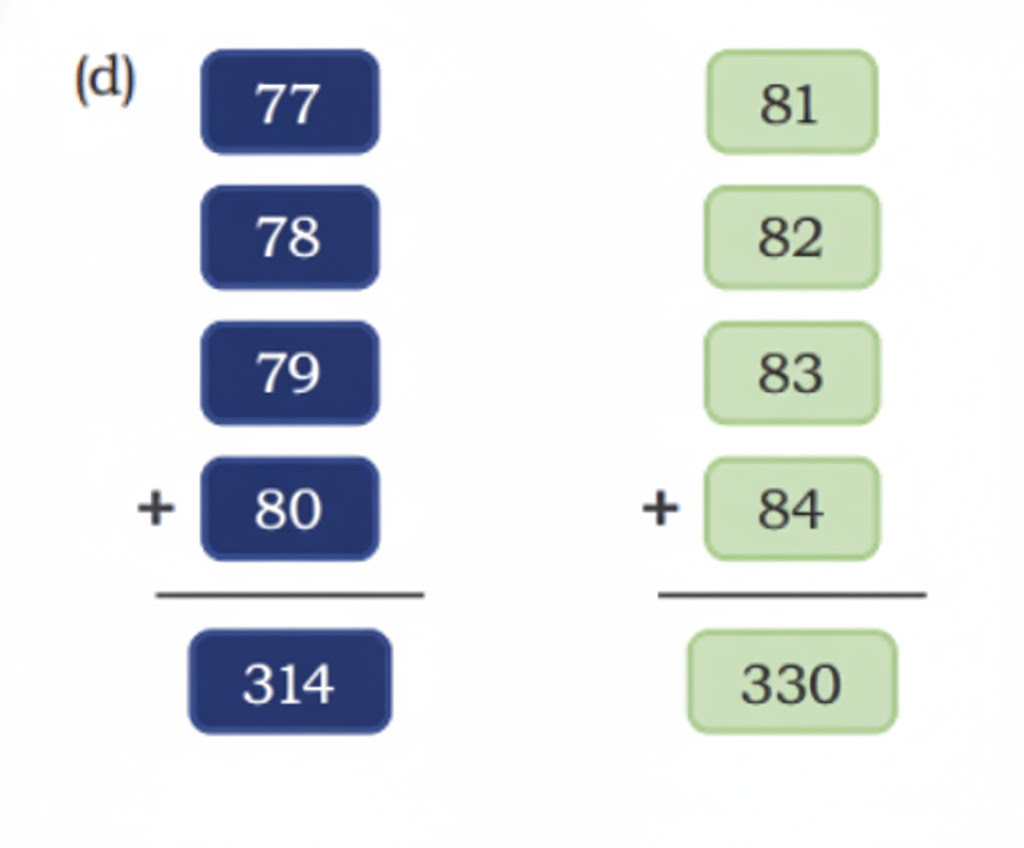
Solution:
Students should do it by themselves.
NCERT Textbook Page 43
Fuel Arithmetic
Question 1.
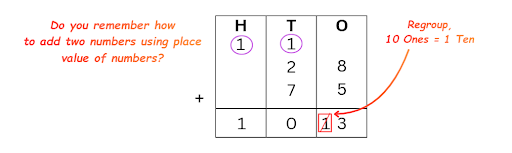
A lorry has 28 litres of fuel in its tank. An additional 75 litres is filled. What is the total quantity of fuel in the lorry?
Solution:
The total amount of fuel in the tank is 28 litres + 75 litres.
Question 2.
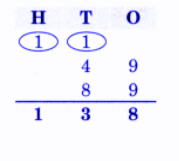
Find the sum of 49 and 89.
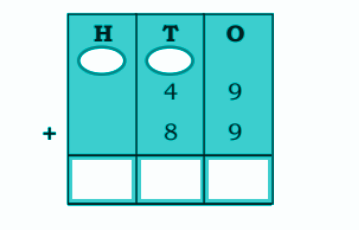
Solution:
Let Us Solve
Add the following numbers. Wherever possible, find easier ways to add the pairs of numbers.
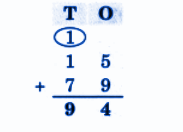
1. 15 + 79
Solution:
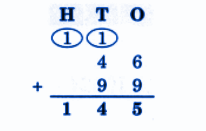
2. 46 + 99
Solution:
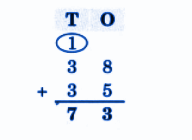
3. 38 + 35
Solution:
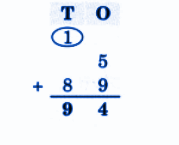
4. 5 + 89
Solution:
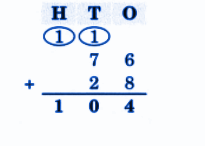
5. 76 + 28
Solution:
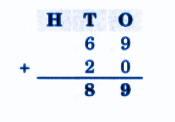
6. 69 + 20
Solution:
NCERT Textbook Page 44
Relationship Between Addition and Subtraction
Question 1.
Find the relationship between the numbers in the given statements and fill in the blanks appropriately.
(a) If 46 + 21 = 67, then,
67 – 21 = _______.
67 – 46 = _______.
Solution:
If 46 + 21 = 67 then,
67-21 = 46.
67-46 = 21.
(b) If 198 – 98 = 100, then,
100 + _______ = 198.
198 – _______ = 98.
Solution:
If 198-98 = 100, then,
100 + 98 = 198.
198 – 100 = 98.
(c) If 189 + 98 = 287, then,
287 – 98 = _______.
287 – 189 = _______.
Solution:
If 189 + 98 = 287 then,
287 – 98 = 189.
287 – 189 = 98.
(d) If 872 – 672 = 200, then,
200 + _______ = 872.
872 – _______ = 672.
Solution:
If 872 – 672 = 200 then,
200 + 672 = 872.
872 – 200 = 672.
Question 2.
In each of the following, write the subtraction and addition sentences that follow from the given sentence.
(a) If 78 + 164 = 242, then,
Solution:
If 78 + 164 = 242, then
242 – 78 = 164
242 – 164 = 78
(c) If 921 – 137 = 784, then,
Solution:
If 462 + 839 = 1301, then
1301 – 462 = 839
1301 – 839 = 462
(b) If 462 + 839 = 1301, then,
Solution:
If 921 – 137 = 784, then
784 + 137 = 921
921 – 784 = 137
(d) If 824 – 234 = 590, then,
Solution:
If 824- 234 = 590, then
824 – 590 = 234
590 + 294 = 824
NCERT Textbook Page 45
Let Us Solve
Question 1.
What is the difference between 82 and 37?
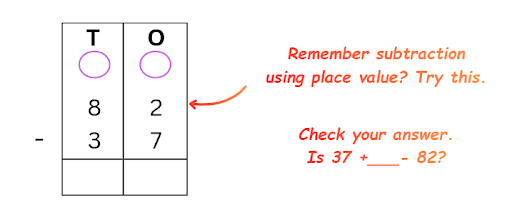
Solution:
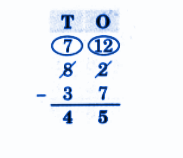
Check your answer. Is 37 + _____ = 82?
Solution:
Yes, 37 + 45 = 82.
Question 2.
57 – 11 = _____
Solution:
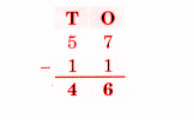
Check: 46 + 11 = 57
Question 3.
23 – 19 = _____
Solution:
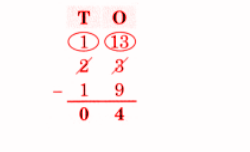
Check: 19 + 4 = 23
Question 4.
49 – 21 = _____
Solution:
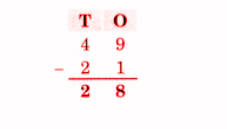
Check: 21 + 28 = 49.
Question 5.
56 – 18 = _____
Solution:
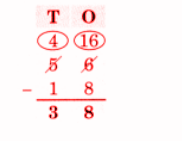
Check: 38 + 18 = 56
Question 6.
93 – 35 = _____
Solution:
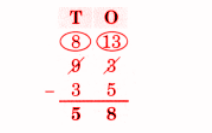
Check: 35 + 58 = 93
Question 7.
84 – 23 = _____
Solution:
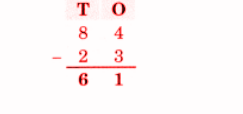
Check: 23 + 61 = 84
Question 8.
70 – 43 = _____
Solution:
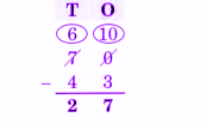
Check: 43 + 27 = 70
Question 9.
65 – 47 = _____
Solution:
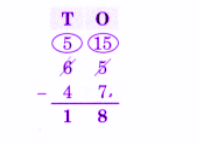
Check: 47 + 18 = 65
NCERT Textbook Pages 45-46
Sums of Consecutive Numbers
Numbers that follow one another in order : without skipping any number are called consecutive numbers. Here are some examples—
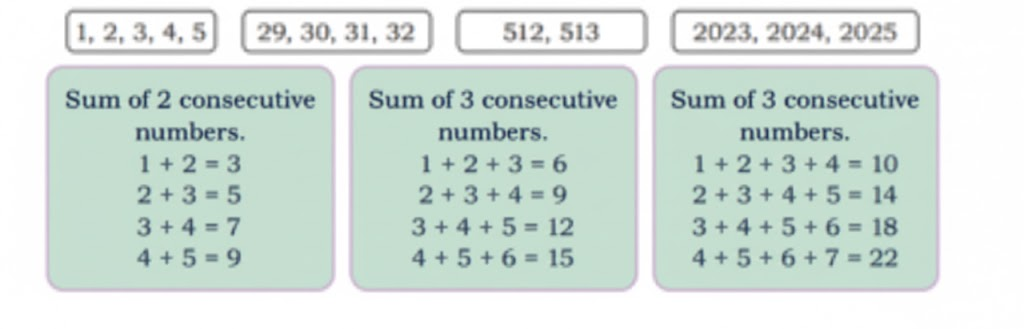
Question 1.
In each of the boxes above, state whether the sums are even or odd. Explain why this is happening.
Solution:
Box 1: Since even + odd = odd, and here one number is odd while the other is even, all the sums are odd.
Box 2: The sum of three consecutive numbers can follow the pattern even–odd–even or odd–even–odd. Therefore, the sum alternates between even and odd, depending on the starting number.
Box 3: The sum of four consecutive numbers is always even because it includes two odd numbers and two even numbers, and their total is always even. Hence, all the sums are even.
Question 2.
What is the difference between two successive sums in each box? Is it the same throughout?
Solution:
Box 1:
5−3=2, 7−5=2, 9−7=2.5 - 3 = 2,\; 7 - 5 = 2,\; 9 - 7 = 2.5−3=2,7−5=2,9−7=2.
The difference between each pair of successive sums is always 2, so the difference remains the same throughout.
Box 2:
9−6=3, 12−9=3, 15−12=3.9 - 6 = 3,\; 12 - 9 = 3,\; 15 - 12 = 3.9−6=3,12−9=3,15−12=3.
Here, the difference between successive sums is consistently 3, so it stays the same.
Box 3:
14−10=4, 18−14=4, 22−18=4.14 - 10 = 4,\; 18 - 14 = 4,\; 22 - 18 = 4.14−10=4,18−14=4,22−18=4.
In this case, the difference between successive sums is always 4, and it remains constant throughout.
Question 3.
What will be the difference between two successive sums for-
(a) 5 consecutive numbers
Solution:
1 + 2 + 3 + 4 + 5 = 15
2 + 3 + 4 + 5 + 6 = 20
3 + 4 + 5 + 6 + 7 = 25
Difference between two successive sums:
20 – 15 = 25 – 20 = 5
So, the difference is 5.
(b) 6 consecutive numbers
Solution:
1 + 2 + 3 + 4 + 5 + 6 = 21
2 + 3 + 4 + 5 + 6 + 7 = 27
3 + 4 + 5 + 6 + 7 + 8 = 33
Difference between two successive sums:
27 – 21 = 33 – 27 = 39 – 33 = 6.
So, the difference is 6.
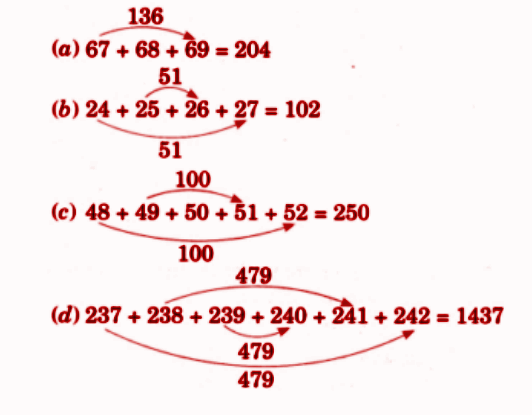
Find the following sums without adding the numbers directly.
(a) 67 + 68 + 69
(b) 24 + 25 + 26+ 27
(c) 48 + 49 + 50 + 51 + 52
(d) 237 + 238 + 239 + 240 + 241 + 242
Solution:
NCERT Textbook Page 48
Let Us Solve
Question 1.
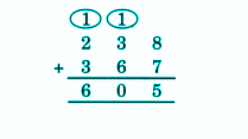
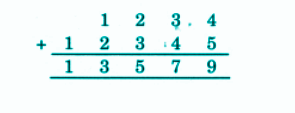
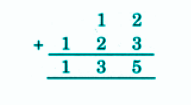
Find the following sums. Try not to write TTh, Th, H, T, and O at the top. Just align the digits properly, at least for the smaller numbers.
(a) 238 + 367
Solution:
(b) 1,234 + 12,345
Solution:
(c) 12 + 123
Solution:
(d) 46,120 + 12,890
Solution:
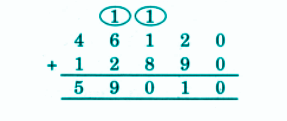
(e) 878 + 8,789
Solution:
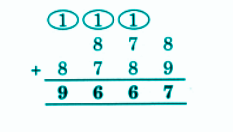
(f) 1,749 + 17,490
Solution:
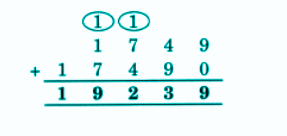
Question 2.
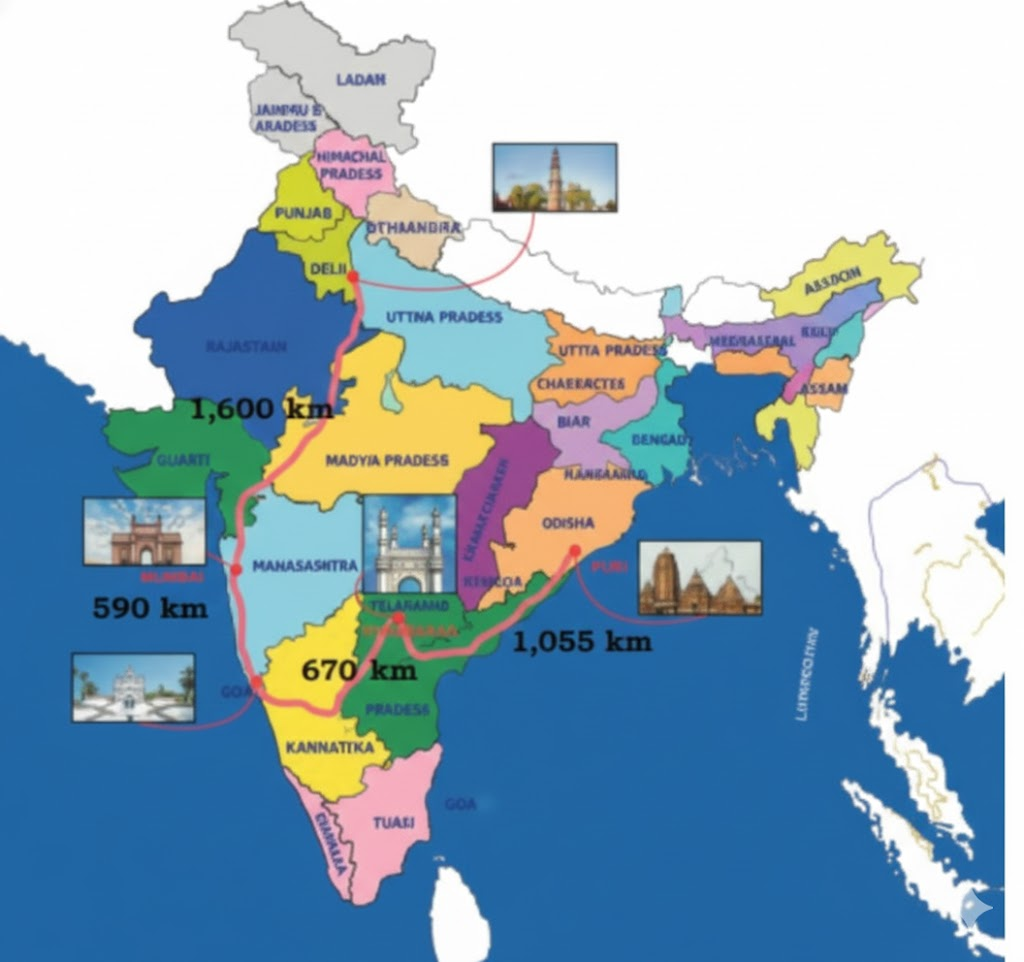
The great Indian road trip!
Nazrana and her friends planned a road trip across India, starting from Delhi. They first drove to Mumbai, then Goa, then Hyderabad, and finally Puri.
Look at the distances marked on the map and help them find the total distance travelled.
Solution:
According to the given map, the distances between the cities are:
Delhi to Mumbai: 1600 km
Mumbai to Goa: 590 km
Goa to Hyderabad: 670 km
Hyderabad to Puri: 1055 km
Adding these distances, the total distance is
1600+590+670+1055=39151600 + 590 + 670 + 1055 = 39151600+590+670+1055=3915 km.
So, the total distance travelled by Nazrana and her friends is 3,915 km.
Question 3.
Find 2 numbers among 5,205, 6,220, 7,095, 8,455, and 4,840 whose sum is closest to the following.
(а) 10,000
Solution:
5,205+4,840=10,045.
This total is closest to 10,000, while all other possible combinations give sums that are much greater than 10,000.
(b) 15,000
Solution:
6,220+8,455=14,675.
This total is closest to 15,000, while all other possible combinations result in sums that are much higher or much lower than 15,000.
(c) 13,000
Solution:
8,455+4,840=13,295.
This total is closest to 13,000, while all other possible combinations produce sums that are much higher or much lower than 13,000.
(d) 16,000
Solution:
7,095+8,455=15,550.
This total is closest to 16,000, while all other possible combinations give sums that are much lower than 16,000.
NCERT Textbook Pages 50-51
Let Us Solve
Question 1.
Subtract the following. Try not to write TTh, Th, H, T, and O at the top. Align the digits carefully.
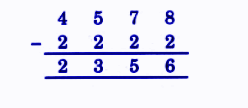
(a) 4,578 – 2,222
Solution:
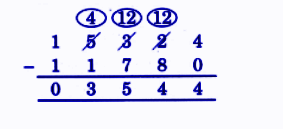
(b) 15,324- 11,780
Solution:
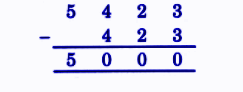
(c) 5,423 – 423
Solution:
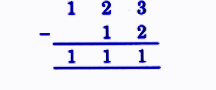
(d) 123 – 12
Solution:
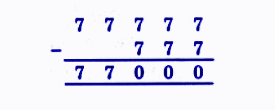
(e) 77,777 – -777
Solution:
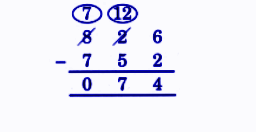
(f) 826 – -752
Solution:
Question 2.
Mary’s train journey to Delhi.
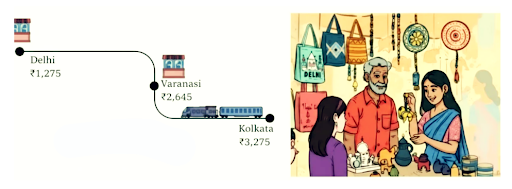
Mary is on a train journey. She starts from Kolkata with ₹ 12,540.
She spends ₹ 3,275 on food and other expenses during her trip to Varanasi. In Varanasi, her uncle gives her a gift worth ₹ 4,900. She then travels to Delhi, spending ₹ 2,645 on the train ticket. She spends ₹ 1,275 on souvenirs in Delhi. How much money is Mary left with at the end of the Delhi trip?
Solution:
(a) Mary began her journey from Kolkata with ₹12,540. She spent ₹3,275 on food and other expenses while travelling to Varanasi. In Varanasi, her uncle gifted her ₹4,900. After that, she spent ₹2,645 on a train ticket to Delhi and bought souvenirs in Delhi for ₹1,275.
The total money she had after receiving the gift was:
₹12,540 + ₹4,900 = ₹17,440
Her total expenses during the journey were:
₹3,275 + ₹2,645 + ₹1,275 = ₹7,195
So, the money left with Mary was:
₹17,440 − ₹7,195 = ₹10,245
Therefore, Mary had ₹10,245 remaining after completing her trip to Delhi.
Question 3.
Members of a school council have raised ₹ 70,500. They plan to setup a Maths Lab with some games and models worth ₹ 39,785, buy library books worth ₹ 9,545, and purchase sports equipment worth ₹ 19,548.
(a) Estimate whether the school council has raised enough money to make the purchases. Share your thoughts in the class.
(b) Check your estimate with calculations.
Solution:
(a) The estimated costs are as follows:
Amount required for the Math lab with games and models (₹39,785) is rounded to ₹40,000.
Amount required for library books (₹19,545) is rounded to ₹10,000.
Amount required for sports equipment (₹19,548) is rounded to ₹20,000.
The total estimated amount is:
₹40,000 + ₹10,000 + ₹20,000 = ₹70,000
The amount raised by the school council is ₹70,500, so the council has enough funds.
(b) Now, calculating the actual total cost:
₹39,785 + ₹9,545 + ₹19,548 = ₹68,878
The school council raised ₹70,500.
The remaining balance is:
₹70,500 − ₹68,878 = ₹1,622
Therefore, the school council will have ₹1,622 left after making all the purchases.
Question 4.
A truck can carry 8,250 kg of goods. A factory loads 3,675 kg of cement and 2,850 kg of steel on it.
(a) What is the total weight loaded onto the truck?
(b) How much more weight can the truck carry before reaching its maximum capacity?
Solution:
(a) The weight of the cement is 3,675 kg and the weight of the steel is 2,850 kg.
So, the total weight of cement and steel loaded onto the truck is:
3,675 kg + 2,850 kg = 6,525 kg
(b) The maximum load capacity of the truck is 8,250 kg.
The weight already loaded is 6,525 kg.
Therefore, the remaining load the truck can carry is:
8,250 kg − 6,525 kg = 1,725 kg
So, the truck can carry 1,725 kg more before reaching its maximum capacity.
NCERT Textbook Pages 51-52
Quick Sums and Differences
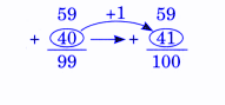
Sukanta likes the numbers 10, 100, 1,000, and 10,000. He wants to figure out what number he should add to a given number such that the sum is 100 or 1,000. Help him fill in the blanks with an appropriate number.
59 + _____ = 100
Try this method for the number 59.
Solution:
Now, use this method to solve the following.
877 + ________ = 1,000 and 666 + ________ = 1,000
4,103 + ________ = 10,000 and 5,555 + ________ = 10,000
Solution:
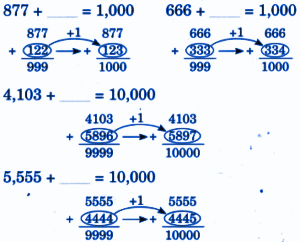
Will this method work if the units digit is 0? What do you think? What other methods can you use to find the missing number to fill in the blanks? Share your thoughts in the class.
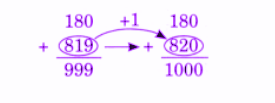
(a) 180 + ________ = 1,000
Solution:
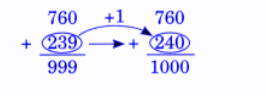
(b) 760 + ________ = 1,000
Solution:
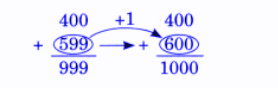
(c) 400 + ________ = 1,000
Solution:
(a) 180 + _____ = 1,000 9 10
_____ = 1,000 – 180
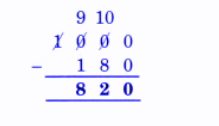
(b) 760 + _____ = 1,000
_____ = 1,000 – 760
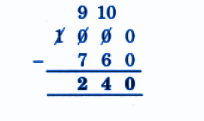
(c) 400 + = 1,000 10
_____ = 1,000 – 400
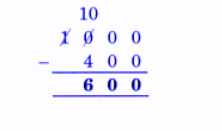
Rule: To find the missing number in an addition sentence like.
Known number + _____ = Total.
We can just subtract known number from total.
Namita likes the number 9. She wants to subtract 9 or 99 from any number. Find a way to quickly subtract 9 or 99 from any number.
(a) 67 – 9 = _____
Solution:
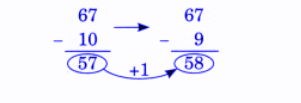
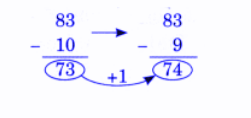
(b) 83 – 9 = _____
Solution:
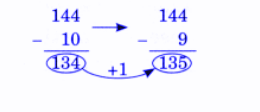
(c) 144 – 9 = _____
Solution:
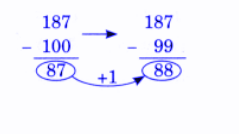
(d) 187 – 99 = _____
Solution:
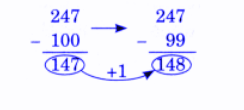
(e) 247 – 99 = _____
Solution:
(f) 763 – 99 = _____
Solution:
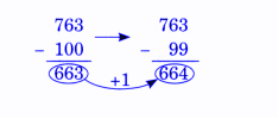
Rule: To subtract 9 or 99 from any number. Subtract 10 or 100 from the given number and add 1 in result.
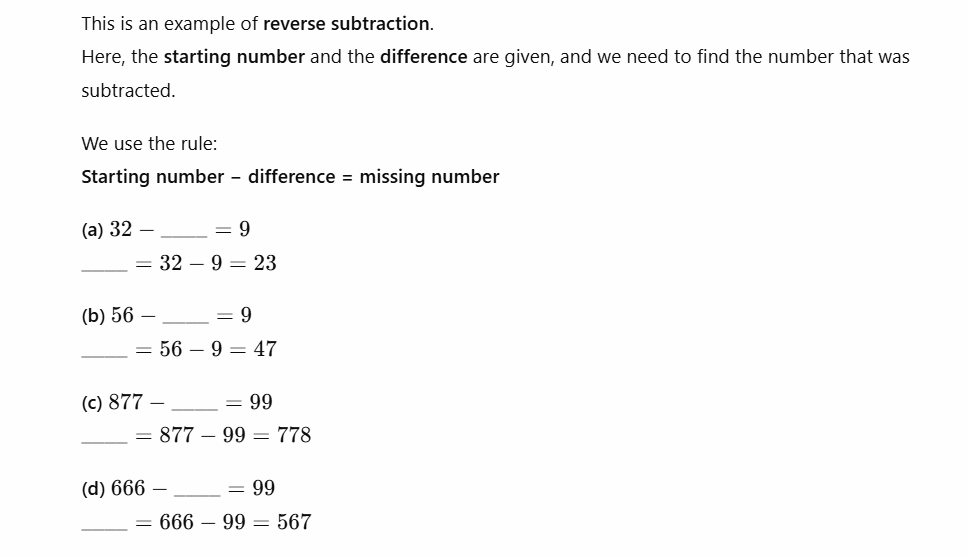
Namita wonders if she can get 9 or 99 as the answer to any subtraction problem. Find a way to get the desired answer.
(a) 32 – _____ =9
(b) 66 – _____ =9
(c) 877 – _____ = 99
(d) 666 – _____ = 99
Solution:
NCERT Textbook Page 53
Let Us Think and Solve
Question 1.
Nitin likes numbers that read the same when read from left to right or from right to left. Such numbers are called palindrome numbers. The numbers 22, 363, 404, and 8,558 are some examples.
List all palindrome numbers between 100 and 200.
List all palindrome numbers between 900 and 1,200.
List all palindrome numbers between 25,000 and 27,000.
Solution:
Palindrome numbers in the range 100 to 200 are:
101, 111, 121, 131, 141, 151, 161, 171, 181, and 191.
Palindrome numbers between 900 and 1,200 are:
909, 919, 929, 939, 949, 959, 969, 979, 989, 999, 1001, and 1111.
Palindrome numbers between 25,000 and 27,000 are:
25052, 25152, 25252, 25352, 25452, 25552, 25652, 25752, 25852, 25952, 26062, 26162, 26262, 26362, 26462, 26562, 26662, 26762, 26862, and 26962.
Question 2.
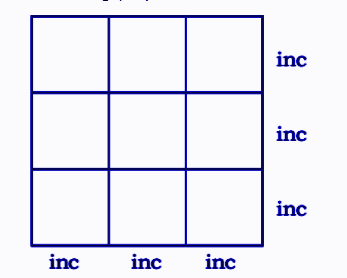
In a 3 × 3 grid, arrange the numbers 1 to 9 such that each row and each column has numbers in an increasing (inc) order. Each number should be used only once.
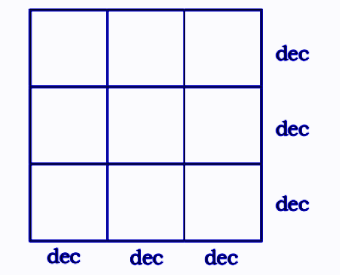
This time, fill the grid such that each row and column has numbers in decreasing (dec) order.
Now, fill the grids below with numbers (1-9) based on the inc (increasing) and dec (decreasing) conditions, as indicated below.
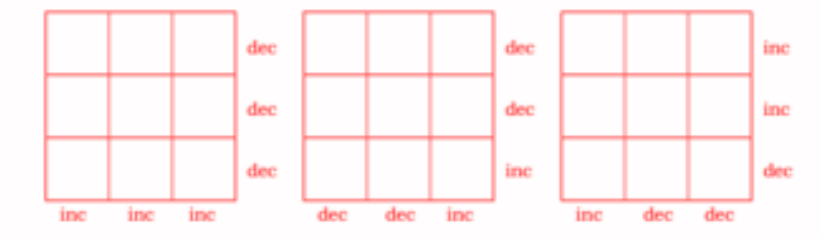
Solution:
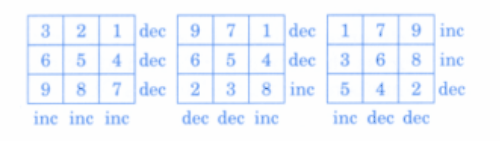
Answers might be different
NCERT Textbook Page 54
Even and Odd Numbers
Question 1.
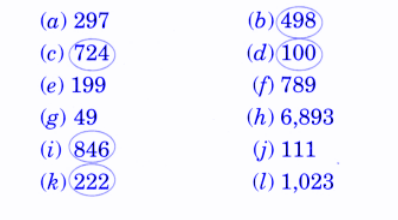
Circle the numbers that are even.
(a) 297
(b) 498
(c) 724
(d) 100
(e) 199
(f) 789
(g) 49
(h) 6,893
(i) 846
(j) HI
(k) 222
(l) 1,023
Solution:
A number is called even if its ones digit is 0, 2, 4, 6, or 8.
Question 2.
Observe the given arrangement.

Add 2 to 18. What changes or does not change in the arrangement?
Add 2 to 23. What changes or does not change in the arrangement?
Solution:
In the first arrangement, the 18 circles can be paired completely. Since every circle has a partner, 18 is an even number.
In the second arrangement, the 23 circles cannot all be paired, and one circle remains unpaired. Therefore, 23 is an odd number.
When 2 is added to 18, all the circles can still be paired, so the arrangement remains the same.
Similarly, when 2 is added to 23, one circle is still left unpaired, so the arrangement also remains unchanged.
Question 3.
What do you notice about the sums in each of the following cases? Do you think it will be true for all pairs of such numbers? Explain your observations. You may use the paired arrangement to explain your thinking.
(a) 12 and 6 are a pair of even numbers. Choose 5 such pairs of even numbers. Add the numbers in each of the pairs.
Solution:
12 and 6 are both even numbers.
Below are five examples of pairs of even numbers along with their sums:
6+8=146 + 8 = 146+8=14
4+8=124 + 8 = 124+8=12
2+10=122 + 10 = 122+10=12
4+12=164 + 12 = 164+12=16
10+8=1810 + 8 = 1810+8=18
Answers might be different
We observe that adding two even numbers always gives an even sum.
Rule: Even number + even number = even number.
(b) 13 and 9 are a pair of odd numbers. Choose 5 such pairs of odd numbers. Add the numbers in each of the pairs.
Solution:
13 and 9 are both odd numbers.
Here are five examples of pairs of odd numbers along with their sums:
19+9=2819 + 9 = 2819+9=28
11+7=1811 + 7 = 1811+7=18
5+15=205 + 15 = 205+15=20
13+7=2013 + 7 = 2013+7=20
5+19=245 + 19 = 245+19=24
(Answers might be different)
We observe that adding two odd numbers always results in an even number.
Rule: Odd number + odd number = even number.
(c) 7 and 12 are a pair of odd and even numbers. Choose 5 such pairs of odd and even numbers. Add the numbers in each of the pairs.
Solution:
7 and 12 form a pair of an odd and an even number.
Here are five examples of such odd–even pairs along with their sums:
3+4=73 + 4 = 73+4=7
9+12=219 + 12 = 219+12=21
12+11=2312 + 11 = 2312+11=23
7+10=177 + 10 = 177+10=17
11+6=1711 + 6 = 1711+6=17
We observe that adding an odd number and an even number always results in an odd number.
Rule: Odd number + even number = odd number
or
Even number + odd number = odd number.
NCERT Textbook Pages 54-55
Let Us Think
Question 1.
Jincy opened her piggy bank. She found 8 coins of ₹ 1, 9 coins of ₹ 2 and 5 coins of ₹ 5. She wants to buy stickers worth ₹ 38. What possible combination of coins can she use to pay the exact amount?
Solution:
Jincy has the following coins:
₹1 × 8 = ₹8
₹2 × 9 = ₹18
₹5 × 5 = ₹25
So, the total amount she has is:
₹8 + ₹18 + ₹25 = ₹51
She wants to buy stickers costing ₹38, so she needs to pay ₹38.
One possible combination of coins she can use is:
₹5 × 5 = ₹25
₹2 × 6 = ₹12
₹1 × 1 = ₹1
Total = ₹25 + ₹12 + ₹1 = ₹38
Another possible combination is:
₹5 × 4 = ₹20
₹2 × 5 = ₹10
₹1 × 8 = ₹8
Total = ₹20 + ₹10 + ₹8 = ₹38
Answers might be different
Question 2.
Raghu is fond of his grandfather’s torch. He starts playing with it. He presses the switch once and the light turns ON. He presses it a second time and the light turns OFF. He presses the switch a third time and the light turns ON. He keeps doing this several times. Will the torch be ON or OFF after the 23rd press? How do you know?
For what number of presses will the torch be ON? For what number of presses of the switch will the torch be OFF?
Solution:
Raghu keeps pressing the switch repeatedly.
Each time he presses it, the torch changes its state. The pattern is as follows:
1st press → Torch turns ON
2nd press → Torch turns OFF
3rd press → Torch turns ON
4th press → Torch turns OFF, and so on.
From this pattern, we observe that after an odd-numbered press, the torch is ON, and after an even-numbered press, it is OFF.
Since 23 is an odd number, the torch will be ON after the 23rd press.
Question 3.
Mountain climbing
Priyanka Mohite is the first Indian woman to climb five Himalayan peaks above 8,000 metres. In addition to that, she has also climbed mountain peaks in other parts of the world. Read the table below and answer the questions that follow.
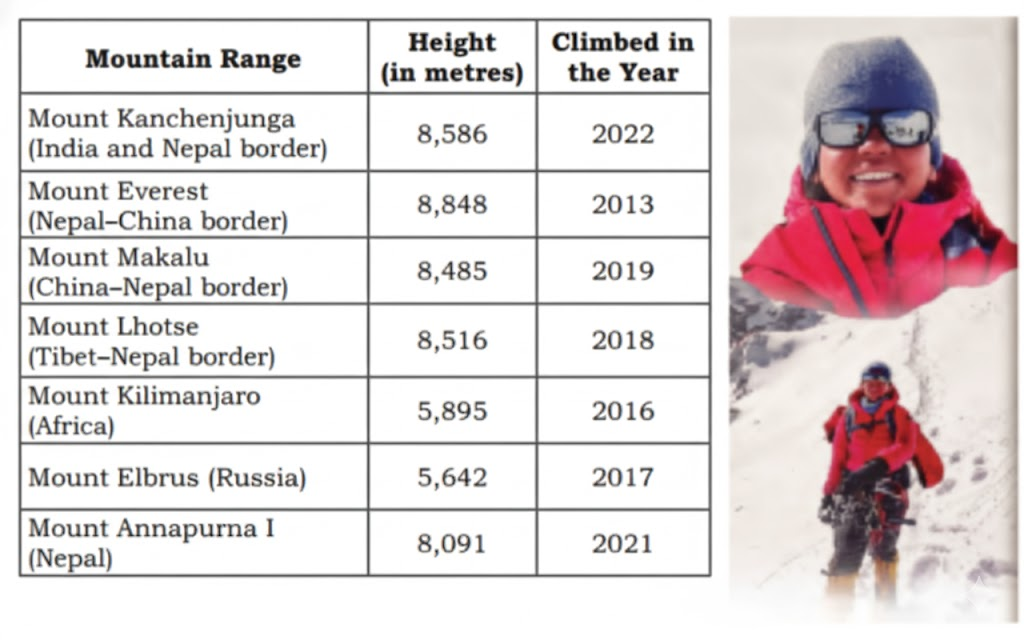
(a) Which is the highest peak she climbed?
Solution:
The highest peak she climbed was Mount Everest, which has a height of 8,848 metres.
(b) What is the difference in height between the highest and lowest peaks she has climbed, as per the table.
Solution:
The height of the highest peak, Mount Everest, that she climbed is 8,848 m.
The height of the lowest peak, Mount Elbrus, is 5,642 m.
The difference in height is:
8,848 − 5,642 = 3,206 m.
(c) What is the difference between heights of Mount Elbrus and Mount Kanchenjunga?
Solution:
The height of Mount Elbrus is 5,642 m, and the height of Mount Kanchenjunga is 8,586 m.
The difference in their heights is:
8,586 − 5,642 = 2,944 m.
(d) If Priyanka was 20 years old when she summited Mount Everest in 2013, in which year was she born?
Solution:
Priyanka was 20 years old in 2013.
So, her year of birth is 2013 − 20 = 1993.
Therefore, she was born in 1993.
NCERT Textbook Page 56
Math Metric Mela
A grand Math Metric Mela was held at the district level to celebrate young math whizzes. Every participating student was to receive a certificate of participation. The organisers got certificates printed for each district before the Mela. The number of certificates printed and the number of students who attended the competition in each district are as follows.
For each district, find out if the number of certificates were sufficient?
If insufficient, calculate how many certificates fell short.
If extra, calculate how many certificates were in excess.
Solution:
In Chittoor, A.P.:
The number of certificates printed was 18,225, while 18,104 students attended. Since 18,225 is greater than 18,104, the certificates were sufficient.
The number of extra certificates was 18,225 − 18,104 = 121.
In Jaunpur, U.P.:
The number of certificates printed was 19,043, and 19,265 students attended. Since 19,043 is less than 19,265, the certificates were insufficient.
The shortage of certificates was 19,265 − 19,043 = 222.
In Raigad, Maharashtra:
The number of certificates printed was 20,863, while 19,974 students attended. Since 20,863 is greater than 19,974, the certificates were sufficient.
The number of extra certificates was 20,863 − 19,974 = 889.
Let Us Do
Question 1.
Add’.
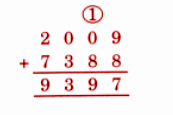
(a) 2,009 + 7,388
Solution:
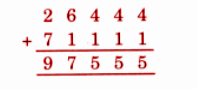
(b) 26,444 + 71,111
Solution:
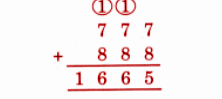
(c) 777 + 888
Solution:
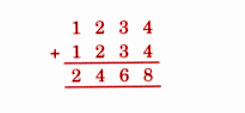
(d) 1,234 + 1,234
Solution:
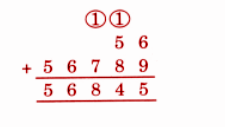
(e) 56 + 56,789
Solution:
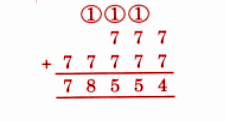
(f) 777 + 77,777
Solution:
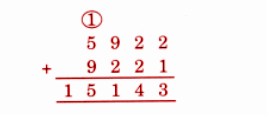
(g) 5,922 + 9,221
Solution:
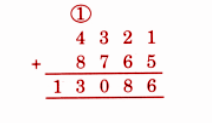
(h) 4,321 + 8,765
Solution:
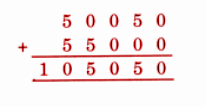
(i) 50,050 + 55,000
Solution:
Question 2.
Subtract.
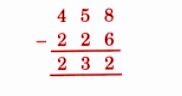
(a) 458 – 226
Solution:
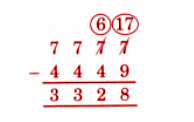
(b) 7,777 – 4,449
Solution:
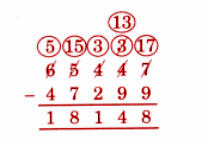
(c) 65,447 – 47,299
Solution:
(d) 1,234 – 123
Solution:
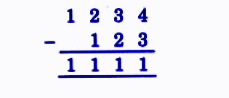
(e) 12,345 – 1,234
Solution:
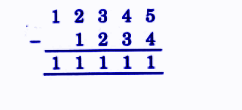
(f) 56,789 – 56
Solution:
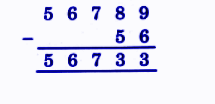
(g) 87,326 – 11,111
Solution:
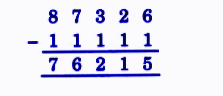
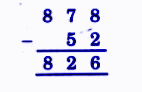
(h) 878 – 52
Solution:
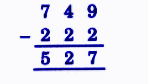
(i) 749 – 222
Solution:
Question 3.
Ambrish saved ₹ 92,375 over a year to buy cows and goats. He buys a cow for ₹ 26,000 and a goat for ₹ 17,000. He also buys a milking machine for ₹ 19,873. Does he have enough money to buy these? How much more or less does he have than he needs?
Solution:
Ambrish has saved ₹92,375.
The total cost of the cow and the goat is ₹26,000 + ₹17,000 = ₹43,000.
The cost of the milking machine is ₹19,873.
So, the total expenditure is:
₹43,000 + ₹19,873 = ₹62,873
Since ₹92,375 is greater than ₹62,873, Ambrish has enough money to make the purchases.
The remaining amount is:
₹92,375 − ₹62,873 = ₹29,502
Therefore, Ambrish will be left with ₹29,502 after the purchase.
Question 4.
A factory produces 54,000 nuts and bolts in a day. An order is placed for 85,300 nuts and bolts. How many more nuts and bolts does the factory need to produce to complete the order?
Solution:
The total order for nuts and bolts is 85,300 units.
The number already produced is 54,000 units.
So, the remaining number of nuts and bolts that need to be produced to complete the order is:
85,300 − 54,000 = 31,300 units.
Question 5.
Virat Kohli has scored 27,599 runs. He has 6,758 runs less than Sachin Tendulkar. How many runs has Sachin Tendulkar scored?
Solution:
Virat Kohli has scored 27,599 runs.
He has scored 6,758 runs fewer than Sachin Tendulkar.
Therefore, the number of runs scored by Sachin Tendulkar is:
27,599 + 6,758 = 34,357.
Mastering Addition and Subtraction in The Travellers—II
The NCERT Solutions for Class 5 Maths Mela Chapter 4 The Travellers—II (2026-27) build a solid foundation in large number addition and subtraction. With clear methods and fun examples, students learn important strategies for problem-solving in mathematics.
Practice with chapter-wise NCERT solutions helps you recognize number patterns, place value techniques, and connections between addition and subtraction. These concepts are essential for understanding more advanced topics in mathematics.
Regular revision of exercise-based questions from NCERT Class 5 Maths Mela Chapter 4 is a smart way to improve speed and accuracy. Focus on mental math tricks for faster calculations and ace your exams with confidence!
FAQs on NCERT Solutions For Class 5 Maths Chapter 4 We The Travellers-Ii - 2026-27 Free PDF Download (Login Required)
1. What is covered in NCERT Solutions Class 5 Maths Mela Chapter 4 The Travellers—II?
NCERT Solutions Class 5 Maths Mela Chapter 4 The Travellers—II provides stepwise answers to all exercise and intext questions, matching CBSE 2026–27 requirements.
- Complete stepwise solutions for every question
- Clear diagrams and exam-aligned explanations
- Definitions, formulae, and important concepts
- Helpful for scoring full marks in CBSE Class 5 Maths exams
2. How to score full marks in The Travellers II?
To score full marks in Class 5 Maths Chapter 4 The Travellers II, students should follow structured steps:
- Write stepwise answers as shown in NCERT Solutions
- Include clear diagrams and labels where needed
- Use keywords and definitions from the syllabus
- Show all calculation steps for stepwise marking
- Revise important topics and practice with sample questions
3. Is diagram compulsory in class 5 maths chapter 4?
Diagrams are often required in answers for Chapter 4, especially for questions involving measurements or journey maps.
- Use neat, well-labelled diagrams for full marks
- Diagrams help illustrate concepts like distance or directions
- Always check if your answer includes a visual component in the textbook or solutions
- Marking schemes may allocate specific marks for diagrams
4. Where to get pdf of NCERT solutions class 5 maths?
You can download the free PDF of NCERT Solutions for Class 5 Maths Chapter 4 from trusted educational platforms.
- Look for the “Free PDF Download” button on the solutions page
- PDF covers all stepwise answers, diagrams, and revision notes
- Use the PDF for offline study and quick revision before exams
5. What are key concepts in Chapter 4 The Travellers II?
Class 5 Maths Chapter 4 The Travellers II focuses on:
- Distance, Time, and Measurement
- Reading and drawing maps or routes
- Stepwise problem solving using real-life travel scenarios
- Application of basic arithmetic in practical journeys
- Understanding directions and landmarks
6. What is the marking scheme for chapter 4?
The marking scheme for Class 5 Maths Chapter 4 is based on stepwise accuracy, correct diagrams, and key terms.
- 1–2 marks for definitions or direct answers
- 2–4 marks for stepwise solutions
- Separate marks for diagrams/maps if asked
- Additional marks for using correct keywords and calculation steps
- Always break answers into neat, labelled steps for best marks
7. How to present long answers to match CBSE marking?
For long answers in CBSE Class 5 Maths:
- Write in logical steps, each step on a separate line
- Show all calculations and working
- Add diagrams or maps if relevant, and label them neatly
- Use headings or underline important keywords
- Check marking scheme to include all required points
8. How to learn diagrams/maps for this chapter?
To master diagrams and map questions in Chapter 4:
- Practice by drawing maps/diagrams from the textbook and solutions
- Label directions (North, South, East, West) and important points
- Use a ruler for neatness and clarity
- Revise common labels and symbols before exams
9. Are NCERT Solutions enough for Class 5 Maths exams?
NCERT Solutions provide comprehensive coverage for exam preparation.
- They follow the latest CBSE syllabus
- Include stepwise answers and important topics
- Useful for concept clarity and practice
- Supplement with practice questions for extra confidence
10. Where can I get chapterwise solutions PDF for offline study?
Chapterwise solutions PDFs for Class 5 Maths NCERT can be downloaded from reliable educational websites.
- Look for the ‘Download PDF’ option on the solutions page
- Ensure you select the latest academic year (2026–27) PDF
- Use PDFs for offline revision and preparation anytime
11. What are the most important topics from this chapter?
The most important topics from Class 5 Maths Chapter 4 are:
- Calculating distance and time using real-life examples
- Drawing and interpreting travel maps
- Stepwise problem solving involving routes and journeys
- Labelling diagrams and following directions
- Understanding and applying key definitions
12. Do examiners award partial marks for correct steps even if the final answer is wrong?
Yes, CBSE marking scheme gives partial marks for correct steps and method, even if the final answer is incorrect.
- Always write each calculation step clearly
- Show full working and reasoning
- Attempt every part of the question to gain possible marks
- Even with a small mistake, you can score for method and presentation
