



Step-by-step Answers and Tips for Food for Health Class 4 EVS
Write (Page 74)
Can you think of at least five ingredients or food items that match each of the tastes listed below? Write them down in the spaces provided. See the example given below:
Answer:
Discuss (Page 74)
Discuss in small groups and identify the food items having at least three different tastes.
Answer:
Some food items that contain three or more different tastes are:
Sambar: It has a mix of sour, salty, and spicy flavours.
Bhel puri: It tastes sweet, sour, and salty.
Chutney: It usually has sour, salty, and spicy flavours.
Pickle: It is mainly sour and salty, and sometimes has a bitter taste.
Fruit salad with chaat masala: It combines sweet, sour, and spicy flavours.
Find Out (Page 75)
Find out more about a millet-based food prepared at your home.
Answer:
At my home, we prepare ragi dosa, which is made from ragi flour—a type of millet. It is usually eaten with chutney or sambar. Ragi is rich in nutrients and is very beneficial for good health.
Discuss (Page 75)
Why do we need to eat different kinds of food items?
Answer:
We should eat a variety of foods because each type provides different nutrients. These nutrients help our body grow, give us energy, and keep us healthy. A balanced diet makes our body strong and helps protect us from many illnesses.
Discuss (Page 77)
What happens if we eat food from a single group of foods everyday.
Answer:
If we eat foods from only one food group every day, our body does not receive all the nutrients it requires. This can make us weak, unhealthy, and more prone to illnesses.
Write (Page 78)
Question 1.
Can you name a few more junk food items?
Answer: Some other examples of junk food include French fries, doughnuts, cookies, cakes, pastries, samosas, ice cream, and similar items.
Question 2.
Why do you think we should avoid eating junk food?
Answer: We should stay away from junk food because it is unhealthy. It has large amounts of oil, salt, and sugar.
Question 3.
List the junk food items that you will avoid.
Answer:
I will stay away from junk foods such as pizza, burgers, chips, soft drinks, and chocolates.
Activity 1 (Page 79)
Make a Food Diary
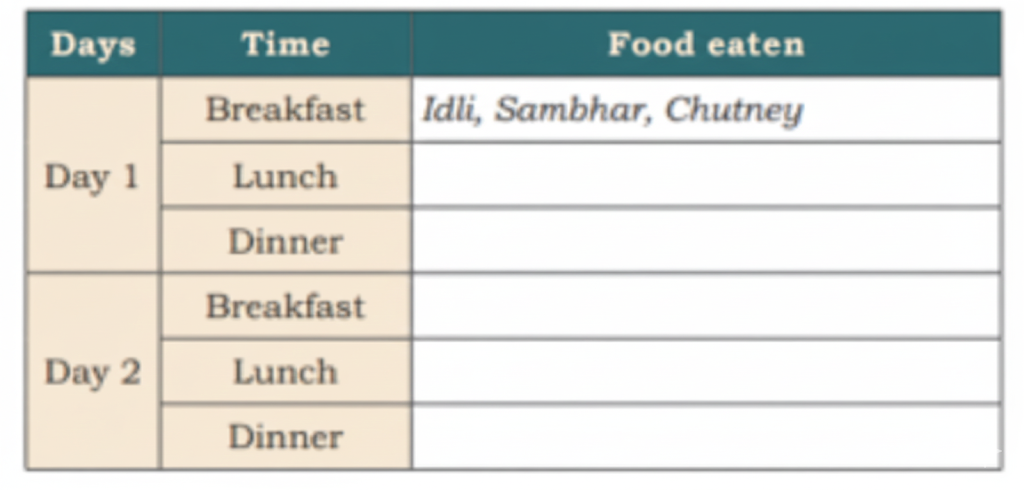
1. Create a food diary of your daily routine for a week. Write down what you eat in a day for breakfast, lunch and dinner. An example is given. Expand the table for a week.
2. Encircle the food items that are healthy and put an ‘X’ mark for items which are not healthy.
3. Identify the food groups missing in your daily routine. Discuss with your parents how these items can be included in the daily routine.
Answer:
Draw a table for seven days in your notebook and note down what you eat for breakfast, lunch, and dinner each day. Circle the healthy food items and mark the unhealthy ones with an “X”. With the help of your parents, check which food groups are missing and think of ways to include them in your meals.
Find out (page 80)
Find out a ‘food thali’ from your region, and list its food items.
Answer:
Students should do it by themselves.
Write (page 81)
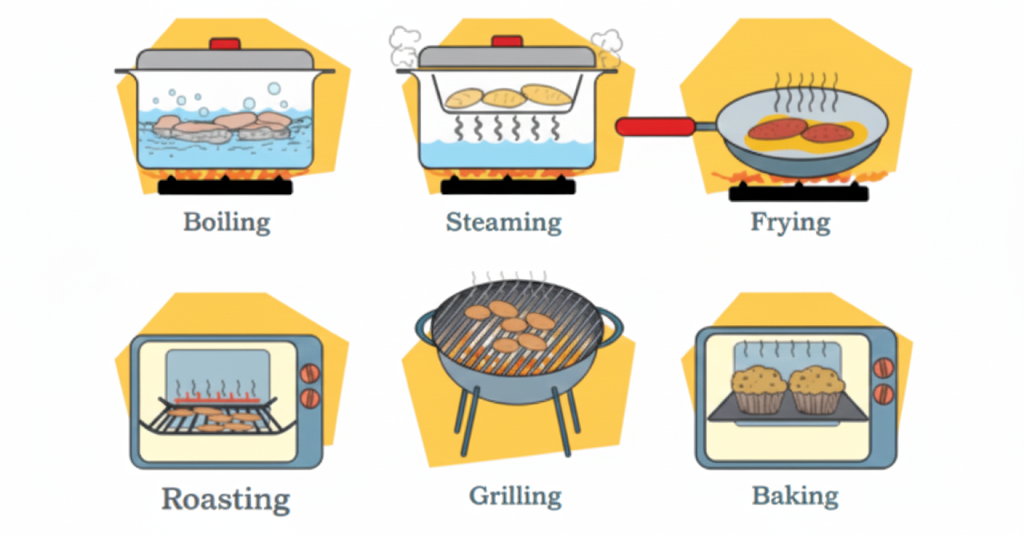
Identify different methods used to cook the food items given in the list below. One example is given for you. You can take help from your family members and add more items to the list.
Answer:
Discuss (Page 82)
Question 1.
Do you help in cooking at home?
Answer:
Yes, I help with cooking at home. I assist by arranging the table, cleaning the vegetables, and stirring the food while it is being cooked.
Question 2.
Do you think all family members should know how to cook? Why?
Answer:
Yes, I believe everyone in the family should know how to cook. It is helpful when someone is away from home and also makes sharing the cooking work easier for all.
Let Us Reflect (Pages 83-84)
Question 1.
Hands-on activity —food collage
Materials: Old magazines, newspapers, scissors, glue, and a blank sheet of paper.
Cut out pictures of food items and create a collage with three sections:
energy-giving foods, body-building foods, and protective foods.

Answer:
Students should do it by themselves.
Question 2.
Check the label
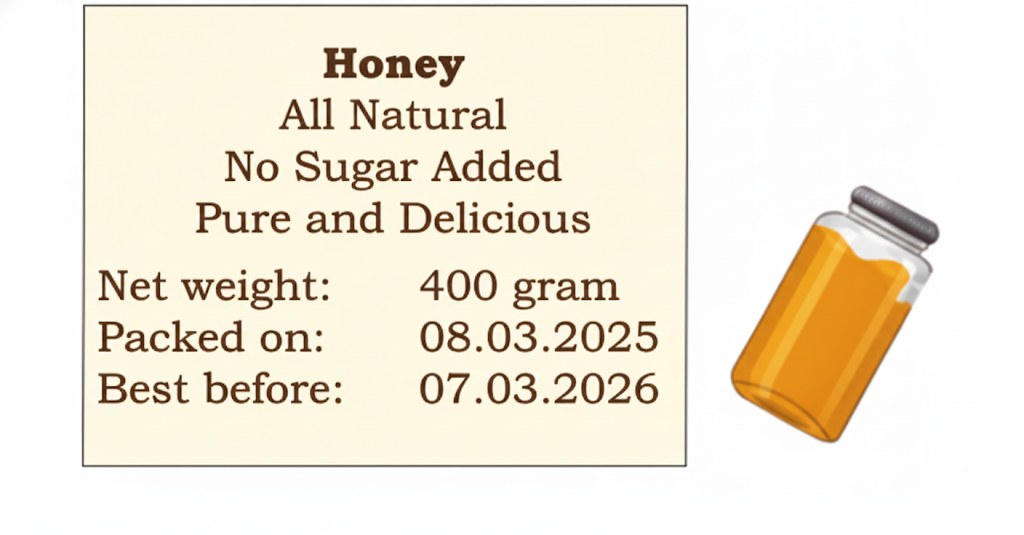
(a) At home, pick up any one packaged food item from your kitchen. Check the label and note down the expiry date, and also two main ingredients.
(b) Why is it important to check labels before buying or eating packaged food items?
Answer:
(a) Students should do it by themselves.
(b) It is important to check labels to know the expiry date, ingredients, and if the food is safe and healthy.
Question 3.
Organise a food festival students may bring home-made food and organise a food festival at school. Parents may be encouraged to participate in the food festival.
Answer:
Students should do it by themselves.
Question 4.
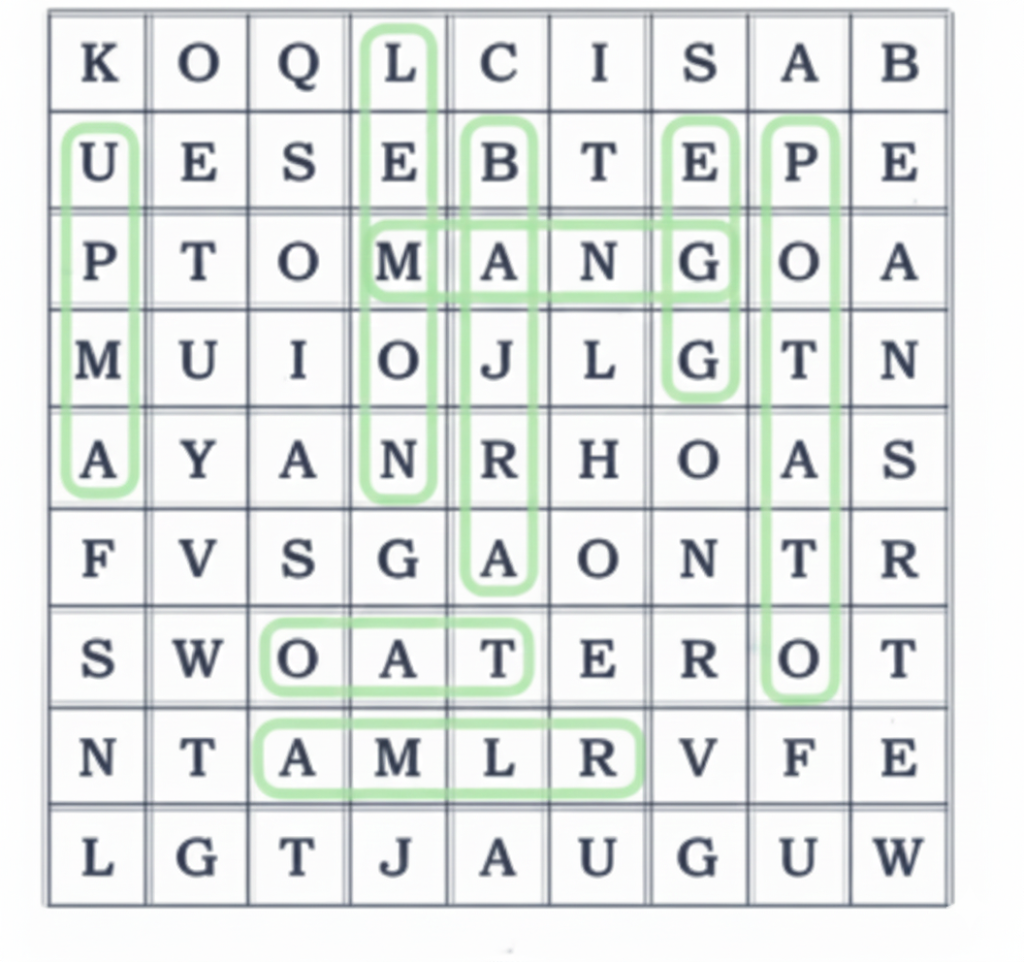
Find and circle
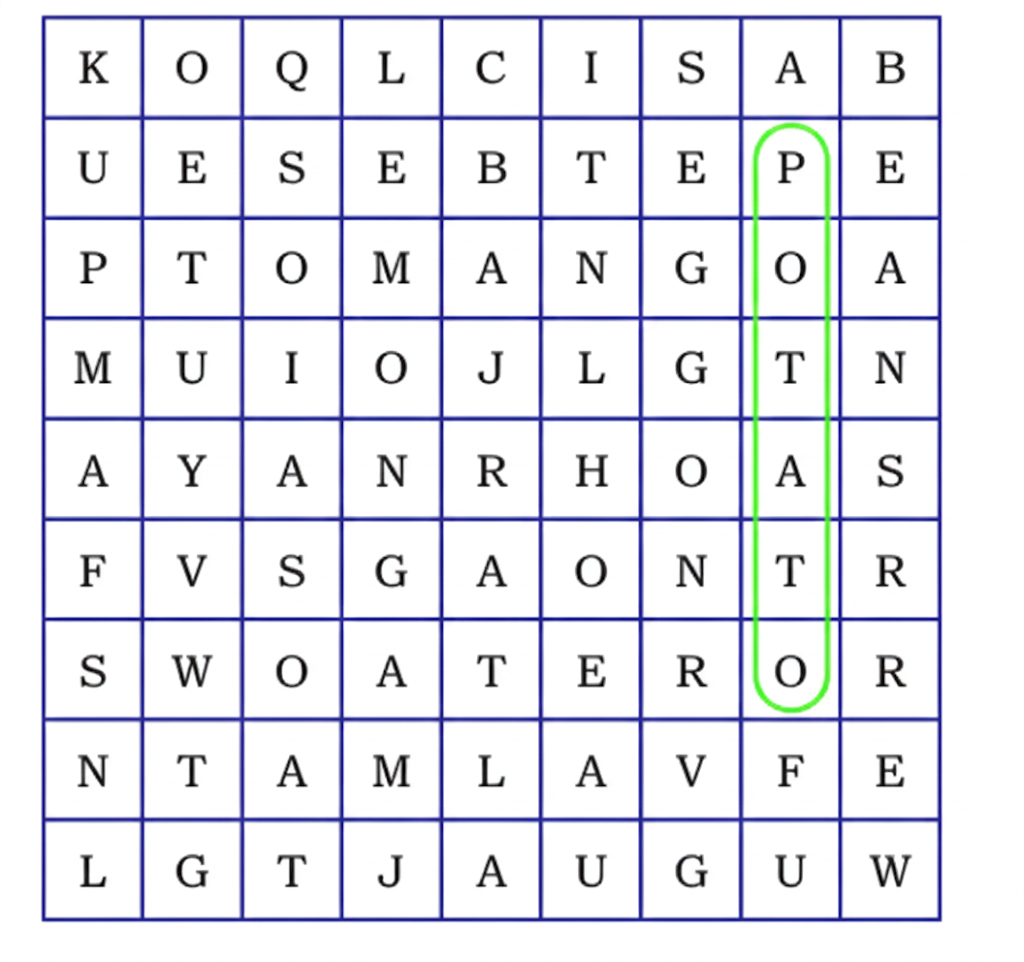
Circle the words related to food in the grid below. One example is given below.
Answer:
Balanced Food and Health – Key Ideas for Class 4 EVS
Mastering the chapter Food for Health helps Class 4 students learn about the importance of balanced food, healthy habits, and mindful eating. These concepts support long-term well-being and make learning relatable to real-life experiences.
By understanding food groups and healthy choices, students develop good eating patterns. Including fruits, vegetables, and protective foods in daily meals helps children stay energetic, avoid diseases, and grow strong. Regular revision keeps concepts fresh for exams.
Practice mindful eating and avoid junk food for a healthier lifestyle. Build your own food diary and ask for help from your family to keep your diet balanced. These simple steps are key to scoring well and enjoying better health every day.
FAQs on NCERT Solutions For Class 4 Our Wonderous World Chapter 5 Food For Health - 2026-27 Free PDF Download (Sign-in Required)
1. What is food for health in class 4 EVS?
Food for health in Class 4 EVS means eating the right kinds of food needed by our body to stay healthy and strong.
Key points:
- Food gives us energy, helps us grow, and keeps us healthy.
- Eating a balanced diet with cereals, fruits, vegetables, milk, and pulses is important.
- Clean and fresh food prevents illness and promotes good health.
These points are covered in NCERT Solutions for Class 4 EVS Chapter 5: Food for Health.
2. How to write stepwise NCERT answers to score full marks?
To score full marks in Class 4 EVS answers, always use stepwise, clear, and structured points.
Follow these steps:
1. Begin with a short introduction about the topic.
2. Write answers in points or steps.
3. Use key terms like balanced diet, nutrients, vitamins.
4. Add diagrams or drawings if asked.
5. Keep handwriting neat and avoid spelling mistakes.
6. Conclude with a final line if appropriate.
This method matches the CBSE marking scheme for 2026–27.
3. Are diagrams needed in class 4 evs food for health?
Diagrams are sometimes needed in Class 4 EVS Food for Health answers, especially if the question asks for it.
Tips:
- Draw food pyramid, sources of food, or balanced plate if the question requires.
- Label diagrams neatly.
- Diagrams can help get extra marks when marking scheme allows.
- Use colored pencils for clarity and better presentation.
Ask your teacher if you’re unsure when to draw a diagram.
4. Where can I download the chapter’s solutions PDF?
You can download the free, teacher-verified PDF of NCERT Solutions for Class 4 EVS Chapter 5: Food for Health from trusted educational websites.
Steps:
- Search for 'NCERT Solutions for Class 4 EVS Chapter 5 PDF'.
- Visit a reliable site offering free, CBSE-aligned solutions.
- Click the download button to get the PDF for offline study.
Using official PDFs helps with easy and effective revision for exams.
5. How to present long answers to match CBSE marking?
To score high in long answers for Class 4 EVS, use a clear structure:
Best Practices:
- Start with a brief introduction about the question.
- Use short paragraphs or bullet points.
- Highlight important words like nutrients, hygiene, balanced diet.
- Add diagrams if required.
- End with a simple conclusion.
This matches the CBSE marking scheme and helps examiners award full marks.
6. Which questions are likely from this chapter in school exams?
School exams often cover these topics from Class 4 EVS Chapter 5: Food for Health:
- Meaning and importance of food for health
- Balanced diet and its parts
- Sources of different types of foods
- The role of water and cleanliness
- Drawing or labeling diagrams of food groups
Practicing these questions helps you score better in CBSE exams.
7. What are the important definitions for class 4 evs food for health?
Important definitions for Class 4 EVS Food for Health include:
- Nutrients: Substances in food that our body needs for good health.
- Balanced Diet: A meal with all necessary nutrients in the right amount.
- Hygiene: Keeping yourself and your food clean.
- Energy-giving foods: Foods like rice, wheat that give us energy.
- Body-building foods: Foods like pulses, eggs that help us grow.
Learn these for exams and worksheets.
8. Is downloading NCERT Solutions Class 4 EVS Chapter 5 PDF beneficial for revision?
Downloading the NCERT Solutions PDF for Class 4 EVS Chapter 5 is very useful for quick revision.
Benefits:
- You get all chapter questions and answers in one place.
- Helps revise anywhere, even without internet.
- Teacher-verified answers ensure accuracy.
- Makes revision before tests easier.
Use the PDF for easy, last-minute study before CBSE exams.
9. How to avoid common mistakes in Class 4 EVS Food for Health answers?
To avoid errors in Class 4 EVS Food for Health answers:
- Write clear, to-the-point steps.
- Use the right keywords like 'balanced diet', 'hygiene', 'energy-giving foods'.
- Draw diagrams only if asked.
- Check for spelling and grammar mistakes.
- Do not leave out any part of multipart questions.
Careful answers help prevent negative marking and improve scores.
10. What are the most important topics from this chapter?
The most important topics in Class 4 EVS Chapter 5: Food for Health are:
- Meaning of Food for Health
- Balanced Diet and its components
- Importance of clean water and hygiene
- Types of food: energy-giving, body-building, protective foods
- Reasons for eating fresh and clean food
Focus on these to do well in exams and worksheets for the CBSE 2026–27 syllabus.
11. Do examiners award partial marks for correct steps even if the final answer is wrong?
Yes, CBSE examiners often award partial marks if you write the correct steps or process, even if the final answer is incorrect.
- Each correct step or point usually carries some marks.
- Writing methodical, stepwise answers increases your chances of getting partial credit.
- Always show your working or reasoning in EVS answers.
12. How can I structure my revision for Class 4 EVS Chapter 5?
Structure your revision for Class 4 EVS Chapter 5: Food for Health like this:
- Start with key definitions and concepts.
- Practice stepwise answers for all exercises.
- Revise important diagrams and practice labeling.
- Use the downloadable PDF for last-minute revision.
- Test yourself with extra questions and worksheets.
This plan ensures complete and effective preparation for exams.
