



Stepwise Answers & Exam Tips for Class 4 EVS Chapter 4
Activity 1 (Page 58)
Write names of five colourful flowers in your area. For example, Palash is called Kesuda in Gujarat.
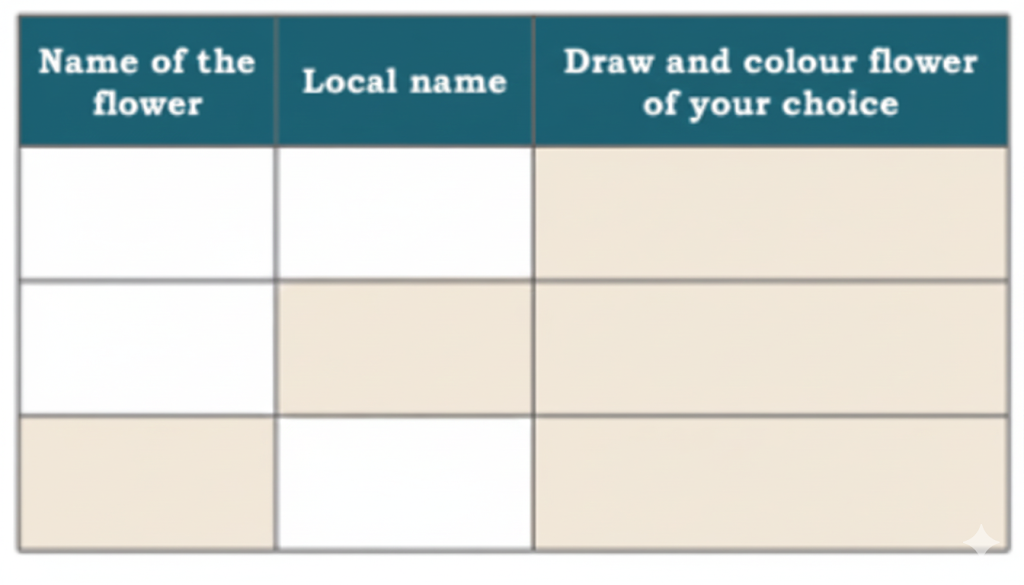
Answer:
Activity 2 (Page 60)
Make the model of a house using materials from nature, such as clay, wooden sticks, hay, grass, leaves, etc. Decorate it with an art form of your choice.
Answer:
Do it on your own.
Hint: One example is provided below to help you.

Activity 3 (Page 60)
Let us prepare a natural dye.
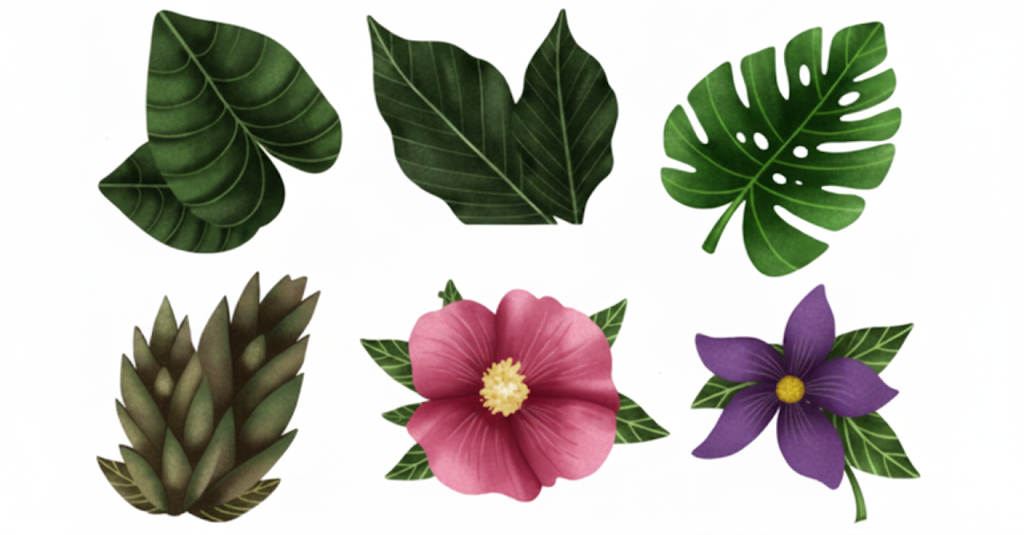
Step 1: Collect some flowers, leaves, barks, and roots, such as beetroot, hibiscus, and marigold that have colouring properties.
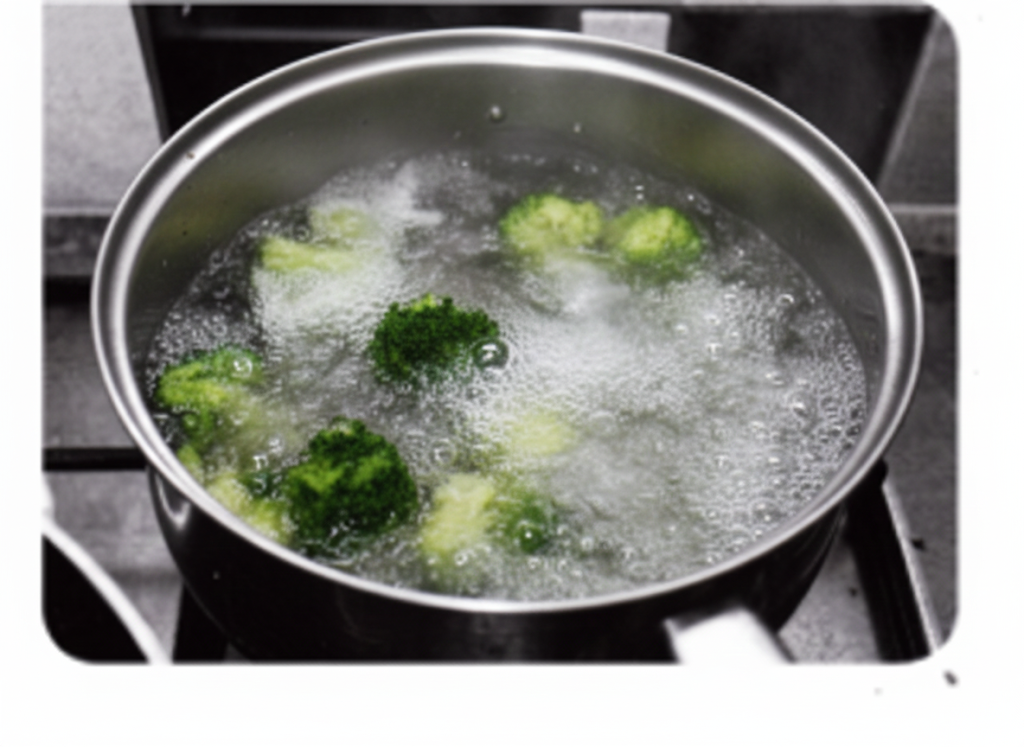
Step 2: Boil any of the collected plant parts in approximately 1 – 2 litres of water for 30 minutes to an hour covering the container with a plate. (Please take help from your teacher or an elder.)
Step 3: Strain the liquid to remove the plant materials, leaving behind the natural dye. Now, try to paint a piece of cloth such as a light-coloured handkerchief or hand towel using the dye you have prepared. Note that you need to soak the cloth overnight, squeeze it and dry it the next morning.

Answer:
Students should do it by themselves.
Activity 4 (Page 62)
Find out some traditional ways of preserving grains and vegetables at your place, and fill the following table. One example is given.
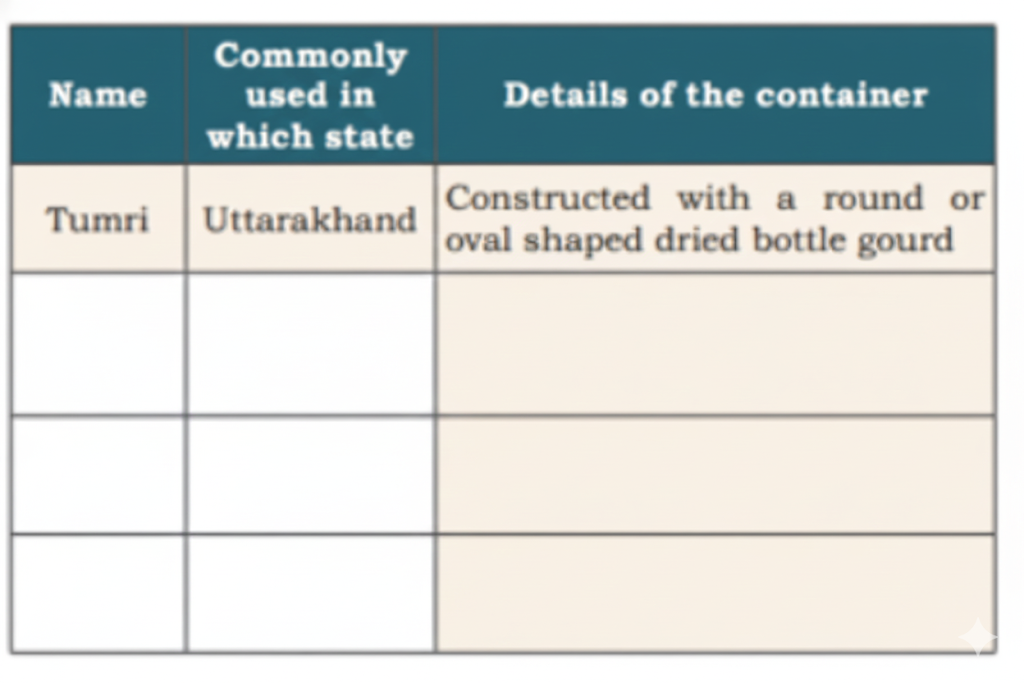
Answer:
Activity 5 (Page 63)
Discuss with the elders in your family and write the name of the plant, its parts, and its uses in the table given below.
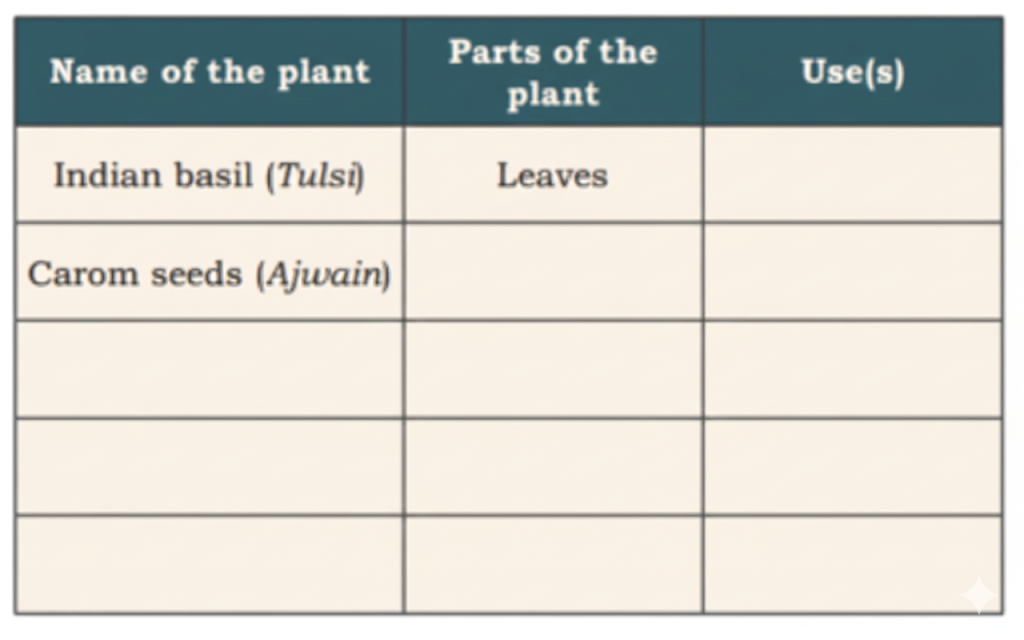
Answer:
Discuss (Page 63)
Question 1.
What things should be kept in a first-aid box?
Answer:
A first-aid box is important for handling small injuries and emergencies at home, school, or the workplace. It should include items such as bandages, cotton, antiseptic liquid or cream, pain-relief medicines, burn ointment, ORS packets, scissors, a thermometer, mosquito repellent, and hand sanitiser. Having a well-stocked first-aid box ensures quick care whenever it is required.
Question 2.
Why do you think providing first-aid is important if someone gets injured?
Answer:
First aid is the quick care provided to a person who is injured or unwell before professional medical help reaches them. It helps prevent the condition from becoming more serious, eases pain, avoids infection, and in some cases, can save a person’s life.
Activity 6 (Page 65)
Find out the traditional dances and songs of your region. Perform a traditional dance with the help of your classmates and teachers for the Annual Day of your school.
Answer:
Students should do it by themselves.
Hint: Bihu dance of Assam
Discuss (Page 65)
Imagine if there is no light in your area for two days. What changes will you see in your life?
Answer:
Life would become very challenging if there was no electricity in my area for two days. Everyday tasks such as studying, cooking, playing, and working would be hard to manage. People would feel tired and less active. We would have to rely on candles, torches, or emergency lights to see in the dark.
Activity 7 (Page 66)
Talk to your elders and find out the rituals in connection to animals and plants which are celebrated in your locality. A few examples are given below.
Answer:
Let Us Reflect (Pages 67-68)
What are the things that we use from nature in our daily life?
Using natural resources excessively can create major problems for the environment and for future generations.
Water: When water is used carelessly, rivers and lakes can dry up, underground water levels fall, and droughts may occur more often. This also harms plants and animals that rely on these water sources.
Soil: Overusing soil without restoring its nutrients makes it weak and unproductive. This results in soil erosion and reduces the quality and quantity of crops.
Sea resources: Too much fishing and pollution damage marine life. Fish numbers decline, and the natural balance of ocean ecosystems is affected.
Trees: Large-scale cutting of trees leads to deforestation, which destroys animal habitats, disturbs the climate, and reduces the amount of oxygen in the air.
Question 3.
How can we protect the natural environment around us?
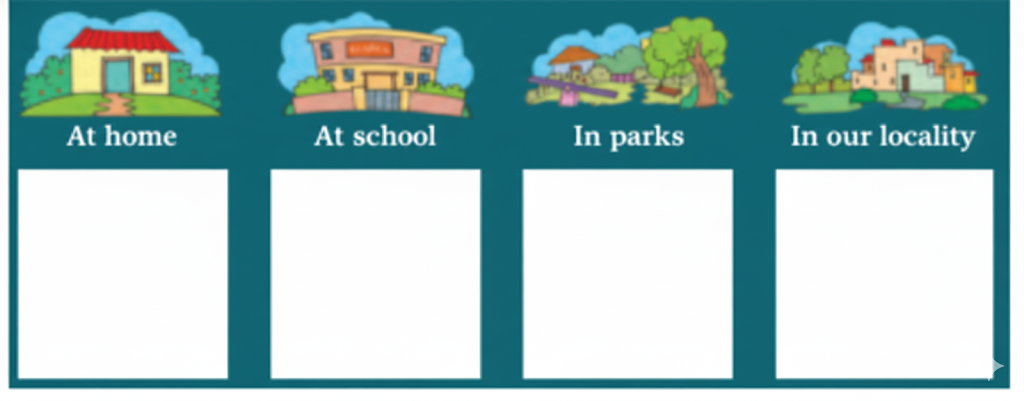
Answer:
We can help protect our natural surroundings by cutting down on waste, recycling materials, and using natural resources carefully.
Conserve water, use electricity carefully, and limit the use of plastic.
Keep the surroundings clean, use paper wisely, reuse old notebooks, and make sure taps are turned off properly.
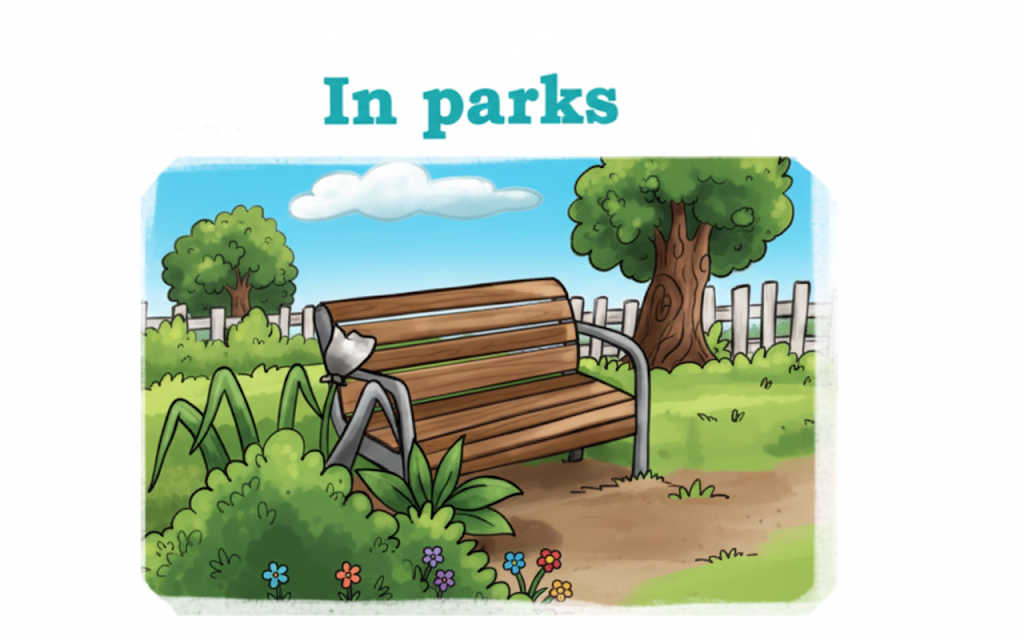
Plant more trees and avoid harming plants or soil.
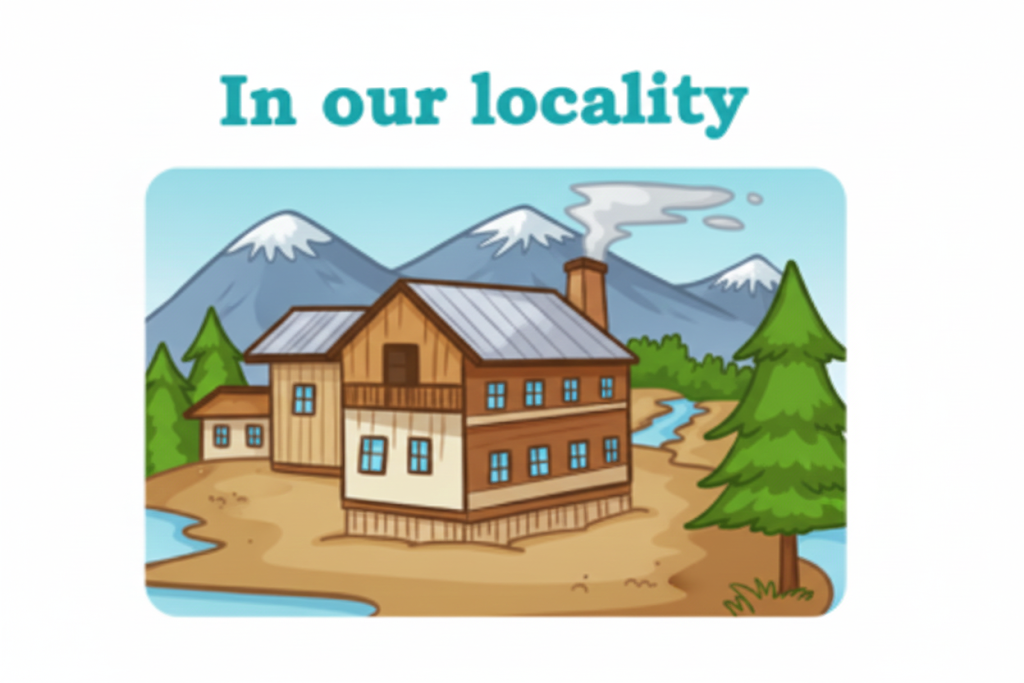
Maintain clean streets, throw waste only in designated bins, and use water carefully.
Question 4.
Design your herbal garden here is a space for your herbal garden. Draw pictures of your favorite herbs in different parts of the garden and write down their names. Are there some herbs that you like less? Draw them too!
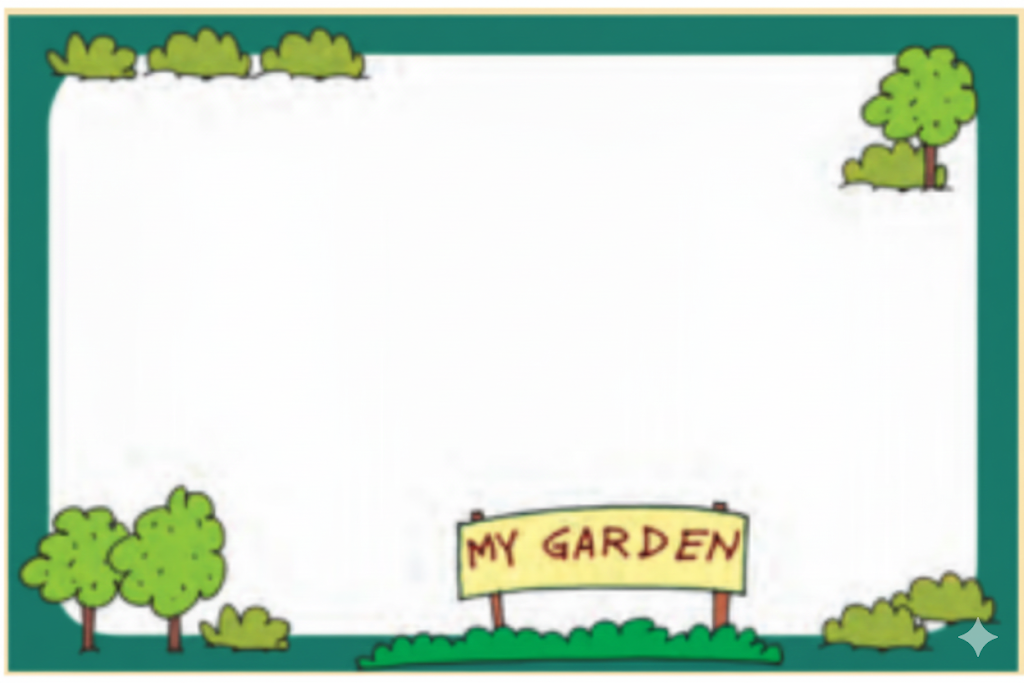
Answer:
Students should do it by themselves.
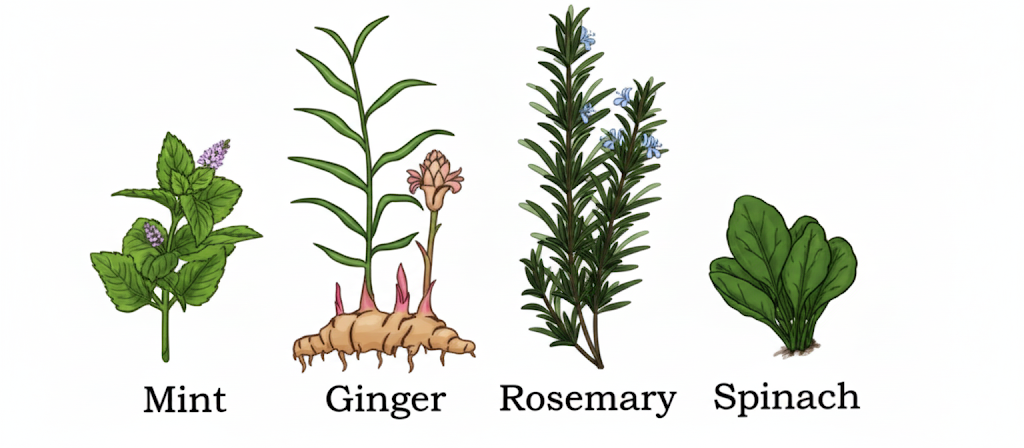
Hint: Include pictures of mint, basil, coriander, spinach, tomato, bay leaves, ginger, and spring onion.
A Journey Through a Forest – NCERT Solutions for Class 4 EVS
Exploring A Journey Through a Forest lets learners connect with the environment and understand the importance of sustainable living. These NCERT solutions for Class 4 EVS make complex ideas simple and help students relate to nature’s wonders around them.
Practicing chapter-wise NCERT questions for Growing up with Nature builds a strong conceptual base. Students learn traditional and modern ways of living harmoniously with nature, boosting both exam performance and daily understanding of their surroundings.
Use these solutions to revise important points quickly before your test. Reviewing activity-based and practical questions will improve your confidence, helping you score better in Class 4 exams and appreciate environmental values in daily life.
FAQs on NCERT Solutions For Class 4 Our Wonderous World Chapter 4 Growing Up With Nature - 2026-27 Free PDF Download (Login Required)
1. What are the main topics of Growing up with Nature in Class 4 EVS?
The chapter Growing up with Nature in Class 4 EVS Chapter 4 covers key natural and environmental concepts. Main topics include:
- Children’s interactions with plants and animals
- Understanding trees, flowers, and nature’s cycles
- Observing seasonal changes
- The importance of loving and protecting nature
- How we benefit from forests and greenery
2. Are diagrams needed in Class 4 EVS answers?
Yes, neat diagrams or labelled drawings are often required in Class 4 EVS answers, especially when describing plants, animals, or maps. Important points:
- Use simple, clear, and properly labelled diagrams
- Draw diagrams for questions on plant parts, trees, or nature cycles
- Marks can be given specifically for correct diagrams or labels
3. How can I score full marks in Class 4 EVS Chapter 4 Growing up with Nature?
To score full marks in EVS Chapter 4, write stepwise, clear answers using textbook keywords. Tips include:
- Follow CBSE marking guidelines and use formatted points
- Include neat diagrams or labelled sketches where asked
- Start with definitions; structure long answers into subpoints
- Revise using stepwise solutions and quick notes
4. Where can I download EVS Class 4 Chapter 4 PDF solutions for offline study?
You can download NCERT Solutions for Class 4 EVS Chapter 4 as a free PDF on trusted educational portals. Steps:
- Visit CBSE/NCERT solution websites
- Search for ‘Class 4 EVS Chapter 4 PDF download’
- Click the download button for offline use
5. What are important questions from Growing up with Nature?
Some important questions from Class 4 EVS Chapter 4 include:
- Describe how plants help us in daily life
- List activities children can do in nature
- Draw and label a tree, naming its parts
- Why is it important to protect forests?
- Explain seasonal changes in plants
6. Is it necessary to write definitions in EVS answers for full marks?
Yes, writing exam-ready definitions is important in EVS answers, especially for key terms like ‘forest’, ‘nature’, or ‘season’. You should:
- Begin your answer with textbook-based definitions
- Underline or highlight main keywords
- Use the correct sequence as in NCERT stepwise solutions
7. How should I structure long answers in Class 4 EVS for better marks?
Structure long answers in Class 4 EVS using clear steps:
- Start with a short introduction or definition
- Break the answer into bullet points or numbered lists
- Include diagrams, maps, or examples when relevant
- End with a short conclusion or summary
8. Are NCERT Solutions enough for Class 4 EVS exams?
NCERT Solutions are usually enough for Class 4 EVS exams if you practise all exercises, intext, and back questions. Benefits of using them:
- CBSE syllabus and marking scheme aligned
- Include key definitions, diagrams, and steps
- Help in writing exam-style answers for full marks
9. How to revise Class 4 EVS Chapter 4 quickly before exams?
Revise EVS Chapter 4 with a planned approach:
- Read through stepwise NCERT solutions and highlight key points
- Practise quick diagrams and map labels
- Use 1-day, 3-day, and 7-day revision planners with flashcards
- Attempt sample and previous year questions for practice
10. Do examiners award partial marks for correct steps even if the final answer is wrong?
Yes, CBSE examiners often give partial marks if your answer has correct steps or working, even if the final answer is not fully correct. To maximize marks:
- Show all intermediate steps and use proper headings
- Write clearly, avoiding overwriting or cutting
- Always attempt the question with diagrams (if needed)
11. How to learn diagrams and maps for this chapter?
To master diagrams and maps in Class 4 EVS Chapter 4:
- Practise drawing plant/tree diagrams and label all parts
- Use NCERT textbook samples as references
- Keep diagrams neat; use a pencil and ruler for maps
- Memorise commonly asked labels (roots, stem, leaves, etc.)
