




Which of the following gives the silver mirror test?
A. Formic acid
B. \[C{H_3}COCHOHC{H_3}\]
C. Tartaric acid
D. Glucose
Answer
 Verified
251.1k+ views
Hint: Silver mirror test is also termed as Tollens test. This test is used to differentiate between aldehydic group-containing compounds and ketonic group-containing compounds.
Complete Step by Step Solution:
Tollens reagent is a chemical reagent which helps in detecting the presence of an aldehyde functional group in the compound, alpha hydroxy ketone functional group in a compound and formic acid where its COOH group behaves like an aldehydic group.
The Tollens reagent is given by a German chemist known Bernhard Tollens. It is a solution mixture of silver nitrate and ammonia.
The compound gives a white precipitate of silver where silver salt reduces to silver metal and the aldehydic group get oxidises to silver salt of carboxylic acid.
A. Formic acid gives a positive silver mirror test as its COOH group act as an aldehydic group.
B. \[C{H_3}COCHOHC{H_3}\] has chemical name 3-hydroxybutan-2-one. It has an alpha hydroxy ketone functional group so it will give a positive silver mirror test.
C. Tartaric acid contains a COOH group which acts as an aldehydic group therefore it will give a silver mirror test.
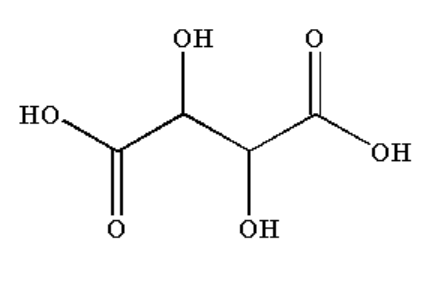
Image: Tartaric acid
D. Glucose contains alpha hydroxy ketone functional group so it will give a positive silver mirror test.
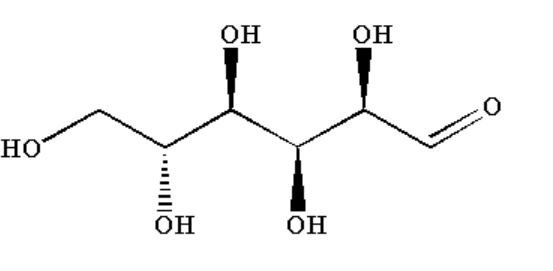
Image: Glucose
Thus, options A, B, C and D are correct.
Note: Ketone does not give a silver mirror test but alpha hydroxy ketone gives a silver mirror test. An alpha hydroxy ketone is a molecule having adjacent ketone and alcohol groups. Example: Glucose, tartaric acid.
Complete Step by Step Solution:
Tollens reagent is a chemical reagent which helps in detecting the presence of an aldehyde functional group in the compound, alpha hydroxy ketone functional group in a compound and formic acid where its COOH group behaves like an aldehydic group.
The Tollens reagent is given by a German chemist known Bernhard Tollens. It is a solution mixture of silver nitrate and ammonia.
The compound gives a white precipitate of silver where silver salt reduces to silver metal and the aldehydic group get oxidises to silver salt of carboxylic acid.
A. Formic acid gives a positive silver mirror test as its COOH group act as an aldehydic group.
B. \[C{H_3}COCHOHC{H_3}\] has chemical name 3-hydroxybutan-2-one. It has an alpha hydroxy ketone functional group so it will give a positive silver mirror test.
C. Tartaric acid contains a COOH group which acts as an aldehydic group therefore it will give a silver mirror test.
Image: Tartaric acid
D. Glucose contains alpha hydroxy ketone functional group so it will give a positive silver mirror test.
Image: Glucose
Thus, options A, B, C and D are correct.
Note: Ketone does not give a silver mirror test but alpha hydroxy ketone gives a silver mirror test. An alpha hydroxy ketone is a molecule having adjacent ketone and alcohol groups. Example: Glucose, tartaric acid.
Recently Updated Pages
JEE Isolation, Preparation and Properties of Non-metals Important Concepts and Tips for Exam Preparation

Isoelectronic Definition in Chemistry: Meaning, Examples & Trends
Ionisation Energy and Ionisation Potential Explained
Iodoform Reactions - Important Concepts and Tips for JEE
Introduction to Dimensions: Understanding the Basics
Instantaneous Velocity Explained: Formula, Examples & Graphs
Trending doubts
JEE Main 2026: Exam Dates, Session 2 Updates, City Slip, Admit Card & Latest News
JEE Main Marking Scheme 2026- Paper-Wise Marks Distribution and Negative Marking Details
Hybridisation in Chemistry – Concept, Types & Applications
JEE Main 2026 Application Login: Direct Link, Registration, Form Fill, and Steps
Understanding the Electric Field of a Uniformly Charged Ring
Derivation of Equation of Trajectory Explained for Students
Other Pages
JEE Advanced Marks vs Ranks 2025: Understanding Category-wise Qualifying Marks and Previous Year Cut-offs
JEE Advanced 2026 - Exam Date (Released), Syllabus, Registration, Eligibility, Preparation, and More
CBSE Notes Class 11 Chemistry Chapter 9 - Hydrocarbons - 2025-26
CBSE Notes Class 11 Chemistry Chapter 5 - Thermodynamics - 2025-26
CBSE Notes Class 11 Chemistry Chapter 8 - Organic Chemistry Some Basic Principles And Techniques - 2025-26
JEE Advanced Weightage 2025 Chapter-Wise for Physics, Maths and Chemistry