






Main Symptoms, Treatment and Prevention of Colon Infection in Hindi
Colon infection को हिंदी में "बड़ी आंत का संक्रमण" कहा जाता है। यह एक ऐसी स्थिति है जिसमें बड़ी आंत में बैक्टीरिया, वायरस, परजीवी या फंगस के कारण सूजन और संक्रमण हो जाता है। इस समस्या को मेडिकल भाषा में कोलाइटिस भी कहा जाता है। यह रोग पाचन तंत्र को प्रभावित करता है और समय पर उपचार न मिलने पर गंभीर जटिलताएं पैदा कर सकता है। छात्रों और प्रतियोगी परीक्षाओं की तैयारी करने वालों के लिए यह विषय स्वास्थ्य विज्ञान के अंतर्गत महत्वपूर्ण है।
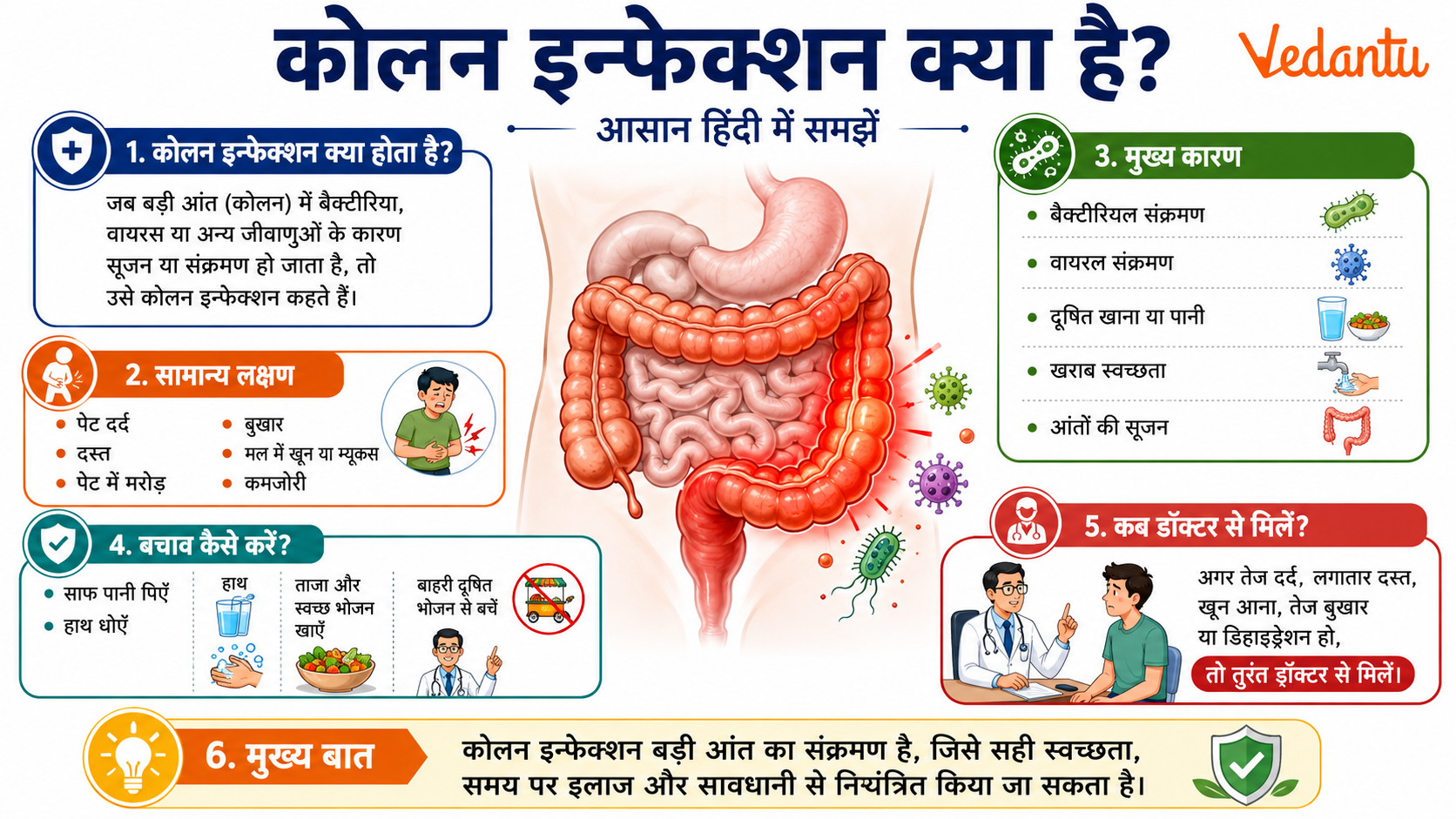
Colon Infection क्या है?
Colon Infection या बड़ी आंत का संक्रमण वह स्थिति है जिसमें कोलन की अंदरूनी परत में सूजन, जलन और दर्द उत्पन्न हो जाता है। यह संक्रमण दूषित भोजन, गंदा पानी, कमजोर प्रतिरक्षा प्रणाली या एंटीबायोटिक दवाओं के अधिक उपयोग से हो सकता है।
Colon Infection के प्रकार
- बैक्टीरियल संक्रमण - जैसे साल्मोनेला, ई. कोलाई, शिगेला।
- वायरल संक्रमण - जैसे रोटावायरस या नोरोवायरस।
- परजीवी संक्रमण - जैसे एंटअमीबा हिस्टोलिटिका।
- एंटीबायोटिक संबंधित संक्रमण - क्लोस्ट्रीडियम डिफिसाइल बैक्टीरिया के कारण।
Colon Infection के लक्षण
इस संक्रमण के लक्षण हल्के से लेकर गंभीर तक हो सकते हैं। निम्नलिखित प्रमुख लक्षण देखे जाते हैं:
- पेट में तेज दर्द या ऐंठन
- दस्त या खून वाला दस्त
- बुखार
- उल्टी या मतली
- कमजोरी और थकान
Colon Infection के कारण
- दूषित भोजन और पानी का सेवन
- स्वच्छता की कमी
- कमजोर प्रतिरक्षा प्रणाली
- लंबे समय तक एंटीबायोटिक का उपयोग
- संक्रमित व्यक्ति के संपर्क में आना
Colon Infection से संबंधित मुख्य जानकारी
| पैरामीटर | विवरण | महत्व |
|---|---|---|
| प्रभावित अंग | बड़ी आंत | पाचन तंत्र का मुख्य भाग |
| मुख्य कारण | बैक्टीरिया, वायरस, परजीवी | संक्रमण की रोकथाम जरूरी |
| उपचार | दवाएं और तरल पदार्थ | समय पर इलाज से जटिलता कम |
ऊपर दी गई तालिका Colon Infection के मुख्य पहलुओं को संक्षेप में समझाती है। यह जानकारी छात्रों के लिए त्वरित पुनरावृत्ति में सहायक होती है।
Colon Infection का निदान
डॉक्टर मरीज के लक्षणों और मेडिकल इतिहास के आधार पर जांच करते हैं। आवश्यकता होने पर निम्नलिखित परीक्षण किए जा सकते हैं:
- मल परीक्षण
- ब्लड टेस्ट
- कोलोनोस्कोपी
Colon Infection का उपचार
उपचार संक्रमण के प्रकार पर निर्भर करता है। बैक्टीरियल संक्रमण में एंटीबायोटिक दी जाती है जबकि वायरल संक्रमण में आराम और तरल पदार्थ पर्याप्त होते हैं। गंभीर मामलों में अस्पताल में भर्ती की आवश्यकता हो सकती है।
रोकथाम के उपाय
- साफ और उबला हुआ पानी पीना
- भोजन को अच्छी तरह पकाकर खाना
- हाथों की नियमित सफाई
- बिना डॉक्टर की सलाह के एंटीबायोटिक न लेना
NEET के लिए महत्वपूर्ण बिंदु
NEET परीक्षा में पाचन तंत्र, संक्रमण और मानव स्वास्थ्य से संबंधित प्रश्न पूछे जाते हैं। Colon Infection को समझने के लिए विद्यार्थियों को बड़ी आंत की संरचना, कार्य, रोगजनक जीवाणु और प्रतिरक्षा प्रणाली की भूमिका का अध्ययन करना चाहिए। संक्रमण के कारण, लक्षण और उपचार की बुनियादी जानकारी परीक्षा में सहायक होती है।
इस प्रकार Colon Infection एक सामान्य लेकिन गंभीर स्वास्थ्य समस्या है। सही जानकारी, स्वच्छता और समय पर उपचार से इसे नियंत्रित किया जा सकता है। विद्यार्थियों के लिए यह विषय मानव स्वास्थ्य और रोग अध्याय में महत्वपूर्ण स्थान रखता है।
FAQs on Colon Infection in Hindi – Meaning, Symptoms and Care Guide
1. What Is Colon Infection In Hindi?
Colon infection को हिंदी में बड़ी आंत का संक्रमण कहा जाता है, जिसमें कोलन (बड़ी आंत) में सूजन और संक्रमण हो जाता है।
• यह संक्रमण बैक्टीरिया, वायरस या परजीवी के कारण हो सकता है।
• इसे मेडिकल भाषा में Colitis भी कहा जाता है।
• आम लक्षणों में पेट दर्द, दस्त, बुखार और कमजोरी शामिल हैं।
• People also ask: What is colitis? Colon infection meaning in Hindi?
2. Colon Infection के मुख्य कारण क्या होते हैं?
Colon infection के मुख्य कारण संक्रमण और आंतों की सूजन से जुड़े होते हैं।
• बैक्टीरियल संक्रमण (जैसे E. coli, Salmonella)
• वायरल संक्रमण
• परजीवी (Parasites)
• दूषित भोजन या पानी का सेवन
• कमजोर इम्यून सिस्टम
• PAS: Causes of colitis, infection in large intestine
3. Colon Infection के लक्षण (Symptoms) क्या हैं?
Colon infection के लक्षण पाचन तंत्र से जुड़े होते हैं और हल्के से गंभीर तक हो सकते हैं।
• लगातार दस्त (Diarrhea)
• पेट में मरोड़ या दर्द
• मल में खून या म्यूकस
• बुखार और थकान
• वजन घटना और कमजोरी
• People also search: Symptoms of colon infection in Hindi
4. क्या Colon Infection खतरनाक हो सकता है?
हाँ, Colon infection गंभीर स्थिति में खतरनाक हो सकता है यदि समय पर इलाज न किया जाए।
• डिहाइड्रेशन (शरीर में पानी की कमी)
• आंतों में अल्सर या सूजन
• गंभीर मामलों में आंत फटना (Perforation)
• बुजुर्गों और बच्चों में अधिक जोखिम
• PAA: Is colon infection serious? Complications of colitis
5. Colon Infection का इलाज कैसे किया जाता है?
Colon infection का इलाज उसके कारण पर निर्भर करता है और डॉक्टर की सलाह से किया जाता है।
• एंटीबायोटिक दवाएं (बैक्टीरियल संक्रमण में)
• ORS और तरल पदार्थ
• हल्का और सुपाच्य आहार
• गंभीर मामलों में अस्पताल में भर्ती
• Semantic keywords: Treatment of colitis, large intestine infection cure
6. Colon Infection और Colitis में क्या अंतर है?
Colon infection और Colitis अक्सर एक ही संदर्भ में उपयोग किए जाते हैं, लेकिन Colitis सूजन को दर्शाता है।
• Colon infection = संक्रमण के कारण सूजन
• Colitis = बड़ी आंत की सूजन (संक्रमण या अन्य कारणों से)
• Ulcerative colitis एक अलग ऑटोइम्यून रोग है
• People also ask: Difference between colitis and colon infection
7. Colon Infection से बचाव कैसे करें?
Colon infection से बचाव के लिए स्वच्छता और स्वस्थ जीवनशैली जरूरी है।
• साफ और उबला हुआ पानी पिएं
• हाथ धोने की आदत रखें
• ताजा और पका हुआ भोजन करें
• सड़क के दूषित भोजन से बचें
• Strong immunity बनाए रखें
• PAS: Prevention of colon infection, intestinal infection safety tips
8. क्या Colon Infection बच्चों में भी होता है?
हाँ, Colon infection बच्चों में भी हो सकता है, खासकर दूषित भोजन या पानी के कारण।
• बार-बार दस्त लगना
• पेट दर्द और उल्टी
• तेज बुखार
• बच्चों में डिहाइड्रेशन का खतरा अधिक
• People also search: Colon infection in children symptoms
9. Colon Infection की जांच (Diagnosis) कैसे होती है?
Colon infection की जांच डॉक्टर द्वारा लक्षण और मेडिकल टेस्ट के आधार पर की जाती है।
• स्टूल टेस्ट (मल जांच)
• ब्लड टेस्ट
• Colonoscopy (जरूरत पड़ने पर)
• शारीरिक जांच और मेडिकल इतिहास
• Semantic cluster: Diagnosis of colitis, large intestine test
10. Colon Infection कितने दिनों में ठीक होता है?
Colon infection सामान्यतः हल्के मामलों में 3–7 दिनों में ठीक हो सकता है, लेकिन गंभीर मामलों में अधिक समय लग सकता है।
• हल्का संक्रमण: 3–5 दिन
• बैक्टीरियल संक्रमण: 1–2 सप्ताह
• Chronic colitis: लंबी अवधि तक उपचार
• समय पर इलाज से जल्दी रिकवरी संभव
• PAA: How long does colon infection last?
