






Why National Park Conservation Matters for Wildlife and People
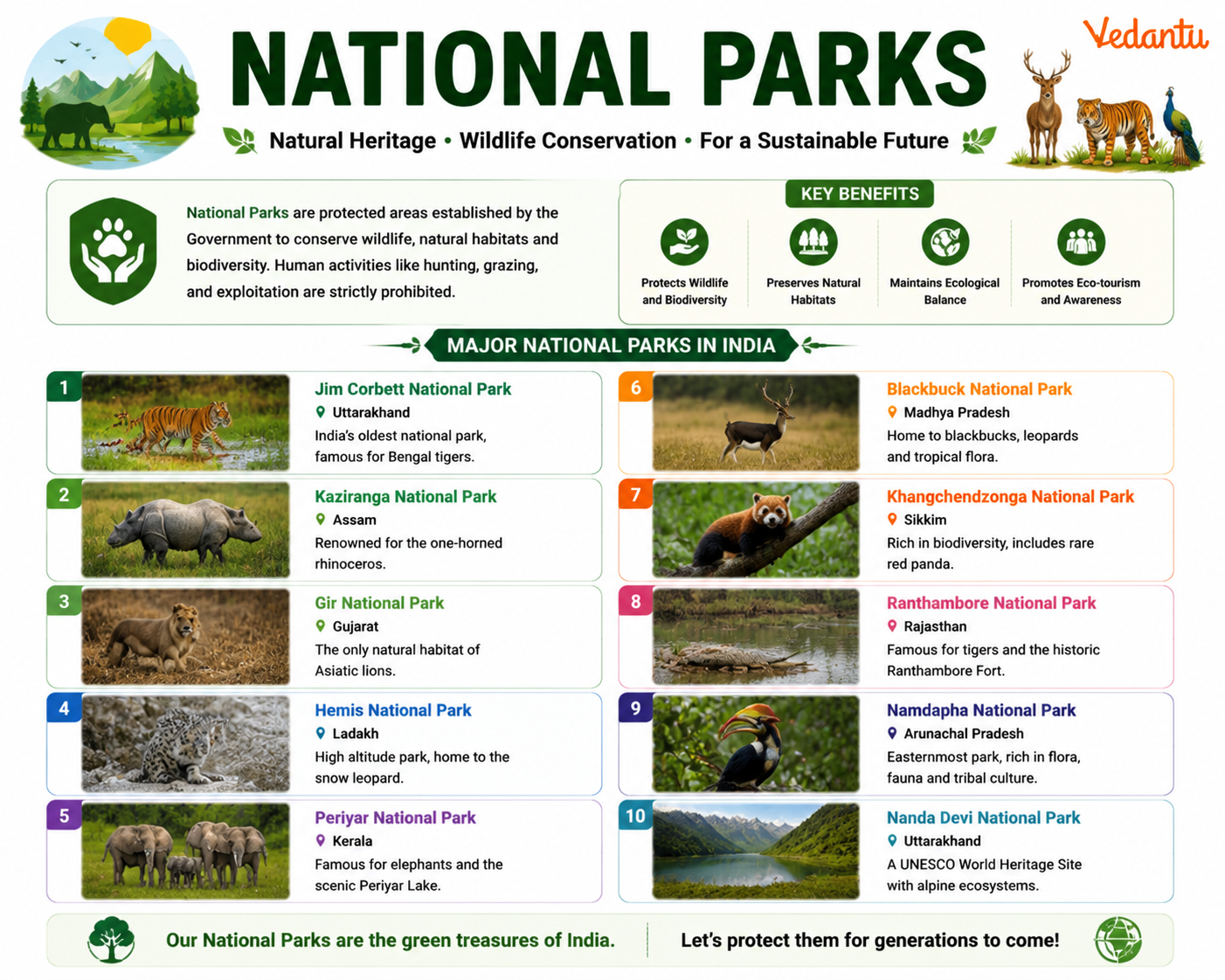
National Parks are protected areas established by governments to conserve wildlife, natural habitats, and biodiversity. They are created to protect endangered species, preserve ecological balance, and maintain the natural beauty of landscapes. National Parks play a crucial role in environmental conservation, scientific research, tourism, and education. For students and competitive exam aspirants, understanding National Parks is important from the perspective of General Knowledge, Geography, Environment, and current affairs.
What are National Parks?
A National Park is a strictly protected area designated by the government to conserve natural ecosystems, wildlife, and landscapes. Human activities such as hunting, grazing, and industrial operations are generally prohibited inside National Parks. These areas are maintained to preserve flora, fauna, and geological features for present and future generations.
- Established and managed by the government.
- Strict protection of wildlife and habitats.
- No private ownership of land allowed.
- Limited human interference and regulated tourism.
Objectives of National Parks
National Parks are created with specific environmental and conservation goals. They help in maintaining ecological balance and protecting endangered species.
- Conservation of biodiversity.
- Protection of endangered and rare species.
- Preservation of natural landscapes and ecosystems.
- Promotion of eco-tourism and environmental awareness.
- Encouragement of scientific research and wildlife studies.
Difference Between National Parks and Wildlife Sanctuaries
| Basis of Comparison | National Park | Wildlife Sanctuary |
|---|---|---|
| Level of Protection | Very High and Strict | Moderate Protection |
| Human Activity | Highly Restricted | Limited Activities Allowed |
| Ownership Rights | No Private Rights Allowed | Some Rights May Continue |
National Parks have stricter regulations compared to Wildlife Sanctuaries. Activities such as grazing and resource collection are generally prohibited in National Parks, ensuring better protection of biodiversity.
Importance of National Parks
National Parks contribute significantly to environmental stability and sustainable development. They are essential for maintaining the natural balance of ecosystems.
- Maintain ecological balance by protecting food chains.
- Act as carbon sinks and help reduce climate change effects.
- Preserve water resources and prevent soil erosion.
- Provide livelihood opportunities through eco-tourism.
- Serve as natural laboratories for scientific research.
Famous National Parks of the World
| National Park | Country | Famous For |
|---|---|---|
| Yellowstone National Park | USA | Geysers and Wildlife |
| Serengeti National Park | Tanzania | Great Migration of Wildebeest |
| Kaziranga National Park | India | One Horned Rhinoceros |
These National Parks are globally recognized for their unique biodiversity and conservation success stories. They attract millions of tourists and researchers every year.
National Parks in India
India has a large network of National Parks that protect diverse ecosystems ranging from Himalayan regions to coastal mangroves. They are declared under the Wildlife Protection Act, 1972.
- Jim Corbett National Park - First National Park of India.
- Ranthambore National Park - Known for Bengal Tigers.
- Sundarbans National Park - Famous for mangrove forests and Royal Bengal Tiger.
- Gir National Park - Home of Asiatic Lions.
Challenges Faced by National Parks
Despite strict regulations, National Parks face several environmental and administrative challenges that threaten biodiversity.
- Poaching and illegal wildlife trade.
- Climate change and habitat destruction.
- Human-wildlife conflict.
- Encroachment and pollution.
How to Prepare National Parks for Competitive Exams
National Parks are frequently asked in competitive exams under General Knowledge and Environmental Studies. Students should focus on important parks, their locations, and unique features.
- Learn important National Parks and their states or countries.
- Remember flagship species associated with each park.
- Understand differences between National Parks, Wildlife Sanctuaries, and Biosphere Reserves.
- Stay updated with newly declared National Parks.
Conclusion
National Parks are vital for conserving biodiversity, protecting endangered species, and maintaining ecological balance. They serve as safe havens for wildlife and natural ecosystems while promoting environmental awareness and sustainable tourism. For students and exam aspirants, understanding National Parks is essential for building strong General Knowledge and environmental awareness. Protecting these natural treasures ensures a healthy planet for future generations.
FAQs on National Park Reserves: Meaning, Importance, and Protection
1. What is a National Park?
A National Park is a protected area established by the government to conserve wildlife, forests, and natural landscapes.
- It protects flora and fauna in their natural habitat.
- Human activities like hunting, grazing, and deforestation are strictly restricted.
- It promotes biodiversity conservation, eco-tourism, and environmental awareness.
- Examples include Yellowstone National Park (USA) and Jim Corbett National Park (India).
2. Why are National Parks important?
National Parks are important because they help in wildlife conservation and environmental protection.
- Preserve endangered species and rare plants.
- Maintain ecological balance and natural ecosystems.
- Support scientific research and environmental education.
- Promote sustainable tourism and nature awareness.
3. What is the difference between a National Park and a Wildlife Sanctuary?
The main difference lies in the level of protection and human activity allowed.
- National Parks: Strict protection; no private activities like grazing or forestry allowed.
- Wildlife Sanctuaries: Limited human activities may be permitted.
- National Parks have stricter legal boundaries under the Wildlife Protection Act.
- Both aim at conserving biodiversity and natural habitats.
4. Which is the first National Park in the world?
The world’s first National Park is Yellowstone National Park, established in 1872 in the United States.
- Located mainly in Wyoming.
- Famous for geysers like Old Faithful.
- Known for diverse wildlife such as bison, elk, and bears.
- Considered the beginning of the global conservation movement.
5. How many National Parks are there in India?
India currently has 106 National Parks (as per latest government data).
- Cover around 1.35% of India’s geographical area.
- Established under the Wildlife Protection Act, 1972.
- Famous parks include Kaziranga, Ranthambore, and Sundarbans.
- Important for protecting tigers, rhinos, and Asiatic lions.
6. What activities are allowed in National Parks?
Only regulated and eco-friendly activities are allowed in National Parks.
- Wildlife safaris and guided tours.
- Photography and nature study.
- Environmental education programs.
- Activities like hunting, poaching, and deforestation are strictly prohibited.
7. What are some famous National Parks in the world?
Several National Parks worldwide are known for their natural beauty and biodiversity.
- Yellowstone (USA) – geysers and wildlife.
- Serengeti (Tanzania) – Great Migration.
- Kruger National Park (South Africa) – Big Five animals.
- Banff National Park (Canada) – Rocky Mountains landscapes.
8. Who manages National Parks?
National Parks are managed by government authorities for conservation purposes.
- In India, managed by the Ministry of Environment, Forest and Climate Change.
- Supported by forest departments and wildlife authorities.
- Rangers and conservation officers monitor wildlife protection.
- Policies follow national and international conservation laws.
9. How do National Parks help in protecting endangered species?
National Parks provide a safe habitat for endangered species to survive and reproduce.
- Prevent poaching and illegal hunting.
- Offer protected breeding grounds.
- Support conservation projects like Project Tiger.
- Maintain natural ecosystems essential for species survival.
10. What are the main features of a National Park?
National Parks are characterized by strict protection and rich biodiversity.
- Legally protected natural area.
- No human settlement or private ownership allowed.
- Focus on conserving wildlife, forests, and landscapes.
- Promote eco-tourism, research, and environmental sustainability.
