






Key Causes and Social Impact of Human Trafficking Explained in Hindi
Human trafficking is one of the most serious crimes against humanity. It involves the illegal trade of people for exploitation and profit. In Hindi, human trafficking is called "मानव तस्करी". This issue affects millions of people worldwide, especially women and children. Understanding the meaning and reasons of human trafficking is important for students, competitive exam aspirants, and general awareness. It is a major social, economic, and human rights problem that needs strict legal action and public awareness.
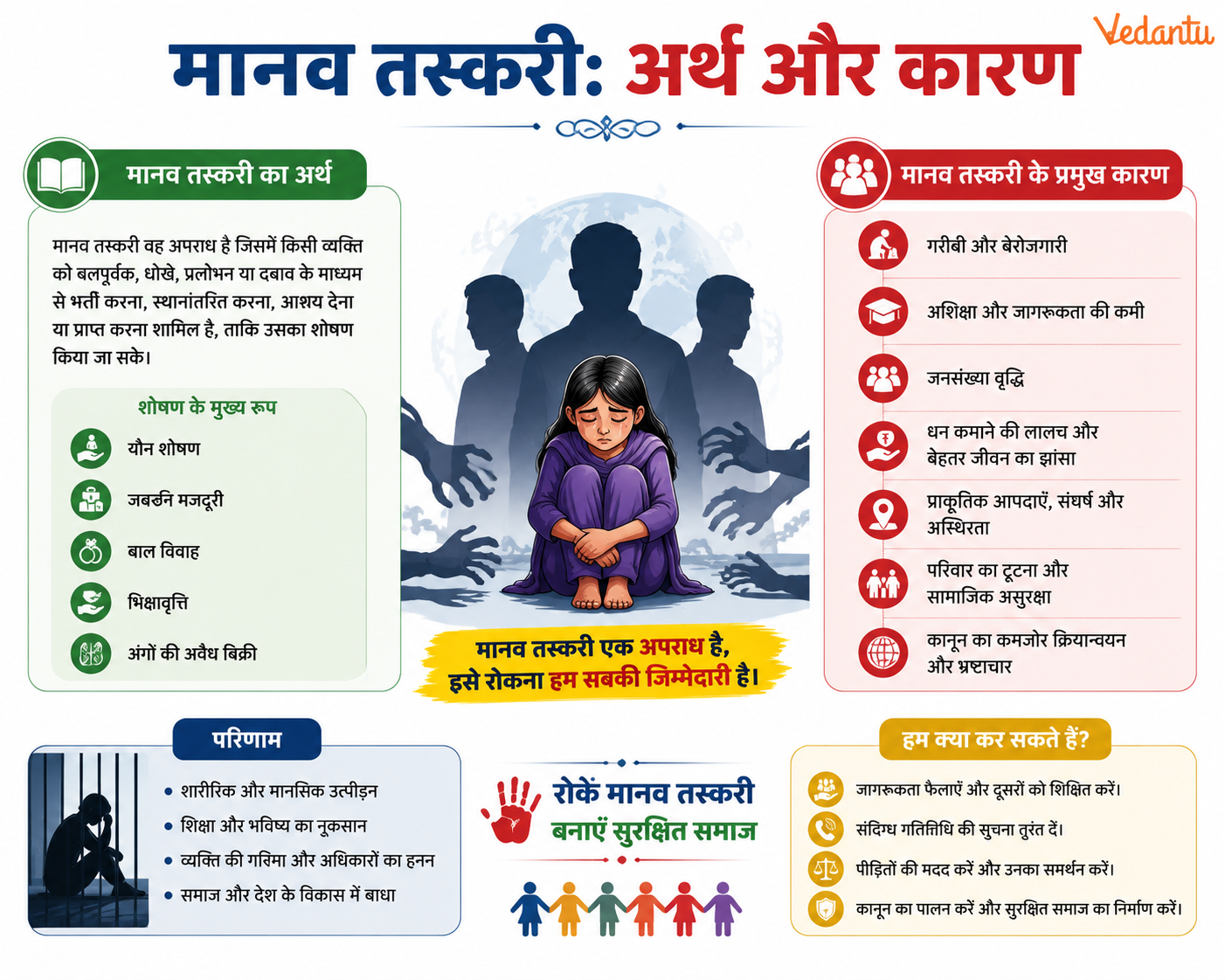
Meaning of Human Trafficking in Hindi
Human trafficking in Hindi is known as "मानव तस्करी". It refers to the illegal transportation, recruitment, transfer, or harboring of people through force, fraud, or coercion for the purpose of exploitation. Exploitation may include forced labor, sexual exploitation, slavery, organ trade, or child labor.
Definition According to Law
According to international law, especially the United Nations Palermo Protocol, human trafficking involves:
- Recruitment or transportation of persons
- Use of threat, force, coercion, fraud, or deception
- Purpose of exploitation such as prostitution, forced labor, slavery, or organ removal
In India, human trafficking is punishable under the Indian Penal Code and other special laws.
Types of Human Trafficking
Human trafficking can occur in different forms depending on the purpose of exploitation. The main types are:
- Sex trafficking - Forcing individuals into prostitution or other forms of sexual exploitation.
- Forced labor - Compelling people to work without pay in factories, farms, or homes.
- Child trafficking - Exploiting children for labor, begging, or illegal activities.
- Organ trafficking - Illegal removal and sale of human organs.
Reasons of Human Trafficking
Human trafficking happens due to several social, economic, and political factors. Understanding these reasons helps in prevention and awareness.
1. Poverty
Poverty is one of the main causes of human trafficking. Poor families are often lured by false promises of jobs and better opportunities. Traffickers take advantage of financial weakness.
2. Lack of Education
Illiteracy and lack of awareness make people vulnerable. Without education, individuals may not understand the risks involved in suspicious job offers.
3. Unemployment
High unemployment rates force people to search for work outside their regions. Traffickers misuse this situation by offering fake employment.
4. Gender Discrimination
Women and girls are more affected due to gender inequality. Discrimination, domestic violence, and child marriage increase their vulnerability.
5. Political Instability and Conflict
War, natural disasters, and political unrest displace people from their homes. Displaced populations become easy targets for traffickers.
6. Demand for Cheap Labor and Sexual Services
The demand for low cost labor and illegal services encourages traffickers to exploit victims for profit.
Major Causes and Their Impact
| Cause | Description | Impact |
|---|---|---|
| Poverty | Lack of basic needs and income | Increased vulnerability to false job offers |
| Unemployment | No stable job opportunities | Migration and risk of exploitation |
| Gender Inequality | Discrimination against women and girls | Higher cases of sexual trafficking |
The above table highlights the major causes and how they contribute to the problem of human trafficking. These interconnected factors make prevention more challenging.
Effects of Human Trafficking
Human trafficking has severe physical, emotional, and social consequences for victims and society.
- Violation of human rights
- Physical and mental trauma
- Spread of diseases
- Increase in organized crime
- Social instability
Prevention and Control Measures
Preventing human trafficking requires combined efforts from governments, organizations, and society.
- Strict implementation of anti trafficking laws
- Awareness campaigns in rural and urban areas
- Providing education and employment opportunities
- Support and rehabilitation for victims
Conclusion
Human trafficking or मानव तस्करी is a serious crime that violates basic human rights. It is driven by poverty, unemployment, gender inequality, and demand for exploitation. Understanding its meaning and reasons helps students and society become more aware and responsible. Strong laws, public awareness, and social support are essential to eliminate this problem. Every individual must contribute to preventing human trafficking and protecting human dignity.
FAQs on Meaning and Causes of Human Trafficking in Hindi: Simple Explanation for Students
1. मानव तस्करी (Human Trafficking) क्या है?
मानव तस्करी वह अवैध प्रक्रिया है जिसमें लोगों को धोखे, बल या लालच से शोषण के उद्देश्य से एक स्थान से दूसरे स्थान पर ले जाया जाता है।
• Human Trafficking में व्यक्तियों की खरीद-फरोख्त शामिल होती है।
• इसका उद्देश्य यौन शोषण, बंधुआ मजदूरी, बाल श्रम, अंग व्यापार आदि होता है।
• यह मानव अधिकारों का गंभीर उल्लंघन है।
• People Also Ask: मानव तस्करी का अर्थ क्या है? मानव व्यापार क्या होता है?
2. मानव तस्करी के मुख्य कारण क्या हैं?
मानव तस्करी के पीछे सामाजिक, आर्थिक और राजनीतिक कारण जिम्मेदार होते हैं।
• गरीबी और बेरोजगारी
• अशिक्षा और जागरूकता की कमी
• लिंग भेदभाव
• तेजी से शहरीकरण और प्रवासन
• सस्ते श्रम की मांग
• People Also Search: मानव तस्करी के कारण, reasons of human trafficking in Hindi
3. मानव तस्करी के प्रकार कौन-कौन से हैं?
मानव तस्करी कई रूपों में होती है जो विभिन्न प्रकार के शोषण से जुड़ी होती है।
• यौन तस्करी (Sex Trafficking)
• बंधुआ मजदूरी (Forced Labour)
• बाल तस्करी (Child Trafficking)
• अंग तस्करी (Organ Trafficking)
• जबरन विवाह
• Synonyms: मानव व्यापार, मानव शोषण
4. मानव तस्करी और मानव स्मगलिंग (Human Smuggling) में क्या अंतर है?
मानव तस्करी और मानव स्मगलिंग दोनों अलग अपराध हैं जिनका उद्देश्य और प्रकृति भिन्न है।
• Human Trafficking में शोषण मुख्य उद्देश्य होता है।
• Human Smuggling में अवैध रूप से सीमा पार कराना शामिल होता है।
• तस्करी में पीड़ित की सहमति नहीं होती, जबकि स्मगलिंग में प्रारंभिक सहमति हो सकती है।
• PAS: trafficking vs smuggling difference
5. भारत में मानव तस्करी से संबंधित प्रमुख कानून कौन सा है?
भारत में मानव तस्करी को रोकने के लिए कई कानूनी प्रावधान बनाए गए हैं।
• भारतीय दंड संहिता (IPC) की धारा 370
• अनैतिक देह व्यापार (निवारण) अधिनियम, 1956
• बाल श्रम (निषेध एवं विनियमन) अधिनियम
• POCSO Act, 2012
• People Also Ask: मानव तस्करी की सजा क्या है?
6. मानव तस्करी के प्रभाव क्या होते हैं?
मानव तस्करी के प्रभाव पीड़ित के शारीरिक, मानसिक और सामाजिक जीवन पर गंभीर पड़ते हैं।
• शारीरिक उत्पीड़न और हिंसा
• मानसिक आघात (Trauma)
• सामाजिक बहिष्कार
• शिक्षा और रोजगार से वंचित होना
• Keywords: effects of human trafficking, impact of human trafficking
7. मानव तस्करी से सबसे अधिक प्रभावित कौन होते हैं?
मानव तस्करी का शिकार समाज के कमजोर और असुरक्षित वर्ग अधिक होते हैं।
• महिलाएं और लड़कियां
• बच्चे
• गरीब और प्रवासी मजदूर
• प्राकृतिक आपदा या संघर्ष प्रभावित क्षेत्र के लोग
• PAS: who are victims of human trafficking
8. मानव तस्करी को रोकने के उपाय क्या हैं?
मानव तस्करी की रोकथाम के लिए सामूहिक प्रयास और सख्त कानून आवश्यक हैं।
• जागरूकता अभियान
• शिक्षा और रोजगार के अवसर बढ़ाना
• कानून का सख्त पालन
• सीमा सुरक्षा मजबूत करना
• NGO और सरकार का सहयोग
• Keywords: prevention of human trafficking in Hindi
9. वैश्विक स्तर पर मानव तस्करी की स्थिति क्या है?
मानव तस्करी एक वैश्विक समस्या है जो लगभग सभी देशों को प्रभावित करती है।
• संयुक्त राष्ट्र (United Nations) ने इसे अंतरराष्ट्रीय अपराध घोषित किया है।
• लाखों लोग हर वर्ष तस्करी का शिकार होते हैं।
• यह संगठित अपराध नेटवर्क से जुड़ा होता है।
• People Also Search: global human trafficking statistics
10. मानव तस्करी और बाल तस्करी में क्या संबंध है?
बाल तस्करी, मानव तस्करी का ही एक गंभीर रूप है जिसमें बच्चों का शोषण किया जाता है।
• Child Trafficking में बच्चों को मजदूरी, भीख मंगवाने या यौन शोषण के लिए उपयोग किया जाता है।
• यह बाल अधिकारों का उल्लंघन है।
• बच्चों को शिक्षा और सुरक्षा से वंचित किया जाता है।
• PAS: बाल तस्करी क्या है?
