






Major Rivers of Bihar: Ganga, Kosi, Gandak and Their Importance
The major rivers in Bihar play a vital role in shaping the state’s geography, agriculture, economy, and culture. Bihar is a landlocked state in eastern India, but it is richly blessed with perennial rivers, most of which originate in the Himalayas and flow southward into the Ganga. These rivers deposit fertile alluvial soil, making Bihar one of the most agriculturally productive regions in India. However, they also cause frequent floods due to heavy monsoon rainfall and silt deposition. Understanding the major rivers in Bihar is important for school exams, competitive exams like UPSC, BPSC, SSC, and for general knowledge.
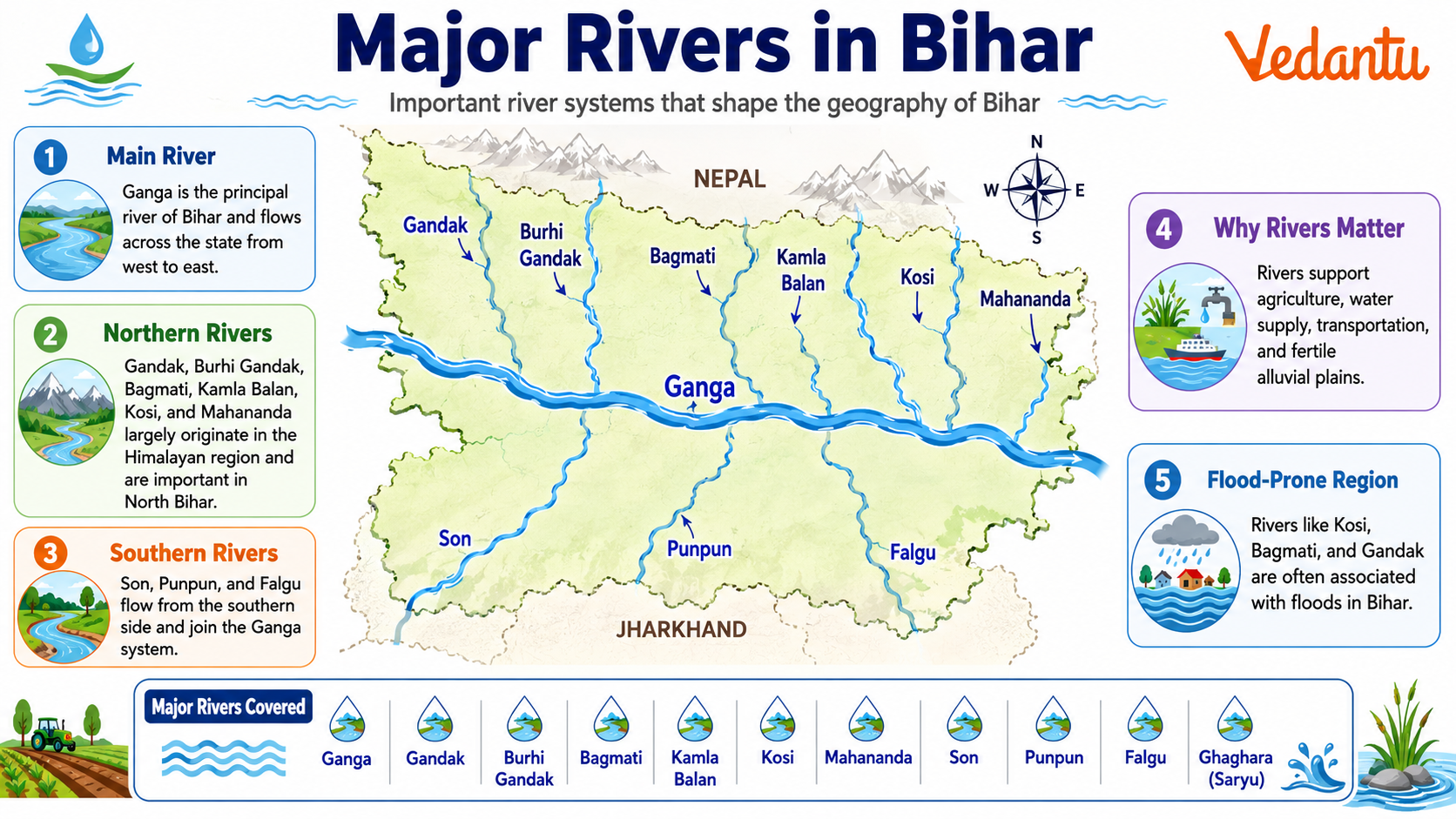
Overview of River System in Bihar
The river system of Bihar is mainly divided into two parts based on their location in relation to the Ganga River:
- Rivers flowing north of the Ganga - Mostly originate from the Himalayas and are prone to floods.
- Rivers flowing south of the Ganga - Originate from the Peninsular plateau and have comparatively less water flow.
The Ganga River is the most important river of Bihar and acts as the central drainage system of the state.
Major Rivers of Bihar
1. Ganga River
The Ganga is the lifeline of Bihar. It enters Bihar from Uttar Pradesh near Buxar and flows eastward across the state before entering West Bengal. Many major tributaries join the Ganga within Bihar.
- Length in Bihar - About 445 km
- Major cities on its banks - Patna, Bhagalpur, Munger, Buxar
- Major tributaries - Kosi, Gandak, Son, Ghaghara
2. Kosi River
The Kosi River is known as the Sorrow of Bihar due to its frequent floods and shifting course. It originates in the Himalayas of Nepal and enters Bihar near Supaul.
- Forms a large alluvial fan in north Bihar
- Prone to heavy silt deposition
- Joins the Ganga near Kursela
3. Gandak River
The Gandak River originates in the Nepal Himalayas and enters Bihar near Valmikinagar. It flows through north Bihar before joining the Ganga near Patna.
- Also known as Narayani in Nepal
- Important for irrigation through Gandak Project
- Supports agriculture in Champaran region
4. Son River
The Son River originates near Amarkantak in Madhya Pradesh and flows through Jharkhand before entering Bihar. It joins the Ganga near Patna.
- One of the largest southern tributaries of the Ganga
- Wide river bed with seasonal flow variation
- Indrapuri Barrage built on this river
5. Ghaghara River
The Ghaghara River originates in Tibet and flows through Nepal and Uttar Pradesh before touching northern Bihar and joining the Ganga.
- Also called Karnali in upper reaches
- Contributes significantly to flood conditions
- Major Himalayan tributary of the Ganga
Major Rivers in Bihar - Quick Facts Table
| River | Origin | Joins |
|---|---|---|
| Ganga | Gangotri Glacier | Bay of Bengal |
| Kosi | Nepal Himalayas | Ganga River |
| Gandak | Nepal Himalayas | Ganga River |
| Son | Amarkantak Plateau | Ganga River |
| Ghaghara | Tibet | Ganga River |
The above table highlights the origin and confluence of the major rivers flowing through Bihar. Most rivers ultimately drain into the Ganga, making it the central river of the state.
Importance of Major Rivers in Bihar
1. Agriculture
The rivers deposit fertile alluvial soil which supports the cultivation of rice, wheat, maize, and pulses. Irrigation canals from Gandak and Son projects are highly beneficial for farmers.
2. Floods and Challenges
While rivers are beneficial, north Bihar frequently faces floods due to heavy rainfall in Nepal and silt deposition. The Kosi and Gandak rivers are especially flood prone.
3. Transportation and Culture
The Ganga supports inland water transport and has great religious and cultural importance. Many historic cities developed along river banks.
Exam Oriented Key Points
- Ganga divides Bihar into North and South Bihar.
- Kosi is called the Sorrow of Bihar.
- Gandak is known as Narayani in Nepal.
- Son is the main southern tributary of the Ganga in Bihar.
- Most rivers of Bihar are part of the Ganga river system.
Conclusion
The major rivers in Bihar form the backbone of the state’s geography and economy. The Ganga and its tributaries such as Kosi, Gandak, Son, and Ghaghara shape the landforms, influence agriculture, and affect the lives of millions of people. While they provide fertile soil and irrigation, they also pose challenges in the form of floods. A clear understanding of these rivers is essential for academic exams, state level competitive exams, and general awareness.
FAQs on Major Rivers of Bihar – Complete Guide for Students
1. Which is the largest river in Bihar?
The Ganga River is the largest and most important river in Bihar, flowing across the state from west to east.
• It enters Bihar at Buxar and flows through Patna, Bhagalpur, and other districts.
• It divides Bihar into North Bihar and South Bihar.
• Major tributaries include Kosi, Gandak, Ghaghara, and Son.
• It is also called the lifeline of Bihar and is important for agriculture and transportation.
2. What are the major rivers in Bihar?
Bihar has several major rivers that support agriculture, irrigation, and daily life in the state.
• Ganga – Main river of Bihar
• Kosi – Known as the "Sorrow of Bihar"
• Gandak – Major northern tributary
• Ghaghara – Important Himalayan river
• Son – Major southern tributary of the Ganga
• Bagmati – Flood-prone river in North Bihar
These rivers are commonly asked in GK questions, competitive exams, and Bihar state exams.
3. Why is the Kosi River called the "Sorrow of Bihar"?
The Kosi River is called the "Sorrow of Bihar" because it frequently causes devastating floods.
• It originates in the Himalayas of Nepal.
• It carries heavy silt and changes its course frequently.
• Flooding affects districts like Supaul, Saharsa, and Madhepura.
• It is one of the most flood-prone rivers in India.
This nickname is commonly seen in GK and People Also Ask (PAA) queries.
4. Where does the Son River originate and join?
The Son River originates from the Amarkantak Plateau in Madhya Pradesh and joins the Ganga in Bihar.
• It flows through Madhya Pradesh, Uttar Pradesh, and Bihar.
• It joins the Ganga near Patna (Danapur area).
• It is one of the major southern tributaries of the Ganga.
• Known for its wide sandy riverbed.
This river is important for irrigation and hydropower projects.
5. Which rivers of Bihar originate from the Himalayas?
Several major rivers of Bihar originate from the Himalayas in Nepal.
• Kosi River
• Gandak River
• Bagmati River
• Ghaghara River
These Himalayan rivers carry heavy rainfall water and silt, making North Bihar flood-prone and agriculturally fertile.
6. How does the Ganga River divide Bihar geographically?
The Ganga River divides Bihar into North Bihar and South Bihar.
• North Bihar – Fertile plains, flood-prone, Himalayan tributaries.
• South Bihar – Slightly elevated land, rivers like Son and Punpun.
• Major cities like Patna are located on the southern bank.
This division is frequently asked in school exams and state-level GK tests.
7. What is the importance of rivers in Bihar?
Rivers in Bihar play a crucial role in agriculture, economy, and daily life.
• Provide irrigation for crops like rice and wheat.
• Deposit fertile alluvial soil in plains.
• Support fishing and transportation.
• Help in religious and cultural activities along the Ganga.
They are central to Bihar’s geography and economy.
8. Which river is known for frequent flooding in North Bihar?
The Kosi River is most famous for frequent flooding in North Bihar.
• Changes its course frequently due to heavy silt.
• Causes large-scale damage to crops and property.
• Affects districts like Saharsa and Supaul.
• Managed through embankments and flood control projects.
This river is often mentioned in disaster management and geography GK questions.
9. Which river joins the Ganga near Patna?
The Son River joins the Ganga near Patna.
• Confluence occurs near Danapur (west of Patna).
• It is a major right-bank tributary of the Ganga.
• Important for irrigation canals in South Bihar.
This confluence is a commonly asked fact in competitive exams.
10. Which river is called the lifeline of Bihar?
The Ganga River is called the lifeline of Bihar.
• Flows across the entire state from west to east.
• Supports agriculture, drinking water supply, and trade.
• Has major tributaries like Kosi, Gandak, and Son.
• Holds great religious and cultural significance.
It is the most important river in Bihar for geography and GK preparation.
