






List of Major International Airports in India with Cities and Key Facts
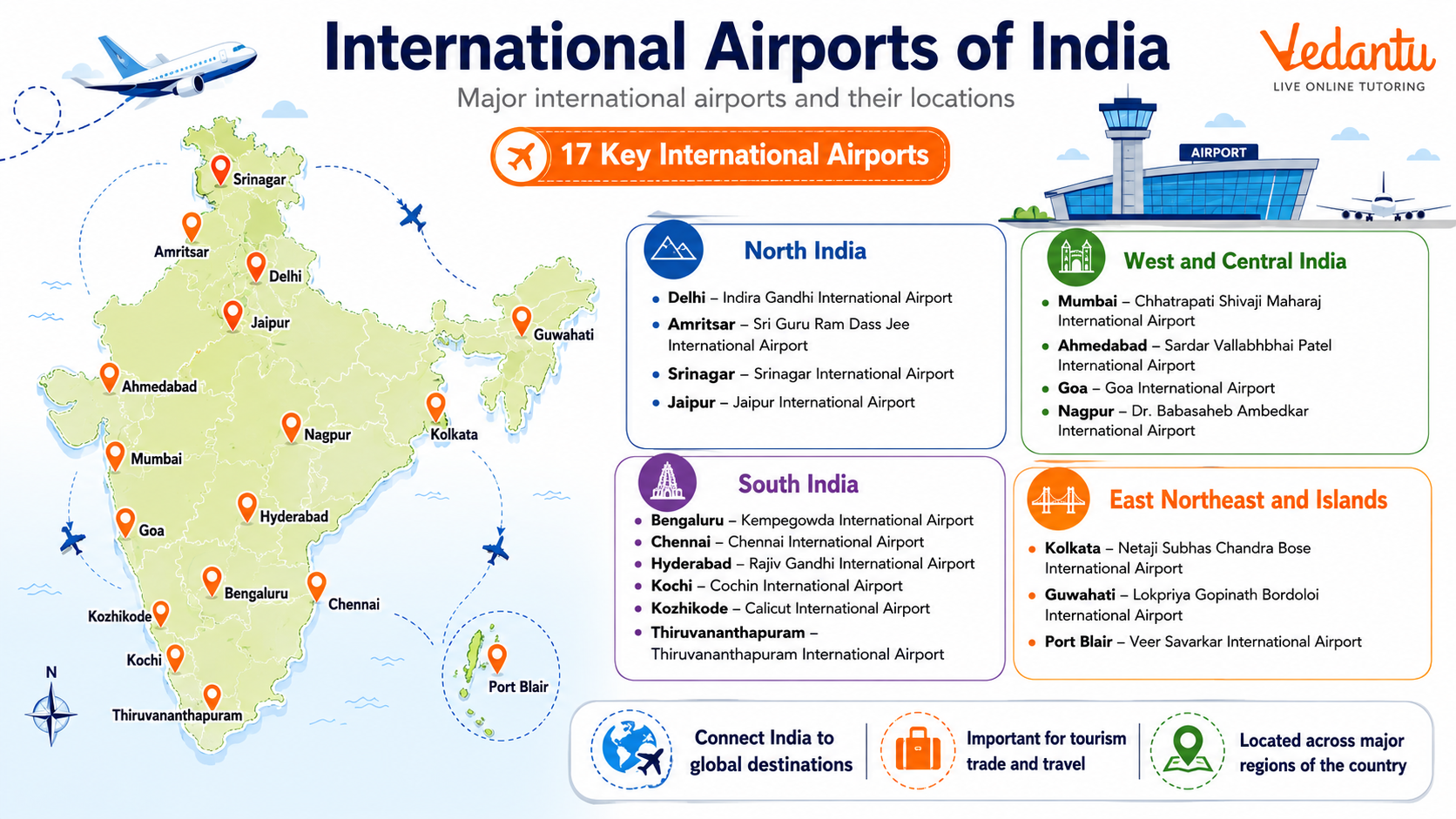
International Airports of India play a vital role in connecting the country with the rest of the world. These airports handle international flights, cargo operations, tourism movement, and global trade. For students and competitive exam aspirants, knowledge about major international airports, their locations, and their importance is an essential part of General Knowledge. India has several international airports spread across different states, facilitating economic growth and cultural exchange.
What is an International Airport?
An international airport is an airport equipped with customs and immigration facilities to handle international flights to and from other countries. These airports meet global aviation standards and provide services such as passenger terminals, cargo handling, security checks, and runway infrastructure suitable for long-distance aircraft.
Key Features of International Airports
- Customs and immigration facilities
- Long runways for wide-body aircraft
- International passenger terminals
- Advanced security systems
- Cargo terminals for international trade
Major International Airports of India
India has more than 30 international airports operated by the Airports Authority of India and private operators. Below is a list of some of the most important international airports across different regions of India.
List of Major International Airports in India
| Airport Name | Location | State / UT |
|---|---|---|
| Indira Gandhi International Airport | New Delhi | Delhi |
| Chhatrapati Shivaji Maharaj International Airport | Mumbai | Maharashtra |
| Kempegowda International Airport | Bengaluru | Karnataka |
| Chennai International Airport | Chennai | Tamil Nadu |
| Netaji Subhas Chandra Bose International Airport | Kolkata | West Bengal |
| Rajiv Gandhi International Airport | Hyderabad | Telangana |
| Cochin International Airport | Kochi | Kerala |
| Sardar Vallabhbhai Patel International Airport | Ahmedabad | Gujarat |
| Lokpriya Gopinath Bordoloi International Airport | Guwahati | Assam |
| Jaipur International Airport | Jaipur | Rajasthan |
These airports serve as major gateways for international travel and handle millions of passengers every year. Indira Gandhi International Airport in Delhi is one of the busiest airports in India in terms of passenger traffic.
Region-wise Distribution of International Airports
North India
- Indira Gandhi International Airport - Delhi
- Jaipur International Airport - Rajasthan
- Sri Guru Ram Dass Jee International Airport - Amritsar
South India
- Chennai International Airport - Tamil Nadu
- Kempegowda International Airport - Karnataka
- Cochin International Airport - Kerala
- Rajiv Gandhi International Airport - Telangana
West India
- Chhatrapati Shivaji Maharaj International Airport - Maharashtra
- Sardar Vallabhbhai Patel International Airport - Gujarat
- Goa International Airport - Goa
East and North East India
- Netaji Subhas Chandra Bose International Airport - West Bengal
- Lokpriya Gopinath Bordoloi International Airport - Assam
Importance of International Airports in India
International airports contribute significantly to India's economic development. They promote tourism, enhance trade, and strengthen diplomatic relations. Airports also create employment opportunities and support the aviation and hospitality industries.
- Boost international tourism
- Facilitate global trade and cargo transport
- Strengthen connectivity with other nations
- Support regional economic growth
Important Facts for Competitive Exams
- Indira Gandhi International Airport is one of the busiest airports in India.
- Cochin International Airport is the world's first fully solar powered airport.
- Airports Authority of India manages many international airports in the country.
- Several new airports are being developed under the UDAN scheme.
Conclusion
International Airports of India are crucial for global connectivity, economic growth, and national development. Understanding their locations and importance is essential for students preparing for competitive examinations and general awareness. With continuous infrastructure development and modernization, India is strengthening its position in global aviation.
FAQs on International Airports in India – Complete Guide for Students
1. What are international airports in India?
International airports in India are airports authorized to handle international flights, including customs and immigration services.
• Operate flights between India and foreign countries
• Provide customs, immigration, and quarantine facilities
• Managed by the Airports Authority of India (AAI) or private operators
• Important for global trade, tourism, and connectivity
These airports play a key role in India’s aviation network and international travel system.
2. How many international airports are there in India in 2026?
As of 2026, India has more than 30 international airports operating across different states.
• Major hubs include Delhi, Mumbai, Bengaluru, Chennai, and Hyderabad
• Several state capitals have international status
• The number increases as new airports are upgraded
• Important for competitive exams and GK preparation
The total count may change as the government upgrades domestic airports to international status.
3. Which is the largest international airport in India?
The largest international airport in India is Indira Gandhi International Airport (IGI), New Delhi.
• Located in Delhi
• One of the busiest airports in South Asia
• Terminal 3 is among the largest airport terminals globally
• Major hub for international and domestic flights
It handles the highest passenger traffic in India.
4. Which is the busiest international airport in India?
The busiest international airport in India is Indira Gandhi International Airport, Delhi based on passenger traffic.
• Handles millions of passengers annually
• Major hub for airlines like Air India and IndiGo
• Connects India to Europe, USA, Asia, and the Middle East
• Important for international cargo movement
It consistently ranks among the top airports in Asia.
5. Which is the first international airport in India?
The first international airport in India was Chhatrapati Shivaji Maharaj International Airport, Mumbai.
• Located in Mumbai, Maharashtra
• Earlier known as Sahar International Airport
• One of the oldest aviation hubs in India
• Major gateway for international trade and travel
It played a crucial role in the development of civil aviation in India.
6. Which state in India has the highest number of international airports?
Kerala has the highest number of international airports among Indian states.
• Thiruvananthapuram International Airport
• Cochin International Airport
• Calicut International Airport
• Kannur International Airport
This is due to high overseas travel demand, especially to the Middle East.
7. What is the role of the Airports Authority of India (AAI)?
The Airports Authority of India (AAI) manages and develops civil aviation infrastructure in India.
• Controls many international and domestic airports
• Provides air traffic management services
• Ensures aviation safety and airport maintenance
• Works under the Ministry of Civil Aviation
AAI plays a key role in expanding India’s airport network.
8. Which is the first fully solar-powered international airport in India?
The first fully solar-powered international airport in India is Cochin International Airport in Kerala.
• Located in Kochi, Kerala
• Powered completely by solar energy
• Recognized globally for sustainable development
• Model for green airports worldwide
It is an important example of eco-friendly aviation infrastructure.
9. Why are international airports important for India?
International airports are vital for India’s economic growth and global connectivity.
• Promote international trade and exports
• Boost tourism and foreign exchange
• Create employment opportunities
• Strengthen diplomatic and global relations
They serve as gateways connecting India with the rest of the world.
10. What facilities are available at international airports in India?
International airports in India provide advanced facilities for global passengers.
• Customs and immigration counters
• Duty-free shops
• Currency exchange and banking services
• VIP lounges and cargo terminals
• Security and baggage handling systems
These facilities ensure smooth international travel and passenger convenience.
