






Why Is Easter Celebrated and What Does It Symbolize?
Easter is one of the most important festivals in Christianity. It celebrates the resurrection of Jesus Christ from the dead, which Christians believe happened three days after his crucifixion. Easter is a movable festival, meaning its date changes every year. It usually falls between March 22 and April 25. The festival represents hope, renewal, and new life, and it is observed with religious services, family gatherings, and cultural traditions around the world.
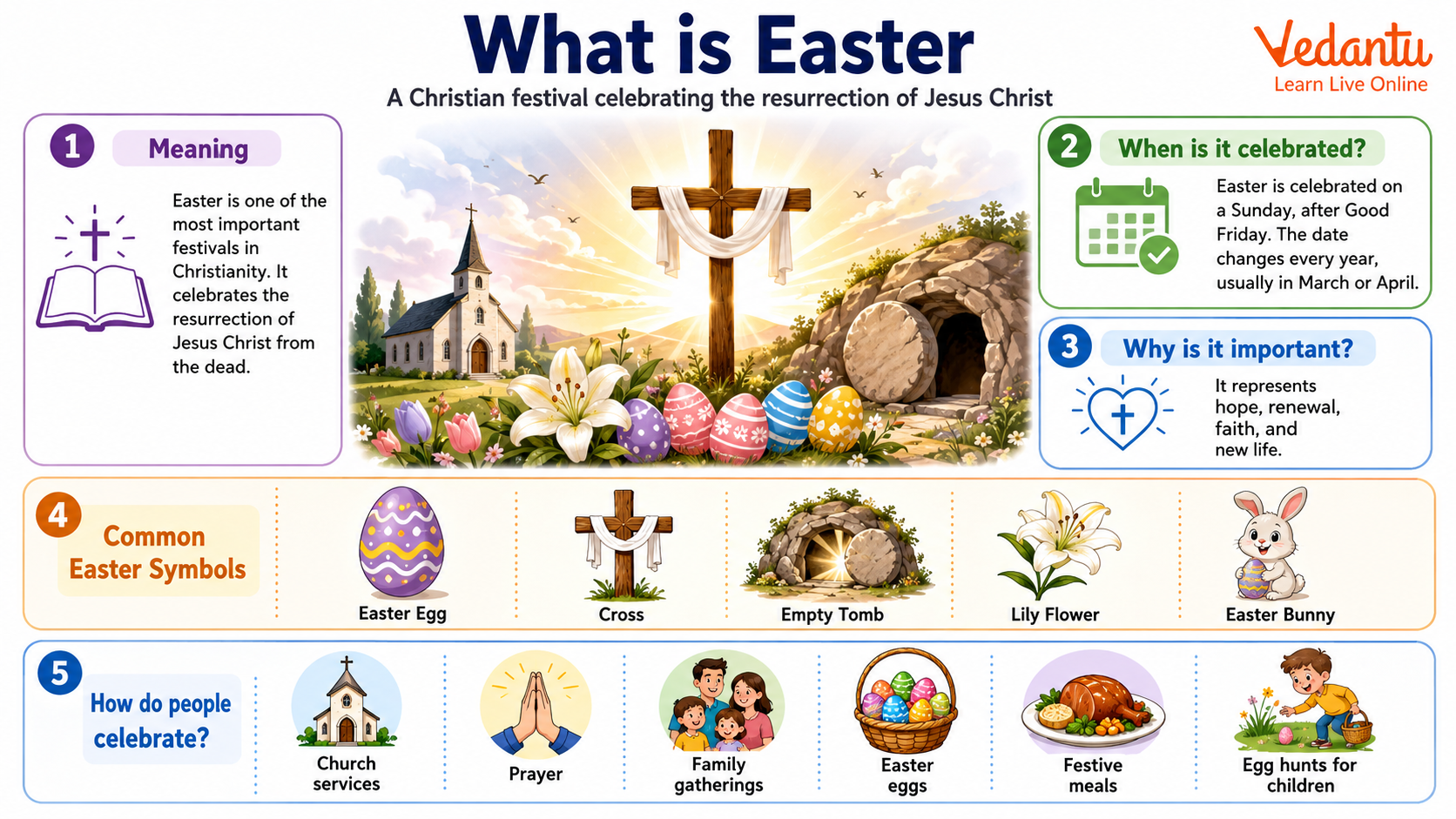
What Is Easter?
Easter is a Christian festival that marks the resurrection of Jesus Christ. According to the New Testament of the Bible, Jesus was crucified on Good Friday and rose from the dead on the third day, known as Easter Sunday. The resurrection is considered the foundation of Christian faith because it symbolizes victory over sin and death.
Easter comes at the end of Holy Week, which includes important days such as Palm Sunday, Maundy Thursday, Good Friday, and Holy Saturday. Each of these days holds religious significance for Christians.
When Is Easter Celebrated?
Easter does not have a fixed date. It is celebrated on the first Sunday after the full moon that follows the spring equinox. Because of this calculation, Easter can occur anytime between March 22 and April 25.
How the Date Is Determined
- The spring equinox is considered to be on March 21.
- The first full moon after March 21 is identified.
- Easter is celebrated on the first Sunday following that full moon.
Eastern Orthodox churches may celebrate Easter on a different date because they follow the Julian calendar instead of the Gregorian calendar.
Historical Background of Easter
The origins of Easter go back nearly 2000 years. It is linked to the Jewish festival of Passover, as the crucifixion and resurrection of Jesus took place during this time. Early Christians began celebrating the resurrection as the most important event in their faith.
The word "Easter" is believed to have come from Eostre, the name of an Anglo Saxon goddess associated with spring and fertility. Over time, Christian and local traditions blended in some cultures.
Significance of Easter
Easter holds deep religious and spiritual meaning for Christians. It is considered the most important festival in the Christian calendar.
- Represents the resurrection of Jesus Christ.
- Symbolizes hope, renewal, and eternal life.
- Marks the victory of life over death.
- Strengthens faith and community bonding.
Common Easter Symbols and Their Meanings
| Symbol | Meaning | Importance |
|---|---|---|
| Easter Egg | New life and rebirth | Represents resurrection |
| Easter Bunny | Fertility and spring | Cultural tradition |
| Lily | Purity and hope | Common church decoration |
These symbols combine religious and cultural traditions. While eggs and lilies are connected to themes of new life, the Easter bunny is more of a popular cultural figure, especially among children.
How Easter Is Celebrated
Easter celebrations vary across countries and cultures, but religious observances are central to the festival.
Religious Practices
- Special church services on Easter Sunday.
- Prayer, hymns, and reading from the Bible.
- Holy Communion in many denominations.
Cultural Traditions
- Easter egg hunts for children.
- Exchanging chocolates and gifts.
- Family meals and gatherings.
Difference Between Good Friday and Easter Sunday
| Aspect | Good Friday | Easter Sunday |
|---|---|---|
| Event | Crucifixion of Jesus | Resurrection of Jesus |
| Mood | Solemn and reflective | Joyful and celebratory |
| Purpose | Remember sacrifice | Celebrate new life |
Good Friday and Easter Sunday are closely connected. Good Friday focuses on sacrifice and suffering, while Easter Sunday celebrates hope and resurrection.
Interesting Facts About Easter
- Easter is the oldest and most important Christian festival.
- The tradition of decorating eggs dates back to ancient times.
- In many countries, Easter Monday is also a public holiday.
- The 40 day period before Easter is called Lent, observed through fasting and prayer.
Conclusion
Easter is a major Christian festival that celebrates the resurrection of Jesus Christ and symbolizes hope, renewal, and new beginnings. It is observed with both religious devotion and joyful cultural traditions across the world. Understanding Easter helps students appreciate its religious significance, historical background, and global impact. As an important topic in General Knowledge, it highlights cultural diversity and religious beliefs practiced worldwide.
FAQs on What Is Easter? A Simple Guide for Students
1. What is Easter?
Easter is a major Christian festival that celebrates the resurrection of Jesus Christ from the dead.
• It marks Jesus rising on the third day after His crucifixion.
• It is considered the most important event in Christianity.
• The festival symbolizes hope, renewal, and new life.
• It is also known as Resurrection Sunday in many countries.
2. Why is Easter celebrated?
Easter is celebrated to honor the resurrection of Jesus Christ, which signifies victory over sin and death.
• According to the Bible, Jesus rose from the dead after being crucified on Good Friday.
• It confirms the belief in eternal life in Christian teachings.
• The celebration strengthens faith among Christians worldwide.
3. When is Easter celebrated?
Easter is celebrated on a Sunday between March 22 and April 25, depending on the lunar calendar.
• It falls on the first Sunday after the full moon following the spring equinox.
• The date changes every year.
• Both Western and Eastern Churches may celebrate it on different dates.
4. What is the significance of Good Friday and Easter Sunday?
Good Friday and Easter Sunday are key events in the Holy Week of Christianity.
• Good Friday marks the crucifixion and death of Jesus Christ.
• Easter Sunday celebrates His resurrection.
• Together, they represent sacrifice, forgiveness, and salvation.
5. What are common Easter symbols and their meanings?
Easter symbols represent themes of new life and resurrection.
• Easter Eggs: Symbolize rebirth and new beginnings.
• Easter Bunny: Represents fertility and life.
• Cross: Signifies Jesus’ sacrifice.
• Lily flower: Symbol of purity and hope.
6. How do people celebrate Easter around the world?
People celebrate Easter with religious services and cultural traditions across the world.
• Attend church services and prayer gatherings.
• Organize Easter egg hunts for children.
• Share festive meals with family.
• Participate in parades and community events in countries like the USA, UK, and Australia.
7. What is Holy Week in Christianity?
Holy Week is the week leading up to Easter Sunday and commemorates the final days of Jesus Christ.
• Begins with Palm Sunday.
• Includes Maundy Thursday (Last Supper).
• Observes Good Friday (Crucifixion).
• Ends with Easter Sunday (Resurrection).
8. Is Easter a public holiday?
Easter is a public holiday in many countries with significant Christian populations.
• Observed as a national holiday in countries like the United Kingdom, United States, Canada, and Australia.
• Schools and offices may remain closed on Good Friday or Easter Monday.
• It is widely recognized as a major religious festival.
9. What is the difference between Easter and Christmas?
Easter and Christmas are major Christian festivals but celebrate different events in Jesus’ life.
• Christmas celebrates the birth of Jesus Christ on December 25.
• Easter celebrates His resurrection from the dead.
• Easter is considered the most important Christian festival because it represents salvation and eternal life.
10. What is the importance of Easter in General Knowledge (GK) exams?
Easter is important in General Knowledge (GK) and competitive exams due to its religious and cultural significance.
• Questions may ask about the date calculation of Easter.
• Important terms include Good Friday, Holy Week, Resurrection.
• It is commonly asked in sections related to religious festivals of the world and cultural studies.
