






List of Major Hydropower Projects in India with States and Capacity
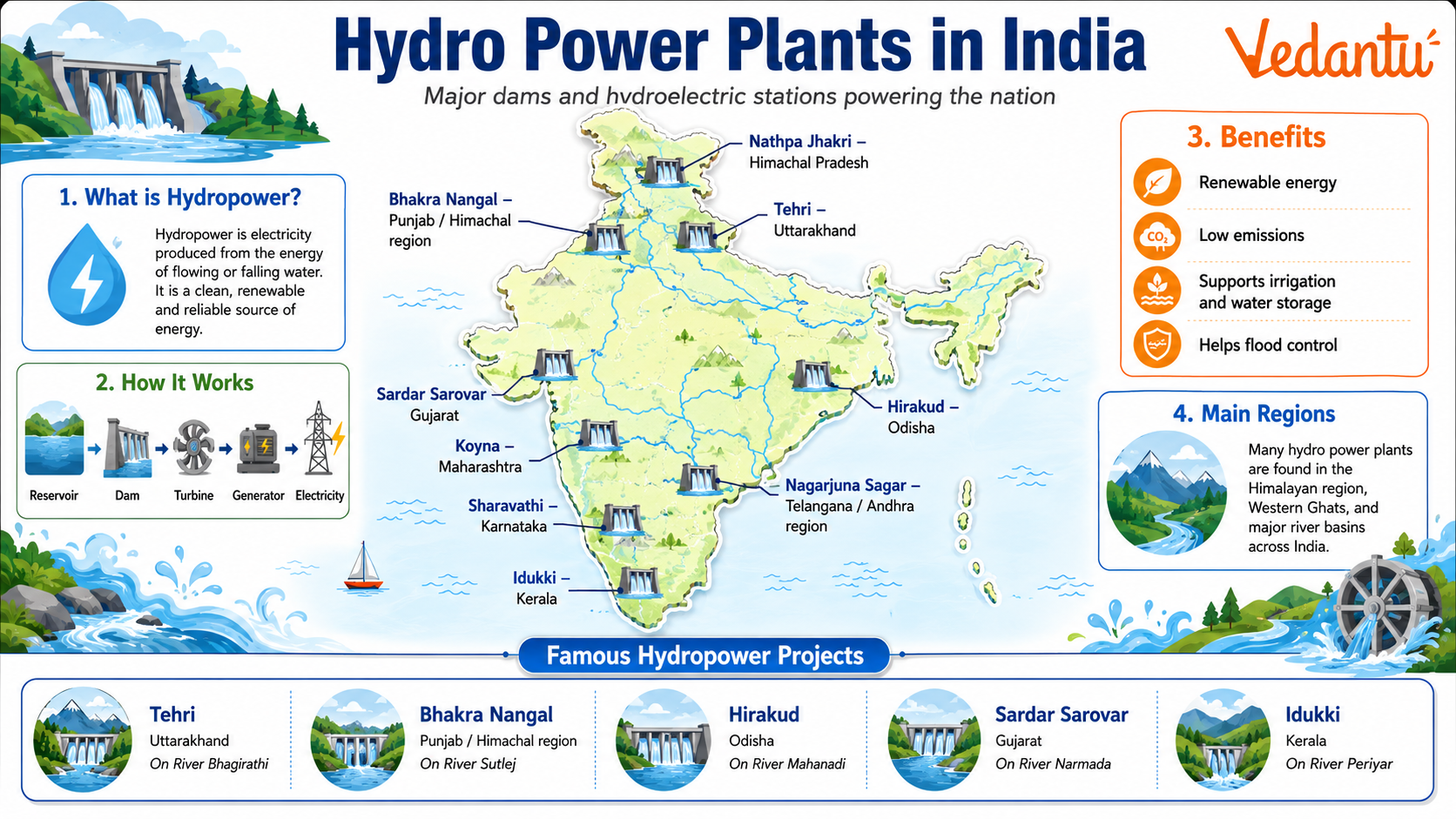
Hydro Power Plants in India play a vital role in meeting the country’s growing energy demands through clean and renewable sources. Hydropower is generated by using the energy of flowing or falling water to rotate turbines connected to generators. India, with its vast river systems such as the Ganga, Brahmaputra, and Indus, has significant potential for hydroelectric power generation. These plants not only produce electricity but also support irrigation, flood control, and water supply. Hydropower is considered one of the oldest and most reliable sources of renewable energy in India.
What is a Hydro Power Plant?
A hydro power plant is a facility that converts the kinetic and potential energy of water into electrical energy. Water stored at a height in a dam flows through turbines. The force of moving water rotates the turbine blades, which drive a generator to produce electricity. The generated power is then transmitted through transmission lines to different regions.
Main Components of a Hydro Power Plant
- Dam - Stores water and creates a reservoir.
- Reservoir - Large water body stored behind the dam.
- Penstock - Pipe that carries water from the reservoir to the turbine.
- Turbine - Rotates due to flowing water.
- Generator - Converts mechanical energy into electrical energy.
- Transformer - Increases voltage for power transmission.
Hydropower Potential in India
India has an estimated hydropower potential of more than 1,45,000 MW. The Himalayan rivers contribute the highest potential due to their steep gradients and perennial water flow. States like Himachal Pradesh, Uttarakhand, Arunachal Pradesh, and Jammu and Kashmir are rich in hydropower resources. The government promotes hydro projects to ensure sustainable development and reduce dependence on fossil fuels.
Major Hydro Power Plants in India
List of Important Hydro Power Plants in India
| Power Plant | River | State |
|---|---|---|
| Bhakra Nangal | Sutlej | Himachal Pradesh |
| Tehri Dam | Bhagirathi | Uttarakhand |
| Sardar Sarovar | Narmada | Gujarat |
| Hirakud Dam | Mahanadi | Odisha |
| Nagarjuna Sagar | Krishna | Telangana |
These hydro power plants are among the largest and most significant in India. They contribute substantially to regional and national electricity supply while also supporting irrigation and flood control activities.
Types of Hydro Power Plants
- Storage Plants - Use dams to store water and release it when required.
- Run-of-the-River Plants - Generate power without large reservoirs.
- Pumped Storage Plants - Pump water to a higher level during low demand and release during peak demand.
Advantages of Hydro Power Plants
- Renewable and clean source of energy.
- Low operating and maintenance cost.
- Long operational life of plants.
- Helps in flood control and irrigation.
- Reduces dependence on coal and fossil fuels.
Disadvantages of Hydro Power Plants
- High initial construction cost.
- Displacement of local communities.
- Environmental impact on aquatic life.
- Dependence on rainfall and water availability.
Importance of Hydro Power in India
Hydro power is crucial for India’s energy security and sustainable growth. It supports peak load management and stabilizes the power grid. Pumped storage projects help balance renewable sources like solar and wind power. With increasing emphasis on clean energy, hydropower remains a key component of India’s renewable energy mix. The development of hydro power plants also contributes to regional development by improving infrastructure and employment opportunities.
Conclusion
Hydro Power Plants in India are an essential part of the country’s renewable energy framework. With abundant river systems and favorable geography, India has immense potential to expand hydropower generation. Major projects like Bhakra Nangal, Tehri, and Sardar Sarovar highlight the importance of hydroelectricity in national development. Despite environmental and social challenges, hydropower continues to be a reliable, sustainable, and eco-friendly source of electricity for the nation.
FAQs on Hydropower Plants in India – Major Projects and Key Facts
1. What are hydro power plants in India?
Hydro power plants in India are electricity-generating stations that use the energy of flowing or falling water to produce power. Hydroelectric power plants convert water energy into electricity through:
• Dams built across rivers
• Turbines rotated by flowing water
• Generators that produce electricity
India is one of the largest producers of hydropower energy in the world, making it a key source of renewable energy, clean energy, and sustainable electricity production.
2. Which is the largest hydro power plant in India?
The Tehri Hydro Power Plant in Uttarakhand is the largest hydro power plant in India. Key details include:
• Located on the Bhagirathi River
• Installed capacity of about 1000 MW
• One of the tallest dams in the world
It plays a major role in power generation in North India and supports irrigation and water supply.
3. What are the major hydro power plants in India?
India has several major hydroelectric projects that contribute significantly to national power generation. Important hydro power plants in India include:
• Tehri Dam – Uttarakhand
• Bhakra Nangal Dam – Himachal Pradesh/Punjab
• Sardar Sarovar Dam – Gujarat
• Hirakud Dam – Odisha
• Nathpa Jhakri Project – Himachal Pradesh
These projects support renewable electricity, irrigation, and flood control.
4. Which river has the most hydro power plants in India?
The Ganga River system and its tributaries have the highest concentration of hydro power plants in India. Major rivers used for hydroelectric projects include:
• Ganga and its tributaries (Bhagirathi, Alaknanda)
• Brahmaputra
• Sutlej
• Narmada
These rivers provide strong water flow suitable for large-scale hydropower generation.
5. What are the advantages of hydro power plants in India?
Hydro power plants in India offer clean and renewable energy with multiple long-term benefits. Key advantages include:
• Renewable and eco-friendly energy source
• Low greenhouse gas emissions
• Supports irrigation and flood control
• Long operational life and low maintenance cost
• Reduces dependence on fossil fuels
This makes hydroelectric power an important part of India’s sustainable development.
6. What are the disadvantages of hydro power plants?
Hydro power plants have environmental and social challenges despite being renewable. Major disadvantages include:
• Displacement of local communities
• Impact on aquatic ecosystems
• High initial construction cost
• Risk of floods if dam failure occurs
• Dependence on rainfall and water availability
These concerns are often discussed in topics like environmental impact of dams and sustainable hydropower development.
7. Which state produces the highest hydroelectric power in India?
States like Himachal Pradesh, Uttarakhand, and Arunachal Pradesh are leading producers of hydroelectric power in India. Key points:
• Abundant river systems and hilly terrain
• Presence of large dams like Nathpa Jhakri
• High potential for future hydropower projects
These states play a crucial role in India’s renewable energy capacity.
8. What is the installed hydro power capacity of India?
India has an installed hydro power capacity of over 45,000 MW, making it one of the top hydropower producers globally. Important facts:
• Accounts for around 10–12% of total electricity generation
• Includes large hydro projects and small hydro plants
• Managed by agencies like NHPC (National Hydroelectric Power Corporation)
This capacity supports India’s goal of expanding clean and green energy.
9. What is a pumped storage hydro power plant?
A pumped storage hydro power plant stores energy by moving water between two reservoirs at different heights. It works through:
• Pumping water upward during low electricity demand
• Releasing water to generate power during peak demand
• Acting as an energy storage system
Such pumped storage projects improve grid stability and support renewable energy integration in India.
10. Why is hydro power important for India?
Hydro power is important for India because it provides reliable, renewable, and sustainable electricity. Its significance includes:
• Reduces dependence on coal and fossil fuels
• Supports rural electrification
• Helps in water management and irrigation
• Contributes to India’s climate change goals
Thus, hydro power plants in India remain a key pillar of national energy security and green development.
