






Key Characteristics of Generation Z in Modern Society
Generation Z, commonly known as Gen Z, refers to the demographic cohort born after Millennials. Although exact birth years may vary slightly among researchers, Generation Z is generally considered to include individuals born between 1997 and 2012. This generation has grown up in a fully digital world with smartphones, social media, and instant access to information. As a result, they are often called digital natives. Understanding Generation Z is important in General Knowledge as it helps explain current social trends, workforce changes, consumer behavior, and cultural transformations in the 21st century.
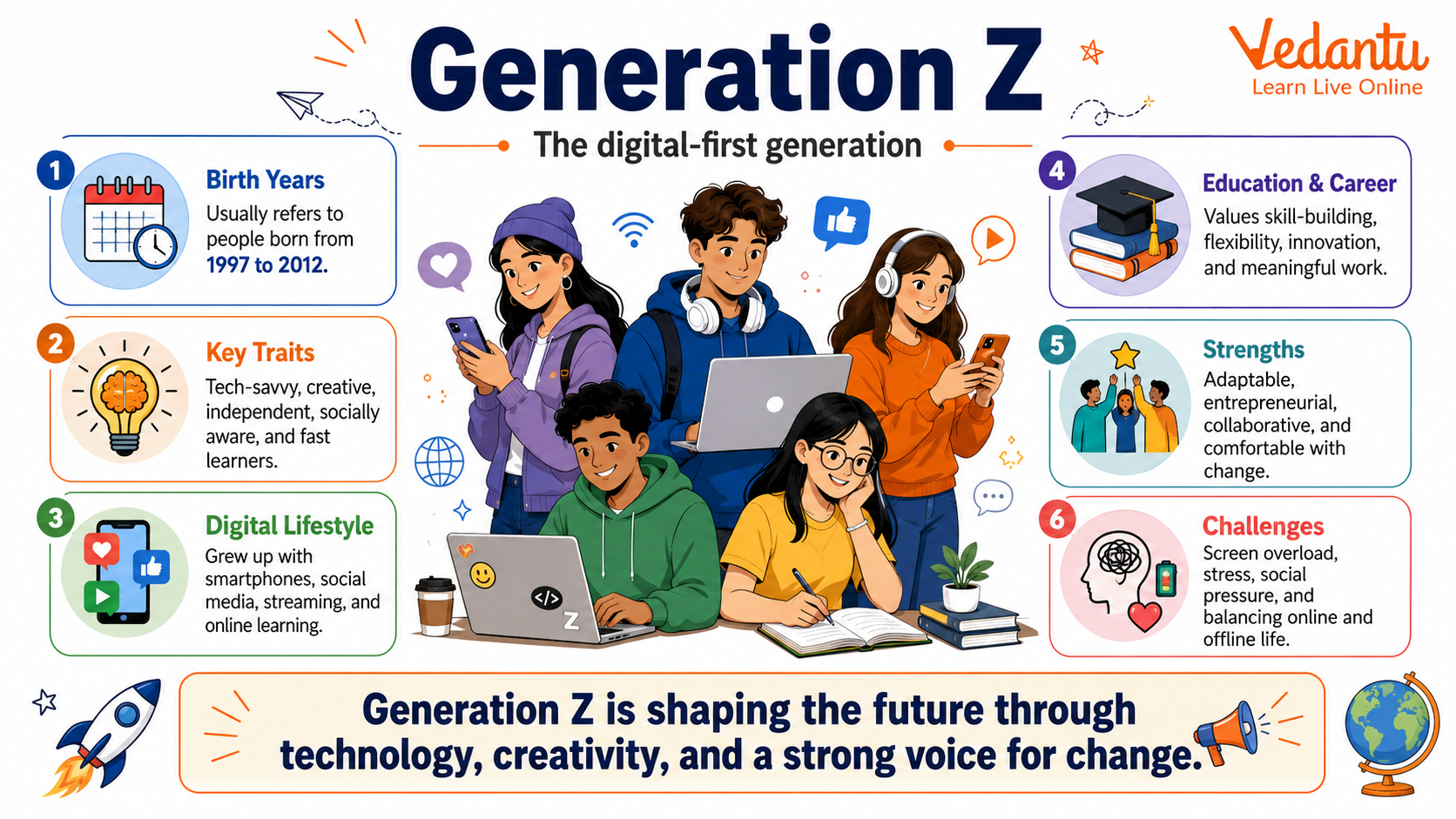
Who Are Generation Z?
Generation Z is the generation that follows Millennials and precedes Generation Alpha. Members of Gen Z have experienced rapid technological growth, globalization, climate change debates, and major global events such as the COVID-19 pandemic during their formative years. These experiences have shaped their values, attitudes, and lifestyle choices.
- Born approximately between 1997 and 2012
- First generation to grow up with smartphones and high speed internet
- Highly active on social media platforms
- Strong awareness of social, political, and environmental issues
- Entering higher education and workforce in large numbers
Generational Comparison Table
| Generation | Birth Years | Key Characteristics |
|---|---|---|
| Millennials | 1981 - 1996 | Witnessed internet rise, value work life balance |
| Generation Z | 1997 - 2012 | Digital natives, socially aware, tech savvy |
| Generation Alpha | 2013 onwards | Fully digital childhood, AI exposure |
This comparison helps in understanding where Generation Z stands in the broader demographic timeline and how it differs from other generations in terms of technological exposure and social experiences.
Key Characteristics of Generation Z
1. Digital Natives
Generation Z has never known a world without the internet. From online education to digital payments and streaming platforms, technology is deeply integrated into their daily lives. They are comfortable using multiple devices and apps simultaneously.
2. Socially Conscious
Gen Z actively participates in discussions related to climate change, gender equality, mental health, and social justice. Social media platforms have amplified their voices and enabled global awareness.
3. Entrepreneurial Mindset
Many members of Generation Z show interest in freelancing, startups, content creation, and independent income sources. The gig economy and digital platforms have made entrepreneurship more accessible to them.
4. Preference for Diversity and Inclusion
Gen Z values diversity in workplaces, media, and society. They tend to support brands and organizations that promote equality and representation.
Generation Z and Education
Education for Generation Z is highly influenced by technology. Online learning platforms, digital classrooms, and virtual collaboration tools are common. The COVID-19 pandemic further accelerated digital education adoption.
- Preference for interactive and visual content
- Use of online tutorials and educational apps
- Greater focus on skill based learning
- Interest in emerging fields like AI, data science, and biotechnology
Generation Z in the Workforce
As Generation Z enters the workforce, employers are observing shifts in workplace expectations. Flexibility, meaningful work, and mental health support are important priorities for this generation.
- Preference for flexible work arrangements
- Desire for continuous feedback and mentorship
- Emphasis on work life balance
- Use of digital tools for collaboration
Challenges Faced by Generation Z
Despite being technologically advanced and socially aware, Generation Z faces several challenges in the modern world.
- Mental health concerns linked to social media usage
- Economic uncertainty and job competition
- Academic pressure and career expectations
- Exposure to misinformation online
Importance of Studying Generation Z in General Knowledge
In competitive exams and general awareness sections, questions related to demographic trends, social changes, and modern generations frequently appear. Understanding Generation Z helps students analyze contemporary social issues, economic patterns, and cultural developments. It also provides insight into future leadership, consumer markets, and technological growth.
Conclusion
Generation Z represents a transformative phase in global society. Born into a rapidly evolving digital era, this generation is reshaping education, workplaces, culture, and communication. Their strong technological skills, social awareness, and demand for inclusivity distinguish them from previous generations. Studying Generation Z enhances general knowledge and helps in understanding current and future global trends.
FAQs on Generation Z: Understanding Today’s Digital Youth
1. Who are Generation Z?
Generation Z refers to the demographic cohort born roughly between 1997 and 2012, known as true digital natives.
- Also called Gen Z, Zoomers
- Grew up with smartphones, social media, and high-speed internet
- Follow Millennials and precede Generation Alpha
- Highly connected, tech-savvy, and globally aware
People also ask: What age is Gen Z? When did Generation Z start?
2. What are the key characteristics of Generation Z?
Generation Z is known for being digitally fluent, socially conscious, and independent thinkers.
- Strong users of technology and social media platforms
- Value diversity, equality, and mental health awareness
- Prefer visual content like short videos and memes
- Entrepreneurial mindset and interest in freelancing
Related searches: traits of Gen Z, qualities of Generation Z, Gen Z personality features.
3. How is Generation Z different from Millennials?
Generation Z differs from Millennials mainly in their deeper digital integration and practical outlook.
- Gen Z: Born 1997–2012; grew up with smartphones
- Millennials: Born 1981–1996; witnessed rise of the internet
- Gen Z prefers short-form content (TikTok, Reels)
- More financially cautious due to global crises
People also search: Gen Z vs Millennials comparison, difference between Millennials and Gen Z.
4. Why is Generation Z called digital natives?
Generation Z is called digital natives because they were born into a world of advanced digital technology.
- First generation with constant access to Wi-Fi and smartphones
- Comfortable with AI, apps, and online learning
- Use social media for communication and education
- Adapt quickly to new tech trends
Related terms: digital generation, internet generation, tech-savvy youth.
5. What values are important to Generation Z?
Generation Z strongly values authenticity, inclusivity, and social responsibility.
- Support climate action and sustainability
- Advocate for gender equality and diversity
- Prioritize mental health and work-life balance
- Prefer brands with strong ethical standards
People also ask: What motivates Gen Z? What does Gen Z care about?
6. How does Generation Z use social media?
Generation Z uses social media as a primary tool for communication, learning, and entertainment.
- Popular platforms: Instagram, TikTok, YouTube, Snapchat
- Engage in short videos, influencers, and memes
- Use platforms for activism and awareness campaigns
- Follow trends, creators, and online communities
Related searches: Gen Z social media habits, most used apps by Gen Z.
7. What challenges does Generation Z face?
Generation Z faces economic, social, and mental health challenges in a fast-changing world.
- Impact of COVID-19 pandemic on education and jobs
- Rising climate change concerns
- Increased screen time and digital stress
- Competitive academic and career pressure
People also search: problems faced by Gen Z, Gen Z mental health issues.
8. How does Generation Z influence society and culture?
Generation Z significantly influences modern culture through digital trends and social movements.
- Drives internet trends, slang, and fashion
- Promotes social justice movements
- Shapes marketing strategies and brand communication
- Encourages inclusive representation in media
Related terms: Gen Z impact on culture, youth influence on society.
9. What is the role of education in Generation Z's life?
Education plays a crucial role in shaping Generation Z’s career and personal development.
- Preference for online learning and digital classrooms
- Use of e-learning platforms and AI tools
- Focus on skill-based and practical education
- Interest in global exposure and innovation
People also ask: How does Gen Z learn? What type of education suits Gen Z?
10. What comes after Generation Z?
The generation that follows Generation Z is known as Generation Alpha.
- Born from around 2013 onwards
- Children of Millennials
- Growing up with advanced AI, smart devices, and automation
- Expected to be even more technologically integrated
Related searches: next generation after Gen Z, Generation Alpha meaning.
