






How Uttarayan Differs from Dakshinayan in Hindu Calendar and Astronomy
Uttarayan and Dakshinayan are two important astronomical and cultural concepts in Indian tradition that describe the apparent movement of the Sun in relation to the Earth. These terms are widely discussed in General Knowledge, geography, astronomy, and competitive exams. Understanding the difference between Uttarayan and Dakshinayan helps students grasp seasonal changes, Earth’s tilt, and their significance in Indian culture and festivals. This topic is especially important for school exams, UPSC, SSC, state PSCs, and other competitive examinations.
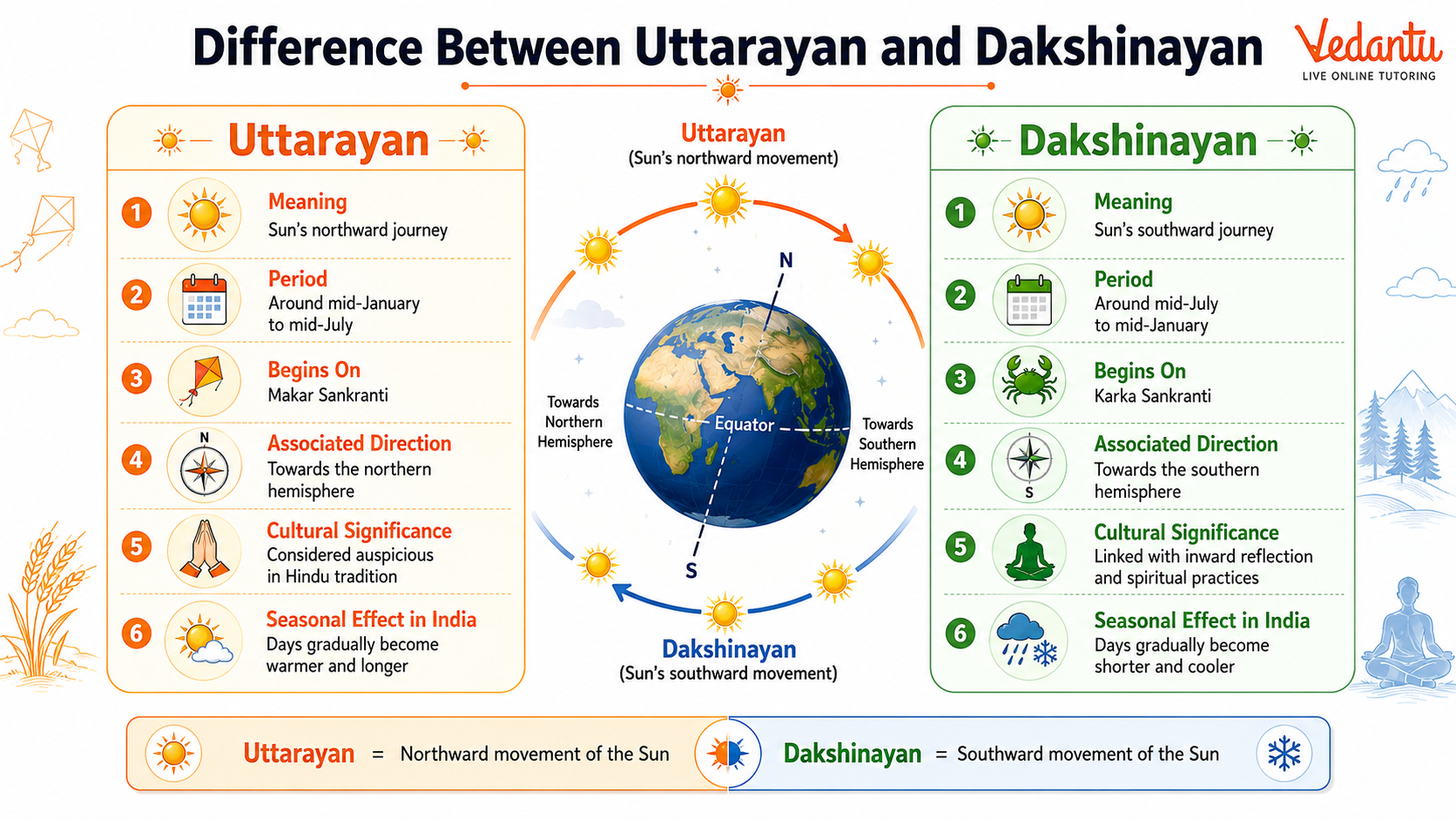
Meaning of Uttarayan
Uttarayan refers to the period when the Sun appears to move northward in the sky. Astronomically, it begins when the Sun enters the zodiac sign of Capricorn, which usually occurs around 14 January and is celebrated as Makar Sankranti in India.
- Marks the northward movement of the Sun.
- Begins around 14 January every year.
- Days gradually become longer and nights shorter in the Northern Hemisphere.
- Considered an auspicious period in Hindu tradition.
Meaning of Dakshinayan
Dakshinayan refers to the period when the Sun appears to move southward in the sky. It begins around 21 June, after the Summer Solstice, when the Sun starts shifting toward the Southern Hemisphere.
- Marks the southward movement of the Sun.
- Begins around 21 June.
- Days gradually become shorter and nights longer in the Northern Hemisphere.
- Associated with the beginning of the southern solar journey.
Astronomical Basis of Uttarayan and Dakshinayan
The Earth revolves around the Sun and is tilted at an angle of approximately 23.5 degrees. Due to this tilt, different parts of the Earth receive varying amounts of sunlight throughout the year. This causes the apparent movement of the Sun between the Tropic of Cancer and the Tropic of Capricorn.
- When the Sun moves from the Tropic of Capricorn toward the Tropic of Cancer, it is called Uttarayan.
- When the Sun moves from the Tropic of Cancer toward the Tropic of Capricorn, it is called Dakshinayan.
- These movements are apparent, not actual shifts in the Sun’s position.
Difference Between Uttarayan And Dakshinayan
| Basis of Comparison | Uttarayan | Dakshinayan |
|---|---|---|
| Direction of Sun | Northward movement | Southward movement |
| Starting Time | Around 14 January | Around 21 June |
| Effect on Days | Days become longer | Days become shorter |
| Associated Festival | Makar Sankranti | No major pan-India solar festival |
| Hemisphere Focus | Northern Hemisphere receives more sunlight | Southern Hemisphere receives more sunlight |
The key difference between Uttarayan and Dakshinayan lies in the apparent direction of the Sun’s movement and its impact on day length in the Northern Hemisphere. These changes influence seasons and cultural practices across India.
Cultural and Religious Significance
In Indian tradition, Uttarayan is considered highly auspicious. Many important festivals and rituals are associated with this period. Dakshinayan, though less festive, is also spiritually significant and marks an important phase in the Hindu calendar.
- Makar Sankranti is celebrated at the beginning of Uttarayan.
- Uttarayan is believed to be a favorable time for spiritual activities.
- Dakshinayan marks the beginning of the southern course of the Sun in Hindu scriptures.
Importance for Competitive Exams
Questions related to Uttarayan and Dakshinayan are frequently asked in GK sections of various exams. Students should focus on their starting dates, astronomical reasons, and seasonal impacts.
- Understand the Earth’s tilt and revolution.
- Remember the approximate starting dates of both periods.
- Link the concept with solstices and seasonal changes.
- Revise related festivals such as Makar Sankranti.
Conclusion
The difference between Uttarayan and Dakshinayan is based on the apparent northward and southward movement of the Sun due to the Earth’s axial tilt and revolution. These two phases influence seasonal patterns, day and night duration, and cultural traditions in India. A clear understanding of this topic strengthens conceptual knowledge in geography and astronomy and enhances performance in competitive examinations.
FAQs on Uttarayan and Dakshinayan: Key Differences Explained Simply
1. What is the difference between Uttarayan and Dakshinayan?
The main difference between Uttarayan and Dakshinayan lies in the apparent movement of the Sun in relation to the Earth.
- Uttarayan refers to the northward movement of the Sun, beginning around 14 January (Makar Sankranti).
- Dakshinayan refers to the southward movement of the Sun, starting around 21 June (Summer Solstice).
- Uttarayan marks the beginning of longer days, while Dakshinayan signals the gradual shortening of days.
- Both are important in Hindu astronomy, Indian culture, and Vedic traditions.
2. What is Uttarayan?
Uttarayan is the period when the Sun appears to move northward after the Winter Solstice.
- It begins on Makar Sankranti (around 14 January).
- The Sun enters the zodiac sign of Capricorn (Makara).
- Days become longer and nights shorter in the Northern Hemisphere.
- It is considered an auspicious period in Hinduism.
3. What is Dakshinayan?
Dakshinayan is the period when the Sun appears to move southward after the Summer Solstice.
- It begins around 21 June.
- The Sun gradually shifts towards the Tropic of Capricorn.
- Days start becoming shorter in the Northern Hemisphere.
- It is associated with the monsoon season and spiritual practices.
4. When does Uttarayan and Dakshinayan start and end?
The starting and ending dates of Uttarayan and Dakshinayan are based on solar movement.
- Uttarayan: Starts on 14 January (Makar Sankranti) and ends around 21 June.
- Dakshinayan: Starts on 21 June and ends on 14 January.
- These transitions are linked to the Winter Solstice and Summer Solstice.
5. Why is Uttarayan considered auspicious in Hinduism?
Uttarayan is considered highly auspicious because it symbolizes positivity, growth, and spiritual upliftment.
- It marks the Sun’s entry into Makara Rashi (Capricorn).
- According to the Mahabharata, Bhishma Pitamah chose this period to leave his body.
- It is associated with festivals like Makar Sankranti, Pongal, and Lohri.
6. How are Uttarayan and Dakshinayan related to solstices?
Uttarayan and Dakshinayan are closely connected to the Earth’s tilt and revolution around the Sun.
- Winter Solstice (December 21/22) marks the turning point toward Uttarayan.
- Summer Solstice (June 21) marks the beginning of Dakshinayan.
- They explain changes in day length, seasons, and solar declination.
7. What is the scientific reason behind Uttarayan and Dakshinayan?
The scientific reason behind Uttarayan and Dakshinayan is the 23.5° tilt of the Earth’s axis and its revolution around the Sun.
- The Sun appears to move north and south due to Earth’s axial tilt.
- This apparent movement changes the position of the Sun between the Tropic of Cancer and Tropic of Capricorn.
- It causes seasonal variations and changes in daylight duration.
8. What are the major festivals celebrated during Uttarayan?
Several important Indian festivals are celebrated during Uttarayan.
- Makar Sankranti – Celebrated across India.
- Pongal – Celebrated in Tamil Nadu.
- Lohri – Celebrated in Punjab.
- Magh Bihu – Celebrated in Assam.
These festivals mark the harvest season and the Sun’s northward journey.
9. How do Uttarayan and Dakshinayan affect seasons in India?
The periods of Uttarayan and Dakshinayan influence seasonal patterns in India.
- Uttarayan brings the transition from winter to summer.
- Dakshinayan includes the monsoon and autumn seasons.
- They impact agriculture, climate, and crop cycles.
10. Are Uttarayan and Dakshinayan important for competitive exams?
Yes, Uttarayan and Dakshinayan are important topics for General Knowledge (GK), UPSC, SSC, and other competitive exams.
- Questions are asked about solstices, Earth’s tilt, and seasonal changes.
- They are relevant in Geography, Astronomy, and Indian Culture.
- Understanding their difference helps in answering conceptual MCQs.
