






Major Biodiversity Hotspots Around the World and Why They Matter
Biodiversity Hotspots of the World are regions that are exceptionally rich in plant and animal species but are also highly threatened by human activities. These areas are crucial for conservation because they contain a large number of endemic species - species found nowhere else on Earth. Protecting biodiversity hotspots helps preserve ecological balance, genetic diversity, and natural resources essential for human survival. This topic is important for students, competitive exam aspirants, and especially NEET candidates as it is frequently asked in environmental and ecology-related questions.
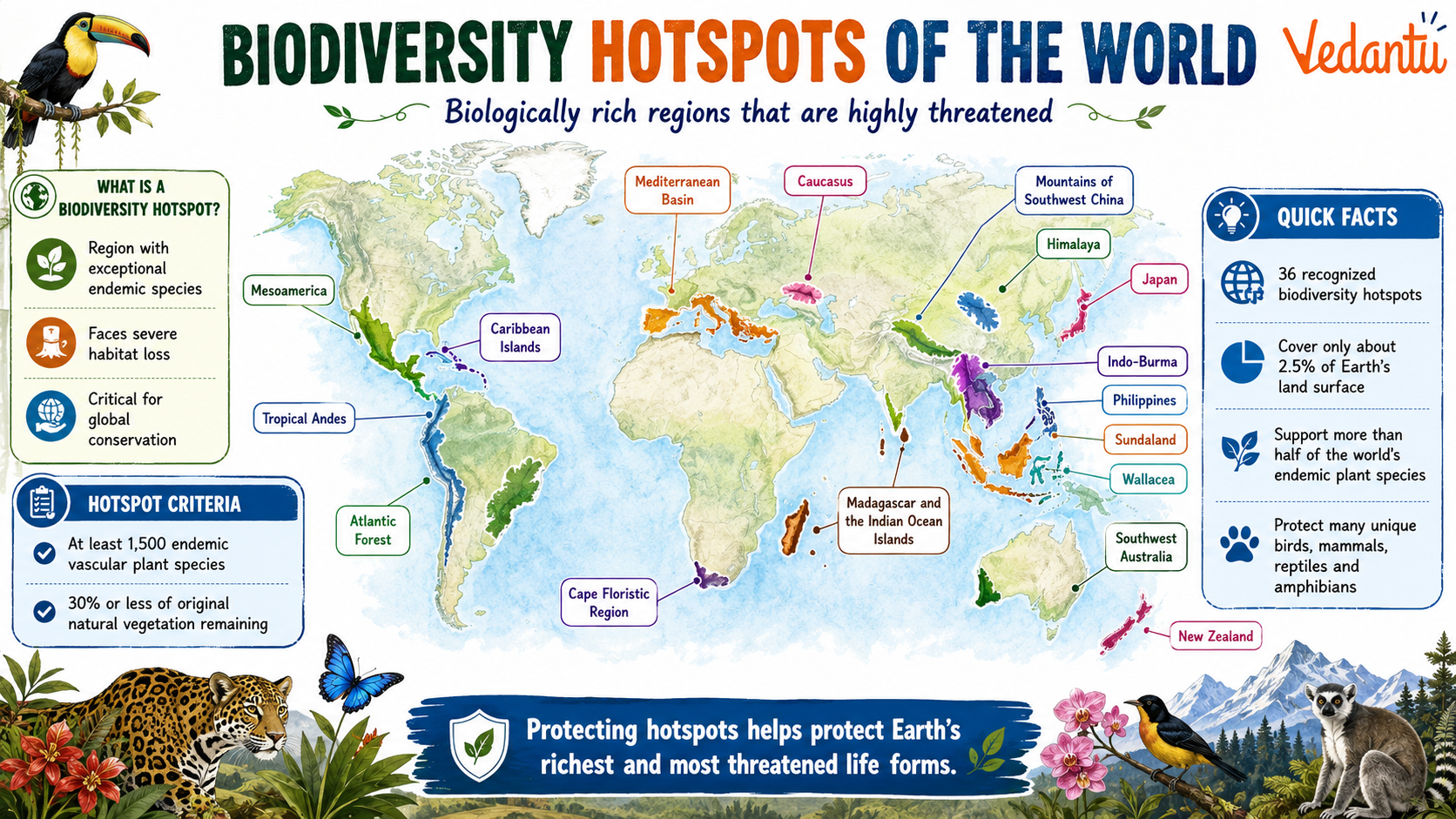
What is a Biodiversity Hotspot?
The concept of biodiversity hotspots was first introduced by Norman Myers in 1988. A biodiversity hotspot is a biogeographic region that is both rich in endemic species and significantly threatened by habitat loss. These regions are conservation priorities because they hold a high percentage of the world’s biodiversity in a relatively small area.
Criteria for Biodiversity Hotspots
To qualify as a biodiversity hotspot, a region must meet two strict criteria defined by Conservation International:
- It must contain at least 1,500 species of vascular plants as endemics.
- It must have lost at least 70 percent of its original natural vegetation.
These criteria ensure that conservation efforts focus on areas with high biodiversity value and urgent conservation needs.
Major Biodiversity Hotspots of the World
There are currently 36 recognized biodiversity hotspots across the globe. These hotspots cover only about 2.5 percent of the Earth's land surface but support more than half of the world’s plant species and nearly 43 percent of bird, mammal, reptile, and amphibian species.
Selected Biodiversity Hotspots and Their Features
| Hotspot Name | Region | Key Features |
|---|---|---|
| Tropical Andes | South America | Highest plant diversity in the world |
| Western Ghats and Sri Lanka | India and Sri Lanka | High endemic flora and fauna |
| Sundaland | Southeast Asia | Rich tropical rainforests and endangered species |
| Madagascar and Indian Ocean Islands | Africa | Unique lemur species and endemic plants |
Each hotspot has unique ecological characteristics and supports species that are not found anywhere else in the world. Their protection is essential for maintaining global biodiversity.
Biodiversity Hotspots in India
India is one of the 17 megadiverse countries in the world and shares four biodiversity hotspots:
- Western Ghats
- Himalaya
- Indo-Burma
- Sundaland - includes Nicobar Islands
These regions are home to numerous endemic species such as the lion-tailed macaque, Nilgiri tahr, and several unique plant varieties. Rapid urbanization, deforestation, and climate change threaten these areas.
Importance of Biodiversity Hotspots
Biodiversity hotspots are essential for ecological and human well-being. Their conservation provides multiple environmental and economic benefits.
- Preserve endangered and endemic species.
- Maintain ecological balance and ecosystem services.
- Provide resources such as food, medicine, and raw materials.
- Help in climate regulation and carbon storage.
- Support livelihoods through ecotourism and sustainable practices.
Major Threats to Biodiversity Hotspots
Despite their importance, biodiversity hotspots are under severe threat due to human activities and environmental changes.
- Deforestation and habitat destruction
- Urbanization and industrial expansion
- Climate change and global warming
- Illegal wildlife trade and poaching
- Invasive alien species
Conservation Strategies
Effective conservation strategies are necessary to protect biodiversity hotspots for future generations.
- Establishment of national parks and wildlife sanctuaries.
- Promotion of sustainable land-use practices.
- Community participation in conservation programs.
- Strict enforcement of environmental protection laws.
- Global cooperation and funding for biodiversity conservation.
Key Points for NEET and Competitive Exams
- Concept introduced by Norman Myers in 1988.
- 36 biodiversity hotspots currently recognized worldwide.
- Two main criteria - 1,500 endemic vascular plants and 70 percent habitat loss.
- India shares four biodiversity hotspots.
- Hotspots cover about 2.5 percent of land but support more than 50 percent of plant species.
Conclusion
Biodiversity Hotspots of the World represent the most biologically rich and threatened regions on Earth. Their conservation is essential not only for protecting rare and endemic species but also for ensuring ecological stability and sustainable development. Understanding biodiversity hotspots helps students grasp the importance of environmental conservation and prepares them effectively for NEET and other competitive examinations. Protecting these critical regions is a shared global responsibility that determines the future of our planet’s biodiversity.
FAQs on Biodiversity Hotspots of the World Explained for Students
1. What are Biodiversity Hotspots of the World?
Biodiversity hotspots are regions with exceptionally high species diversity that are under serious threat from human activities.
Biodiversity Hotspots are areas that:
• Contain at least 1,500 endemic vascular plant species
• Have lost at least 70% of their original natural vegetation
• Show high levels of endangered species and habitat destruction
These hotspots are crucial for global conservation efforts, wildlife protection, and maintaining ecological balance. (People also ask: What is a biodiversity hotspot? Why are hotspots important?)
2. Who introduced the concept of Biodiversity Hotspots?
The concept of biodiversity hotspots was introduced by Norman Myers in 1988.
• Proposed to identify areas needing urgent conservation
• Later expanded by Conservation International
• Initially identified 10 hotspots, now expanded to 36 global biodiversity hotspots
This concept helps prioritize regions for biodiversity conservation and sustainable development. (People also search: Founder of biodiversity hotspot concept, Norman Myers contribution)
3. How many Biodiversity Hotspots are there in the world?
There are currently 36 recognized Biodiversity Hotspots in the world.
• Spread across continents like Asia, Africa, South America, and Australia
• Cover only about 2.4% of Earth’s land surface
• Support more than 50% of the world’s plant species
These hotspots play a vital role in protecting global biodiversity and rare species. (PAA: Total biodiversity hotspots in the world, list of global hotspots)
4. What are the criteria for identifying Biodiversity Hotspots?
An area must meet strict scientific criteria to qualify as a biodiversity hotspot.
The two main criteria are:
• At least 1,500 endemic plant species
• At least 70% loss of original habitat
These criteria ensure that only highly threatened and biologically rich regions receive conservation priority. (People also ask: Conditions for biodiversity hotspot, hotspot qualification rules)
5. Which are the Biodiversity Hotspots in India?
India is home to four major Biodiversity Hotspots.
These include:
• Himalaya
• Indo-Burma
• Western Ghats and Sri Lanka
• Sundaland (Nicobar Islands)
These regions are rich in endemic flora and fauna and are important for India’s ecological security. (PAS: Biodiversity hotspots of India list, Indian ecological regions)
6. Why are Biodiversity Hotspots important for conservation?
Biodiversity hotspots are important because they protect endangered species and maintain ecological balance.
They help in:
• Conserving endemic and rare species
• Preventing mass extinction
• Supporting ecosystem services like clean air and water
• Promoting sustainable development
Protecting hotspots ensures long-term environmental sustainability and climate stability. (People also ask: Importance of biodiversity hotspots, conservation benefits)
7. What are some examples of major Biodiversity Hotspots in the world?
Some well-known biodiversity hotspots are globally recognized for their rich ecosystems.
Examples include:
• Amazon Rainforest (South America)
• Madagascar and the Indian Ocean Islands
• Tropical Andes
• Western Ghats
• Coral Triangle
These regions contain exceptional species diversity and high levels of endemism. (PAA: Examples of biodiversity hotspots, famous hotspots worldwide)
8. What is the difference between Biodiversity Hotspots and Mega-diverse Countries?
Biodiversity hotspots are threatened regions, while mega-diverse countries are nations with high overall biodiversity.
Key differences:
• Hotspots: Specific threatened regions within countries
• Mega-diverse countries: Entire nations rich in biodiversity (e.g., India, Brazil, Indonesia)
• Hotspots focus on conservation priority areas
This distinction helps in global biodiversity management and environmental policy planning. (People also search: Mega biodiversity countries vs hotspots)
9. What are the major threats to Biodiversity Hotspots?
Biodiversity hotspots face severe threats mainly due to human activities.
Major threats include:
• Deforestation
• Urbanization
• Climate change
• Illegal wildlife trade
• Pollution and mining
These threats lead to habitat destruction, species extinction, and ecological imbalance. (PAA: Causes of biodiversity loss, threats to hotspots)
10. How do Biodiversity Hotspots help in combating climate change?
Biodiversity hotspots help combat climate change by preserving forests and natural ecosystems that absorb carbon dioxide.
They contribute by:
• Acting as carbon sinks
• Protecting rainforests and wetlands
• Maintaining climate regulation systems
• Supporting sustainable livelihoods
Conserving hotspots is essential for climate action and global environmental protection. (People also ask: Role of forests in climate change, biodiversity and climate link)
