






How Agro-Climatic Regions Affect Crop Selection in India
Agro Climatic Zone is a geographical area defined on the basis of climate, soil type, rainfall, temperature, and agricultural practices. It helps in identifying regions that have similar agricultural potential and limitations. The concept of agro climatic zones is important for effective crop planning, resource management, and sustainable agriculture. In India, the Planning Commission and Indian Council of Agricultural Research have divided the country into different agro climatic zones to improve agricultural productivity and ensure balanced regional development.
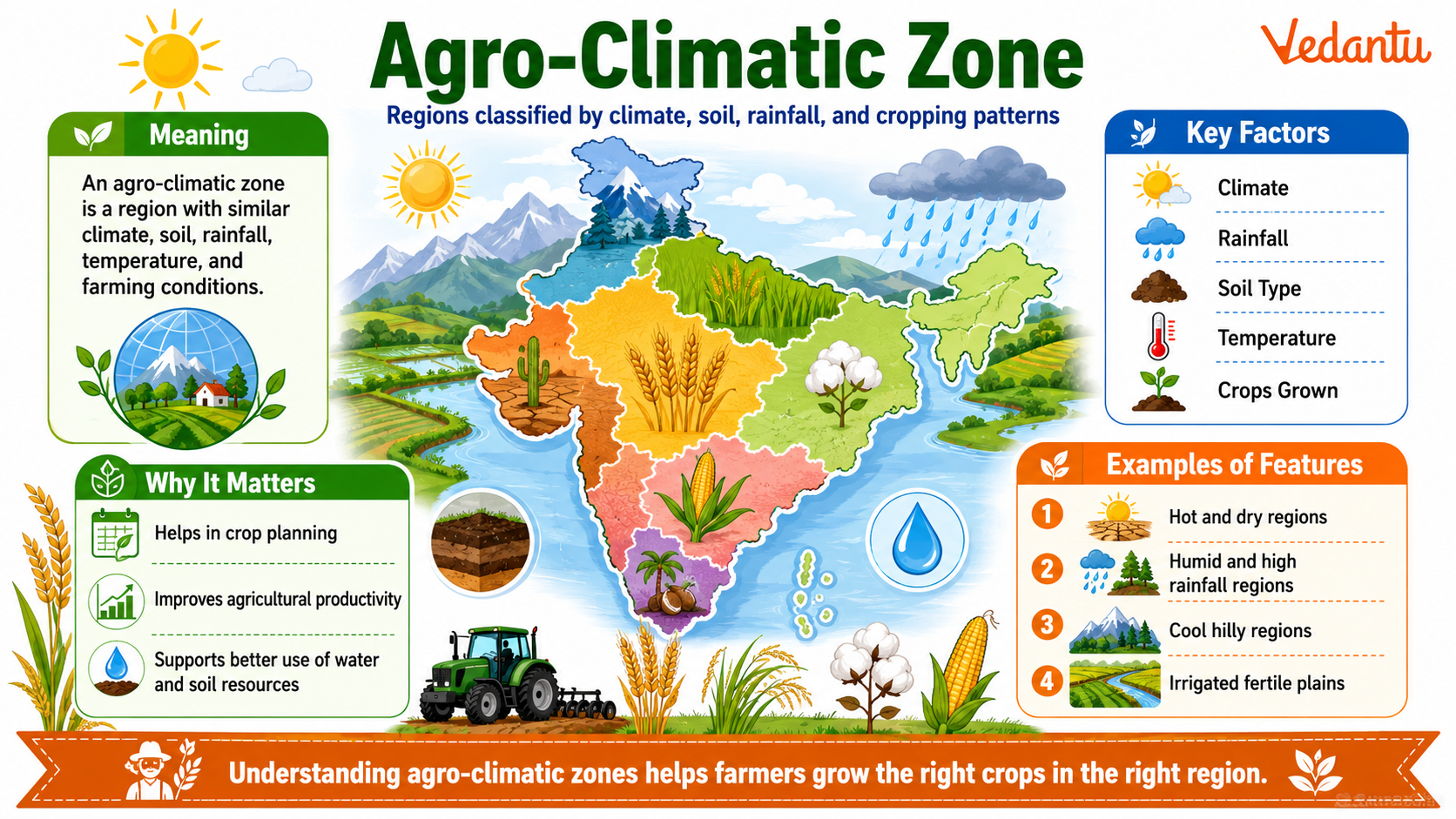
What is an Agro Climatic Zone?
An Agro Climatic Zone refers to a land unit where the climate, soil characteristics, and cropping patterns are relatively uniform. These zones are classified to promote suitable crops and farming practices according to regional conditions. The objective is to maximize agricultural output while maintaining ecological balance.
Key Factors Determining Agro Climatic Zones
- Temperature range and seasonal variation
- Annual rainfall and its distribution
- Type and fertility of soil
- Topography such as plains, plateaus, hills
- Length of growing period
- Water availability and irrigation facilities
Importance of Agro Climatic Zoning
Agro climatic zoning plays a vital role in agricultural planning and rural development. It ensures that crops are grown according to regional suitability, which increases productivity and reduces risk of crop failure.
- Helps in scientific crop selection and diversification
- Promotes efficient use of natural resources
- Supports region specific agricultural research
- Improves food security and farmer income
- Assists in planning irrigation and infrastructure projects
Agro Climatic Zones of India
India has been divided into 15 major agro climatic zones by the Planning Commission. Each zone has distinct climatic and agricultural features. These zones help in implementing location specific agricultural strategies.
Major Agro Climatic Zones of India
| Zone Name | Climatic Features | Major Crops |
|---|---|---|
| Western Himalayan Region | Cold climate, moderate rainfall | Wheat, maize, apple |
| Eastern Himalayan Region | High rainfall, humid climate | Rice, tea, maize |
| Lower Gangetic Plain | Humid, fertile alluvial soil | Rice, jute, sugarcane |
| Western Dry Region | Low rainfall, arid climate | Bajra, pulses, cotton |
| Southern Plateau and Hills | Moderate rainfall, tropical climate | Millets, oilseeds, coffee |
Each agro climatic zone has specific crop patterns and agricultural practices adapted to its environmental conditions. The government and agricultural scientists use this classification to introduce improved seeds, irrigation techniques, and farming systems suitable for each zone.
Difference Between Agro Climatic Zone and Agro Ecological Zone
Though both terms are related to agricultural planning, they are not exactly the same. Agro climatic zones focus mainly on climate and administrative boundaries, while agro ecological zones consider soil type, length of growing period, and ecological factors in greater detail.
- Agro climatic zones are broader and used for policy planning.
- Agro ecological zones are more scientific and detailed.
- Both aim to improve agricultural sustainability and productivity.
Applications in Agricultural Development
The concept of agro climatic zones is widely applied in crop insurance, drought management, and agricultural research. It helps in minimizing risks associated with climate change and extreme weather events. Farmers benefit by selecting crops that match the local climate, thereby ensuring stable yields.
Steps in Agro Climatic Planning
- Identification of climatic and soil characteristics
- Classification of regions into zones
- Selection of suitable crops and cropping systems
- Implementation of irrigation and resource management strategies
- Continuous monitoring and improvement
Conclusion
Agro Climatic Zone is an essential concept in agricultural geography and planning. It helps in understanding how climate and soil conditions influence farming practices. By dividing regions based on similar agricultural characteristics, policymakers and farmers can make informed decisions that enhance productivity and sustainability. For students and competitive exam aspirants, understanding agro climatic zones is important for topics related to agriculture, geography, environment, and rural development.
FAQs on English Understanding Agro-Climatic Zones and Their Importance
1. What is an Agro Climatic Zone?
An Agro Climatic Zone is a land unit classified based on climate, soil type, rainfall, and cropping pattern to support scientific agricultural planning.
• It combines climate, temperature, rainfall, and soil characteristics.
• It helps in selecting suitable crops and farming practices.
• It improves agricultural productivity and sustainability.
• In India, agro-climatic zoning was introduced by the Planning Commission (1988) for regional agricultural development.
2. How many Agro Climatic Zones are there in India?
India has 15 major Agro Climatic Zones identified by the Planning Commission for balanced agricultural development.
• These zones are based on rainfall, soil type, temperature, and water resources.
• Examples include Western Himalayan Region, Gangetic Plains, Western Dry Region, and Coastal Plains.
• Different classifications like ICAR Agro-Ecological Zones (20 zones) also exist.
• These divisions support region-specific crop planning and irrigation management.
3. Why are Agro Climatic Zones important in agriculture?
Agro Climatic Zones are important because they help optimize crop production according to regional conditions.
• Ensure efficient use of natural resources like soil and water.
• Promote crop diversification and sustainable farming.
• Reduce risks from droughts, floods, and climate change.
• Assist policymakers in agricultural planning and food security.
4. What factors determine Agro Climatic Zones?
Agro Climatic Zones are determined by climatic and geographical factors affecting agriculture.
• Temperature range (tropical, temperate conditions).
• Annual rainfall and humidity levels.
• Soil type such as alluvial, black, red, or laterite soil.
• Topography and altitude (plains, plateaus, hills).
• Availability of irrigation and water resources.
5. What is the difference between Agro Climatic Zone and Agro Ecological Zone?
The main difference lies in classification criteria and scientific detail.
• Agro Climatic Zone focuses on climate and administrative planning for agriculture.
• Agro Ecological Zone (AEZ) considers soil type, climate, length of growing period, and ecological sustainability.
• AEZ is more scientific and research-oriented.
• Both systems aim at improving crop productivity and environmental balance.
6. Which crops grow in different Agro Climatic Zones?
Different Agro Climatic Zones support specific crops based on climate and soil conditions.
• Western Himalayan Region – Apples, wheat, barley.
• Gangetic Plains – Rice, wheat, sugarcane.
• Black Soil Region (Deccan Plateau) – Cotton, soybean.
• Coastal Regions – Rice, coconut, spices.
• Arid and Semi-Arid Regions – Bajra, pulses, millets.
7. Who introduced the Agro Climatic Zone classification in India?
The Agro Climatic Zone classification in India was introduced by the Planning Commission in 1988.
• It aimed at regional agricultural planning.
• Focused on improving food grain production and rural development.
• Helped in implementing area-specific agricultural strategies.
• Later supported by institutions like ICAR (Indian Council of Agricultural Research).
8. What is meant by agro-climatic regional planning?
Agro-climatic regional planning means developing agriculture based on climatic and regional characteristics.
• Identifies region-specific crops and farming systems.
• Promotes efficient irrigation and soil management.
• Encourages sustainable agriculture and balanced growth.
• Reduces regional disparities in agricultural productivity.
9. How do Agro Climatic Zones help in sustainable agriculture?
Agro Climatic Zones promote sustainable agriculture by aligning farming practices with natural conditions.
• Prevent overuse of soil and water resources.
• Encourage crop rotation and diversification.
• Reduce environmental degradation and climate risk.
• Support long-term food security and ecological balance.
10. What are the major Agro Climatic Zones of India?
The major Agro Climatic Zones of India are classified into 15 regions based on climate and soil.
• Western Himalayan Region
• Eastern Himalayan Region
• Lower, Middle & Upper Gangetic Plains
• Trans-Gangetic Plains
• Eastern Plateau and Hills
• Central Plateau and Hills
• Western Plateau and Hills
• Southern Plateau and Hills
• East & West Coastal Plains
• Gujarat Plains and Hills
• Western Dry Region
• Island Region
These zones guide crop selection, irrigation planning, and agricultural development policies.
