






Main Features of Sher Shah Suri’s Administrative System
The Administration of Sher Shah Suri is considered one of the most efficient and well-organized administrative systems in medieval Indian history. Sher Shah Suri, the founder of the Sur Empire, ruled North India from 1540 to 1545 after defeating Humayun. Although his reign was short, his administrative reforms left a lasting impact on the Mughal Empire, especially under Akbar. His policies in revenue, military, justice, currency, and road construction strengthened central authority and improved governance. The system he developed became a model for future rulers and remains an important topic for competitive examinations.
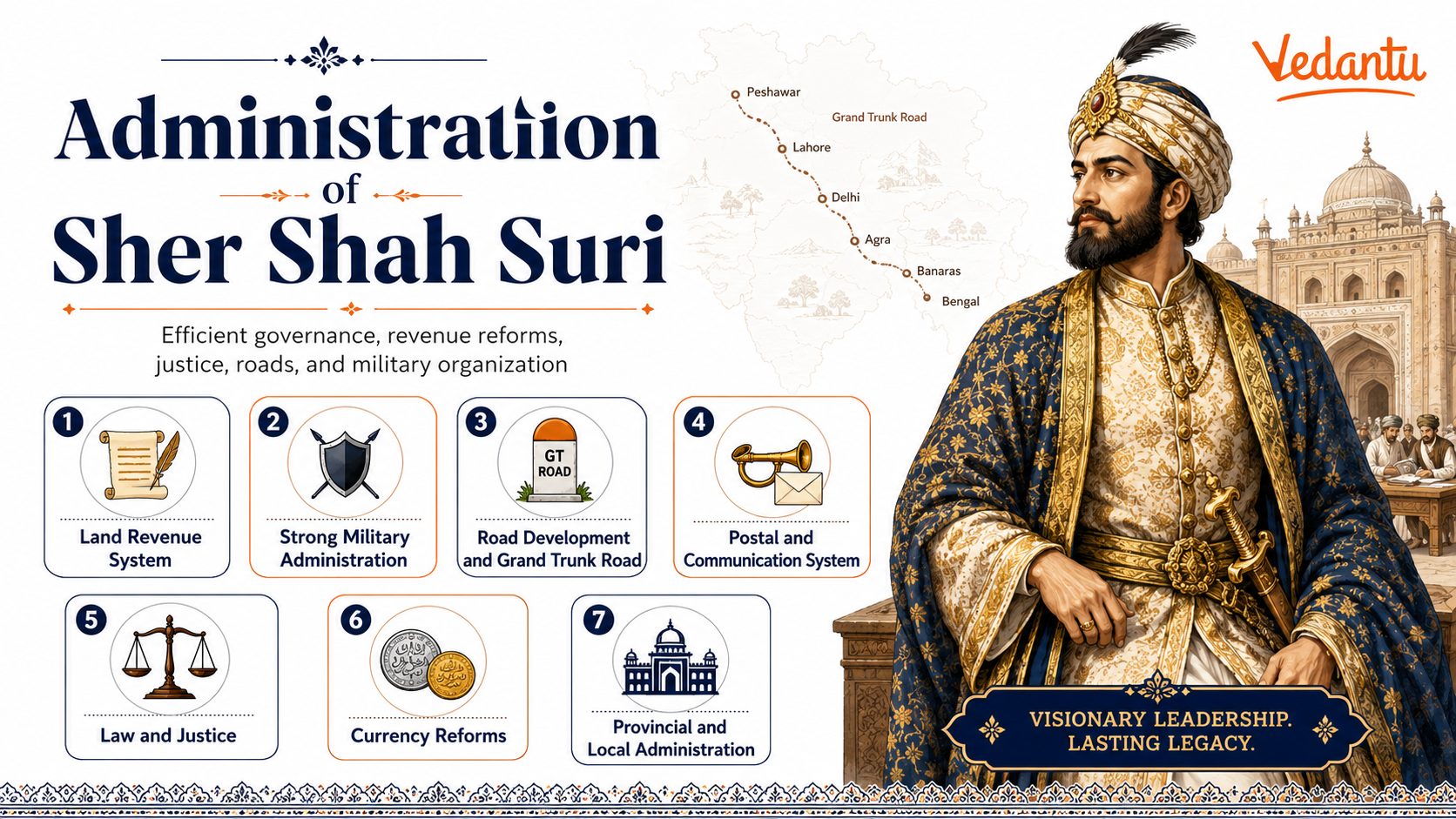
Central Administration of Sher Shah Suri
Sher Shah Suri established a strong central administration with the Sultan as the supreme authority. He personally supervised all departments and ensured efficiency and discipline among officials.
Key Central Departments
- Diwan-i-Wizarat - Headed by the Wazir, responsible for revenue and finance.
- Diwan-i-Arz - Managed military affairs and recruitment of soldiers.
- Diwan-i-Insha - Handled royal correspondence and records.
- Diwan-i-Rasalat - Managed foreign affairs and diplomatic relations.
Each department functioned independently but remained directly accountable to the Sultan, ensuring centralized control and efficient governance.
Provincial Administration
For effective governance, Sher Shah divided his empire into several administrative units. This ensured better control over distant regions.
Administrative Divisions
- Empire divided into Sarkars.
- Sarkars divided into Parganas.
- Parganas consisted of villages.
Each Sarkar was administered by two main officers - Shiqdar (law and order) and Munsif or Amin (revenue collection). At the village level, the headman and patwari maintained local administration and records.
Revenue Administration
Sher Shah Suri is most famous for his land revenue reforms. His revenue system was systematic, scientific, and fair to peasants.
Main Features of Revenue System
- Measurement of land using a standard unit called Gaz.
- Classification of land based on fertility.
- Fixation of revenue at one-third of the average produce.
- Direct settlement with peasants.
- Issuance of Patta to peasants and Qabuliat signed by them.
This system reduced exploitation by middlemen and ensured regular income for the state. Akbar later adopted and improved this system under Todar Mal.
Military Administration
Sher Shah maintained a strong and disciplined army. He believed that a powerful military was essential for maintaining stability and protecting the empire.
- Soldiers were directly recruited and paid by the state.
- Introduction of Dagh system - branding of horses.
- Maintenance of descriptive rolls of soldiers called Chehra.
- Strict discipline and regular inspections.
These reforms prevented corruption and ensured the loyalty and efficiency of the army.
Judicial Administration
Sher Shah Suri ensured a fair and strict justice system. He personally supervised judicial matters and ensured equality before law.
- Appointment of Qazis for civil cases.
- Appointment of Shiqdars for criminal cases.
- Severe punishment for corruption and misconduct.
- Equal treatment of Hindus and Muslims.
His justice system helped maintain peace and public confidence in the administration.
Roads, Communication and Public Welfare
Sher Shah Suri paid special attention to infrastructure and public welfare measures, which improved trade and communication.
- Construction of the Grand Trunk Road from Bengal to Punjab.
- Establishment of Sarais at regular intervals for travelers.
- Plantation of trees along roads.
- Efficient postal system using horses.
These developments promoted trade, improved military movement, and strengthened administrative control.
Currency Reforms
Sher Shah introduced a stable and uniform currency system which improved trade and economic stability.
Currency System of Sher Shah Suri
| Coin | Metal | Significance |
|---|---|---|
| Rupiya | Silver | Standard silver coin and basis of modern rupee |
| Dam | Copper | Used for daily transactions |
The Rupiya introduced by Sher Shah became the foundation of the modern Indian currency system. His monetary reforms reduced confusion and encouraged commercial growth.
Significance of Sher Shah Suri's Administration
The administrative reforms of Sher Shah Suri were practical, efficient, and people-oriented. His policies influenced the Mughal administrative framework, especially under Akbar. Key points of significance include:
- Foundation of a centralized and disciplined administration.
- Scientific land revenue system.
- Efficient military organization.
- Development of roads and communication networks.
- Stable currency system.
Despite ruling for only five years, Sher Shah Suri proved himself as one of the most capable administrators in Indian history. His reforms ensured stability, economic growth, and efficient governance, making his administration a significant chapter in medieval Indian history and an important topic for General Knowledge and competitive examinations.
FAQs on Administration under Sher Shah Suri in Medieval India
1. Who was Sher Shah Suri and why is his administration important?
Sher Shah Suri was the founder of the Sur Empire (1540–1545) and is remembered for his highly efficient administrative reforms in medieval India.
- Defeated Humayun and ruled North India
- Introduced major reforms in revenue, military, currency, and road administration
- Laid the foundation for later Mughal administrative system under Akbar
- Known for justice, centralized governance, and public welfare policies
2. What were the main features of Sher Shah Suri’s administrative system?
The administration of Sher Shah Suri was centralized, efficient, and people-oriented.
- Division of empire into Sarkars, Parganas, and villages
- Appointment of honest officials like Shiqdar and Amin
- Strict law and order system
- Strong military organization
- Reforms in land revenue and currency system
3. What were Sher Shah Suri’s land revenue reforms?
Sher Shah’s land revenue system was based on measurement and fairness to peasants.
- Land was measured using the Gaj-i-Sikandari
- Revenue fixed at one-third of the produce
- Issued Patta (land deed) to farmers
- Took Qabuliyat (agreement) from cultivators
- Reduced exploitation by middlemen
4. How did Sher Shah Suri reform the currency system?
Sher Shah Suri introduced a standardized currency system that improved trade and commerce.
- Introduced the silver coin called Rupiya
- Issued gold and copper coins
- Established uniform coinage across the empire
- Strengthened economic stability and market growth
5. What was the military system of Sher Shah Suri?
The military administration of Sher Shah was strict and well-organized.
- Introduced Dagh system (branding of horses)
- Maintained descriptive rolls of soldiers called Chehra
- Paid soldiers directly in cash
- Maintained a strong and disciplined standing army
6. What role did Sher Shah Suri play in road and infrastructure development?
Sher Shah Suri developed an advanced road network to improve administration and trade.
- Built the famous Grand Trunk Road from Bengal to Punjab
- Constructed Sarais (rest houses) at regular intervals
- Planted trees and dug wells along roads
- Improved communication and postal system
7. How was justice administered under Sher Shah Suri?
Sher Shah Suri ensured strict and impartial justice throughout his empire.
- Personally supervised legal matters
- Severe punishment for corruption and crime
- Equal justice to Hindus and Muslims
- Efficient policing system at village and district levels
8. How did Sher Shah Suri divide his empire for administrative convenience?
The empire of Sher Shah Suri was divided into administrative units for better governance.
- Empire divided into Sarkars (districts)
- Each Sarkar divided into Parganas
- Villages formed the basic unit
- Officials like Shiqdar, Munsif, Amin, and Qanungo managed administration
9. How did Sher Shah Suri influence the Mughal administration?
Sher Shah Suri’s reforms greatly influenced Mughal rulers, especially Akbar.
- Akbar adopted similar land revenue policies
- Continued use of Rupiya currency system
- Followed centralized administrative structure
- Improved road and communication systems based on Sher Shah’s model
10. Why is Sher Shah Suri considered one of the greatest administrators in Indian history?
Sher Shah Suri is regarded as a great administrator because of his visionary reforms and efficient governance.
- Introduced scientific revenue system
- Strengthened military organization
- Promoted trade through standardized currency
- Ensured justice and welfare of subjects
- Laid administrative foundations for the later Mughal Empire
