









Shares and Debentures: Meaning, Features, and Differences Explained
In the world of investment, shares and debentures are two commonly discussed terms. Both are essential financial instruments used by companies to raise funds, but they differ significantly in their characteristics and purpose. For students, parents, and beginners exploring these concepts, understanding their differences can help make informed investment decisions. Let’s learn more about what shares and debentures mean and how they differ.
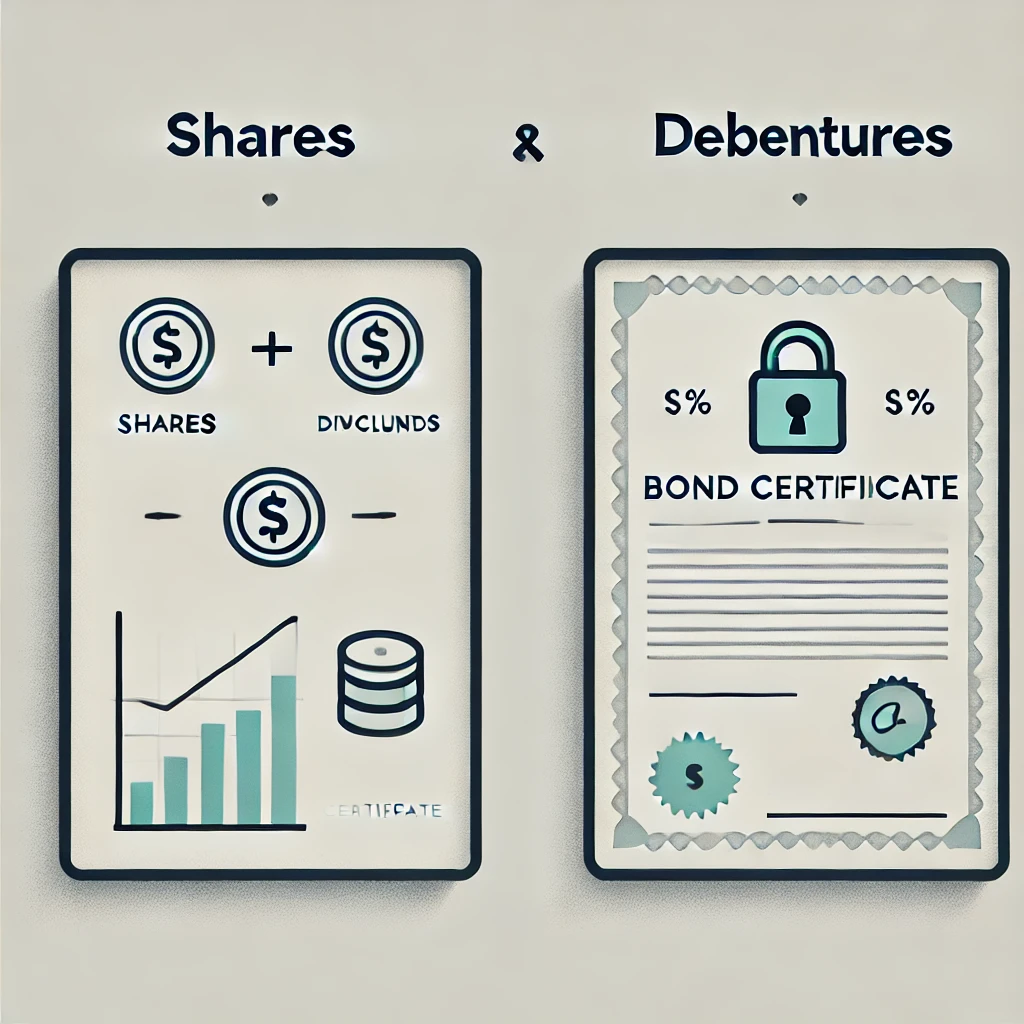
What are Shares?
Shares represent the ownership capital of a company. When a firm decides to raise money through equity, it issues shares to the public. Individuals or entities that purchase these shares are called shareholders and gain partial ownership of the company. Owning shares not only entitles shareholders to a proportion of the company’s profits (as dividends) but also gives them the right to participate in decision-making processes through voting rights.
Key Features of Shares
Ownership: Shareholders are the owners of the company to the extent of their shareholding.
Returns: Returns are paid as dividends, which depend on the company's profitability.
Equity Shares: Offer voting rights and higher returns but come with higher risk.
Preference Shares: Offer fixed dividends and priority over equity shares during liquidation.
Transferability: Shares can be easily bought or sold in the stock market.
Risk Factor: Higher risk as returns depend on the company’s performance.
What are Debentures?
Debentures are debt instruments used by companies to borrow money from the public. Unlike shares, debentures do not offer ownership. Instead, they represent a loan given by the debenture holders to the company, making them creditors. In return, debenture holders receive a fixed interest rate, regardless of the company’s profit or loss.
Key Features of Debentures
Creditor Relationship: Debenture holders are creditors, not owners, of the company.
Fixed Returns: Interest payments are made at regular intervals, irrespective of profitability.
Secured Debentures: Backed by assets.
Unsecured Debentures: Not backed by assets.
Convertible Debentures: Can be converted into shares.
Non-Convertible Debentures (NCDs): Cannot be converted into shares.
Lower Risk: Considered safer than shares as they guarantee fixed returns.
No Voting Rights: Debenture holders cannot participate in company decisions.
Difference Between Share and Debenture
Similarities Between Share and Debenture
Shares and debentures are financial instruments used by companies to raise capital.
Both are issued to the public or institutional investors for funding purposes.
They can be traded in the stock market if they are listed.
Both serve as investment options for individuals or entities looking to invest in a company.
They are governed by legal frameworks, such as the Companies Act, of 2013, ensuring compliance and investor protection.
Investors receive certificates as proof of ownership, like share certificates for shares and debenture certificates for debentures.
Both generate returns for investors—shares through dividends and potential capital appreciation, and debentures through fixed interest payments.
Unique Insights and Additional Information
Tax Benefits: Companies may gain tax benefits on interest paid to debenture holders, whereas dividends paid to shareholders are not tax-deductible.
Long-Term Goals: Shares are ideal for investors seeking long-term capital appreciation, while debentures suit those preferring stable and predictable income.
Liquidity: Shares are highly liquid and actively traded in stock markets. Debentures, though tradable, may have lower liquidity depending on their type.
Investor Suitability:
Shares: Suitable for individuals with a higher risk appetite and a focus on long-term growth.
Debentures: Best for conservative investors prioritising security and regular income.
Conclusion
Understanding the difference between shares and debentures is crucial for making informed financial decisions. While shares offer ownership and the potential for higher returns, they come with greater risk. Debentures, on the other hand, provide stability and fixed income but lack the perks of ownership. Investors must assess their financial goals, risk appetite, and investment horizon before choosing between these instruments.
FAQs on Difference Between Share and Debenture
1. What is the fundamental difference between a share and a debenture?
The fundamental difference lies in their nature. A share represents a part of the company's ownership capital (equity), making the shareholder an owner of the company. In contrast, a debenture represents a part of the company's borrowed capital (debt), making the debenture holder a creditor to the company. You can learn more in this detailed guide on the Difference Between Share and Debenture.
2. Who are considered owners of a company: shareholders or debenture holders?
Shareholders are considered the owners of a company. Their investment forms the equity capital, which gives them voting rights and a say in the company's management. Debenture holders are simply lenders (creditors) and do not have any ownership or voting rights.
3. From an investor's perspective, which is safer, investing in shares or debentures?
From an investor's point of view, debentures are generally considered safer than shares. This is because debenture holders receive a fixed interest payment at regular intervals, regardless of whether the company makes a profit. Furthermore, in the event of the company's closure, debenture holders are repaid before shareholders.
4. How does the return on investment differ between shares and debentures?
The return on investment differs significantly:
- Return on Shares: Shareholders receive a portion of the company's profits in the form of dividends. The dividend rate is not fixed and depends entirely on the company's profitability and its dividend policy. Shareholders can also earn from capital appreciation if the share price increases.
- Return on Debentures: Debenture holders receive a pre-determined, fixed rate of interest. This interest payment is a legal obligation for the company and must be paid even if the company incurs a loss. For more details, see the difference between equity and preference shares.
5. How are shares and debentures treated differently in a company's balance sheet?
In a company's balance sheet, shares and debentures are recorded under different headings, reflecting their distinct nature:
- Shares: The capital raised through shares is shown under the head 'Shareholders' Funds' on the Equity and Liabilities side of the balance sheet.
- Debentures: Debentures are shown under the head 'Non-Current Liabilities' and the sub-head 'Long-term Borrowings', as they represent a debt that the company owes. This distinction is a key concept in NCERT Solutions for Class 12 Accountancy.
6. What happens to shareholders and debenture holders if a company goes into liquidation?
During liquidation, there is a clear order of repayment. Debenture holders, as creditors of the company, have a prior claim on the company's assets. They are paid back their principal amount before any payment is made to the owners. Shareholders are the last to be paid and will only receive a share of the remaining assets after all outside liabilities, including debentures, have been settled.
7. Why might a company choose to issue debentures instead of new shares to raise capital?
A company might prefer issuing debentures over shares for several strategic reasons:
- No Dilution of Ownership: Issuing debentures does not dilute the control of existing shareholders, as debenture holders do not get voting rights.
- Tax Benefits: The interest paid on debentures is treated as a business expense and is tax-deductible, which lowers the effective cost of capital for the company.
- Lower Cost: The cost of raising capital through debentures (flotation cost) is often lower than raising it through shares.
8. Can a debenture be converted into a share?
Yes, certain types of debentures, known as convertible debentures, can be converted into equity shares of the company after a specified period. This feature provides investors with the safety of a debt instrument along with the potential for growth associated with an equity share. You can learn about the difference between convertible and non-convertible debentures for more clarity.
9. What is the difference between a share certificate and a debenture certificate?
A share certificate is a legal document that serves as proof of ownership of a specified number of shares in a company. It establishes the holder as a part-owner. A debenture certificate, on the other hand, is a document that serves as an acknowledgement of a loan made to the company. It establishes the holder as a creditor and specifies the terms of the loan, such as the interest rate and redemption date.
