






What Is a Weevil? Types, Diet, Life Cycle, and How to Get Rid of Them
A weevil is a small beetle famous for its long snout and plant-eating habits. These insects belong to one of the largest groups of animals on Earth, with thousands of different species found worldwide. Weevils may look tiny, but they play a huge role in nature and agriculture. Some species help ecosystems, while others are known as crop pests. Let’s explore interesting Weevil facts, Weevil habitat, Weevil diet, and the amazing Weevil life cycle in a fun and simple way.
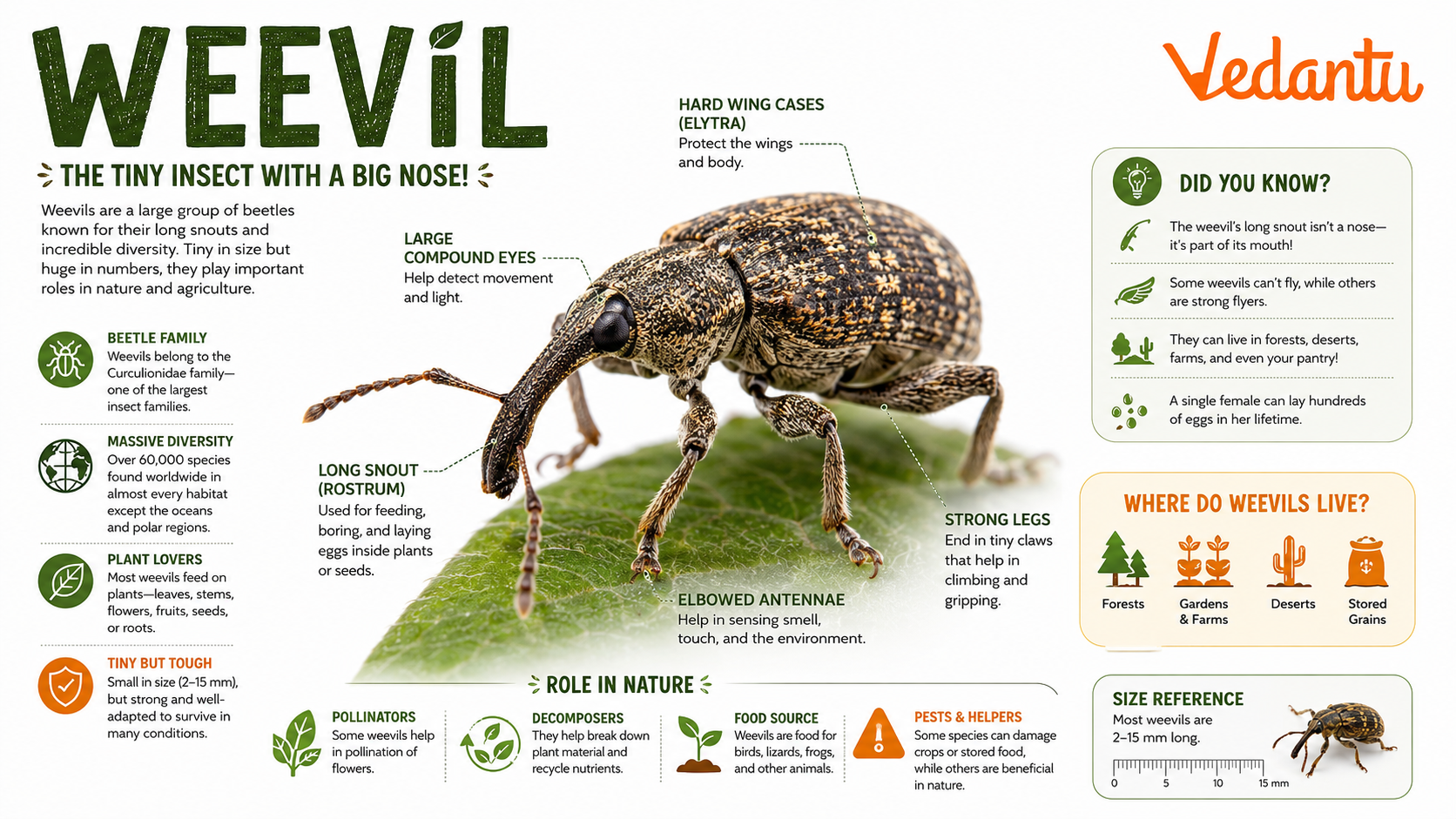
Quick Facts About Weevil
| Feature | Details |
|---|---|
| Common Name | Weevil |
| Scientific Family | Curculionidae |
| Animal Group | Insect (Beetle) |
| Size | About 3 mm to 10 mm (some larger species exist) |
| Diet | Herbivore – feeds on plants, seeds, grains |
| Habitat | Forests, farms, gardens, stored grains |
| Life Cycle | Egg → Larva → Pupa → Adult |
| Special Feature | Long snout (rostrum) |
Appearance and Physical Characteristics
- Small, oval-shaped body.
- Hard outer covering like other beetles.
- Very long snout called a rostrum.
- Antennae usually bend at the snout.
- Colours include brown, black, grey, or reddish.
The long snout helps the weevil drill holes into plants and seeds. Some species have tiny wings under their hard wing covers, but many stored-grain weevils do not fly.
Weevil Habitat and Distribution
- Found on every continent except Antarctica.
- Live in forests, grasslands, farms, and gardens.
- Many species live inside grains like rice, wheat, and corn.
- Prefer warm and moist environments.
The Weevil habitat depends on the species. Some live on trees and plants, while others stay inside stored food products in homes and warehouses.
Weevil Diet and Feeding Habits
- Mostly herbivores (plant eaters).
- Feed on leaves, roots, seeds, fruits, and grains.
- Use their long snout to bore into plant tissue.
- Larvae often feed inside seeds or stems.
The Weevil diet makes some species serious agricultural pests. For example, rice and wheat weevils can damage stored grains by eating them from the inside.
Behaviour and Lifestyle
Weevil Life Cycle
- Egg: Female lays eggs inside plant tissue or grains.
- Larva: Worm-like stage that feeds and grows inside the seed or plant.
- Pupa: Resting stage where transformation happens.
- Adult: Fully formed weevil emerges and begins feeding.
The Weevil life cycle shows complete metamorphosis, just like butterflies and other beetles.
What Makes Weevils Special?
Importance and Role in Nature
Amazing Weevil Facts
- Weevils are a type of beetle.
- They can damage crops worth millions each year.
- Their larvae often live hidden inside food.
- Some weevils specialize in feeding on only one plant species.
- Their snout length varies between species.
- Many species are harmless to humans.
Fun Facts for Kids
FAQs on Weevil Insects: Identification, Facts, and Control Guide
1. What is a weevil?
A weevil is a small type of beetle known for its long snout and love of plants and grains.
- Belongs to the Curculionidae beetle family
- Has a long nose called a rostrum
- Feeds on seeds, grains, fruits, and crops
- Some species are serious agricultural pests
2. What do weevils eat?
Weevils mainly eat plants and stored grains, depending on the species.
- Rice weevils eat rice and wheat
- Boll weevils feed on cotton plants
- Acorn weevils eat nuts and seeds
- Some species damage corn, flour, and cereals
3. Are weevils harmful to humans?
Weevils are not harmful to humans, but they can spoil food supplies.
- They do not bite or sting
- They do not spread diseases
- They can contaminate stored grains and pantry foods
- The main problem is food damage and waste
4. Why do weevils have long noses?
The long nose, or rostrum, helps weevils drill into plants and lay eggs.
- Used to bore holes into seeds and grains
- Females lay eggs inside the food source
- Larvae hatch and eat from inside
- Helps protect eggs from predators
5. Where do weevils live?
Weevils live in many places around the world, especially where plants or grains are found.
- Farms and crop fields
- Forests and gardens
- Kitchen pantries
- Food storage warehouses
6. What is the life cycle of a weevil?
The weevil life cycle has four stages, like most beetles.
- Egg – laid inside a seed or grain
- Larva – feeds inside the food source
- Pupa – changes into an adult
- Adult weevil – emerges and continues the cycle
7. What is a boll weevil?
The boll weevil is a famous agricultural pest that attacks cotton plants.
- Scientific name: Anthonomus grandis
- Feeds on cotton buds called "bolls"
- Caused major crop damage in the United States
- Changed farming history in the 1900s
8. How can you prevent weevils in your pantry?
You can prevent pantry weevils by storing food properly and keeping areas clean.
- Store grains in airtight containers
- Keep pantry shelves clean and dry
- Check rice, flour, and cereal regularly
- Throw away infested food quickly
9. How many types of weevils are there?
There are over 60,000 species of weevils worldwide, making them one of the largest beetle groups.
- Part of the Curculionidae family
- Include rice, boll, and acorn weevils
- Found in forests, farms, and homes
- Different species eat different plants
10. How can you tell if you have weevils?
You can tell you have weevils if you see small beetles or holes in stored food.
- Tiny brown or black bugs in rice or flour
- Small holes in grains or seeds
- Fine powder inside food packages
- Movement inside stored cereals
