






How to Identify Thrips and Prevent Damage to Your Plants
Thrips are extremely small insects that live on plants and flowers. Even though they are tiny, they play an important role in nature. Some thrips help in pollination, while others are known as plant pests. Learning about thrips facts, thrips habitat, and thrips life cycle helps us understand how these little insects affect crops, gardens, and ecosystems. Let’s explore their interesting characteristics and discover why these tiny creatures matter so much.
| Quick Facts | Details |
|---|---|
| Common Name | Thrips |
| Scientific Order | Thysanoptera |
| Animal Group | Insect |
| Size | About 1–2 mm long |
| Habitat | Plants, flowers, crops, forests, gardens |
| Diet | Plant sap, pollen; some eat other insects |
| Wings | Fringed wings (in many species) |
| Distribution | Found all over the world |
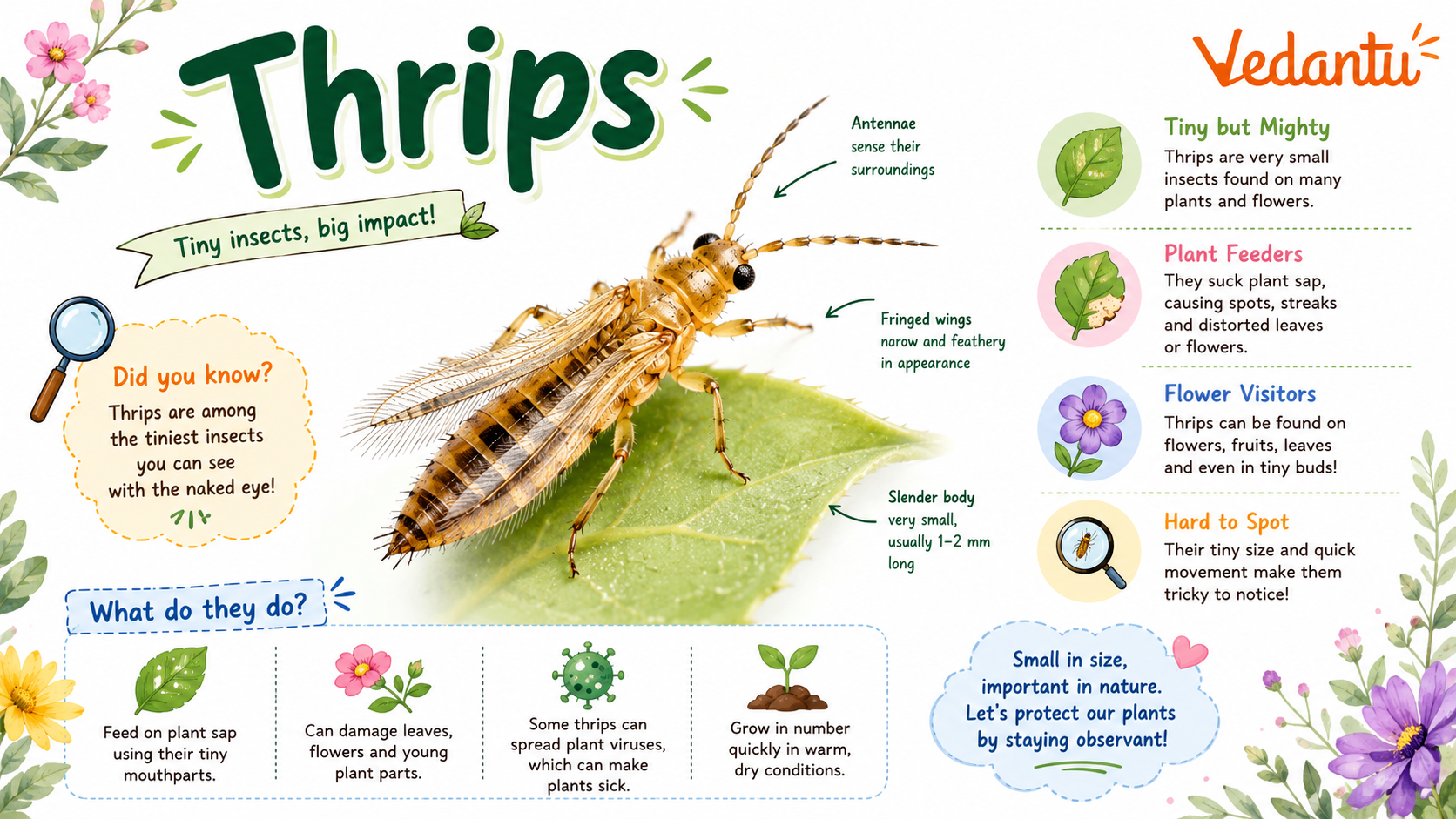
Appearance and Physical Characteristics
- Very tiny and slender body.
- Usually yellow, brown, or black in colour.
- Long, narrow wings with tiny hair-like fringes.
- Asymmetrical mouthparts designed for piercing and sucking.
- Large compound eyes.
Thrips Habitat and Distribution
- Live on leaves, flowers, and stems of plants.
- Common in gardens, farms, greenhouses, and forests.
- Prefer warm and dry climates.
- Hide inside flower buds and under leaves.
Diet and Feeding Habits
- Mostly feed on plant sap.
- Use sharp mouthparts to pierce plant tissues.
- Some species eat pollen.
- A few thrips species are predators and eat other small insects.
Behaviour and Lifestyle
- Active during warm weather.
- Often move in groups on plants.
- Can jump or fly short distances.
- Hide in tight spaces for protection.
Thrips Life Cycle
- Egg: Laid inside plant tissues.
- Larva: Feeds actively on plant sap.
- Pupa: Resting stage, usually in soil or hidden areas.
- Adult: Winged (in many species) and ready to reproduce.
What Makes Thrips Special?
Importance and Role in Nature
Amazing Thrips Facts
- There are more than 6,000 known thrips species.
- Some thrips can reproduce without mating.
- They can spread serious plant diseases.
- Their wings are not strong for long flights.
- They are attracted to bright colours like yellow and blue.
- Thrips can survive in both wild and urban areas.
Interesting Facts About Thrips
Fun Facts for Kids
- Thrips are smaller than a grain of rice!
- You may find them hiding inside flowers.
- They can jump when disturbed.
- Some thrips are helpful, others are harmful.
- They have feathery wings.
FAQs on Thrips Explained: Identification, Life Cycle, and Plant Damage
1. What are thrips?
Thrips are tiny, slender insects that feed on plants and can cause damage to leaves and flowers.
- Thrips insects are very small, usually less than 1/25 inch long.
- They have thin bodies and fringed wings.
- They feed by sucking juices from plants, flowers, and crops.
- They are common garden pests found worldwide.
2. Are thrips harmful to plants?
Yes, thrips can harm plants by sucking out plant juices and spreading plant diseases.
- They cause silver or white streaks on leaves.
- Flowers may become damaged or discolored.
- Some thrips spread plant viruses like Tomato Spotted Wilt Virus.
- Heavy infestations can slow plant growth.
3. What do thrips look like?
Thrips look like tiny, thin insects with narrow wings that are hard to see without a magnifying glass.
- They are usually yellow, brown, or black.
- Their bodies are long and slender.
- They have fringed wings with tiny hairs.
- Young thrips (nymphs) are smaller and wingless.
4. Where do thrips live?
Thrips live on plants in gardens, farms, and greenhouses around the world.
- They hide inside flowers and buds.
- They can live on vegetables, fruits, and ornamental plants.
- Many species prefer warm and dry climates.
- They may also be found indoors on houseplants.
5. How do thrips damage plants?
Thrips damage plants by piercing plant cells and sucking out their contents.
- This feeding causes silvery spots or streaks on leaves.
- Leaves may curl or turn brown.
- Flowers can become deformed.
- Severe damage may reduce crop yield in farms.
6. Can thrips bite humans?
Thrips may lightly pinch human skin, but they are not dangerous.
- Their bite can cause mild itching.
- They do not suck blood like mosquitoes.
- They do not spread diseases to humans.
- They are mainly a problem for plants, not people.
7. How can you get rid of thrips naturally?
You can control thrips naturally using safe garden methods.
- Spray plants with water to knock them off.
- Use insecticidal soap or neem oil.
- Introduce natural predators like ladybugs and lacewings.
- Remove damaged leaves to reduce infestation.
8. What plants are most affected by thrips?
Thrips attack many types of plants, especially soft and flowering ones.
- Roses and ornamental flowers are common targets.
- Vegetables like tomatoes, onions, and peppers.
- Fruit crops such as strawberries.
- Indoor houseplants can also be affected.
9. How do thrips reproduce?
Thrips reproduce quickly, which helps them spread fast.
- Female thrips lay eggs inside plant tissue.
- Eggs hatch into nymphs that look like small adults.
- They go through several growth stages.
- Warm weather speeds up their life cycle.
10. How can you prevent thrips in your garden?
Preventing thrips starts with keeping plants healthy and clean.
- Check plants regularly for early signs of thrips damage.
- Keep weeds under control.
- Use reflective mulch to repel thrips.
- Encourage beneficial insects for biological pest control.
