






What Is a Tabby Cat? Coat Patterns, Colors, and Fun Facts
The Tabby Cat is not a specific breed, but a beautiful coat pattern seen in many domestic cats. Known for its unique stripes, swirls, and the famous “M” mark on the forehead, the tabby cat is one of the most common and loved pet cats in the world. In this guide, explore fascinating Tabby Cat facts, characteristics, habitat, diet, life cycle, and why these friendly felines make such wonderful companions.
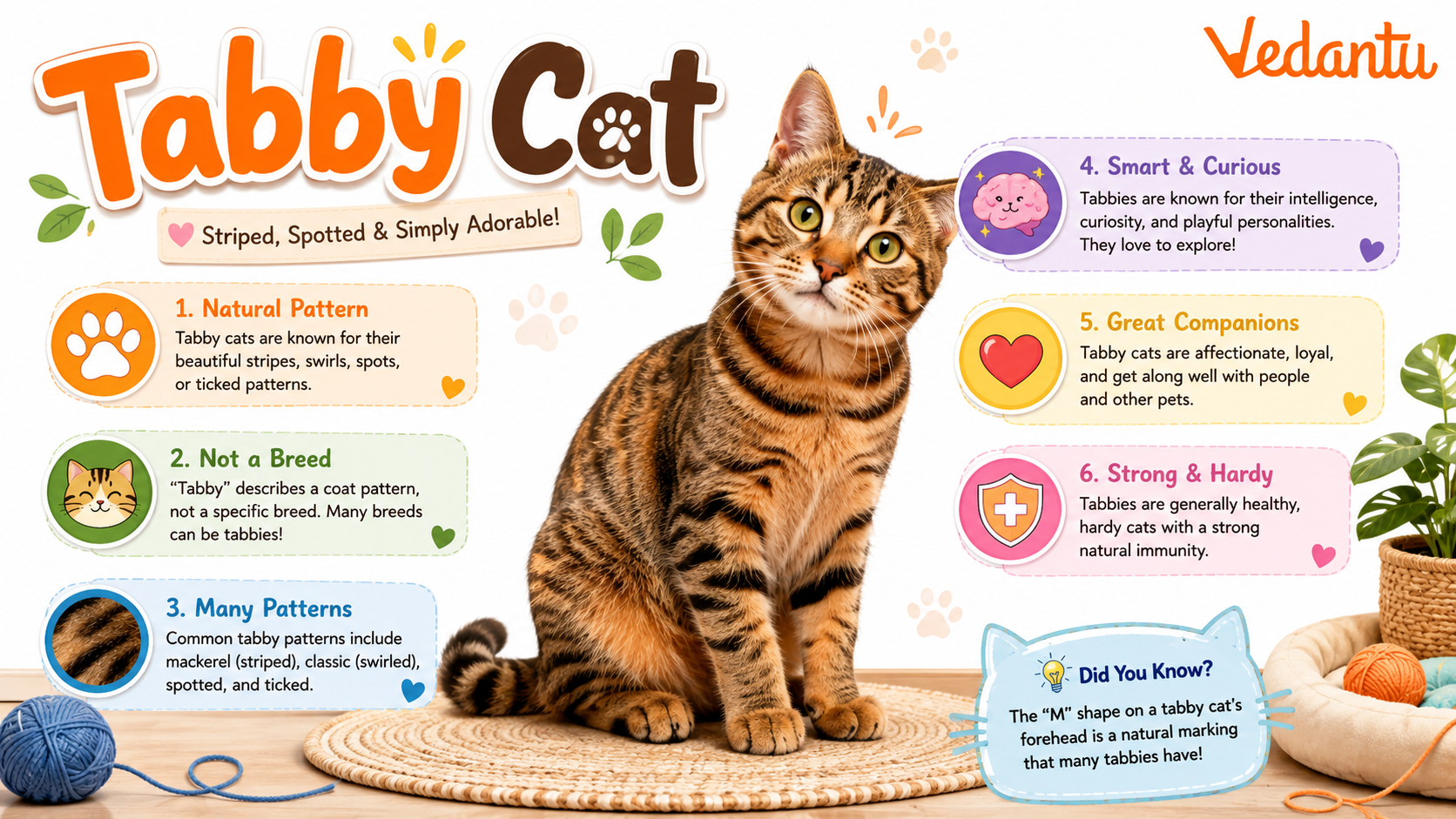
Quick Facts About Tabby Cat
| Feature | Details |
|---|---|
| Common Name | Tabby Cat |
| Scientific Name | Felis catus |
| Animal Group | Mammal |
| Type | Domestic Cat (Coat Pattern, not a breed) |
| Lifespan | 12–18 years (sometimes more) |
| Diet | Carnivore |
| Habitat | Homes, farms, cities, and rural areas worldwide |
| Young One | Kitten |
Appearance and Physical Characteristics
Tabby Cat characteristics mainly focus on their coat pattern rather than body shape, because many different breeds can be tabbies.
- Soft fur with striped, dotted, or swirled patterns.
- Distinct “M” marking on the forehead.
- Usually has rings around the tail and legs.
- Eyes can be green, yellow, gold, or copper.
- Body size depends on the breed (small to medium).
- Classic Tabby: Bold swirls like marble cake.
- Mackerel Tabby: Thin, tiger-like stripes.
- Spotted Tabby: Spots instead of stripes.
- Ticked Tabby: Each hair has multiple colours.
Tabby Cat Habitat and Distribution
Since tabby cats are domestic cats, their habitat depends on where humans live.
- Found all around the world.
- Live in homes as pets.
- Can also live on farms to control rodents.
- Some stray or feral tabby cats survive outdoors.
- Adapt well to both warm and cold climates.
Diet and Feeding Habits
The Tabby Cat diet is the same as other domestic cats because they are strict carnivores.
Cats need animal protein such as chicken, fish, or beef to stay healthy.
They instinctively hunt small animals like mice, birds, and insects.
Designed for tearing meat.
Helps them locate food quickly.
Behaviour and Lifestyle
- Playful and curious by nature.
- Can be independent but also affectionate.
- Active during early morning and evening.
- Communicate by meowing, purring, and body language.
- Enjoy climbing and exploring high places.
Sound or Call
- Meow: To communicate with humans.
- Purr: When relaxed or happy.
- Hiss: When scared or angry.
Tabby Cat Life Cycle
- Birth: Kittens are born blind and depend on their mother.
- Kitten Stage (0–6 months): Learn to walk, play, and hunt.
- Young Adult (6 months–2 years): Fully grown and active.
- Adult Cat: Calm, social, and independent.
- Senior Stage: Slower movement but still affectionate.
The Tabby Cat life cycle usually lasts between 12 to 18 years, depending on health and care.
Temperament and Domestic Life
Many tabbies are gentle and enjoy human company.
Need regular feeding, grooming, and vet check-ups.
Love toys, scratching posts, and interactive games.
Clean animals that groom themselves daily.
Importance and Role in Human Life
- Control rodent populations on farms and in homes.
- Provide emotional comfort and companionship.
- Help reduce stress and loneliness.
- Teach responsibility to children.
The importance of Tabby Cats goes beyond being pets—they are loving members of many families.
Amazing Tabby Cat Facts
Interesting Facts About Tabby Cat
- Some tabbies have spotted bellies.
- They are popular in cartoons and storybooks.
- The word “tabby” comes from a patterned silk called “attabi.”
- Wild cats also have similar stripe patterns.
Fun Facts for Kids
- Tabby cats can jump up to five times their height!
- They sleep for 12–16 hours a day.
- Each whisker helps them measure spaces.
- Kittens love chasing moving shadows.
- Some tabbies enjoy playing in cardboard boxes more than toys.
FAQs on Tabby Cat: Traits, Patterns, and Personality Explained
1. What is a Tabby Cat?
A Tabby Cat is a domestic cat known for its unique striped, spotted, or swirled coat pattern rather than being a specific breed.
- The word tabby describes a coat pattern, not a breed.
- Tabbies can be found in many breeds like Maine Coon, American Shorthair, and British Shorthair.
- They often have a special “M” marking on their forehead.
- Common colors include brown, gray, orange, and silver.
2. What are the different types of Tabby Cat patterns?
Tabby Cats have five main coat patterns that make each cat look unique.
- Classic Tabby – Bold, swirled patterns like marble cake.
- Mackerel Tabby – Thin stripes like a tiger.
- Spotted Tabby – Spots instead of stripes.
- Ticked Tabby – Speckled fur with no clear stripes.
- Patched Tabby – A mix of tabby and tortoiseshell colors.
3. Are Tabby Cats a specific breed?
Tabby Cats are not a specific breed; they are cats with a special coat pattern found in many breeds.
- The term tabby describes fur markings.
- Many purebred and mixed-breed cats can be tabbies.
- Popular tabby breeds include Bengal, Abyssinian, and Persian.
4. Why do Tabby Cats have an “M” on their forehead?
The “M” marking on a Tabby Cat’s forehead is a natural part of its genetic coat pattern.
- It appears due to agouti genes that control fur coloring.
- The marking is visible in almost all tabby patterns.
- There are fun legends about the “M,” but it is scientifically genetic.
5. What is the personality of a Tabby Cat?
Tabby Cats are often friendly, playful, and affectionate, but personality depends more on breed and upbringing.
- Many tabbies are social and loving.
- They can be active and curious.
- Some are calm lap cats, especially in indoor homes.
6. How long do Tabby Cats live?
Tabby Cats usually live between 12–18 years, depending on their health and lifestyle.
- Indoor tabby cats often live longer than outdoor cats.
- Regular vet checkups and vaccinations help extend lifespan.
- A healthy diet and exercise are important.
7. What do Tabby Cats eat?
Tabby Cats eat a balanced diet made for domestic cats, rich in protein and nutrients.
- High-quality cat food with real meat.
- Fresh, clean water daily.
- Occasional healthy treats in small amounts.
8. Are Tabby Cats good pets for kids?
Tabby Cats can be great pets for kids when they are treated gently and respectfully.
- Many tabbies are playful and patient.
- They enjoy interactive toys and family time.
- Teaching kids proper pet care keeps everyone safe.
9. How big do Tabby Cats get?
The size of a Tabby Cat depends on its breed, but most are medium-sized domestic cats.
- Average weight: 8–15 pounds.
- Males are usually larger than females.
- Some breeds like Maine Coon tabbies can grow much bigger.
10. How can you tell if a cat is a Tabby?
You can tell a cat is a Tabby by its special coat markings and forehead “M.”
- Look for stripes, spots, or swirls on the body.
- Check for the clear “M” marking on the forehead.
- Notice ringed tails and striped legs.
