






Sphynx Cat Personality, Care Needs, Health Tips, and Fun Facts
The Sphynx Cat is one of the most unusual and fascinating cat breeds in the world. Known for its hairless body, wrinkled skin, and large ears, this breed stands out instantly. Despite its bold look, the Sphynx Cat is loving, playful, and highly social. These cats love attention and enjoy being around people. Let’s explore interesting Sphynx Cat facts, characteristics, diet, habitat, life cycle, and what makes them truly special.
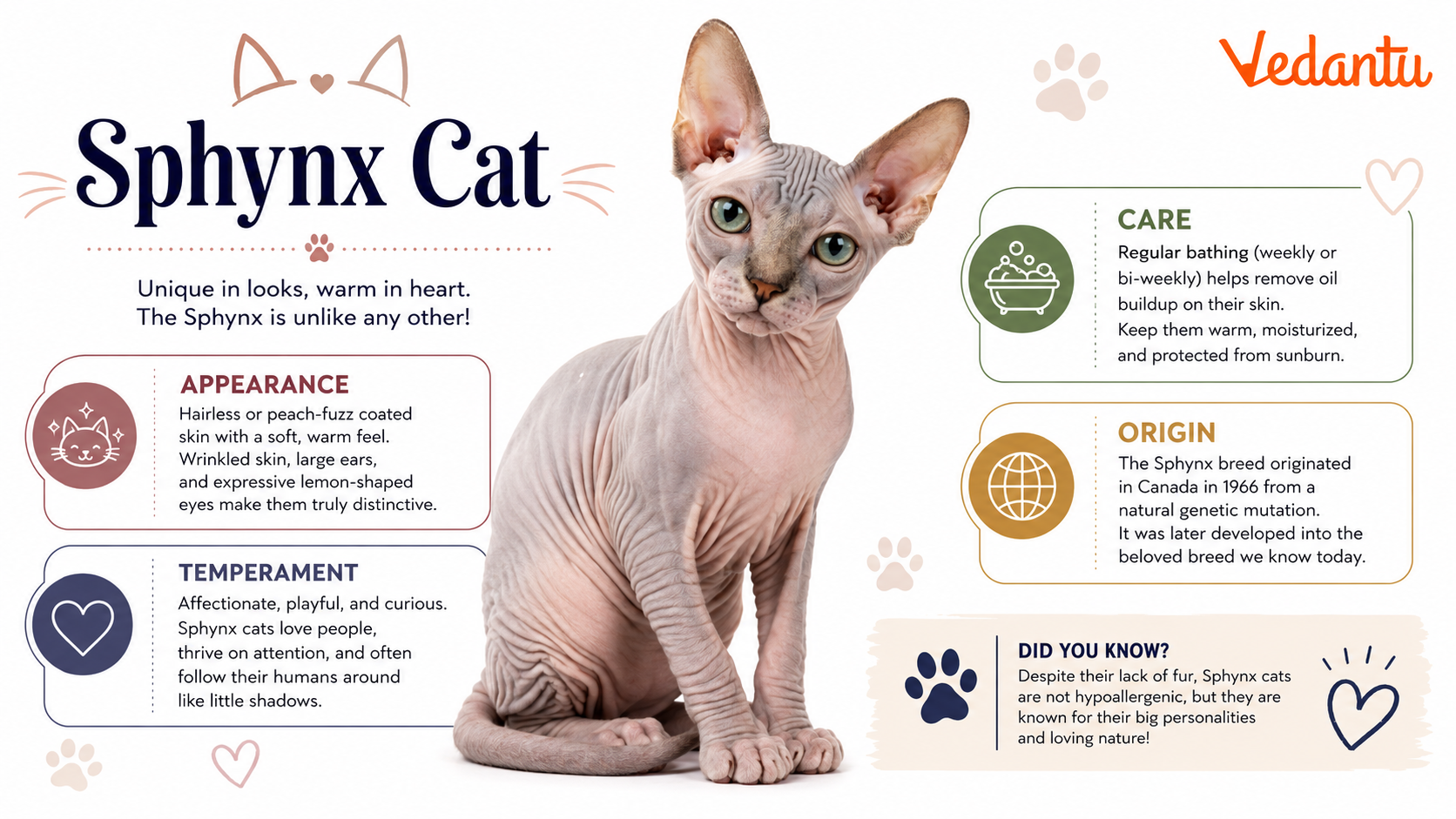
Quick Facts About Sphynx Cat
| Feature | Details |
|---|---|
| Common Name | Sphynx Cat |
| Scientific Name | Felis catus |
| Animal Group | Mammal |
| Size | Medium-sized |
| Weight | 3–6 kg |
| Lifespan | 8–14 years |
| Habitat | Domestic homes (indoor) |
| Diet | Carnivore |
| Special Feature | Hairless, wrinkled skin |
Appearance and Physical Characteristics
- Hairless Body: The Sphynx looks bald but actually has a fine, soft fuzz.
- Wrinkled Skin: Especially around the head, neck, and shoulders.
- Large Ears: Wide and bat-like in shape.
- Big Eyes: Lemon-shaped and expressive.
- Muscular Build: Strong, compact, and surprisingly heavy for their size.
- Warm Skin: Their body feels warm because there is no fur layer.
Sphynx Cat Habitat and Living Environment
The Sphynx Cat habitat is very different from wild cats. This breed is completely domestic and depends on humans for care and protection.
- Lives indoors in homes and apartments.
- Cannot survive extreme cold or heat due to lack of fur.
- Needs warm blankets and cozy resting places.
- Found worldwide as a popular pet breed.
Sphynx Cat Diet and Feeding Habits
Since they lack fur, Sphynx Cats use more energy to maintain body heat. That is why their diet must be balanced and nutritious.
Behaviour and Personality
- Very friendly and people-loving.
- Enjoys cuddling and sitting on laps.
- Playful and energetic.
- Gets along well with children and other pets.
- Dislikes being left alone for long periods.
Among all Sphynx Cat characteristics, their affectionate nature makes them one of the most lovable cat breeds.
Sphynx Cat Life Cycle
- Birth: Kittens are born after about 63–65 days of pregnancy.
- Kitten Stage: Highly playful and curious.
- Young Adult: Develops full body size and personality.
- Adult Cat: Remains active and social throughout life.
The Sphynx Cat life cycle is similar to other domestic cats, but they require special skin care from kittenhood.
What Makes the Sphynx Cat Special?
Temperament and Domestic Life
- Needs regular bathing to remove skin oils.
- Requires sun protection to prevent sunburn.
- Loves interactive toys and climbing spaces.
- Thrives in warm indoor environments.
Amazing Sphynx Cat Facts
Interesting Facts About Sphynx Cat
- They can feel sticky if not bathed regularly.
- They are not truly hypoallergenic.
- Their skin color matches what their fur color would have been.
- They love sleeping under blankets.
Fun Facts for Kids
- Sphynx Cats love warm hugs!
- They can learn simple tricks.
- They look serious but are very playful.
- Their ears are bigger than most cats.
- They enjoy being the center of attention.
FAQs on Sphynx Cat: Complete Guide to This Unique Hairless Breed
1. What is a Sphynx cat?
Sphynx cats are unique hairless cats known for their wrinkled skin and big ears.
- They are a special breed of hairless cats.
- They have soft, warm skin instead of fur.
- They are famous for their large ears and big eyes.
- They are friendly, playful, and love attention.
2. Why do Sphynx cats have no hair?
Sphynx cats have no hair because of a natural genetic mutation.
- A special gene mutation stops fur from growing normally.
- This mutation happened in the 1960s in Canada.
- Breeders carefully developed the modern Sphynx cat breed.
3. Are Sphynx cats good pets for kids?
Sphynx cats are great pets for kids because they are loving and playful.
- They enjoy cuddling and being around people.
- They are energetic and like to play games.
- They are social and do not like being alone.
4. Do Sphynx cats need special care?
Sphynx cats need special skin care because they do not have fur.
- They need regular baths to remove skin oils.
- Their ears must be cleaned often.
- They need warm clothes or blankets in cold weather.
- They should stay indoors to protect their sensitive skin.
5. Are Sphynx cats hypoallergenic?
Sphynx cats are not completely hypoallergenic, even though they have no fur.
- They still produce allergens in their saliva and skin.
- Some people with mild allergies may react less.
- Spending time with one before adopting is helpful.
6. How long do Sphynx cats live?
Sphynx cats usually live between 12 to 15 years with good care.
- Healthy diet and regular vet visits help them live longer.
- Indoor living keeps them safe.
- Proper skin care prevents infections.
7. What do Sphynx cats eat?
Sphynx cats need a balanced, high-quality cat diet.
- They eat protein-rich cat food (dry or wet).
- They may eat more than furry cats because they use energy to stay warm.
- Fresh water should always be available.
8. Do Sphynx cats get cold easily?
Sphynx cats get cold easily because they do not have insulating fur.
- They love warm blankets and sunny spots.
- They may wear soft sweaters indoors.
- Cold weather can make them uncomfortable.
9. Are Sphynx cats friendly?
Sphynx cats are extremely friendly and social pets.
- They love attention and cuddles.
- They follow their owners around the house.
- They get along well with other pets.
10. How much does a Sphynx cat cost?
Sphynx cats can be expensive because they are a rare and special breed.
- They may cost between $1,500 and $3,000 from a breeder.
- Price depends on breeder quality and location.
- Extra costs include food, vet care, and grooming supplies.
