






Softshell Turtle Habitat, Diet, Lifespan, and Surprising Adaptations
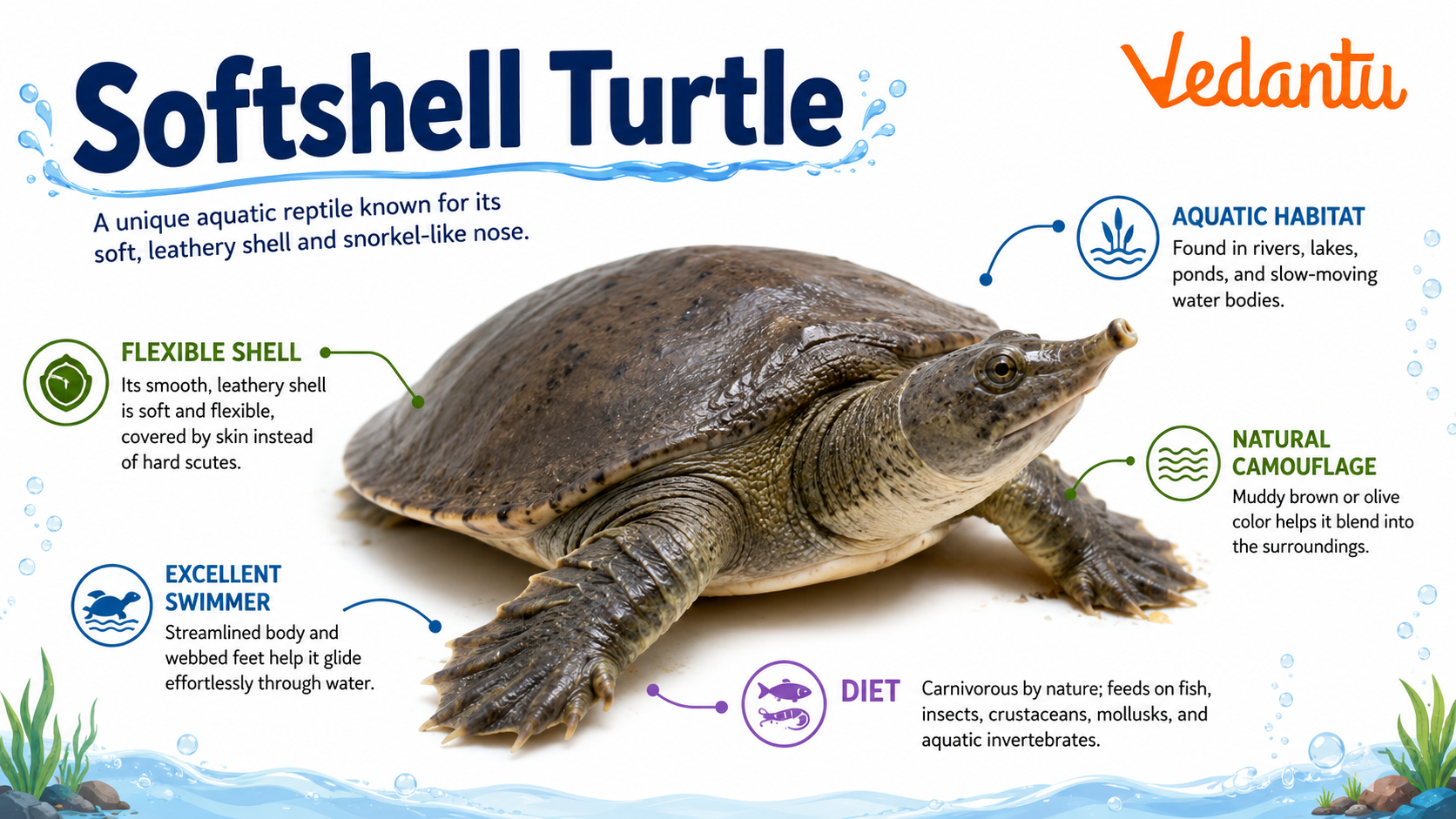
The Softshell Turtle is a unique freshwater turtle known for its flat body and soft, leathery shell. Unlike other turtles with hard shells, this reptile has a flexible covering that helps it move quickly in water. Found in rivers, lakes, and ponds, softshell turtles are skilled swimmers and excellent hunters. Let’s explore amazing Softshell Turtle facts, their habitat, diet, characteristics, and life cycle in a fun and easy way!
Quick Facts and Statistics
| Feature | Details |
|---|---|
| Common Name | Softshell Turtle |
| Scientific Family | Trionychidae |
| Animal Group | Reptile |
| Habitat | Rivers, lakes, ponds, wetlands |
| Diet | Carnivore (fish, insects, small animals) |
| Lifespan | 20–50 years (varies by species) |
| Shell Type | Soft, leathery, flexible |
| Conservation Status | Some species are endangered |
Appearance and Physical Characteristics
- Flat, round body that helps it hide under sand or mud.
- Soft, rubbery shell instead of a hard, bony shell.
- Long neck that stretches quickly to catch prey.
- Pointed snout with tube-like nostrils for breathing while underwater.
- Webbed feet with strong claws for swimming and digging.
Habitat and Distribution
The Softshell Turtle habitat mainly includes freshwater environments. These turtles prefer areas with soft, sandy or muddy bottoms.
- Slow-moving rivers
- Lakes and ponds
- Marshes and wetlands
- Warm temperate and tropical regions
They are found in North America, Africa, and Asia. Many species live in India and Southeast Asia.
Diet and Feeding Habits
Fish, insects, worms, frogs, crustaceans, and sometimes small birds.
Carnivore – mainly feeds on other animals.
Lies buried in sand and quickly stretches its neck to grab prey.
Controls fish and insect populations in aquatic ecosystems.
Behaviour and Lifestyle
- Mostly solitary animals.
- Spend most of their time in water.
- Bask in sunlight to warm their cold-blooded bodies.
- Quick and aggressive when threatened.
- Bury themselves in mud for protection and camouflage.
Life Cycle and Reproduction
- Egg Stage: Female lays eggs in sandy riverbanks.
- Hatching: Baby turtles hatch after 2–3 months.
- Young Turtle: Independent from birth and must survive on their own.
- Adult Stage: Grow larger and develop strong hunting skills.
The Softshell Turtle life cycle does not involve parental care after eggs are laid.
What Makes Softshell Turtle Special?
Importance and Role in Nature
- Maintain balance in freshwater ecosystems.
- Control fish and insect populations.
- Serve as prey for larger animals like crocodiles and birds.
- Indicator of clean and healthy water bodies.
The Softshell Turtle importance lies in keeping aquatic environments healthy and balanced.
Amazing Facts About Softshell Turtle
Fun Facts for Kids
- Their shell is soft, not hard like other turtles!
- They can stretch their neck very far.
- They love to hide in muddy water.
- They breathe through a tiny tube-like nose.
- They can move faster than many other turtles.
FAQs on Softshell Turtle: Complete Guide to This Unique Freshwater Reptile
1. What is a Softshell Turtle?
A Softshell Turtle is a special type of freshwater turtle with a soft, leathery shell instead of a hard one.
- Belongs to the family Trionychidae
- Has a flat, flexible soft shell
- Lives mostly in rivers, lakes, and ponds
- Known for its long neck and snorkel-like nose
2. Why do Softshell Turtles have soft shells?
Softshell turtles have soft shells to help them move faster and hide easily in water and sand.
- Their shell is covered with leathery skin instead of hard scutes
- Helps them swim quickly
- Makes it easier to bury in mud or sand
- Gives them better protection through flexibility
3. Where do Softshell Turtles live?
Softshell turtles live in warm freshwater habitats around the world.
- Found in North America, Asia, and Africa
- Prefer rivers, lakes, ponds, and wetlands
- Stay in areas with sandy or muddy bottoms
- Often seen basking near water edges
4. What do Softshell Turtles eat?
Softshell turtles are mostly carnivores and eat small animals in the water.
- Feed on fish, insects, and worms
- Eat crabs, shrimp, and snails
- Sometimes consume small amphibians
- Young turtles may eat tiny water plants
5. Are Softshell Turtles dangerous?
Softshell turtles can bite if they feel threatened, but they are not usually dangerous to humans.
- Have a strong and fast bite
- May scratch with sharp claws
- Prefer to escape rather than fight
- Should not be handled in the wild
6. How big can a Softshell Turtle grow?
Softshell turtles can grow from small sizes to very large, depending on the species.
- Some grow about 6–12 inches long
- Large species like the Chinese Softshell Turtle can reach over 2 feet
- Females are often bigger than males
- Size depends on habitat and food availability
7. How do Softshell Turtles breathe underwater?
Softshell turtles can breathe air but can also absorb oxygen in water for short periods.
- Use lungs to breathe air at the surface
- Can absorb small amounts of oxygen through their skin and throat
- Stay underwater for a long time while hiding
- Stick out their long nose like a snorkel
8. How long do Softshell Turtles live?
Softshell turtles can live for many years in the wild and in protected habitats.
- Average lifespan is 20–30 years
- Some species may live even longer
- Healthy habitat increases survival
- Threats include pollution and habitat loss
9. Are Softshell Turtles endangered?
Some softshell turtle species are endangered due to human activities.
- Threatened by habitat destruction
- Affected by water pollution
- Hunted for food in some regions
- Conservation programs protect rare species like the Yangtze Giant Softshell Turtle
10. What are some interesting facts about Softshell Turtles?
Softshell turtles are unique reptiles with amazing survival skills.
- They are among the fastest swimming turtles
- Can quickly bury themselves in sand
- Have very long and flexible necks
- Their flat body helps them hide from predators
