






What Do Sloth Bears Eat, Where Do They Live, and Why Are They Unique?
The Sloth Bear is a unique wild bear known for its long shaggy fur, loud snorting sounds, and love for insects and honey. Found mainly in the Indian subcontinent, this fascinating mammal is very different from other bear species. With its powerful claws and long snout, the Sloth Bear has special adaptations that help it survive in forests and grasslands. Let’s explore amazing Sloth Bear facts, habitat, diet, characteristics, life cycle, and importance in nature.
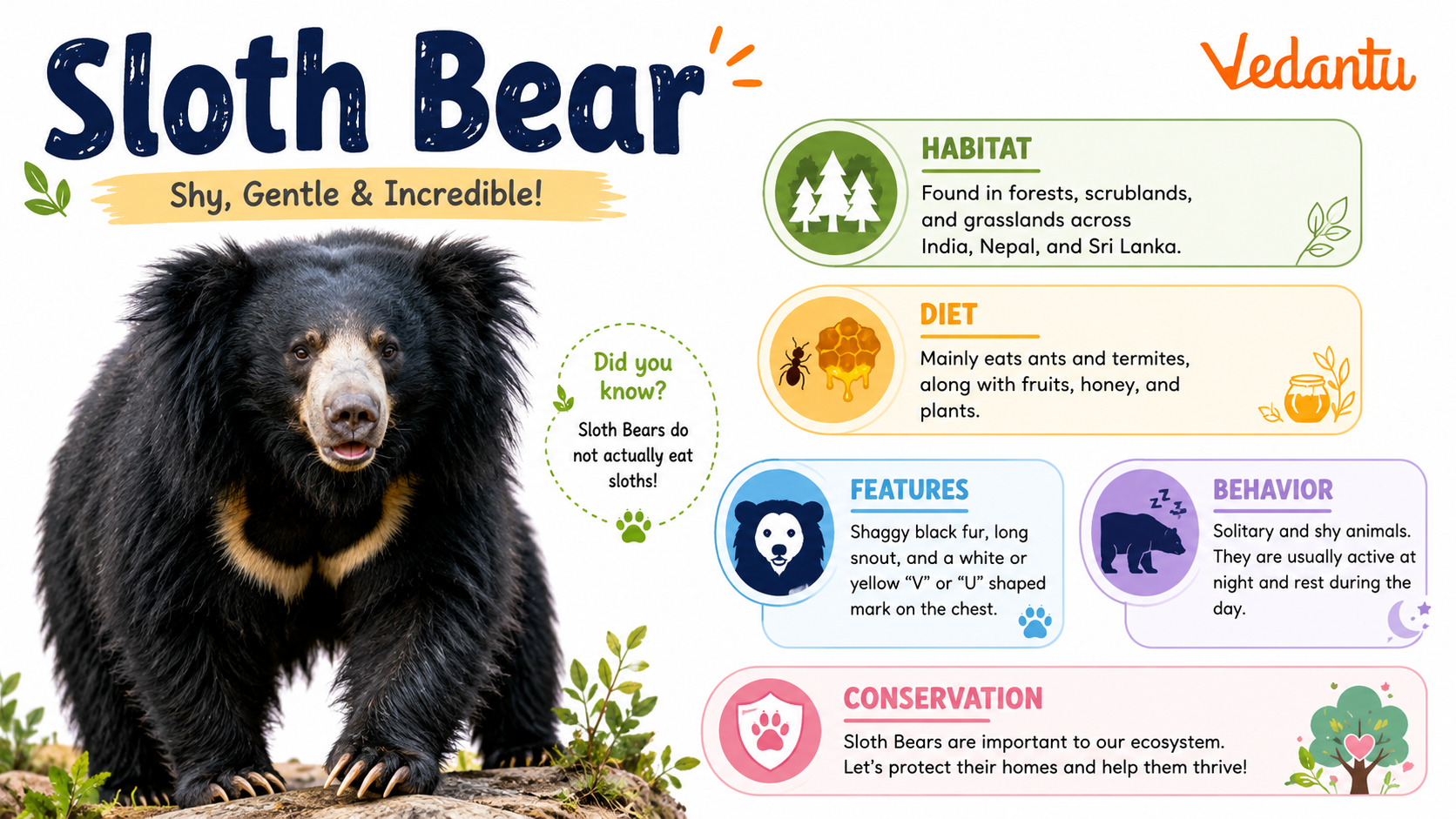
Quick Facts About Sloth Bear
| Feature | Details |
|---|---|
| Common Name | Sloth Bear |
| Scientific Name | Melursus ursinus |
| Animal Group | Mammal |
| Length | 1.4 – 1.9 metres |
| Weight | 80 – 140 kg |
| Lifespan | 20 – 30 years |
| Habitat | Forests, grasslands, scrublands |
| Diet | Insects, termites, ants, fruits, honey |
| Found In | India, Sri Lanka, Nepal, Bhutan |
| Conservation Status | Vulnerable |
Appearance and Physical Characteristics
- Long, shaggy black fur covering the body.
- White or cream “V” or “Y” shaped mark on the chest.
- Long curved claws for digging termite mounds.
- Long snout with flexible lips to suck insects.
- Loose lips and missing front teeth help in sucking up ants and termites.
Sloth Bear Habitat and Distribution
- Mostly found in the Indian subcontinent.
- Common in central and southern India.
- Also seen in Sri Lanka, Nepal, and Bhutan.
- Rest in caves, under rocks, or in dense bushes during the day.
Sloth Bear Diet and Feeding Habits
What Do Sloth Bears Eat?
- Termites and ants (favourite food)
- Honey and bee larvae
- Fruits like mango, jamun, and berries
- Occasionally small animals
Behaviour and Lifestyle
Sloth Bear Life Cycle
- Birth: Female gives birth to 1–3 cubs in a den.
- Baby Stage: Cubs are born blind and depend on their mother.
- Growing Up: Cubs ride on their mother’s back for safety.
- Adult Stage: Become independent after 2–3 years.
What Makes Sloth Bear Special?
Importance and Role in Nature
- Controls insect populations like termites and ants.
- Helps in seed dispersal by eating fruits.
- Maintains ecological balance in forest ecosystems.
Amazing Sloth Bear Facts
- Sloth Bears were once used in street performances, but this practice is now banned.
- They can run faster than humans.
- They are excellent climbers.
- Their sense of smell is very powerful.
- They may appear slow but can be very defensive.
- They have been living in India for thousands of years.
Fun Facts for Kids
FAQs on Sloth Bear: Fascinating Facts, Behavior, and Habitat Explained
1. What is a Sloth Bear?
Sloth Bears are shaggy, insect-eating bears found mainly in India and South Asia.
- Scientific name: Melursus ursinus
- Known for their long, messy black fur and white chest mark
- Have long curved claws for digging
- Unlike other bears, they mainly eat termites and ants
- Native to India, Sri Lanka, Nepal, and Bhutan
2. Why is it called a Sloth Bear?
Sloth Bears got their name because early scientists thought they were related to sloths.
- They hang from trees like sloths
- They move in a slow, swaying way
- Later studies proved they are true bears, not sloths
- The name stayed even after the mistake was discovered
3. Where do Sloth Bears live?
Sloth Bears live in warm forest and grassland habitats in South Asia.
- Tropical forests
- Dry forests and scrublands
- Grasslands near hills
- Mainly found in India, with smaller populations in Sri Lanka, Nepal, and Bhutan
4. What do Sloth Bears eat?
Sloth Bears are insectivores and love eating ants and termites.
- Termites and ant colonies (their favorite food)
- Fruits like mangoes and berries
- Honey from beehives
- Occasionally small animals
- Use their long snout and lips to suck up insects loudly
5. Are Sloth Bears dangerous?
Sloth Bears can be dangerous if they feel threatened, but they usually avoid humans.
- They may attack in self-defense
- Have sharp claws and strong jaws
- Most attacks happen when surprised
- Prefer to run away instead of fighting
6. How big is a Sloth Bear?
Sloth Bears are medium-sized bears with strong bodies and long fur.
- Length: About 5 to 6 feet (1.5 to 1.8 meters)
- Weight: 55 to 145 kg (120 to 320 pounds)
- Males are usually larger than females
- Have long curved claws for digging
7. Do Sloth Bears hibernate?
Sloth Bears do not hibernate like some other bear species.
- They stay active all year round
- Live in warm climates where food is available
- May rest more during very hot weather
- Do not build winter dens like brown bears
8. How do Sloth Bears protect themselves?
Sloth Bears protect themselves using their strength, claws, and loud warning sounds.
- Stand on hind legs to look bigger
- Use sharp claws to defend
- Make loud roars and snorts
- Thick fur helps protect from insect bites
9. Are Sloth Bears endangered?
Sloth Bears are listed as Vulnerable due to habitat loss and human conflict.
- Forests are being cut down
- Illegal poaching and wildlife trade
- Conflict with farmers
- Protected in many wildlife sanctuaries and national parks
10. How do Sloth Bear mothers care for their cubs?
Sloth Bear mothers are very caring and protective of their cubs.
- Usually give birth to 1–2 cubs
- Cubs ride on their mother’s back
- Mothers teach them how to find food
- Stay with their mother for about 2–3 years
