






Are Samoyeds Good Family Dogs? Temperament, Grooming, and Training Basics
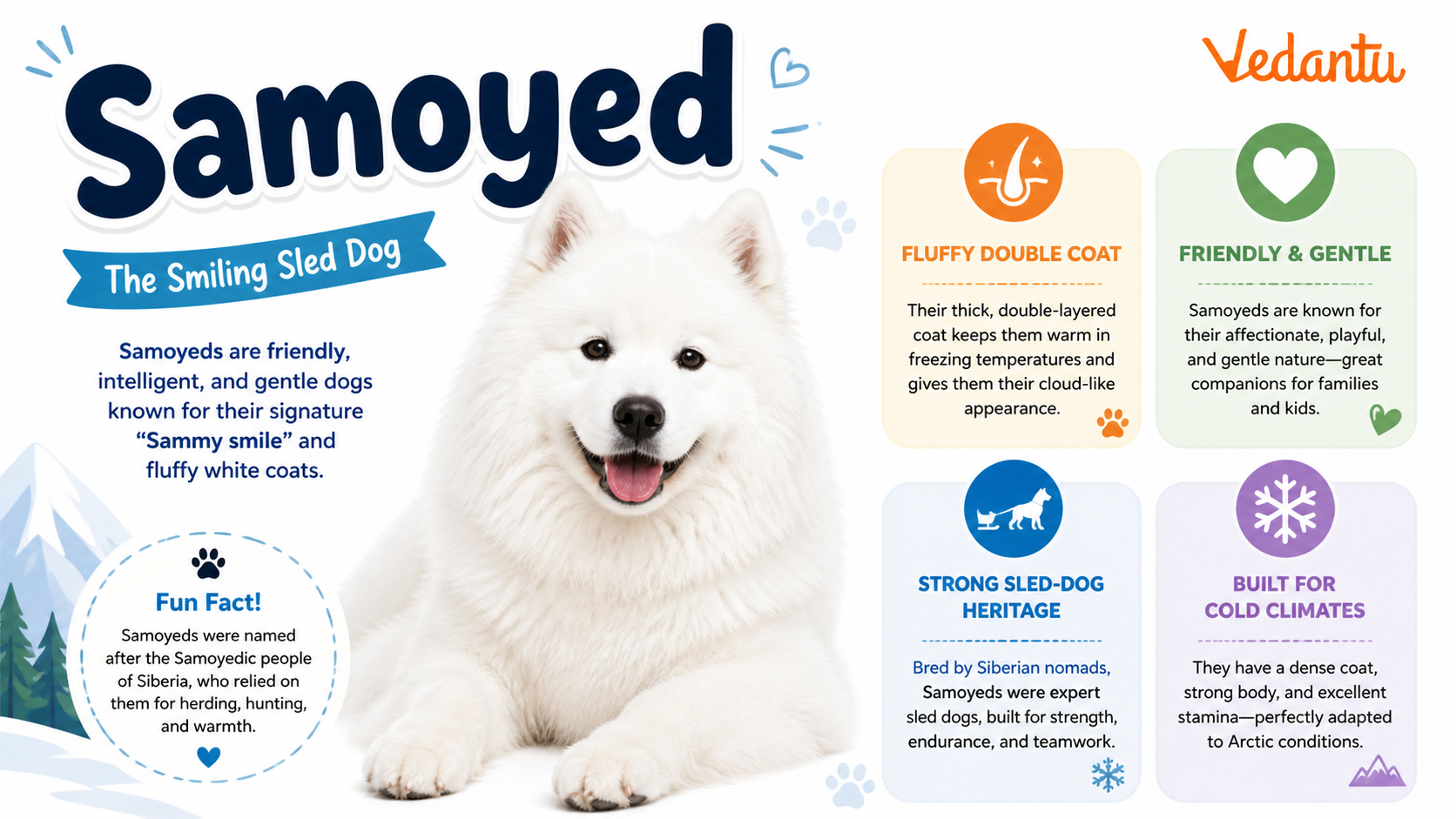
The Samoyed is a beautiful, fluffy dog breed known for its bright white coat and famous “Sammy smile.” Originally bred by the Samoyede people of Siberia, these dogs helped in herding reindeer and pulling sleds in icy regions. Today, Samoyeds are loved as friendly family pets. In this page, explore amazing Samoyed facts, Samoyed characteristics, habitat history, diet, life cycle, and why this cheerful dog is so special.
Quick Facts and Statistics
| Feature | Details |
|---|---|
| Common Name | Samoyed |
| Scientific Name | Canis lupus familiaris |
| Animal Group | Mammal (Dog Breed) |
| Origin | Siberia, Russia |
| Height | 48–60 cm (approx.) |
| Weight | 16–30 kg |
| Lifespan | 12–14 years |
| Diet | Omnivore (dog food, meat, vegetables) |
| Temperament | Friendly, Social, Alert |
Appearance and Physical Characteristics
- Coat: Thick, double-layered fur that protects from freezing temperatures.
- Colour: Mostly pure white; sometimes cream or biscuit shades.
- Face: Upturned mouth corners create the famous “Sammy smile.”
- Eyes: Dark, almond-shaped and expressive.
- Tail: Curly and fluffy, usually carried over the back.
- Build: Strong, muscular, and built for pulling sleds.
Habitat and Distribution
The original Samoyed habitat was the cold and snowy lands of Siberia. These dogs were bred to survive in Arctic climates.
- Originally found in Siberia (Russia).
- Lived with nomadic tribes in icy regions.
- Adapted to extremely cold temperatures.
- Today, found all over the world as family pets.
Even though Samoyeds now live in many countries, they are most comfortable in cooler climates due to their thick fur.
Diet and Feeding Habits
The Samoyed diet is balanced and nutritious. As a domestic dog, it depends on human-provided food.
Behaviour and Lifestyle
- Very social and loves being around people.
- Gets along well with children and other pets.
- Active and playful; needs daily exercise.
- Can bark loudly to alert owners.
- Does not like being left alone for long periods.
Temperament and Domestic Life
Samoyeds are known for their gentle and friendly nature. They are intelligent and can be trained easily, but they may sometimes be stubborn. Regular grooming is important because their thick coat sheds heavily, especially during seasonal changes.
Life Cycle and Reproduction
- Puppy Stage: Born in litters of 4–8 puppies; completely dependent on mother.
- Growing Stage: Learns social behaviour and basic training.
- Adult Stage: Fully grown by about 1–2 years.
- Senior Stage: Slows down after 8–10 years but remains affectionate.
The Samoyed life cycle is similar to other dog breeds, with proper care helping them live up to 14 years.
What Makes the Samoyed Special?
Importance and Role with Humans
- Helped Arctic communities in transportation.
- Used for herding reindeer.
- Provided warmth to families in cold weather.
- Today, valued as loving family pets and show dogs.
Amazing Samoyed Facts
Interesting Facts About Samoyed
- The breed name comes from the Samoyede people of Siberia.
- They are part of the “spitz” family of dogs.
- Their thick coat needs regular brushing.
- They enjoy outdoor adventures like hiking.
Fun Facts for Kids
FAQs on Samoyed Dog Breed Guide: Personality, Care, and Fun Facts
1. What is a Samoyed dog?
Samoyed is a fluffy, white working dog breed known for its friendly smile and gentle nature.
- Origin: Siberia, where they helped the Samoyede people
- Breed type: Working dog
- Famous trait: The "Sammy smile"
- Coat: Thick, double-layered white fur
- Also searched as: Samoyed dog breed, white fluffy dog
2. Are Samoyeds good family dogs?
Samoyeds are excellent family dogs because they are friendly, playful, and love being around people.
- Good with kids: Yes, very gentle and social
- Temperament: Loyal, affectionate, and cheerful
- Energy level: High and playful
- People also ask: Are Samoyeds good with children? Yes!
3. How big do Samoyeds get?
Samoyeds are medium to large-sized dogs with a strong and sturdy body.
- Height: 19–23 inches tall
- Weight: 35–65 pounds
- Build: Muscular and fluffy
- Also searched as: Samoyed size, Samoyed weight chart
4. Do Samoyeds shed a lot?
Yes, Samoyeds shed heavily because of their thick double coat.
- Shedding season: Heavy during spring and fall
- Daily shedding: Moderate year-round
- Grooming need: Regular brushing (3–4 times weekly)
- People also search: Are Samoyeds hypoallergenic? No, they are not.
5. How long do Samoyeds live?
Samoyeds usually live 12 to 14 years with proper care and a healthy lifestyle.
- Diet: Balanced dog food
- Exercise: Daily physical activity
- Vet care: Regular check-ups
- Also searched as: Samoyed lifespan, how long do Samoyed dogs live
6. Are Samoyeds easy to train?
Samoyeds are smart but can be a little stubborn, so training needs patience and consistency.
- Intelligence: Highly intelligent working breed
- Training style: Positive reinforcement works best
- Socialization: Important from puppy age
- People also ask: Are Samoyeds good for first-time owners? With commitment, yes.
7. What were Samoyeds originally bred for?
Samoyeds were bred to herd reindeer and pull sleds in Siberia in extremely cold weather.
- Main jobs: Sled pulling, herding, guarding
- Climate: Arctic and snowy regions
- Strength: Excellent endurance
- Also searched as: Samoyed history, Siberian working dog
8. Do Samoyeds need a lot of exercise?
Yes, Samoyeds need daily exercise to stay happy and healthy.
- Walks: At least 1–2 hours daily
- Activities: Running, hiking, playing fetch
- Mental stimulation: Puzzle toys and training games
- People also search: High-energy dog breeds, active family dogs
9. Are Samoyeds good in hot weather?
Samoyeds prefer cold weather because their thick coat is designed for snow and ice.
- Heat tolerance: Low to moderate
- Care in summer: Shade, water, and air conditioning
- Best climate: Cool or cold regions
- People also ask: Can Samoyeds live in warm climates? Yes, with extra care.
10. Why do Samoyeds always look like they are smiling?
Samoyeds have a natural upturned mouth shape that makes them look like they are always smiling.
- Feature name: The "Sammy smile"
- Purpose: Prevents drooling and ice buildup in cold weather
- Expression: Friendly and happy appearance
- Also searched as: Why do Samoyeds smile, Samoyed face features
