






Where Do Sables Live? Habitat, Diet, and Unique Adaptations
The sable is a small, furry mammal famous for its soft and luxurious fur. It belongs to the weasel family and lives mainly in cold forests of northern Asia. Sable facts show that this animal is clever, quick, and perfectly adapted to snowy environments. Though it looks cute, the sable is a skilled hunter. Let’s explore the sable habitat, diet, characteristics, life cycle, and importance in nature in a fun and simple way.
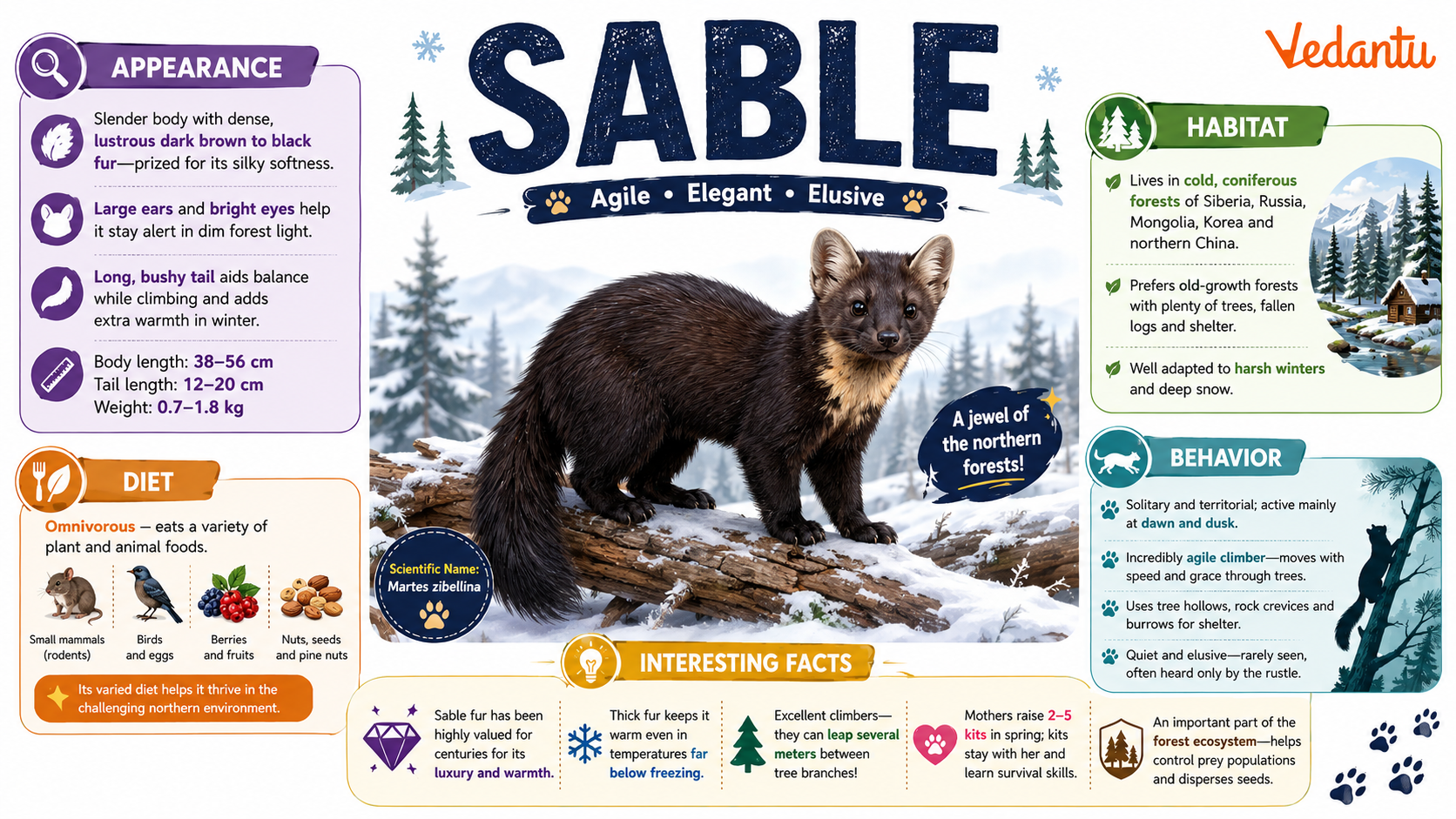
Quick Facts About Sable
| Feature | Details |
|---|---|
| Common Name | Sable |
| Scientific Name | Martes zibellina |
| Animal Group | Mammal |
| Family | Weasel Family (Mustelidae) |
| Size | 32–51 cm long (without tail) |
| Weight | 0.7–1.8 kg |
| Lifespan | 8–10 years (in the wild) |
| Habitat | Dense forests of Siberia and northern Asia |
| Diet | Small animals, birds, eggs, berries |
| Conservation Status | Least Concern |
Appearance and Physical Characteristics
- Slender body with short legs.
- Long, bushy tail.
- Sharp claws for climbing trees.
- Pointed face with small rounded ears.
- Dark brown to almost black fur.
Sable Habitat and Distribution
- Found mainly in Siberia (Russia).
- Also seen in Mongolia, China, and parts of Japan.
- Lives in dense forests called taiga.
- Prefers cold climates with heavy snowfall.
- Makes nests in tree hollows or underground burrows.
Diet and Feeding Habits
Carnivore (mainly meat-eater).
Mice, squirrels, birds, eggs, insects.
Berries and fruits during summer.
Quiet, fast, and mostly active at dawn and dusk.
The sable diet helps control rodent populations, making it an important part of the forest food chain.
Behaviour and Lifestyle
- Mostly solitary animals.
- Active during early morning and evening.
- Excellent climbers and fast runners.
- Use scent markings to mark territory.
- Very alert and cautious in the wild.
Sable Life Cycle
- Mating Season: Usually in summer.
- Delayed Implantation: Babies develop months after mating.
- Birth: 1–7 babies (called kits) are born in spring.
- Growth: Kits open eyes after about a month.
- Independence: Young sables learn hunting skills from their mother.
What Makes the Sable Special?
Importance and Role in Nature
Amazing Sable Facts
- Sables can leap quickly between tree branches.
- Their fur becomes thicker in winter.
- They can hear very faint sounds.
- Sables are related to martens and otters.
- They store extra food during harsh winters.
- Their fur color may vary from light brown to black.
- They are shy and avoid human contact.
Fun Facts for Kids
FAQs on Sable: Fascinating Facts About This Forest Mammal
1. What is a sable animal?
A sable is a small, furry mammal known for its soft and valuable fur.
- The sable animal belongs to the weasel family (Mustelidae).
- Its scientific name is Martes zibellina.
- It is closely related to martens, ferrets, and otters.
- Sables are famous for their luxurious dark brown fur.
2. Where do sables live?
Sables live in cold forest regions of northern Asia and parts of Europe.
- They are mainly found in Siberia, Russia, Mongolia, China, and Japan.
- Sables prefer dense forests (taiga) with lots of trees.
- They build homes in tree hollows or burrows under roots.
- Their habitat includes snowy and cold environments.
3. What do sables eat?
Sables are omnivores, meaning they eat both animals and plants.
- They hunt small animals like mice, squirrels, and birds.
- They also eat eggs, insects, and fish.
- In winter, they may eat berries and nuts.
- Their sharp teeth help them catch prey easily.
4. Why is sable fur so famous?
Sable fur is famous because it is extremely soft, smooth, and warm.
- It is considered one of the most luxurious furs in the world.
- The fur is usually dark brown to black.
- Historically, it was worn by royalty and nobles.
- The Russian sable trade was very important in history.
5. How big is a sable?
A sable is a small animal about the size of a house cat.
- Body length: about 13–22 inches.
- Tail length: about 5–7 inches.
- Weight: usually 1–4 pounds.
- Males are often slightly larger than females.
6. Are sables endangered?
Sables are not currently endangered, but they were heavily hunted in the past.
- Their conservation status is Least Concern according to wildlife groups.
- Overhunting for fur trade once reduced their numbers.
- Today, there are hunting regulations and wildlife protection laws.
- Conservation helps protect their forest habitats.
7. What are the main characteristics of a sable?
Sables have unique physical features that help them survive in cold climates.
- They have thick, silky fur for warmth.
- Their bodies are slender and flexible.
- They have sharp claws and teeth for hunting.
- Their sense of smell and hearing is very strong.
8. How do sables survive in winter?
Sables survive winter by using their thick fur and smart hunting skills.
- Their dense winter coat keeps them warm.
- They store or search for hidden food under snow.
- They rest in cozy tree holes or burrows.
- They stay active instead of hibernating.
9. Are sables active during the day or night?
Sables are mostly crepuscular, meaning they are active at dawn and dusk.
- They hunt during early morning and evening.
- This helps them avoid larger predators.
- They sometimes move around at night.
- During the day, they often rest in sheltered nests.
10. How long do sables live?
Sables usually live several years depending on their environment.
- In the wild, they live about 8–10 years.
- In protected areas or captivity, they may live up to 15 years.
- Predators include wolves, foxes, and large birds of prey.
- Good habitat and protection increase their lifespan.
