






What Is a Red Bug? Types, Bites, Habitat, and How to Get Rid of Them
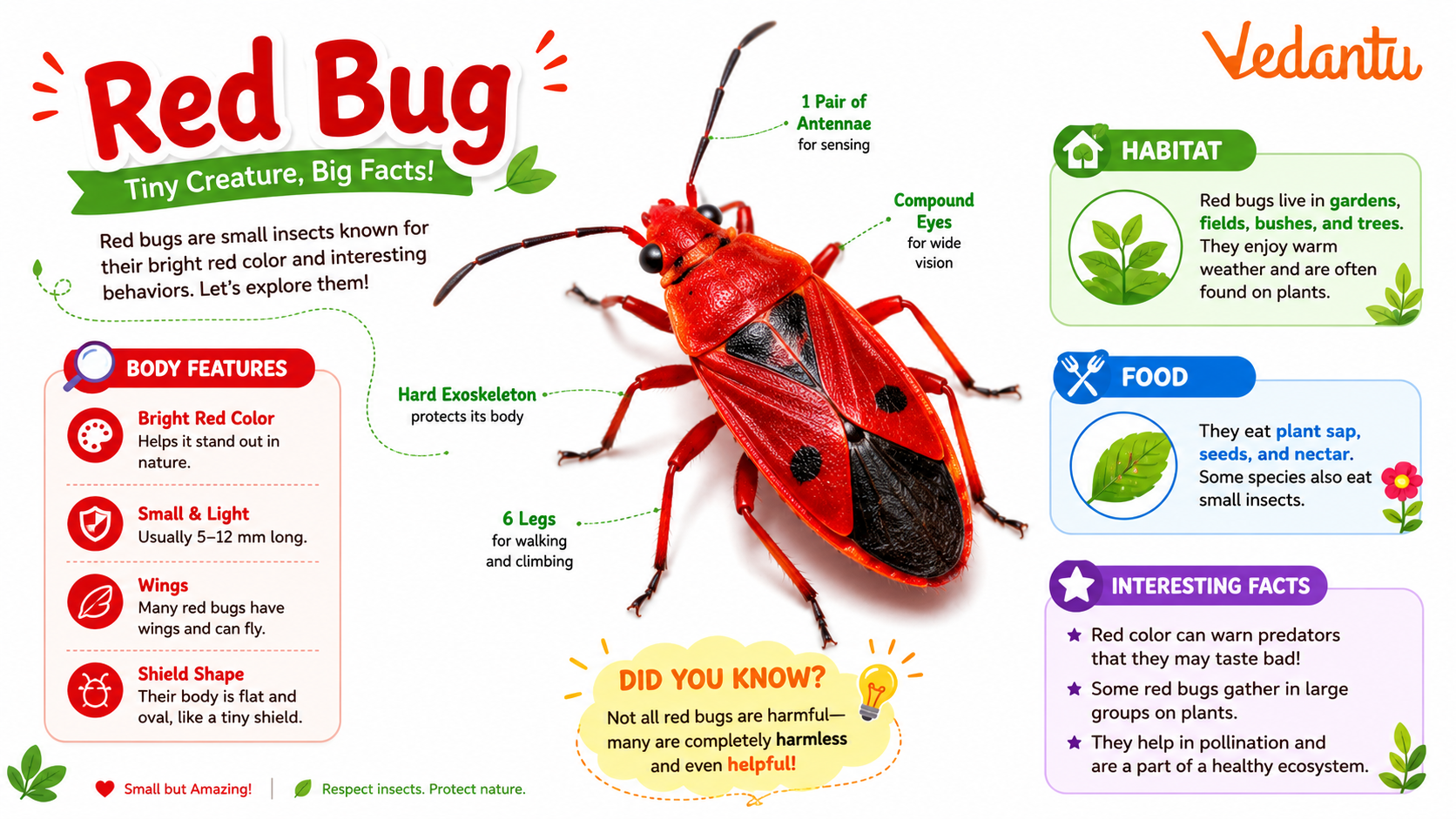
Quick Facts About Red Bug
| Feature | Details |
|---|---|
| Common Name | Red Bug |
| Animal Group | Insect |
| Scientific Group | Hemiptera (True Bugs) |
| Size | Usually 2–10 mm long |
| Colour | Bright red or red with black markings |
| Habitat | Gardens, farms, grassy areas |
| Diet | Plant sap, leaves, or small insects (depending on type) |
| Lifespan | Several weeks to a few months |
Appearance and Physical Characteristics
- Small and oval-shaped body.
- Bright red colour that may include black spots or patterns.
- Six legs like all insects.
- Two antennae used for sensing surroundings.
- Some types have wings, while others are wingless.
Red Bug Habitat and Distribution
- Commonly found in gardens, farms, and grassy areas.
- Prefer warm climates.
- Often seen on plant stems, leaves, and flowers.
- Some species live near crop fields and agricultural lands.
Diet and Feeding Habits
Behaviour and Lifestyle
- Usually active during the daytime.
- Move slowly on leaves and stems.
- May gather in groups on plants.
- Use their bright colour as protection.
Red Bug Life Cycle
- Egg Stage: Female lays tiny eggs on plant surfaces.
- Nymph Stage: Young red bugs hatch and look like smaller versions of adults.
- Growth: Nymphs shed their outer skin several times.
- Adult Stage: Fully grown red bug develops wings (in some species) and reproduces.
What Makes Red Bug Special?
Importance and Role in Nature
Amazing Red Bug Facts
- Red bugs belong to the group called “true bugs.”
- Their red colour makes them easy to identify.
- Some species release a bad smell when disturbed.
- They use antennae to detect food and danger.
- Many red bugs live only for a few months.
- They are commonly seen during warmer seasons.
Interesting Facts About Red Bug
Fun Facts for Kids
- Red bugs are smaller than your fingernail!
- You can often spot them on garden plants.
- They love warm sunshine.
- Their colour acts like a “Stay Away” sign.
- They are tiny but important in nature.
FAQs on Red Bug: Identification, Facts, and What You Should Know
1. What is a Red Bug?
Red bugs are tiny red-colored insects or mites that are often found on plants, soil, or sometimes indoors. The name "red bug" can refer to different small red pests, such as:
- Clover mites (tiny red plant-feeding mites)
- Chiggers (red larvae that bite humans)
- Boxelder bugs (black and red insects)
People also ask if red bugs are dangerous—most are harmless, but some can cause skin irritation or plant damage.
2. Are Red Bugs harmful to humans?
Most red bugs are not harmful, but some types like chiggers can cause itchy bites. Here’s what you should know:
- Clover mites do not bite humans
- Chiggers can cause red, itchy bumps
- Some red insects may stain walls if crushed
If you have red, itchy skin after being outdoors, it could be from red bug bites like chiggers.
3. What do Red Bugs look like?
Red bugs are usually very small and bright red in color, making them easy to spot on light surfaces. Common features include:
- Tiny size (some are smaller than a pinhead)
- Bright red or reddish-brown body
- Oval or round shape
Kids often notice them crawling on walls, windows, plants, or garden soil.
4. Where do Red Bugs live?
Red bugs usually live outdoors in gardens, lawns, forests, and grassy areas. Depending on the type, they may be found:
- On plants and leaves
- In soil or grass
- Near windows and sunny walls
Some red bugs enter homes during warm seasons while searching for shelter.
5. Why do Red Bugs come inside the house?
Red bugs come indoors looking for warmth and shelter, especially during hot or cool weather changes. Common reasons include:
- Cracks around windows and doors
- Dry weather pushing them indoors
- Attraction to sunny walls
Clover mites are one of the most common red bugs found inside homes.
6. How can you get rid of Red Bugs safely?
You can remove red bugs safely using simple cleaning and prevention methods. Try these steps:
- Vacuum them instead of crushing (to avoid stains)
- Seal cracks and gaps in walls
- Keep grass and plants trimmed away from the house
For large infestations, adults may use safe pest control methods.
7. Do Red Bugs bite pets?
Most red bugs do not bite pets, but some mites like chiggers can attach to animals outdoors. Important points:
- Clover mites do not bite pets
- Chiggers may cause itching in dogs
- Outdoor checks help prevent problems
If a pet scratches often after being outside, check with a veterinarian.
8. Are Red Bugs good for the environment?
Some red bugs are helpful in nature because they are part of the ecosystem. Benefits include:
- Helping control other small insects
- Serving as food for birds and spiders
- Supporting the natural balance of gardens
Even tiny red insects play a role in the food chain and environment.
9. What is the difference between Red Bugs and bed bugs?
Red bugs and bed bugs are different insects with different behaviors. Key differences:
- Bed bugs bite humans at night
- Most red bugs live outdoors
- Bed bugs hide in beds and furniture
If you see tiny red insects on plants, they are usually not bed bugs.
10. How can kids avoid Red Bug bites?
Kids can avoid red bug bites by staying protected outdoors. Simple safety tips include:
- Wear long sleeves and pants in grassy areas
- Use child-safe insect repellent
- Shower after playing outside
These steps help prevent itchy chigger bites and other red bug skin problems.
