






What Is a Sole Fish? Habitat, Diet, Lifespan, and Fun Facts
The Sole Fish is a unique flatfish that lives quietly on the seabed. Known for its flattened body and excellent camouflage, this fish blends almost perfectly with sand and mud. Sole Fish are important sea creatures and are also widely known as a popular seafood. In this page, you will explore Sole Fish facts, Sole Fish habitat, Sole Fish diet, characteristics, life cycle, importance, and many interesting facts in a fun and easy way.
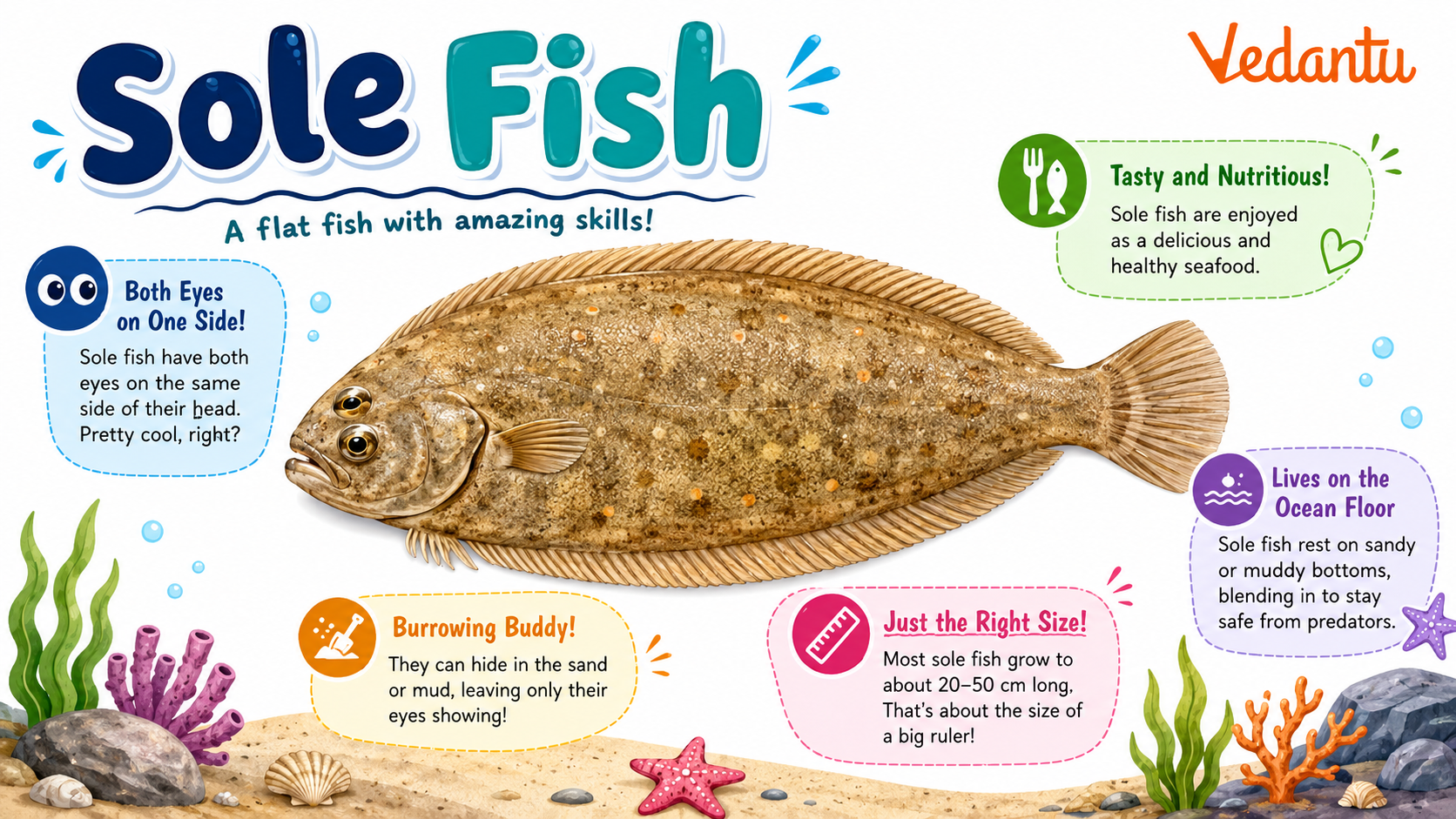
Quick Facts About Sole Fish
| Feature | Details |
|---|---|
| Common Name | Sole Fish |
| Scientific Family | Soleidae |
| Animal Group | Fish (Flatfish) |
| Size | 30–70 cm (depending on species) |
| Weight | Up to 3 kg |
| Habitat | Shallow coastal waters, sandy or muddy seabeds |
| Diet | Small fish, worms, crustaceans |
| Lifespan | 20–30 years (varies by species) |
| Movement | Slow swimmer, glides along the sea floor |
| Special Feature | Both eyes on one side of the head |
Appearance and Physical Characteristics
- Flat Body: Sole Fish have an oval and extremely flattened body.
- Eye Position: Both eyes are located on one side of the head.
- Colour: Usually brown, grey, or sandy to match the ocean floor.
- Soft Fins: Long dorsal and anal fins run along the body.
- Smooth Skin: Helps them hide easily in sand.
Habitat and Distribution
- Found mainly in the Atlantic Ocean, Mediterranean Sea, and parts of the Pacific.
- Prefer shallow coastal waters.
- Live on sandy or muddy seabeds.
- Sometimes found at depths of up to 200 meters.
- Often bury themselves in sand with only their eyes visible.
Diet and Feeding Habits
Sole Fish diet mainly includes small sea animals.
Worms, small fish, mollusks, and crustaceans.
They use their small mouth to suck food from sand.
They control populations of small bottom-dwelling creatures.
Behaviour and Lifestyle
- Bottom-Dweller: Spends most of life on the sea floor.
- Mostly Nocturnal: More active at night.
- Slow Movement: Glides gently rather than swimming fast.
- Defence: Buries itself quickly to avoid predators.
- Solitary Nature: Usually found alone.
Sole Fish Life Cycle
- Egg Stage: Females lay thousands of tiny eggs in water.
- Larva Stage: Young larvae swim freely like normal fish.
- Transformation: One eye shifts to the other side as body flattens.
- Juvenile Stage: Settles on the seabed.
- Adult Stage: Fully adapted flatfish living on the bottom.
What Makes Sole Fish Special?
One eye moves during development.
Changes shade slightly to match sand.
Can hide quickly under sand.
Body shape helps survive on seabed.
Importance and Role in Nature
- Helps maintain balance in marine ecosystems.
- Controls small invertebrate populations.
- Acts as prey for larger fish and marine animals.
- Important commercial fish for human food.
Amazing Sole Fish Facts
Fun Facts for Kids
- Sole Fish look like they are lying sideways all the time!
- They can hide so well that predators often swim past them.
- Their eyes sit close together on one side.
- They are sometimes called “right-eyed” or “left-eyed” fish.
- They glide smoothly over the seabed like a floating leaf.
FAQs on Sole Fish: Amazing Facts About This Unique Flatfish
1. What is a sole fish?
Sole fish is a flat, bottom-dwelling ocean fish known for its delicate taste and thin body.
- It belongs to the flatfish family, like flounder and halibut.
- It has both eyes on one side of its head.
- It lives mostly on the seafloor in sandy or muddy areas.
- It is popular as a seafood dish in many countries.
2. Where do sole fish live?
Sole fish live in salty ocean waters, mostly near the sea bottom.
- Found in the Atlantic Ocean and parts of the Mediterranean Sea.
- Prefer sandy or muddy seabeds.
- Stay in shallow coastal waters but can also live deeper.
- Hide under sand to protect themselves from predators.
3. What does sole fish eat?
Sole fish eat small sea animals that live on or in the ocean floor.
- Small crustaceans like shrimp.
- Tiny fish.
- Marine worms.
- Small shellfish.
4. Why is sole fish flat?
Sole fish are flat to help them hide and survive on the seafloor.
- Their flat body lets them lie close to the sand.
- Both eyes are on one side, helping them see while lying down.
- Their skin color blends with the ocean floor for camouflage.
5. Is sole fish good to eat?
Yes, sole fish is considered a healthy and tasty seafood choice.
- It has a mild, sweet flavor.
- The meat is soft and easy to digest.
- Rich in protein, vitamins, and minerals.
- Low in fat compared to many other fish.
6. How big can a sole fish grow?
Sole fish usually grow to a medium size.
- Average length is about 30–60 cm (12–24 inches).
- Some larger species can grow longer.
- They are generally lightweight compared to other flatfish.
7. How do sole fish protect themselves?
Sole fish protect themselves mainly by hiding and blending in.
- They bury themselves in sand or mud.
- Their body color changes slightly to match surroundings.
- Their flat shape keeps them less visible to predators.
8. What is the life cycle of a sole fish?
Sole fish begin life like normal fish and later become flat.
- They hatch from eggs floating in water.
- Young fish swim upright like other fish.
- As they grow, one eye moves to the other side of the head.
- They settle on the sea bottom as adults.
9. Are there different types of sole fish?
Yes, there are several species of sole fish around the world.
- Common sole (Dover sole) – popular in Europe.
- Lemon sole – found in the North Atlantic.
- Sand sole – lives in sandy coastal areas.
10. Why is sole fish important?
Sole fish is important for both nature and people.
- It helps balance the marine ecosystem by eating small sea creatures.
- It is valuable for commercial fishing.
- It provides nutritious seafood for many cultures.
- It supports coastal economies.
