






What Is a June Beetle? Habitat, Diet, and Seasonal Behavior
The June Beetle is a common insect that appears in late spring and early summer. Known for its shiny brown body and loud buzzing flight, this beetle is often seen around lights at night. These insects are an important part of the ecosystem and have a very interesting life cycle underground. Let’s explore amazing June Beetle facts, including its habitat, diet, characteristics, and life cycle in a fun and easy way.
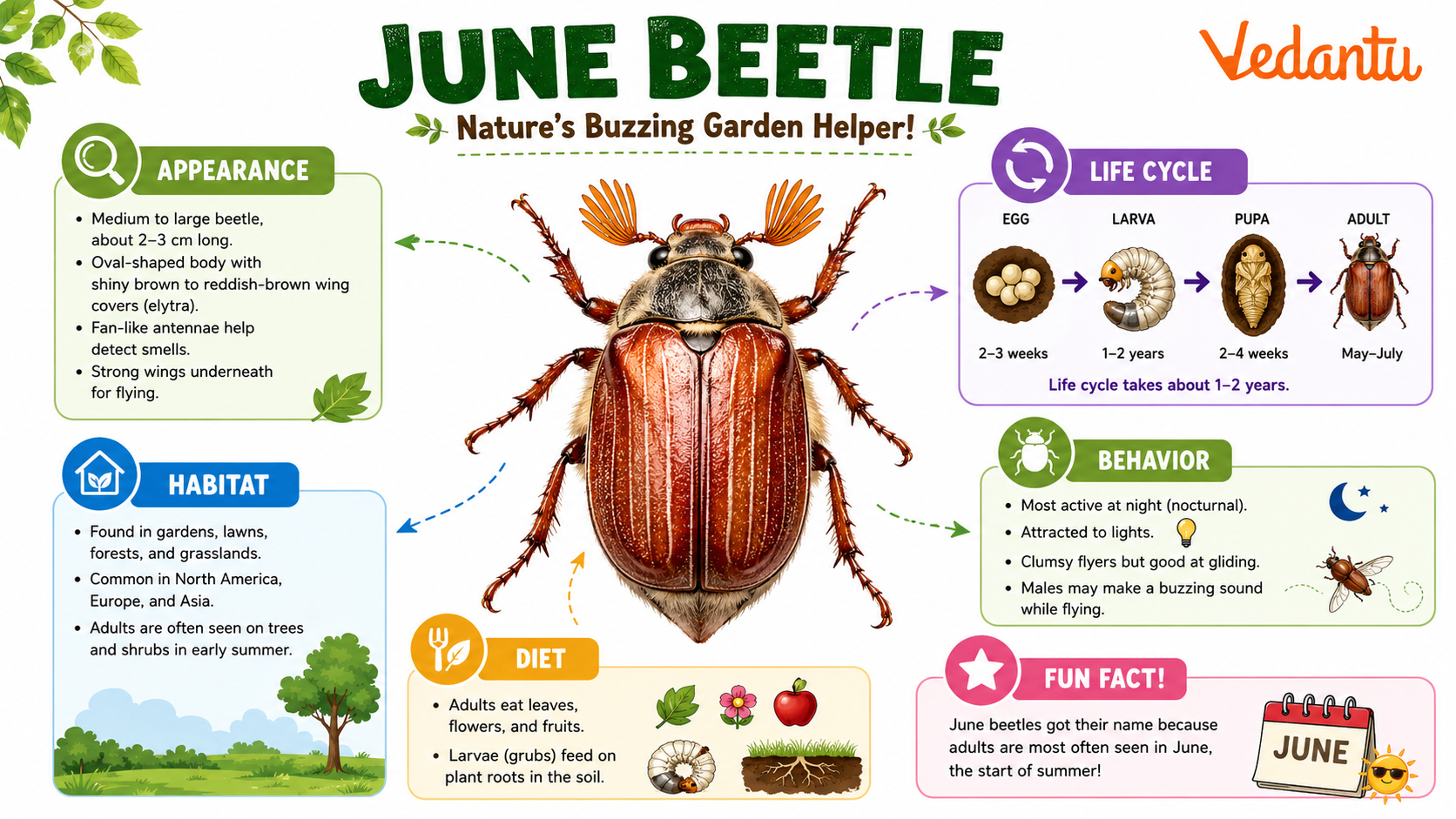
Quick Facts About June Beetle
| Feature | Details |
|---|---|
| Common Name | June Beetle |
| Scientific Name | Phyllophaga (genus) |
| Animal Group | Insect |
| Size | 1–2.5 cm long |
| Habitat | Gardens, forests, grasslands, farms |
| Diet | Leaves (adults), roots (larvae) |
| Active Time | Mainly at night |
| Life Cycle | Egg → Larva → Pupa → Adult |
Appearance and Physical Characteristics
- Oval-shaped, hard body with shiny brown or reddish-brown colour.
- Strong outer wings called elytra protect their flying wings.
- Six legs and short antennae.
- Sturdy body built for digging in soil (especially as larvae).
- Adults are usually 1 to 2.5 cm long.
June Beetle Habitat and Distribution
- Commonly found in North America.
- Lives in gardens, lawns, forests, and farmlands.
- Larvae stay underground in soil.
- Adults come out during warm summer evenings.
- Attracted to bright lights at night.
The June Beetle habitat mainly includes grassy and leafy areas where they can easily find food and soft soil for laying eggs.
Diet and Feeding Habits
What Do They Eat?
Leaves of trees, shrubs, and garden plants.
Roots of grasses and crops underground.
Mostly at night.
Food for birds, raccoons, and other animals.
Because larvae feed on plant roots, they can sometimes damage lawns and crops.
Behaviour and Lifestyle
- Mostly nocturnal (active at night).
- Strong but clumsy flyers.
- Often bump into lights and windows.
- Spend most of their life underground as larvae.
- Adults live for only a few weeks.
June Beetle Life Cycle
- Egg: Female lays eggs in soil during early summer.
- Larva (White Grub): Feeds on roots underground for 1–3 years.
- Pupa: Changes form inside the soil.
- Adult: Emerges in late spring or early summer.
The June Beetle life cycle is an example of complete metamorphosis, just like butterflies.
What Makes June Beetles Special?
Importance and Role in Nature
Amazing June Beetle Facts
- There are over 900 species of June Beetles.
- They are also called “May Beetles” in some regions.
- Adults are attracted strongly to artificial lights.
- They make a loud buzzing sound while flying.
- Most of their life is spent underground.
- They belong to the scarab beetle family.
- Their larvae can survive cold winters underground.
Interesting Facts About June Beetle
- Some species take up to three years to complete their life cycle.
- Their white grubs are sometimes used as fishing bait.
- They use their strong legs to dig quickly into soil.
- They are harmless to humans.
Fun Facts for Kids
FAQs on June Beetle: Identification, Life Cycle, and Fun Facts
1. What is a June Beetle?
June beetles are brown or green flying insects that usually appear in late spring and early summer.
- Also called June bugs or May beetles
- Belong to the scarab beetle family
- Active mostly at night and attracted to lights
- Common in gardens, lawns, and wooded areas
2. Why are they called June Beetles?
They are called June beetles because adult beetles usually come out in the month of June.
- Most active in late spring and early summer
- Some species appear in May or July
- Name depends on when they are commonly seen
3. What do June Beetles eat?
June beetles eat plants, leaves, and grass, especially when they are young.
- Adult beetles chew on tree leaves and garden plants
- Larvae (white grubs) eat grass roots underground
- Can damage lawns and crops if many are present
4. Are June Beetles harmful to humans?
June beetles are not dangerous to people but can be annoying.
- They do not bite or sting
- Harmless if they bump into you
- May damage plants and lawns
5. Why do June Beetles fly into lights?
June beetles are attracted to light because they use natural light to navigate at night.
- Streetlights and porch lights confuse them
- They mistake artificial lights for the moon
- This causes them to fly in circles around bulbs
6. What is the life cycle of a June Beetle?
The June beetle life cycle has four stages and can take up to three years.
- Egg – laid in soil
- Larva (white grub) – feeds on grass roots
- Pupa – changes form underground
- Adult beetle – emerges to fly and reproduce
7. Where do June Beetles live?
June beetles live in grassy and wooded areas across many parts of the world.
- Common in North America
- Found in gardens, farms, and forests
- Larvae live underground in soil
8. How big do June Beetles get?
Most June beetles grow to about ½ to 1 inch long.
- Usually brown, reddish-brown, or metallic green
- Oval-shaped body with hard wing covers
- Strong legs for digging
9. How can you get rid of June Beetles in your yard?
You can control June beetles by targeting both adults and grubs.
- Turn off outdoor lights at night
- Use natural predators like birds
- Apply safe lawn treatments for white grubs
- Keep grass healthy and well-maintained
10. Do June Beetles have any benefits?
Yes, June beetles play a role in the ecosystem despite being pests.
- Serve as food for birds and small animals
- Help break down organic matter in soil
- Part of the natural food chain
