






Where Do Clams Live and How Do They Survive Underwater?
A clam is a soft-bodied sea animal that lives inside a hard shell. It may look simple, but clams are full of surprises! They are found in oceans, rivers, and lakes around the world. Clams play an important role in keeping water clean and are a vital part of marine ecosystems. Learning about clam facts, clam habitat, and clam characteristics helps us understand how these small shellfish make a big difference in nature.
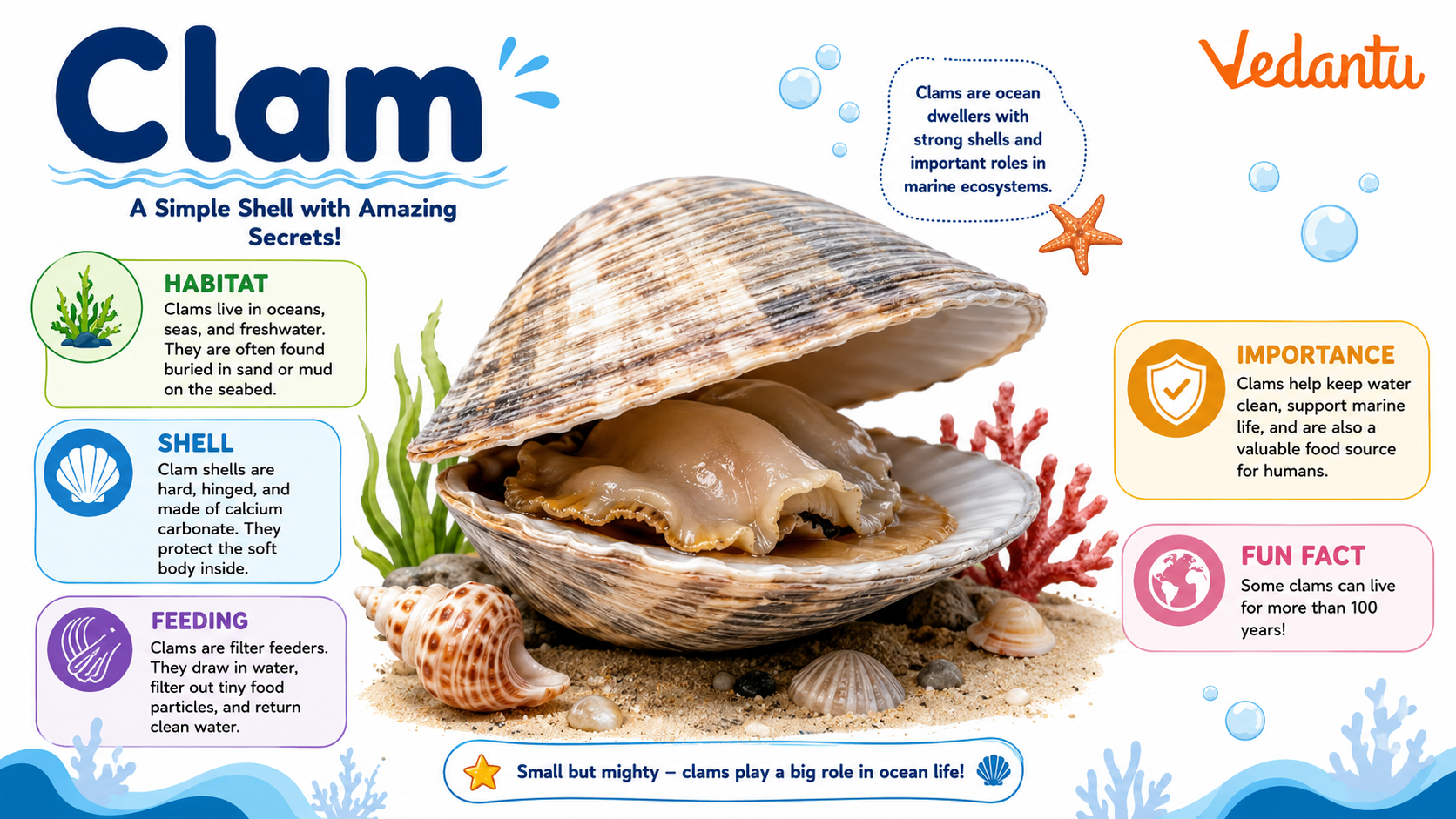
Quick Facts About Clam
| Feature | Details |
|---|---|
| Common Name | Clam |
| Animal Group | Mollusc (Bivalve) |
| Body Covering | Two hard shells (hinged) |
| Habitat | Oceans, rivers, lakes |
| Diet | Plankton and tiny particles |
| Lifespan | 1 to 100+ years (depends on species) |
| Movement | Burrows in sand using muscular foot |
Appearance and Physical Characteristics
- Clams have two hard shells joined by a hinge.
- The soft body stays safely inside the shell.
- Shell colours can be white, brown, grey, or patterned.
- They do not have a head or eyes like fish.
- They have a strong muscular foot to dig into sand.
Clam Habitat and Distribution
- Clams live in saltwater oceans and freshwater rivers and lakes.
- Most species bury themselves in sand or mud.
- They are found on coasts around the world.
- Some live in shallow water, while others live deep in the sea.
The clam habitat usually includes sandy or muddy bottoms where they can easily dig and hide from predators.
Clam Diet and Feeding Habits
Behaviour and Lifestyle
- Clams are mostly slow-moving animals.
- They spend most of their lives buried in sand.
- If danger approaches, they quickly close their shells tightly.
- They do not make loud sounds or hunt like predators.
Clam Life Cycle
- Egg Stage: Female clams release eggs into the water.
- Larva Stage: Tiny larvae float in water for some time.
- Young Clam: They settle on the sea floor and grow shells.
- Adult Clam: Fully developed shell and reproductive organs.
The clam life cycle depends on water conditions and species type.
What Makes Clams Special?
Importance of Clams in Nature
- Help maintain clean and clear water.
- Provide food for fish, birds, and humans.
- Support healthy aquatic ecosystems.
- Shells add nutrients back into the soil and water.
Amazing Clam Facts
- There are thousands of clam species worldwide.
- Some giant clams can grow over 4 feet wide.
- Clams do not have a brain like humans.
- Their shells protect them from predators.
- Some species can move by jumping slightly.
- Clams have existed for millions of years.
Interesting Facts About Clams
Fun Facts for Kids
- A clam can close its shell very tightly to stay safe.
- Baby clams are so tiny you can barely see them.
- Clams don’t have eyes like fish.
- They love sandy beaches.
- Some clams are as small as a coin, others as big as a suitcase!
FAQs on Clam: Fascinating Facts About This Ocean Shellfish
1. What is a clam?
A clam is a type of shellfish that lives in water and has two hard shells that open and close like a door.
- Clams are marine animals found in oceans, rivers, and lakes.
- They belong to a group called bivalve mollusks.
- Their two shells are connected by a strong hinge.
- Clams are related to oysters, mussels, and scallops.
2. Where do clams live?
Clams live in sandy or muddy areas under water all around the world.
- Most clams live in the ocean.
- Some species live in freshwater rivers and lakes.
- They often bury themselves in sand or mud for protection.
- Clams can be found along beaches and sea floors.
3. What do clams eat?
Clams eat tiny floating plants and animals by filtering water.
- They are filter feeders.
- Clams pull in water through a tube called a siphon.
- They eat plankton, tiny algae, and small particles.
- This helps keep the water clean.
4. How do clams move?
Clams can move slowly by using a strong foot-like body part.
- They have a muscular foot that pushes into sand.
- This foot helps them dig and burrow.
- Most clams do not travel far from their spot.
- Burrowing keeps them safe from predators.
5. How do clams protect themselves?
Clams protect themselves with their hard shells and by hiding.
- Their two shells close tightly to block danger.
- They bury themselves in sand or mud.
- The hard shell acts like a natural armor.
- Some clams squirt water to scare predators.
6. Are clams animals or plants?
Clams are animals, not plants, because they eat food and can move.
- They belong to the animal kingdom.
- Clams are invertebrates (animals without backbones).
- They are part of the mollusk family.
- Like other animals, they need oxygen and food to survive.
7. How long do clams live?
Some clams can live for many years, and a few species live over 100 years.
- Small clams may live around 1–10 years.
- The ocean quahog can live more than 400 years.
- Scientists study clam shells to learn about ocean history.
- Rings on shells can show a clam’s age.
8. Do people eat clams?
Yes, clams are popular seafood eaten in many countries.
- They are used in clam chowder and pasta dishes.
- Clams are a type of seafood rich in protein.
- They can be eaten steamed, baked, or fried.
- People collect clams through clam digging.
9. How are clams different from oysters?
Clams and oysters are both shellfish, but they have different shells and habits.
- Clams usually live buried in sand.
- Oysters attach themselves to rocks.
- Clam shells are smoother and more round.
- Oysters are famous for sometimes making pearls.
10. Why are clams important to the environment?
Clams are important because they help clean water and support ocean ecosystems.
- As filter feeders, they remove tiny particles from water.
- They provide food for fish, crabs, and birds.
- Clams help keep marine ecosystems balanced.
- Their shells add nutrients back into the sea floor.
