






What Do Terns Eat, Where Do They Live, and How Do They Migrate?
Terns are elegant seabirds known for their sharp wings, forked tails, and graceful flight over oceans, rivers, and lakes. Often seen diving into water to catch fish, these birds are expert hunters and long-distance travellers. Tern facts show that many species migrate thousands of kilometres every year. With their sleek bodies and strong flight skills, terns are true masters of the skies and coasts.
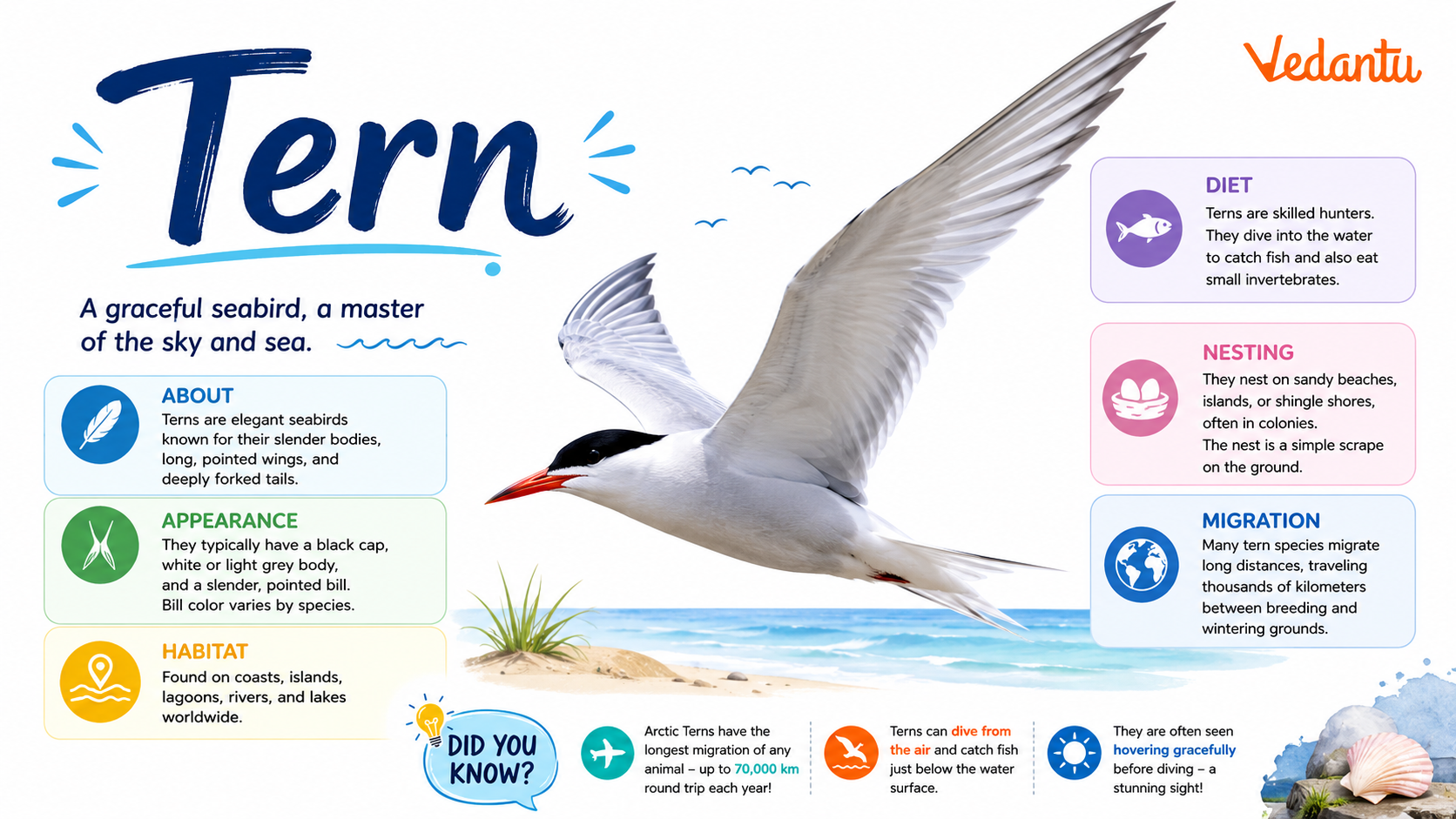
Quick Facts About Tern
| Feature | Details |
|---|---|
| Common Name | Tern |
| Scientific Family | Sternidae |
| Animal Group | Bird |
| Size | 23–50 cm (depending on species) |
| Wingspan | 50–125 cm |
| Diet | Fish, small marine animals, insects |
| Habitat | Coasts, oceans, lakes, rivers |
| Lifespan | 10–30 years (species dependent) |
| Special Feature | Deep diving for fish |
Appearance and Physical Characteristics
- Mostly white or light grey body.
- Black cap on the head during breeding season.
- Long, narrow wings for fast and steady flight.
- Sharp, straight beak for catching fish.
- Forked tail that helps in steering.
Tern Habitat and Distribution
The tern habitat mainly includes coastal regions, islands, rivers, lakes, and wetlands. They prefer open areas near water where fish are easy to catch.
- Found on every continent except Antarctica (though Arctic Terns visit it).
- Common in tropical and temperate regions.
- Nest on sandy beaches, rocky shores, or small islands.
- Some species live near freshwater lakes and rivers.
Diet and Feeding Habits
The tern diet mainly consists of small fish and aquatic animals. They are carnivorous birds and skilled hunters.
Behaviour and Lifestyle
- Highly active and energetic flyers.
- Many species migrate long distances.
- Often live and nest in large colonies.
- Very protective of their nests and chicks.
- Communicate with sharp, high-pitched calls.
Life Cycle of a Tern
- Egg Stage: Female lays 1–3 eggs in a shallow ground nest.
- Incubation: Both parents take turns keeping eggs warm.
- Chick Stage: Chicks hatch covered in soft feathers and can walk soon after birth.
- Growing Up: Parents feed chicks small fish.
- Adult Stage: Young birds learn to fly and later join migration journeys.
Flight Adaptations
Sound or Call
Terns make sharp, high-pitched “kree” or “kee-arr” sounds. These calls help them:
- Warn others about danger.
- Communicate within colonies.
- Protect their nesting area.
Types of Terns
Importance and Role in Nature
- Help control fish populations.
- Act as indicators of marine ecosystem health.
- Serve as food for larger predators.
- Support biodiversity in coastal habitats.
Amazing Tern Facts
Fun Facts for Kids
- Terns look like smaller, slimmer gulls.
- They love flying over water more than walking on land.
- Baby terns can move around soon after hatching.
- Some terns travel from one end of the Earth to the other!
- They are sometimes called “sea swallows” because of their shape.
FAQs on Tern: Fascinating Facts About These Graceful Ocean Birds
1. What is a tern?
A tern is a slender seabird known for its long wings, forked tail, and excellent flying skills.
- Terns belong to the bird family Sternidae.
- They are often found near oceans, seas, rivers, and wetlands.
- They look similar to seagulls but are usually slimmer and more graceful.
- Many species are famous for their long-distance migration.
2. Where do terns live?
Terns live near water in many parts of the world.
- They prefer coastal areas, beaches, lakes, and rivers.
- Some species live in the Arctic, while others stay in tropical regions.
- They build nests on sandy shores, rocky islands, or marshes.
- The Arctic Tern travels between the Arctic and Antarctic.
3. What do terns eat?
Terns mainly eat small fish and other tiny sea animals.
- Their diet includes fish, shrimp, and insects.
- They catch food by diving into the water.
- Some terns also eat crustaceans and marine invertebrates.
- They hunt by flying above water and spotting prey with sharp eyesight.
4. How do terns catch their food?
Terns catch food by diving quickly from the air into the water.
- This hunting method is called plunge-diving.
- They hover in the air before diving.
- Their sharp beak helps grab slippery fish.
- They are skilled and accurate hunters.
5. What is special about the Arctic Tern?
The Arctic Tern is famous for having the longest migration of any bird.
- It travels from the Arctic to the Antarctic every year.
- This journey can be over 40,000 kilometers (25,000 miles).
- It sees more daylight than any other animal.
- The Arctic Tern migration is a record in the animal kingdom.
6. How do terns build their nests?
Terns build simple nests on the ground near water.
- They scrape a small hole in sand, gravel, or soil.
- Some nests are lined with grass or small shells.
- They lay 1 to 3 eggs at a time.
- Their eggs are camouflaged to stay safe from predators.
7. Are terns different from seagulls?
Yes, terns and seagulls are different types of seabirds.
- Terns are slimmer with longer wings and forked tails.
- Seagulls (gulls) are larger and heavier.
- Terns usually have sharper, straighter beaks.
- Both belong to the order Charadriiformes.
8. How long do terns live?
Terns can live for many years, especially in the wild.
- Some species live up to 20–30 years.
- The Arctic Tern is known for its long lifespan.
- Living near water and migrating long distances helps them survive.
- Predators and habitat loss can affect their lifespan.
9. What are the predators of terns?
Terns face threats from several natural predators.
- Predators include foxes, raccoons, large birds, and snakes.
- Eggs and chicks are most at risk.
- Humans and habitat destruction also threaten them.
- Many species are protected to support bird conservation.
10. Why are terns important to the ecosystem?
Terns play an important role in keeping aquatic ecosystems balanced.
- They help control fish and insect populations.
- Their presence shows a healthy marine environment.
- They are part of the food chain.
- Protecting terns supports overall biodiversity.
