






What Is Pomfret Fish? Types, Habitat, Nutrition and Cooking Uses
The silver star of the sea!
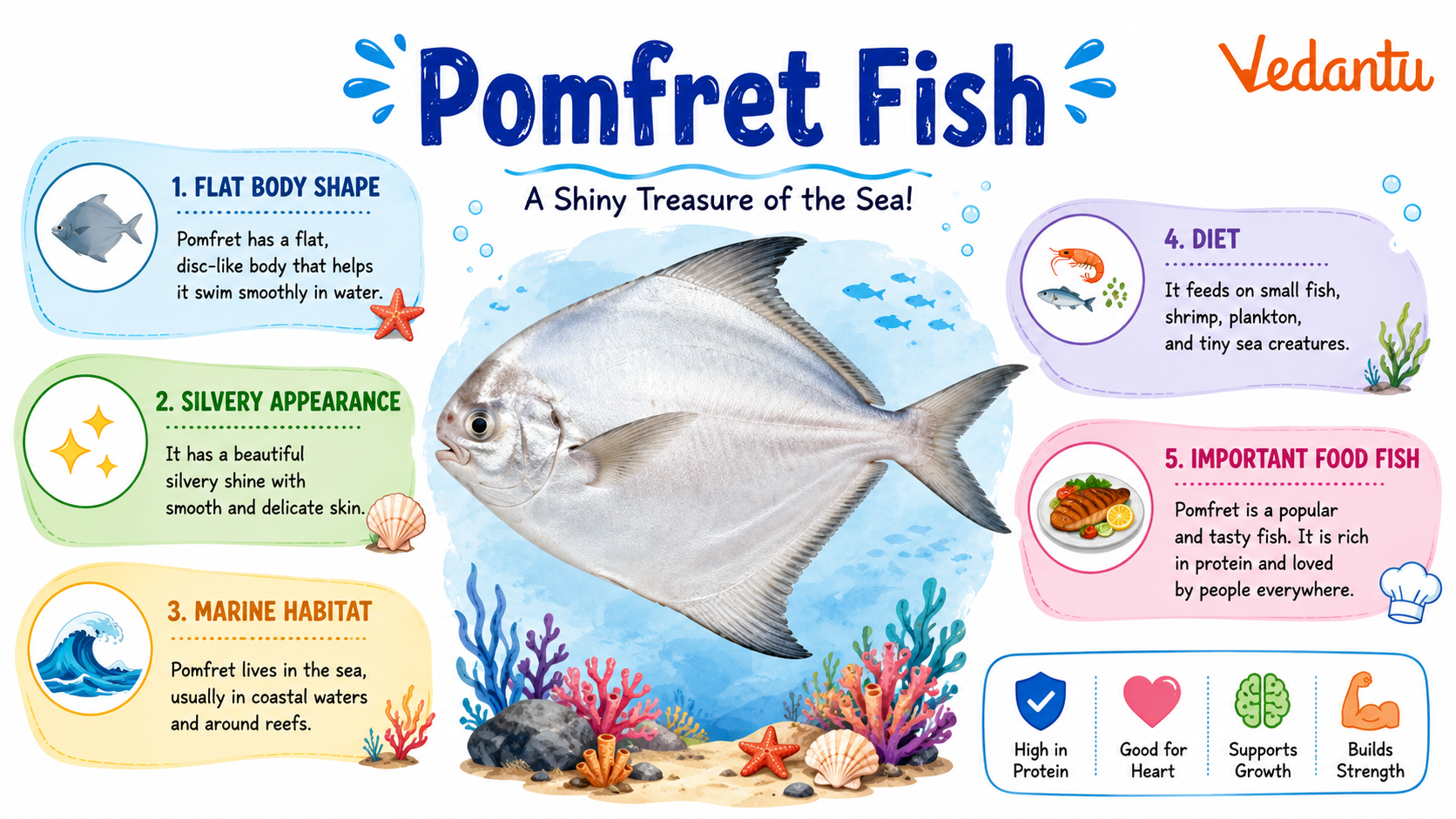
Quick Facts About Pomfret Fish
| Feature | Details |
|---|---|
| Common Name | Pomfret Fish |
| Scientific Family | Stromateidae |
| Animal Group | Fish (Marine) |
| Average Size | 20–60 cm |
| Weight | Up to 1–3 kg (varies by type) |
| Habitat | Warm coastal ocean waters |
| Diet | Small fish, plankton, crustaceans |
| Lifespan | Up to 5–8 years (approx.) |
| Found In | Indian Ocean, Pacific Ocean, Atlantic Ocean |
Appearance and Physical Characteristics
- Body Shape: Deep, flat, and slightly rounded.
- Colour: Silver, black, or white depending on the type.
- Fins: Long dorsal and anal fins that help in smooth swimming.
- Scales: Small and smooth.
- Mouth: Small mouth with sharp teeth for catching prey.
Pomfret Fish Habitat and Distribution
The pomfret fish habitat mainly includes warm and tropical ocean waters. They prefer coastal areas but can also be found in deeper seas.
- Live in marine (saltwater) environments.
- Common near coastal regions and continental shelves.
- Found in the Indian Ocean, Arabian Sea, Bay of Bengal, and parts of the Pacific and Atlantic Oceans.
- Prefer warm temperatures.
Diet and Feeding Habits
The pomfret fish diet mainly includes small marine organisms. They are carnivorous fish.
- Eat small fish
- Feed on plankton
- Consume crustaceans like small shrimps
Behaviour and Lifestyle
- Generally active swimmers.
- May move alone or in small groups.
- Stay alert to escape larger predators.
- Use speed and flat body shape to move quickly in water.
Pomfrets are an important part of the marine food chain, serving as both predators (of small fish) and prey (for larger fish and sharks).
Pomfret Fish Life Cycle
- Egg Stage: Female pomfret lays eggs in ocean water.
- Larva Stage: Eggs hatch into tiny larvae that float with plankton.
- Juvenile Stage: Young fish begin swimming actively and feeding on small organisms.
- Adult Stage: Fully grown pomfret can reproduce and continue the cycle.
The pomfret fish life cycle takes place completely in water, and growth depends on food availability and environmental conditions.
Types of Pomfret Fish
Most popular type. Bright silver colour and widely consumed.
Darker body colour and slightly different taste.
Found in Pacific regions and known for delicate meat.
Found in parts of the Atlantic Ocean.
What Makes Pomfret Fish Special?
Importance and Role in Nature
Amazing Pomfret Fish Facts
- Pomfrets are among the most popular edible marine fish in Asia.
- Their flat body reduces water resistance.
- They grow quickly in warm waters.
- Some species can change depth depending on season.
- They are caught using nets in coastal fisheries.
- Pomfret meat is soft and has very few bones.
Interesting Facts About Pomfret Fish
- The name “pomfret” is believed to have European origins.
- They are different from butterfish, though sometimes confused.
- Pomfrets are sensitive to water pollution.
- They prefer clean and warm sea water.
Fun Facts for Kids
FAQs on Pomfret Fish Guide: Species, Taste, and Health Benefits
1. What is Pomfret Fish?
Pomfret fish is a flat, shiny sea fish that is popular for its soft texture and mild taste. It belongs to the marine fish family and is commonly found in warm oceans.
- Scientific name: Pampus species
- Also called butterfish in some regions
- Lives in Indian Ocean, Pacific Ocean, and coastal waters
- Known for its round, flat body shape
- Common types include Silver Pomfret and Black Pomfret
2. What are the different types of Pomfret Fish?
The main types of pomfret fish are identified by their color and size. These varieties are popular in seafood markets and coastal cuisines.
- Silver Pomfret – Most popular and expensive variety
- Black Pomfret – Darker skin and slightly stronger flavor
- Chinese Pomfret – Found in East Asian waters
- Indian Pomfret – Common in Indian coastal regions
3. Is Pomfret Fish healthy to eat?
Yes, pomfret fish is healthy because it is rich in nutrients that help the body grow strong. It is a good choice for kids and adults.
- High in protein for muscle growth
- Contains Omega-3 fatty acids for heart and brain health
- Low in fat compared to many other fish
- Provides vitamins B12 and D
- Supports healthy bones and immunity
4. Where is Pomfret Fish found?
Pomfret fish is mainly found in warm saltwater oceans around the world. It prefers coastal and tropical marine environments.
- Found in the Indian Ocean
- Common in the Bay of Bengal
- Seen in the Arabian Sea
- Also found in parts of the Pacific Ocean
5. What does Pomfret Fish taste like?
Pomfret fish tastes mild, soft, and slightly sweet, making it perfect for kids and beginners who are new to seafood.
- Soft and tender meat
- Less fishy smell compared to other marine fish
- Absorbs spices and flavors easily
- Popular in fried, grilled, and curried dishes
6. How is Pomfret Fish cooked?
Pomfret fish recipes are simple because the fish cooks quickly and has delicate flesh. It is used in many coastal cuisines.
- Fried Pomfret with spices
- Grilled Pomfret with lemon and herbs
- Pomfret curry in coconut gravy
- Steamed Pomfret for a healthy option
7. Why is Pomfret Fish expensive?
Pomfret fish is expensive because it is highly demanded and not always available in large quantities.
- Limited seasonal availability
- High demand in seafood markets
- Delicate meat and premium quality
- Popular in restaurants and festive dishes
8. What is the size and weight of Pomfret Fish?
Pomfret fish size varies depending on the type and habitat, but most are medium-sized sea fish.
- Usually 20–40 cm in length
- Can weigh between 500 grams to 1.5 kg
- Flat and round body shape
- Lightweight compared to large ocean fish
9. Is Pomfret Fish safe for kids?
Yes, pomfret fish is generally safe for kids when properly cooked and cleaned. It is soft and easy to chew.
- Rich in brain-boosting Omega-3
- Soft bones that are easier to remove
- Mild taste suitable for children
- Should always be cooked thoroughly
10. How can you identify fresh Pomfret Fish?
Fresh pomfret fish can be identified by checking its appearance, smell, and texture before buying.
- Clear and shiny eyes
- Firm and elastic flesh
- Bright silver or black skin
- Mild ocean smell, not strong or sour
