






Where Do Morpho Butterflies Live and What Do They Eat?
The Morpho is one of the most beautiful butterflies in the world. Known for its bright, shiny blue wings, this tropical insect looks like a flying piece of sky. Found mainly in Central and South America, Morpho butterflies are famous for their dazzling colour, unique wing structure, and fascinating life cycle. Let’s explore amazing Morpho facts, its habitat, diet, characteristics, and why this butterfly is so special in nature.
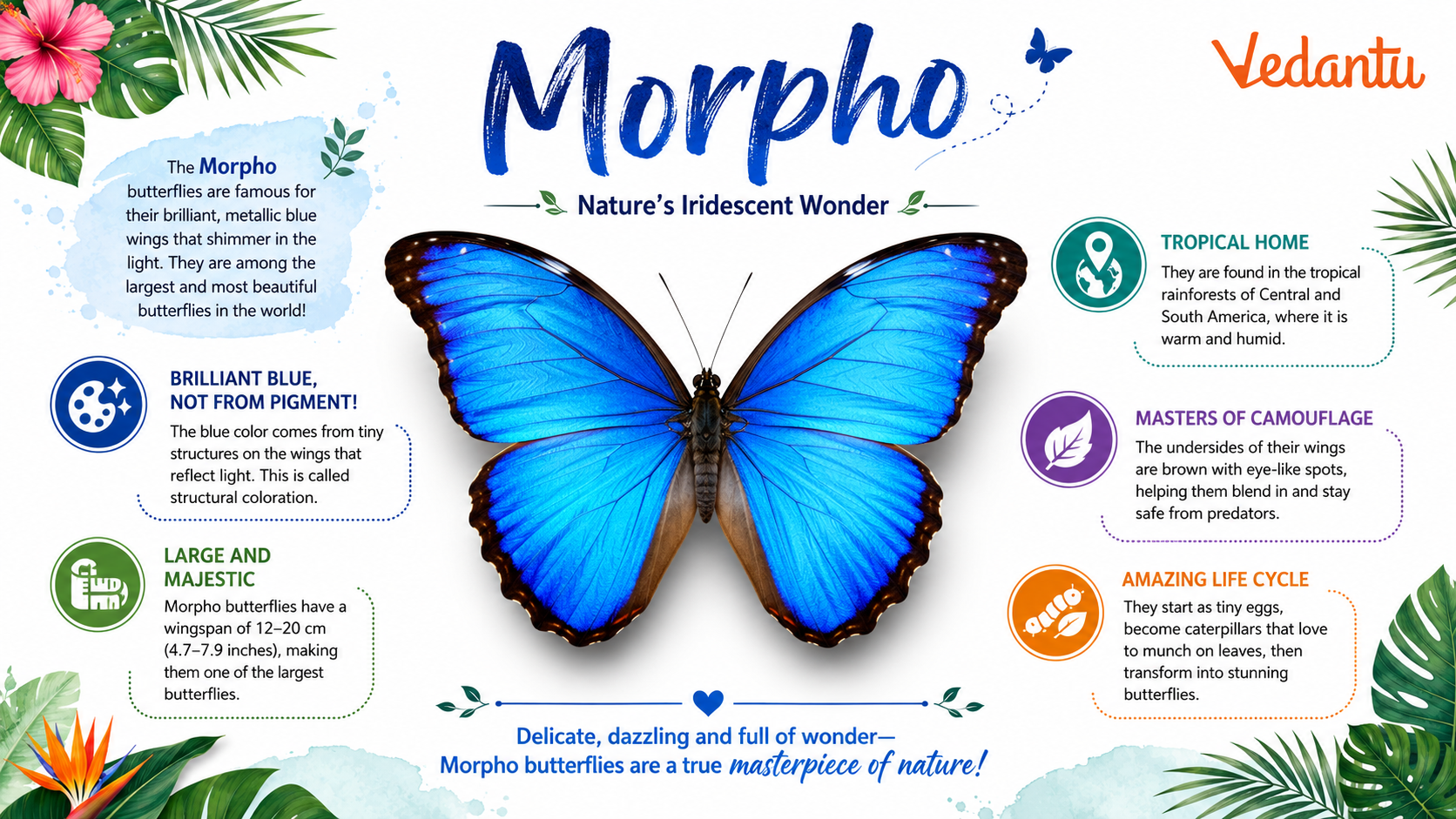
Quick Facts About Morpho
| Feature | Details |
|---|---|
| Common Name | Morpho Butterfly |
| Scientific Genus | Morpho |
| Animal Group | Insect |
| Wingspan | 12–20 cm (varies by species) |
| Habitat | Tropical rainforests |
| Diet | Rotting fruit, tree sap, nectar |
| Life Cycle | Egg → Caterpillar → Pupa → Adult |
| Found In | Central and South America |
Appearance and Physical Characteristics
- Large, broad wings with shiny, metallic blue upper side.
- Underside of wings is brown with eye-like spots for protection.
- Strong, slow, floating flight style.
- Thin body with two antennae and six legs.
- Scales on wings reflect light, creating the bright blue colour.
Morpho Habitat and Distribution
- Lives in tropical rainforests.
- Common near rivers, forest clearings, and dense vegetation.
- Found in countries like Brazil, Costa Rica, Peru, and Colombia.
- Prefers warm and humid climates.
Morpho butterflies usually fly in the lower and middle levels of the forest. Their bright blue colour flashes as they move, helping them confuse predators.
Morpho Diet and Feeding Habits
The Morpho diet plays an important role in recycling nutrients in the forest ecosystem.
Behaviour and Lifestyle
- Active during the day (diurnal).
- Males are more brightly coloured than females.
- Fly slowly but powerfully through forest paths.
- Use wing flashes to scare or confuse predators.
- Rest with wings closed to hide bright blue colour.
Morpho Life Cycle
- Egg: Female lays small eggs on host plant leaves.
- Caterpillar: Hairy caterpillar hatches and feeds on leaves.
- Pupa (Chrysalis): Forms a protective casing to transform.
- Adult Butterfly: Emerges with bright blue wings.
What Makes Morpho Special?
Importance and Role in Nature
- Helps in nutrient recycling by feeding on decaying fruits.
- Serves as food for birds and other predators.
- Important part of rainforest biodiversity.
- Inspires scientific research in optics and materials.
Amazing Morpho Facts
Interesting Facts About Morpho
- Morpho butterflies are often seen flying along forest trails.
- Their blue colour fades quickly after death because of wing damage.
- They are popular in butterfly gardens and exhibitions.
- Some species have slight purple or green shades.
Fun Facts for Kids
FAQs on Morpho Butterfly: Stunning Blue Wings and Unique Traits
1. What is a Morpho butterfly?
Morpho is a group of large, brightly colored butterflies famous for their shiny blue wings.
- Morpho butterflies belong to the genus Morpho.
- They are known for their bright iridescent blue color.
- They live mainly in the rainforests of Central and South America.
- Their glowing wings make them one of the most beautiful insects in the world.
2. Why are Morpho butterflies blue?
Morpho butterflies look blue because of light reflection, not blue pigment.
- Their wings have tiny scales that reflect light.
- This creates a bright iridescent blue color.
- The color can change depending on the angle of light.
- This special effect is called structural coloration.
3. Where do Morpho butterflies live?
Morpho butterflies live in warm tropical rainforests.
- They are found in Central America and South America.
- Countries include Brazil, Costa Rica, and Peru.
- They prefer humid forests near rivers and streams.
- The rainforest provides food and shelter for their life cycle.
4. What do Morpho butterflies eat?
Morpho butterflies mainly drink liquids instead of eating solid food.
- They feed on rotting fruit and tree sap.
- They may also drink plant juices.
- As caterpillars, they eat leaves of rainforest plants.
- Their feeding habits help them survive in tropical ecosystems.
5. How big is a Morpho butterfly?
Morpho butterflies are among the largest butterflies in the world.
- Their wingspan can reach 5 to 8 inches (12–20 cm).
- Females are often slightly larger than males.
- Their large wings help them glide through the rainforest.
- The size makes them easy to spot in the wild.
6. What is the life cycle of a Morpho butterfly?
The Morpho butterfly has four life stages, just like other butterflies.
- Egg – laid on host plant leaves.
- Caterpillar (larva) – eats leaves and grows quickly.
- Pupa (chrysalis) – transforms inside a protective case.
- Adult butterfly – emerges with bright blue wings.
7. How do Morpho butterflies protect themselves from predators?
Morpho butterflies use color and behavior to stay safe from predators.
- Their bright blue wings can confuse birds.
- The underside of their wings is brown with eye spots for camouflage.
- They fly in a slow, bouncing pattern to avoid capture.
- They hide in trees when resting.
8. Are Morpho butterflies endangered?
Some Morpho species face threats, but not all are endangered.
- Deforestation destroys their rainforest habitat.
- Climate change affects tropical ecosystems.
- Some are collected for display or trade.
- Conservation efforts help protect butterfly habitats.
9. How many species of Morpho butterflies are there?
There are about 29 known species of Morpho butterflies.
- Each species has slightly different wing patterns.
- Examples include Morpho menelaus and Morpho peleides.
- They all belong to the genus Morpho.
- Scientists study them to learn about biodiversity.
10. Why are Morpho butterflies important to the ecosystem?
Morpho butterflies play an important role in rainforest ecosystems.
- They help with nutrient recycling by feeding on fruit.
- Caterpillars are food for birds and other animals.
- They are indicators of a healthy tropical rainforest.
- They support biodiversity and eco-tourism.
