






Habitat, Migration, Diet, and Key Characteristics of Hirundinidae
Hirundinidae is the scientific family that includes swallows and martins, some of the most skilled flying birds in the world. These small birds are famous for their forked tails, smooth gliding flight, and long migrations. Found on almost every continent, they are experts at catching insects in mid-air. Learning about Hirundinidae facts, habitat, diet, and life cycle helps us understand how important these birds are for nature and for controlling insect populations.
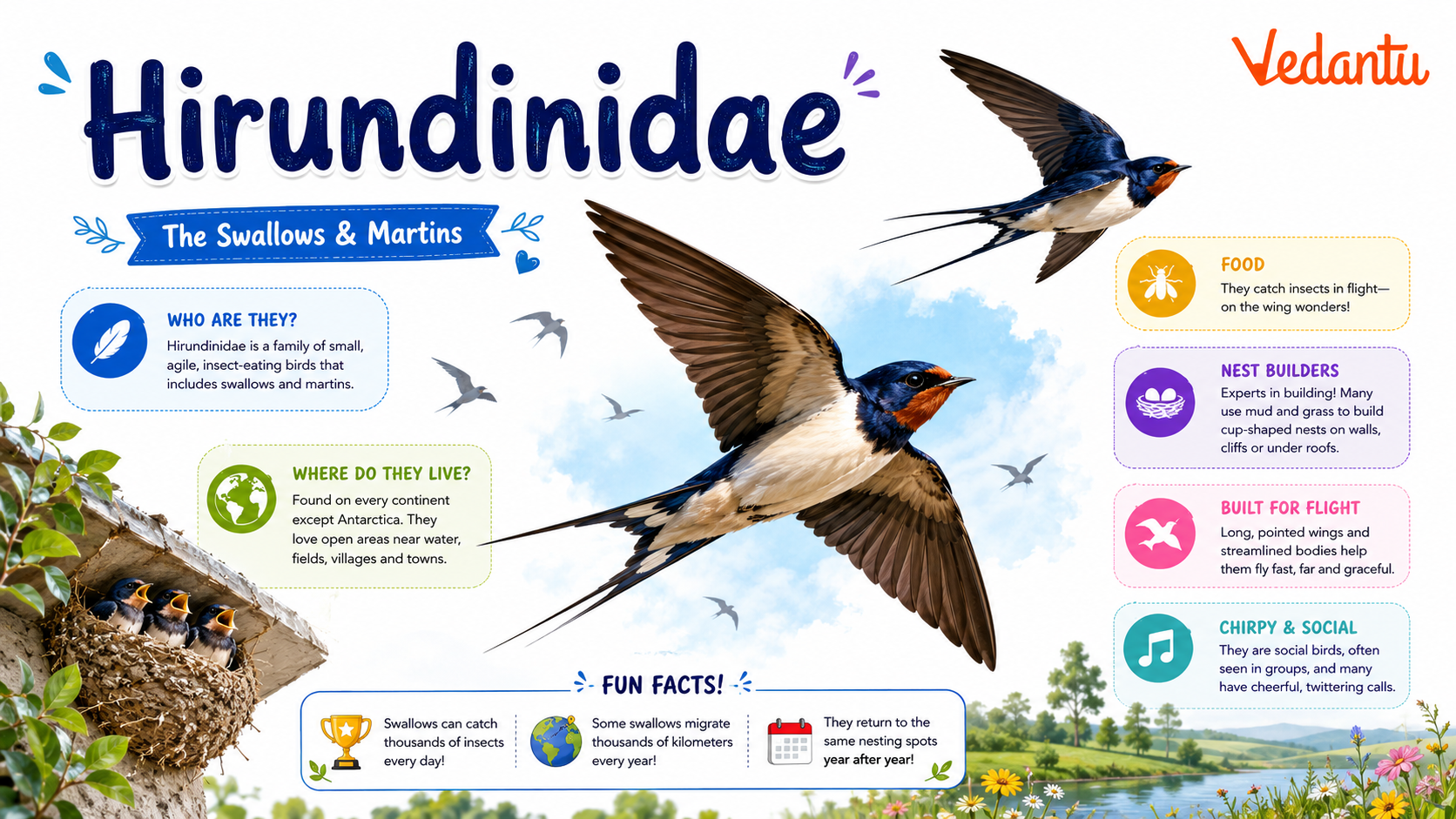
Quick Facts About Hirundinidae
| Feature | Details |
|---|---|
| Common Name | Swallows and Martins |
| Scientific Family | Hirundinidae |
| Animal Group | Birds (Aves) |
| Number of Species | About 90 species |
| Size | 10–24 cm long (small to medium-sized birds) |
| Diet | Insectivore (flies, mosquitoes, beetles) |
| Habitat | Open fields, wetlands, grasslands, near water |
| Movement | Fast, agile flight |
| Lifespan | Up to 4–8 years (some live longer) |
| Special Feature | Forked tail and excellent aerial hunting skills |
Appearance and Physical Characteristics
- Small, slim body built for speed.
- Long, pointed wings for fast and smooth flight.
- Forked or deeply notched tail (especially in swallows).
- Short legs but strong claws for perching.
- Short, flat beak with a wide mouth to catch insects.
- Glossy feathers, often blue, black, brown, or white.
Hirundinidae Habitat and Distribution
The Hirundinidae habitat is mostly open and airy spaces where flying insects are easy to find.
- Found on every continent except Antarctica.
- Prefer open countryside, farmlands, grasslands, and wetlands.
- Often live near lakes, rivers, and ponds.
- Some species build nests on cliffs, buildings, or under bridges.
Diet and Feeding Habits
Insectivore – they mainly eat flying insects.
Flies, mosquitoes, beetles, ants, and small wasps.
Catch insects while flying using their wide mouth.
Help control insect populations naturally.
Behaviour and Lifestyle
- Very active during the day (diurnal).
- Often seen flying low over fields or water.
- Some species live in large colonies.
- Communicate with chirping and twittering sounds.
- Many species migrate in large flocks.
Social Nature
Some martins and swallows build nests close together, forming noisy but lively colonies.
Flight Adaptations
- Long, pointed wings reduce air resistance.
- Lightweight skeleton helps in easy flight.
- Strong chest muscles power rapid wing beats.
- Forked tail helps in steering and sharp turns.
Sound or Call
Swallows and martins make soft chirping, twittering, and warbling sounds. They use these calls to:
- Communicate with their mates.
- Warn others about danger.
- Stay connected in large flocks.
Hirundinidae Life Cycle
- Egg Stage: Females lay 2–6 small eggs in nests made of mud, grass, or feathers.
- Incubation: Parents take turns keeping the eggs warm.
- Chick Stage: Chicks hatch blind and featherless.
- Growing Up: Both parents feed insects to the chicks.
- Fledging: Young birds learn to fly within a few weeks.
Types and Diversity
Famous for its deeply forked tail and red throat.
Builds mud nests under roofs and bridges.
Nests in tunnels dug into sandy banks.
Shiny blue-green back and white belly.
Importance and Role in Nature
Amazing Hirundinidae Facts
- They can fly at speeds of up to 35–40 km/h.
- Some species migrate over 10,000 km.
- Their mud nests can stick strongly to walls and cliffs.
- They drink water while flying by skimming the surface.
- Swallows are often seen as symbols of hope and travel.
- They rarely walk because their legs are short.
Interesting Facts About Hirundinidae
- They can feed, drink, and even bathe while flying.
- Some species sleep in large groups called roosts.
- Their forked tails help them make quick turns to catch insects.
- They prefer open skies instead of dense forests.
Fun Facts for Kids
FAQs on Hirundinidae: Overview of the Swallow Family Birds
1. What is Hirundinidae?
Hirundinidae is the scientific name for the family of birds that includes swallows and martins.
- Hirundinidae are small, fast-flying birds.
- They belong to the order Passeriformes (perching birds).
- This bird family includes swallows, martins, and saw-wings.
- They are known for their smooth flight and forked tails.
2. What do swallows (Hirundinidae) eat?
Swallows mainly eat insects that they catch while flying in the air.
- Their diet includes flies, mosquitoes, beetles, and ants.
- They are called aerial insectivores because they hunt insects in flight.
- They help control insect populations, especially mosquitoes.
- They drink water by skimming over lakes and rivers.
3. Where do birds in the Hirundinidae family live?
Hirundinidae birds live all over the world except Antarctica.
- They are found in North America, South America, Africa, Europe, and Asia.
- They prefer open areas like fields, wetlands, and grasslands.
- Many species build nests near rivers or human buildings.
- Some live in cities, farms, and countryside areas.
4. Why do swallows have forked tails?
Swallows have forked tails to help them steer and balance during fast flight.
- The forked tail improves quick turns in the air.
- It helps them catch insects more easily.
- It makes their flight smooth and agile.
- In some species, longer tails also attract mates.
5. Do Hirundinidae birds migrate?
Yes, many swallows and martins migrate long distances to find food and warm weather.
- They travel from cold regions to warmer countries during winter.
- Some species fly thousands of kilometers each year.
- Migration helps them follow insect populations.
- Examples include the Barn Swallow and Purple Martin.
6. How do swallows build their nests?
Swallows build nests using mud, grass, and small twigs.
- Many species create cup-shaped mud nests.
- They stick mud pellets together using saliva.
- Nests are often attached to walls, cliffs, or bridges.
- Some martins nest in holes or burrows.
7. What are some common examples of Hirundinidae species?
Common Hirundinidae species include swallows and martins found worldwide.
- Barn Swallow (Hirundo rustica)
- Purple Martin (Progne subis)
- Tree Swallow (Tachycineta bicolor)
- House Martin (Delichon urbicum)
8. How big are birds in the Hirundinidae family?
Hirundinidae birds are small to medium-sized birds.
- Most are about 10–24 cm long.
- They have long, pointed wings.
- Their bodies are slim and lightweight.
- This body shape helps them fly quickly and smoothly.
9. Why are swallows important to humans and nature?
Swallows are important because they control insects and support healthy ecosystems.
- They eat large numbers of pest insects.
- They help farmers by reducing crop pests.
- They are indicators of a healthy environment.
- They are part of the natural food chain.
10. How can you identify a swallow or martin?
You can identify a swallow by its fast flight, pointed wings, and forked tail.
- Look for smooth, gliding flight patterns.
- Notice their long, narrow wings.
- Many have shiny blue or dark feathers on top.
- They are often seen flying low over fields or water.
