






How to Care for Guppy Fish in a Home Aquarium
The Guppy is one of the most popular freshwater aquarium fish in the world. Known for its bright colours and flowing tail, this tiny fish is loved by beginners and experts alike. Guppy facts reveal that it is easy to care for, adapts well to different environments, and reproduces quickly. Let’s explore Guppy characteristics, habitat, diet, life cycle, and why this small fish plays an important role in both nature and home aquariums.
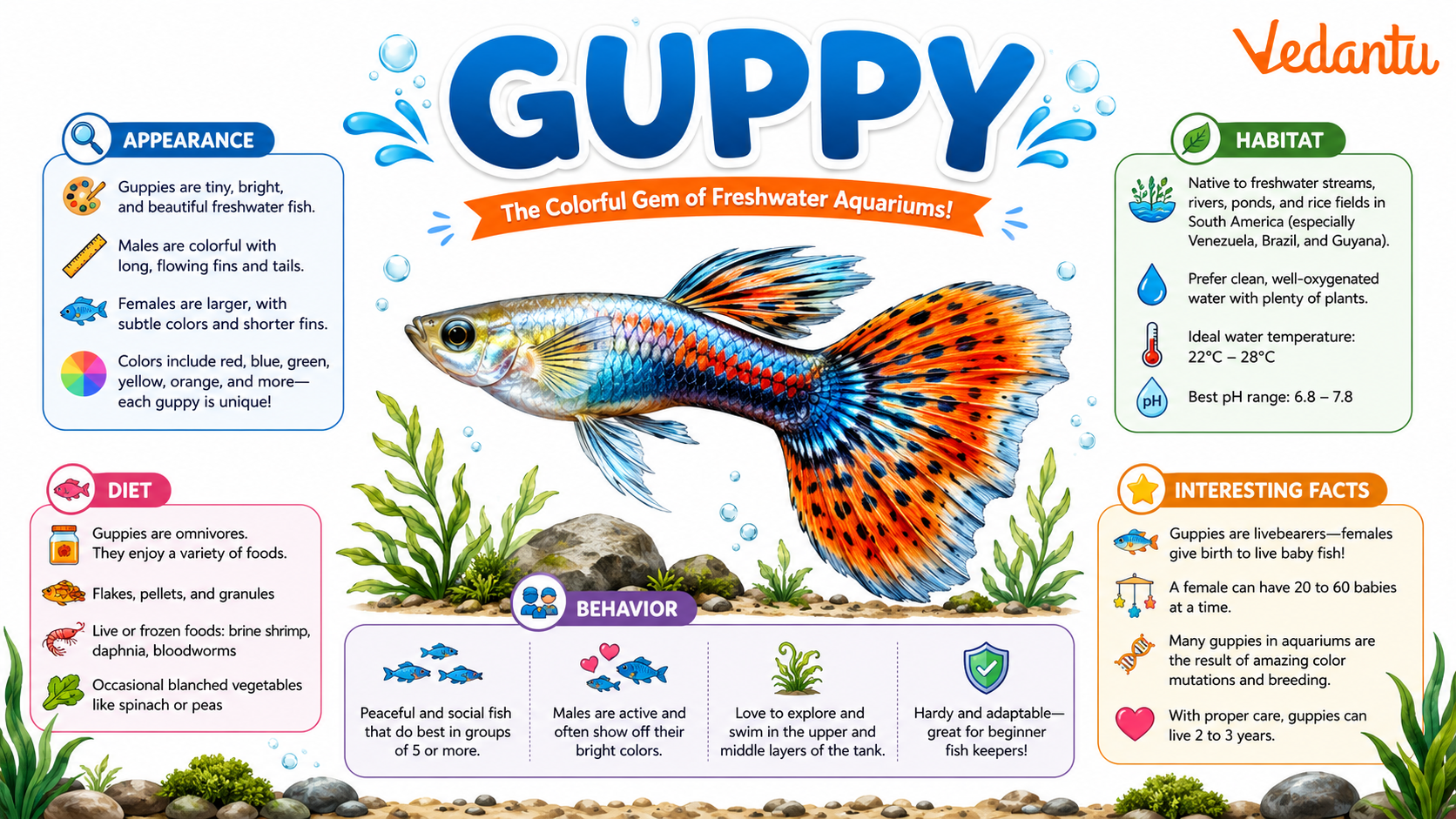
Quick Facts About Guppy
| Feature | Details |
|---|---|
| Common Name | Guppy |
| Scientific Name | Poecilia reticulata |
| Animal Group | Fish |
| Type | Freshwater Tropical Fish |
| Size | 2–6 cm |
| Lifespan | 2–3 years |
| Habitat | Streams, ponds, and aquariums |
| Diet | Omnivore |
| Special Feature | Gives birth to live young |
Appearance and Physical Characteristics
- Small and slim body.
- Males are more colourful than females.
- Long, flowing tail fins in many shapes.
- Colours include red, blue, yellow, green, and multi-patterned designs.
- Transparent or lightly coloured body in wild guppies.
Guppy Habitat and Distribution
- Originally found in South America.
- Common in Venezuela, Trinidad, Barbados, and northern Brazil.
- Prefer warm, slow-moving freshwater.
- Now found worldwide due to aquarium trade.
Diet and Feeding Habits
- Guppy diet includes algae, small insects, and larvae.
- They are omnivores.
- In aquariums, they eat fish flakes, pellets, and live food.
- Help control mosquito larvae in natural water bodies.
Behaviour and Lifestyle
- Peaceful and friendly fish.
- Live well in groups.
- Active swimmers.
- Mostly active during the day.
- Quick breeders in warm water.
Guppy Life Cycle
- Mating: Males display bright colours to attract females.
- Pregnancy: Female carries babies for about 21–30 days.
- Live Birth: Female gives birth to 20–100 baby guppies (called fry).
- Growth: Fry grow quickly and mature in 2–3 months.
- Adult Stage: Ready to reproduce at a young age.
What Makes Guppy Special?
Importance and Role in Nature
Amazing Guppy Facts
- One female can give birth multiple times from one mating.
- They can change slightly in colour depending on diet.
- Wild guppies are less colourful than aquarium ones.
- They are among the easiest fish to breed.
- Guppies can survive in both freshwater and slightly salty water.
- They are small but very energetic swimmers.
Fun Facts for Kids
FAQs on Guppy Fish Guide: Care, Lifespan, Diet, and Types
1. What is a Guppy fish?
A Guppy is a small, colorful freshwater fish that is popular in home aquariums around the world.
- Scientific name: Poecilia reticulata
- Also called millionfish or rainbow fish
- Known for their bright tails and easy care
- Common in freshwater aquariums and fish tanks
- Great beginner fish for kids and new fish keepers
2. Where do Guppies live in the wild?
Guppies naturally live in warm freshwater rivers and streams in tropical regions.
- Native to South America
- Found in countries like Venezuela, Brazil, and Guyana
- Prefer slow-moving water such as ponds and streams
- Can survive in different water conditions
- Often introduced to control mosquito larvae
3. What do Guppies eat?
Guppies are omnivores, meaning they eat both plants and small animals.
- Eat fish flakes and pellets
- Enjoy brine shrimp and bloodworms
- Feed on algae and tiny plants
- In the wild, eat insect larvae
- Need small portions 1–2 times daily
4. How long do Guppies live?
Guppies usually live for about 1 to 3 years with proper care.
- Average lifespan is 2 years
- Clean water helps them live longer
- Proper aquarium maintenance is important
- Healthy diet improves lifespan
- Stress-free tank conditions support longer life
5. How big do Guppies grow?
Guppies are small fish that grow to about 1 to 2.5 inches long.
- Male guppies are smaller and more colorful
- Female guppies are larger but less colorful
- Size depends on diet and tank care
- Perfect for small aquariums
- Lightweight and fast swimmers
6. Are Guppies easy to take care of?
Yes, Guppies are one of the easiest freshwater fish to care for.
- Great for beginners and kids
- Adapt well to different water conditions
- Need a small filtered aquarium
- Prefer warm water around 72–82°F (22–28°C)
- Peaceful and friendly fish
7. Do Guppies need a heater in their tank?
Guppies need warm water, so a heater is usually recommended for their aquarium.
- Ideal temperature is 72–82°F
- Heater keeps water temperature stable
- Important in cold climates
- Helps prevent stress and disease
- Use a thermometer to check water temperature
8. How do Guppies reproduce?
Guppies are livebearers, which means they give birth to live baby fish instead of laying eggs.
- Female guppies carry babies for about 21–30 days
- Can give birth to 20–100 baby guppies
- Babies are called fry
- Fry can swim immediately after birth
- Breeding happens easily in home aquariums
9. Can Guppies live with other fish?
Yes, Guppies are peaceful fish and can live with other friendly aquarium fish.
- Good tank mates include tetras, mollies, and platies
- Avoid aggressive fish like large cichlids
- Keep fish of similar size
- Provide enough space in the tank
- Monitor for fin-nipping behavior
10. Why are Guppies so colorful?
Guppies are colorful because of selective breeding and natural traits that attract mates.
- Male guppies have bright tails and patterns
- Colors include red, blue, yellow, and green
- Selective breeding creates fancy varieties
- Bright colors help males attract females
- Popular types include Fancy Guppies and Endler Guppies
