






What Are Gnats? Types, Life Cycle, Bites, and Easy Prevention Tips
Gnats are tiny flying insects that you may have seen hovering in groups around plants, lights, or even near your face. Though very small, they play important roles in nature. Some gnats help in pollination, while others feed on plants or organic matter. Found across the world, these insects are known for their fast movements and short life cycle. Let’s explore interesting Gnat facts, Gnat habitat, Gnat diet, characteristics, and more in a simple and fun way.
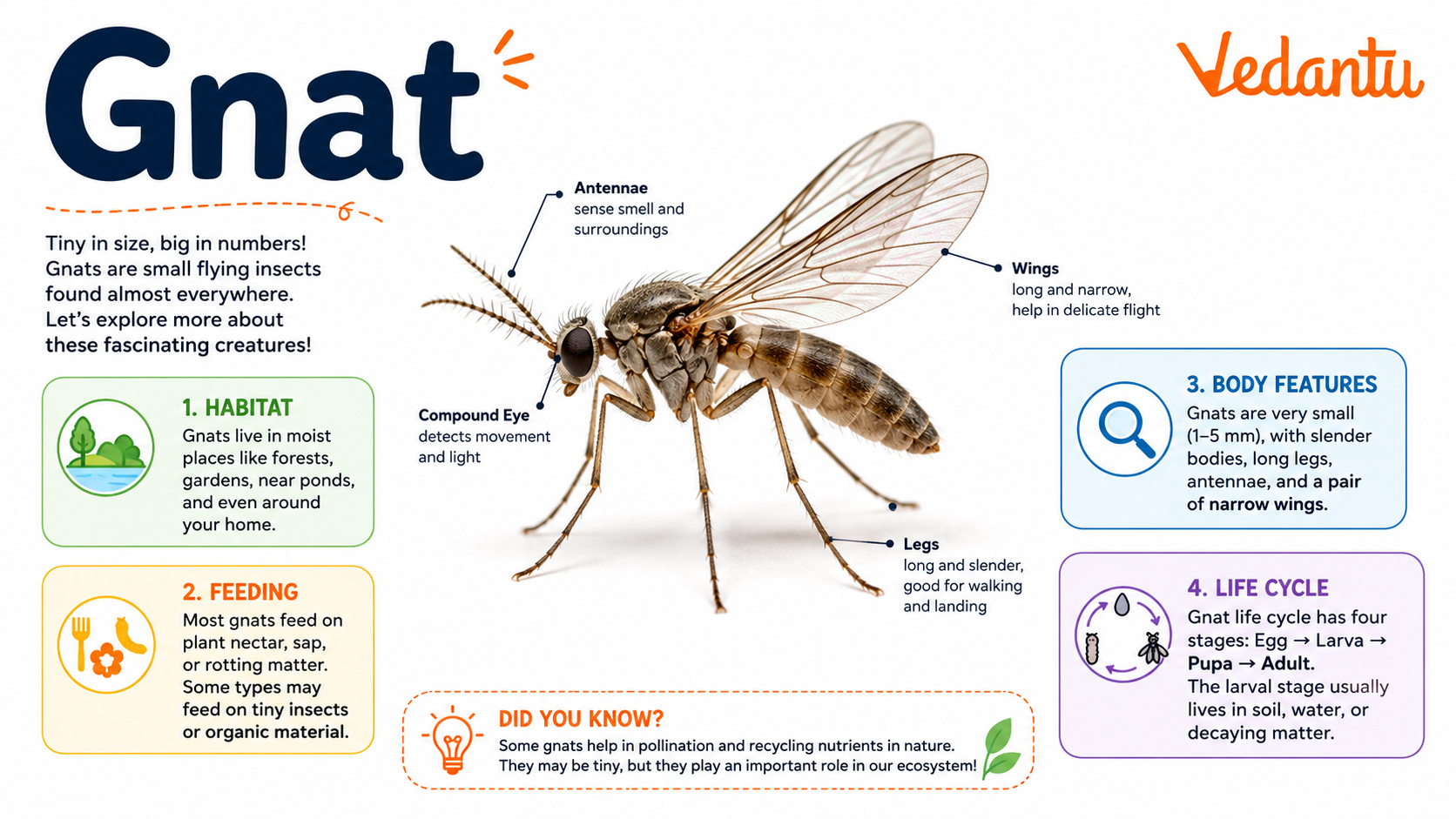
Quick Facts About Gnats
| Feature | Details |
|---|---|
| Common Name | Gnat |
| Animal Group | Insect |
| Scientific Group | Order Diptera (true flies) |
| Size | 1–5 mm long |
| Lifespan | 1–4 weeks (varies by species) |
| Habitat | Gardens, forests, near water, indoors |
| Diet | Plants, fungi, nectar, or blood (in some species) |
| Wings | One pair of transparent wings |
Appearance and Physical Characteristics
- Body Shape: Slender and delicate.
- Size: Usually between 1–5 millimetres.
- Colour: Black, brown, or grey.
- Wings: One pair of clear wings.
- Legs: Long and thin legs.
- Antennae: Small but sensitive for detecting smells.
Habitat and Distribution
The Gnat habitat is extremely wide. These insects are found almost everywhere in the world except very cold polar regions.
- Near ponds, lakes, and rivers
- In forests and grassy fields
- In gardens and farms
- Inside homes near houseplants
- In damp or moist soil
Diet and Feeding Habits
The Gnat diet depends on the species. Some feed on plants, while others feed on animals.
Behaviour and Lifestyle
- Active Time: Many gnats are active during warm evenings.
- Swarming: They often fly in large groups called swarms.
- Attracted to Light: Some gnats gather around lights at night.
- Short Life: Their adult life is usually very short.
Gnat Life Cycle
The Gnat life cycle includes complete metamorphosis, just like many other insects.
- Egg: Laid in moist soil or water.
- Larva: Worm-like stage that feeds actively.
- Pupa: Resting stage where transformation happens.
- Adult: Fully formed flying insect.
What Makes Gnats Special?
Types and Diversity
There are many types of gnats. The word “gnat” is a general name used for several small flying insects.
- Fungus Gnats: Common near indoor plants.
- Fruit Gnats: Found near ripe fruits.
- Biting Gnats: Also called midges, may bite humans.
- Non-biting Midges: Harmless and common near water.
Importance and Role in Nature
Even though they may seem annoying, the Gnat importance in ecosystems is significant.
Amazing Gnat Facts
- Gnats belong to the same order as flies and mosquitoes.
- Some species can survive in extreme environments.
- They can appear in large numbers after rain.
- Larvae are often transparent or pale in colour.
- Some gnats do not eat at all in their adult stage.
- They are attracted to carbon dioxide from our breath.
Interesting Facts About Gnats
Fun Facts for Kids
- Gnats are smaller than a grain of rice!
- They love wet soil and puddles.
- Some gnats glow slightly under certain lights.
- They can fly in funny zig-zag patterns.
- Birds enjoy eating gnats as a snack.
FAQs on Gnat Insect Guide: Identification, Behavior, and Control
1. What is a gnat?
A gnat is a tiny flying insect that looks like a small mosquito but does not usually bite people.
- Gnats are very small insects found worldwide.
- They belong to the fly family (Diptera).
- Some gnats bite animals, but many only feed on plants.
- They are common in gardens, forests, and near water.
2. Why are gnats attracted to humans?
Gnats are attracted to humans because of smell, moisture, and carbon dioxide.
- They follow carbon dioxide when we breathe.
- They like sweat and body odor.
- Some species are drawn to sweet scents like perfume or lotion.
- They are also attracted to moisture around the face and eyes.
3. Do gnats bite or sting?
Some gnats bite, but many types do not sting humans.
- Biting gnats feed on blood, mostly from animals.
- Non-biting gnats feed on nectar and plants.
- Bites can cause small red bumps and itching.
- Most gnats are more annoying than harmful.
4. Where do gnats live?
Gnats live in damp and warm places where they can find food and water.
- Near ponds, lakes, and rivers.
- In gardens and forests.
- Inside homes near houseplants and drains.
- In areas with rotting fruit or organic matter.
5. What do gnats eat?
Gnats eat different foods depending on their species.
- Many feed on plant nectar and juices.
- Some eat fungus and decaying plants.
- Biting gnats may drink animal blood.
- Larvae often feed on organic matter in soil or water.
6. How long do gnats live?
Gnats have short life cycles and usually live only a few weeks.
- Egg stage lasts a few days.
- Larvae grow in soil or water.
- Adult gnats live about 1 to 2 weeks.
- They reproduce quickly in warm weather.
7. How can you get rid of gnats in your house?
You can get rid of gnats by removing what attracts them and keeping areas clean.
- Throw away rotting fruit quickly.
- Clean drains and sinks regularly.
- Avoid overwatering indoor plants.
- Use simple gnat traps like apple cider vinegar.
8. Are gnats harmful to people?
Most gnats are not dangerous, but they can be annoying.
- They may cause itchy bites.
- Some species can spread minor diseases in animals.
- Large swarms can bother eyes and nose.
- They rarely cause serious health problems.
9. What is the difference between gnats and mosquitoes?
Gnats and mosquitoes are different types of flying insects with different behaviors.
- Mosquitoes are usually larger than gnats.
- Mosquitoes commonly bite humans for blood.
- Many gnats do not bite at all.
- Mosquitoes can spread more serious diseases.
10. Why do gnats fly in swarms?
Gnats fly in swarms mainly for mating and protection.
- Male gnats gather to attract females.
- Swarms make it easier to find a mate.
- Flying together helps protect against predators.
- Swarms are common in warm, humid weather.
