






How Big Is a Giant Water Bug and Does It Really Bite?
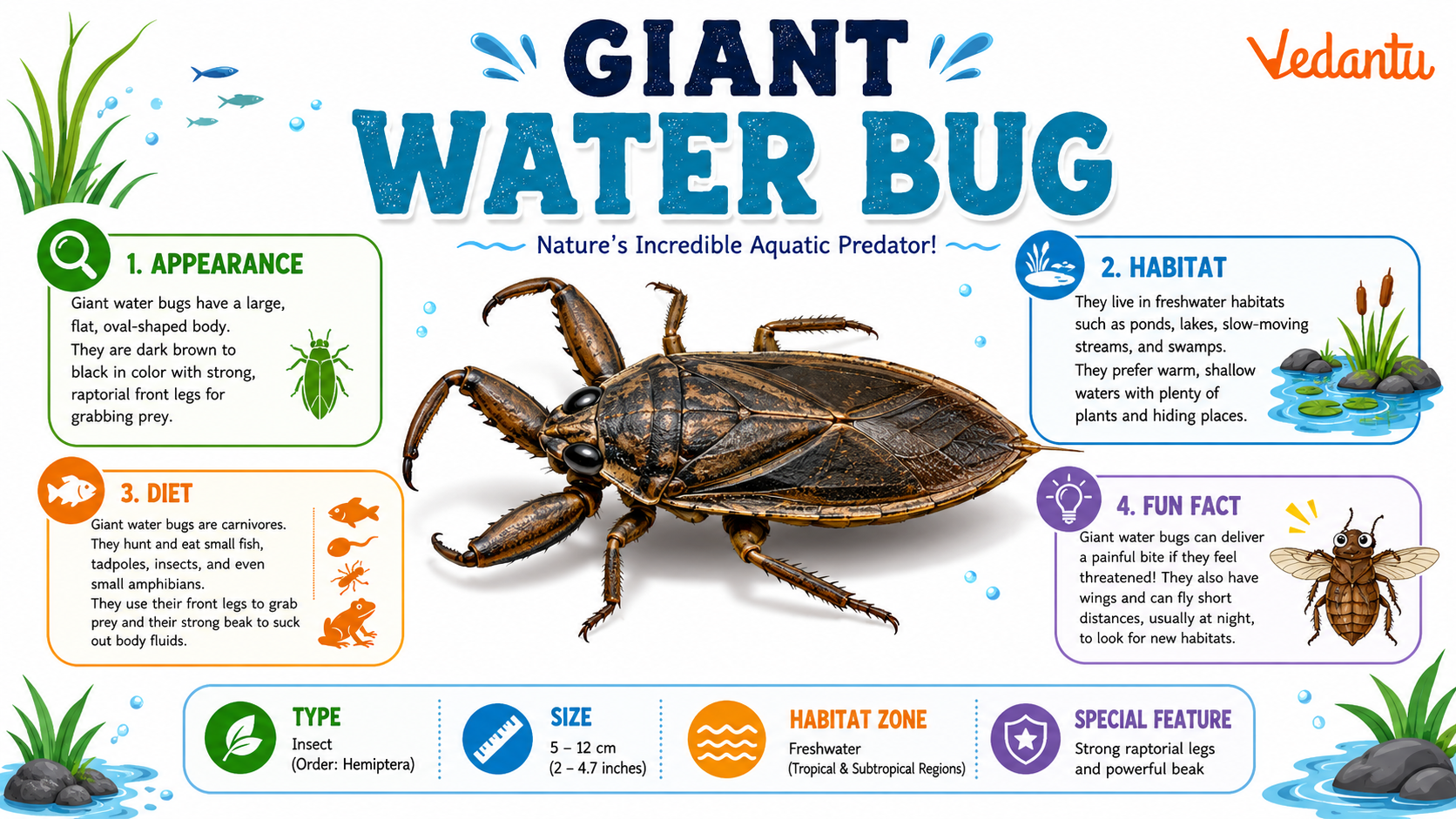
The Giant Water Bug is one of the largest and most fascinating aquatic insects in the world. Often called the “toe-biter,” this powerful predator lives in ponds, lakes, and slow-moving streams. Known for its strong front legs and painful bite, it is a skilled hunter that feeds on fish, frogs, and even small turtles. Learning about Giant Water Bug facts, habitat, diet, and life cycle helps us understand how important this insect is in freshwater ecosystems.
Quick Facts and Statistics
| Feature | Details |
|---|---|
| Common Name | Giant Water Bug |
| Scientific Name | Lethocerus (genus) |
| Animal Group | Insect |
| Size | Up to 10–12 cm long |
| Habitat | Ponds, lakes, marshes, slow streams |
| Diet | Fish, tadpoles, frogs, insects |
| Movement | Swims and flies |
| Special Feature | Strong grasping legs and piercing mouth |
| Life Cycle | Egg → Nymph → Adult (Incomplete metamorphosis) |
Appearance and Physical Characteristics
- Flat, oval-shaped body designed for swimming.
- Brown or dark olive colour for camouflage in muddy water.
- Large front legs shaped like claws to catch prey.
- Sharp, beak-like mouth (proboscis) to pierce and suck body fluids.
- Strong wings that allow it to fly at night.
Habitat and Distribution
- Found in freshwater habitats across North America, South America, Asia, and Australia.
- Prefer still or slow-moving water bodies.
- Often hide among water plants or under rocks.
- Come out more actively during warm seasons.
The Giant Water Bug habitat usually includes ponds, marshes, and shallow lake edges where prey is easily available. They are excellent at blending into muddy or plant-filled water.
Diet and Feeding Habits
What Does a Giant Water Bug Eat?
Behaviour and Lifestyle
- Mostly solitary hunters.
- Nocturnal – active at night.
- Excellent swimmers using their hind legs like paddles.
- Can fly to new water bodies during rainy seasons.
- Use camouflage to ambush prey.
Life Cycle of Giant Water Bug
- Egg Stage: Eggs are laid on plants or carried by males (in some species).
- Nymph Stage: Young nymphs look like small adults but without fully developed wings.
- Molting: They shed their skin several times as they grow.
- Adult Stage: Fully developed wings and reproductive ability.
The Giant Water Bug life cycle shows incomplete metamorphosis, meaning there is no pupal stage like butterflies.
What Makes Giant Water Bugs Special?
Importance and Role in Nature
- Help control fish and insect populations.
- Part of the freshwater food chain.
- Serve as food for birds, turtles, and larger fish.
- Indicator of healthy aquatic ecosystems.
Amazing Giant Water Bug Facts
Fun Facts for Kids
- They are sometimes called “electric light bugs.”
- They swim upside down in water.
- They look scary but avoid humans.
- They use air bubbles to breathe underwater.
- In some countries, they are eaten as food!
FAQs on Giant Water Bug: Size, Habitat and Surprising Facts
1. What is a Giant Water Bug?
Giant Water Bugs are large aquatic insects known for their strong bite and ability to live in freshwater habitats.
- Belong to the family Belostomatidae
- Often called toe-biters or electric light bugs
- Live in ponds, lakes, and slow-moving streams
- Are skilled underwater hunters
- Are part of the order Hemiptera (true bugs)
2. How big can a Giant Water Bug grow?
Giant Water Bugs can grow up to 4 inches (10 cm) long, making them one of the largest insects in freshwater.
- Length ranges from 2 to 4 inches
- Have a flat, oval-shaped brown body
- Front legs are strong and shaped like pincers
- Larger species are found in North America, South America, and Asia
3. Where do Giant Water Bugs live?
Giant Water Bugs live in freshwater environments around the world.
- Found in ponds, marshes, lakes, and slow streams
- Prefer warm climates in North America, Asia, and Australia
- Hide under rocks or plants in the water
- Come out more often at night (nocturnal insects)
4. What do Giant Water Bugs eat?
Giant Water Bugs are carnivorous predators that feed on small aquatic animals.
- Eat small fish, tadpoles, frogs, and insects
- Use sharp mouthparts called a proboscis to inject digestive fluids
- Suck out the liquefied insides of their prey
- Are sometimes called “water tigers” because of their hunting skills
5. Do Giant Water Bugs bite humans?
Yes, Giant Water Bugs can bite humans if they feel threatened or handled.
- The bite is very painful but not dangerous
- They bite using their sharp piercing mouthparts
- Usually bite when picked up or stepped on
- Are nicknamed toe-biters for this reason
6. Can Giant Water Bugs fly?
Giant Water Bugs can fly even though they spend most of their time in water.
- Have fully developed wings
- Fly mostly at night
- Are attracted to bright lights
- Move to new water sources by flying
7. How do Giant Water Bugs breathe underwater?
Giant Water Bugs breathe air but can stay underwater for long periods using special adaptations.
- Have a breathing tube at the end of their abdomen
- Trap air bubbles under their wings
- Must come to the surface to refill air
- Are not fish and do not have gills
8. How do Giant Water Bugs reproduce?
Male Giant Water Bugs take care of the eggs, which is unusual in the insect world.
- Females lay eggs on the male’s back or on plants
- Males protect and carry the eggs until they hatch
- Eggs hatch into nymphs (young bugs)
- Nymphs molt several times before becoming adults
9. Are Giant Water Bugs dangerous?
Giant Water Bugs are not dangerous to humans, but their bite can hurt a lot.
- Do not spread diseases
- Only bite in self-defense
- Are important for controlling fish and insect populations
- Play a role in the aquatic ecosystem
10. Are Giant Water Bugs eaten by people?
Yes, Giant Water Bugs are eaten in some countries, especially in parts of Asia.
- Popular in Thailand and Vietnam
- Used in traditional dishes and sauces
- Sometimes fried or roasted as street food
- Considered a source of protein
