






What Do Earwigs Eat, Where Do They Live, and Are They Harmful?
Earwigs are small insects that often hide in dark, damp places. Many people feel scared when they see their pincer-like tails, but earwigs are mostly harmless to humans. These insects play an important role in nature by eating other small pests and helping maintain balance in gardens. Let’s explore interesting earwig facts, their habitat, diet, characteristics, life cycle, and importance in the ecosystem.
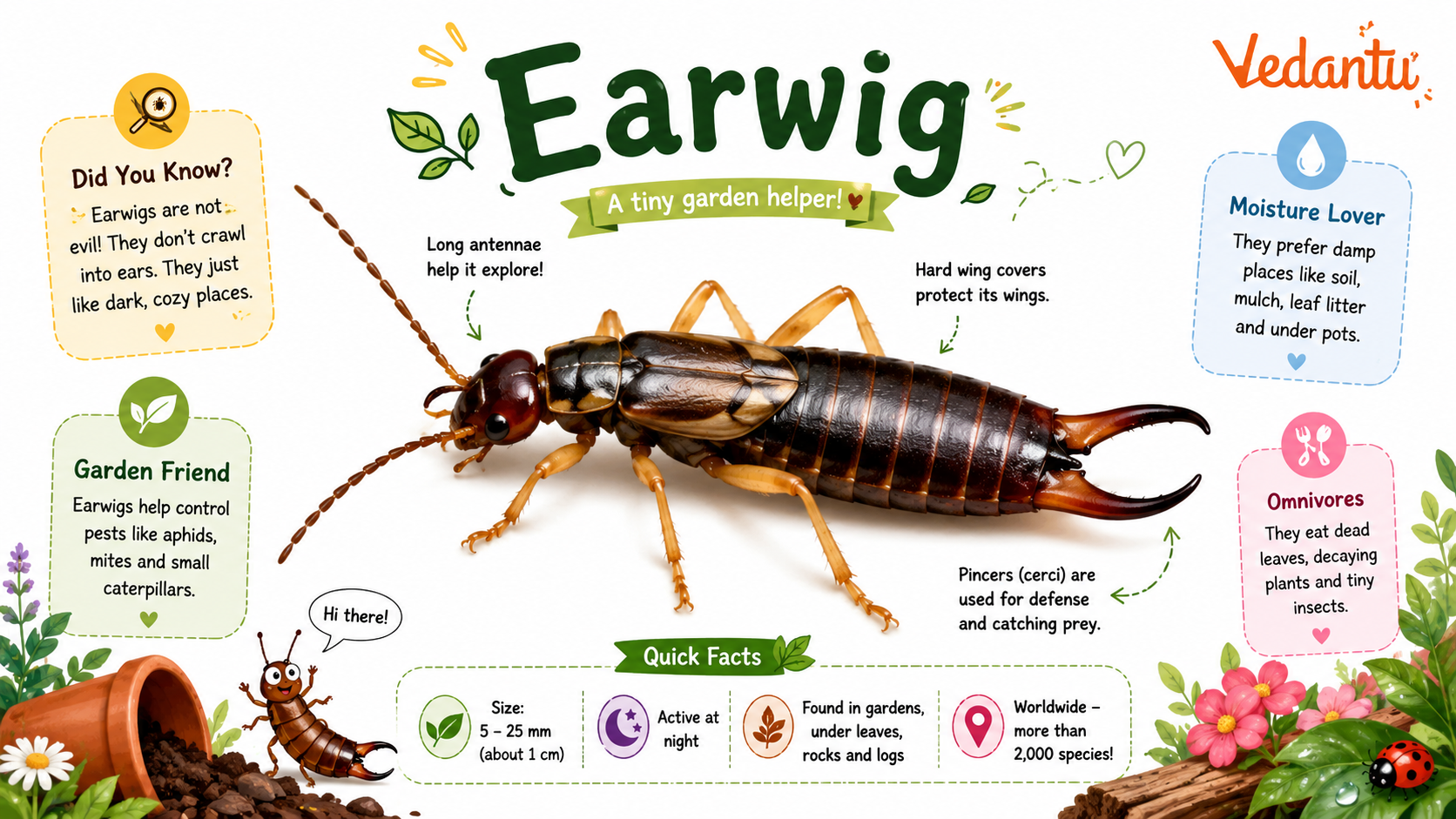
Quick Facts About Earwig
| Feature | Details |
|---|---|
| Common Name | Earwig |
| Scientific Order | Dermaptera |
| Animal Group | Insect |
| Size | About 5–25 mm long |
| Habitat | Gardens, forests, under stones, damp areas |
| Diet | Plants, insects, decaying matter |
| Activity Time | Mostly active at night (Nocturnal) |
| Lifespan | About 1 year |
Appearance and Physical Characteristics
- Long, flat and narrow body.
- Brown or dark reddish-brown colour.
- Six legs and two long antennae.
- Strong pincer-like appendages (called cerci) at the back.
- Some species have short wings, but they rarely fly.
Earwig Habitat and Distribution
Earwig habitat includes moist and dark environments. They avoid bright sunlight and prefer cool, hidden spots.
- Under rocks, logs, and fallen leaves
- In garden soil and flower pots
- Inside tree bark cracks
- Sometimes inside houses during rainy weather
Diet and Feeding Habits
The earwig diet makes them omnivores. They eat both plant material and small insects.
Behaviour and Lifestyle
- Mostly active at night.
- Hide during the day in dark places.
- Use pincers for protection.
- Move quickly when disturbed.
- Prefer moist environments.
Earwig Life Cycle
- Egg Stage: Female lays 30–50 eggs in soil during winter.
- Nymph Stage: Eggs hatch into small nymphs that look like tiny adults.
- Molting: Nymphs shed their outer skin several times as they grow.
- Adult Stage: Fully grown earwig develops pincers and sometimes wings.
What Makes Earwigs Special?
Importance and Role in Nature
Amazing Earwig Facts
- There are over 2,000 species of earwigs worldwide.
- Their name comes from an old European myth.
- Male earwigs have more curved pincers than females.
- Some earwigs can produce a foul-smelling liquid for defence.
- They rarely use their wings to fly.
- They prefer humid environments.
Fun Facts for Kids
FAQs on Earwig Insect Guide: Behavior, Myths, and Identification
1. What is an earwig?
An earwig is a small insect known for its long body and pincer-like tail.
- It belongs to the insect order Dermaptera
- It has a thin, brown or black body
- It has two short front wings and folded back wings
- It is famous for the curved forceps (pincers) at the end of its abdomen
2. Why are earwigs called earwigs?
Earwigs got their name from an old myth that they crawl into people’s ears, but this is not true.
- The word "earwig" comes from Old English
- People once believed they entered ears to lay eggs
- There is no scientific proof of this behavior
- They prefer dark, moist places instead
3. Are earwigs dangerous to humans?
Earwigs are mostly harmless insects and are not dangerous to humans.
- They do not spread diseases
- They rarely bite people
- Their pincers may pinch but do not cause serious harm
- They are not poisonous or venomous
4. What do earwigs eat?
Earwigs are omnivores, which means they eat both plants and small insects.
- Leaves and flowers
- Fruits and vegetables
- Small insects like aphids
- Decaying organic matter
5. Where do earwigs live?
Earwigs live in dark, damp environments to stay safe and moist.
- Under rocks and logs
- In garden soil
- Inside mulch or leaf piles
- Sometimes inside homes during hot or rainy weather
6. What are the pincers on an earwig used for?
The pincers on an earwig, called cerci, help with protection and other tasks.
- Defending against predators
- Catching prey
- Helping fold their wings
- Used by males during mating
7. Do earwigs fly?
Yes, some earwigs can fly, but they rarely do.
- They have short front wings called tegmina
- They have hidden folded back wings
- Most prefer crawling instead of flying
- They usually fly only when necessary
8. How do earwigs reproduce?
Earwigs reproduce by laying eggs, and the mother takes care of them.
- The female lays eggs in soil
- She guards and cleans the eggs
- She protects the young after they hatch
- This care is rare among insects
9. How can you get rid of earwigs in your home?
You can control earwigs by reducing moisture and sealing entry points.
- Keep areas dry and well-ventilated
- Seal cracks in walls and windows
- Remove piles of leaves near the house
- Use natural traps like rolled newspaper
10. Are earwigs helpful or harmful in the garden?
Earwigs can be both helpful and harmful in gardens.
- They eat harmful pests like aphids
- They clean up decaying plants
- They may damage flowers and crops
- Large numbers can become garden pests
