






Dik Dik Habitat, Diet, Behavior, and Fun Facts
The Dik Dik is one of the smallest antelopes in the world, known for its shy nature and cute appearance. Found mainly in Africa, this tiny mammal survives in dry bushlands and savannas. Despite its small size, the Dik Dik is alert, fast, and very smart. In this guide, explore interesting Dik Dik facts, its habitat, diet, characteristics, life cycle, and why it plays an important role in nature.
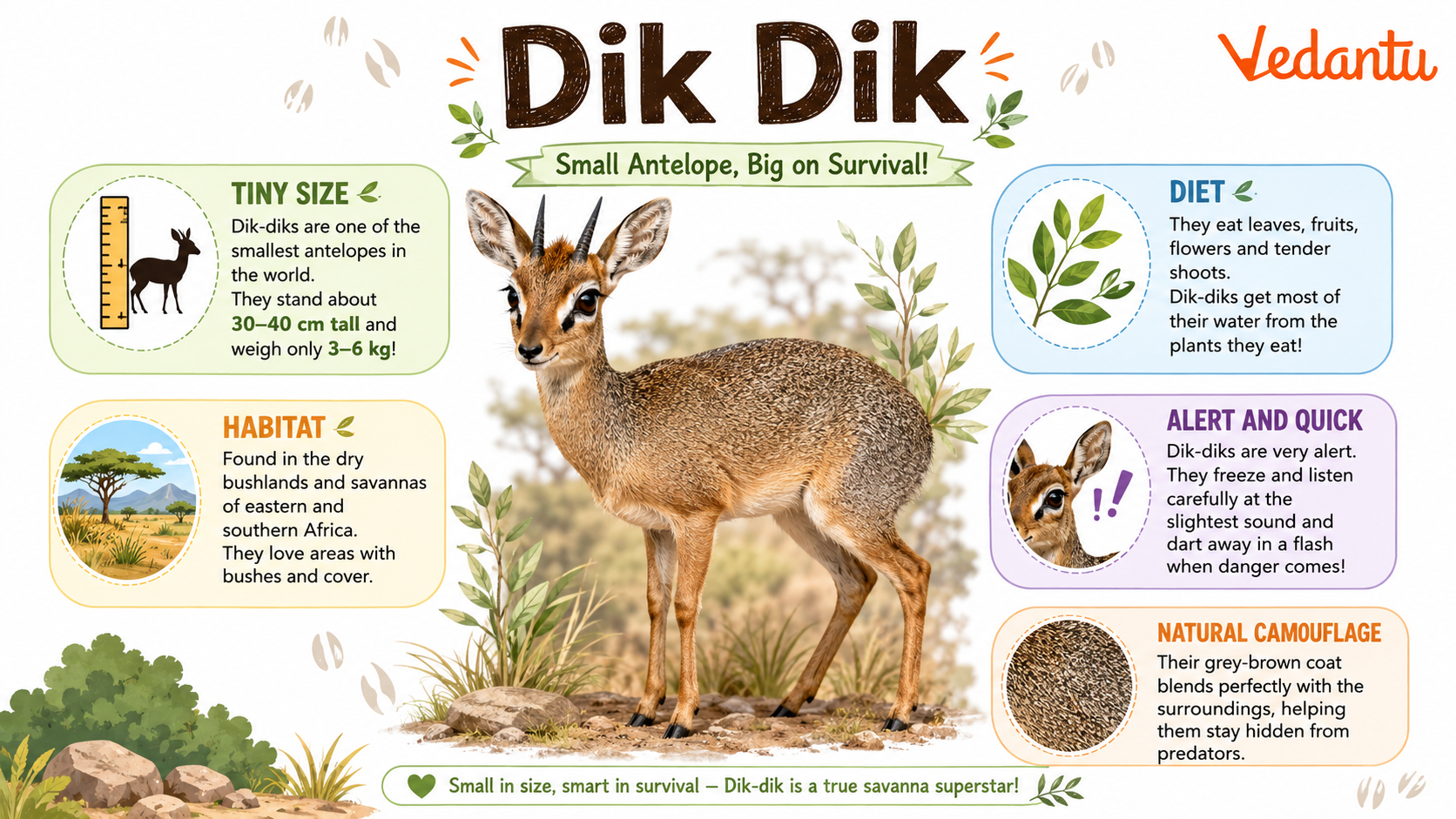
Quick Facts About Dik Dik
| Feature | Details |
|---|---|
| Common Name | Dik Dik |
| Scientific Name | Madoqua |
| Animal Group | Mammal |
| Type | Small Antelope |
| Height | 30–40 cm (about the size of a small dog) |
| Weight | 3–6 kg |
| Lifespan | 6–10 years |
| Diet | Leaves, shoots, fruits |
| Habitat | Dry bushlands and savannas |
| Conservation Status | Least Concern (most species) |
Appearance and Physical Characteristics
- Small, slender body with thin legs.
- Large dark eyes that help spot predators quickly.
- Soft greyish-brown or reddish-brown fur.
- Long nose that looks like a tiny trunk.
- Males have short, sharp horns.
Dik Dik Habitat and Distribution
- Eastern and Southern Africa
- Countries like Kenya, Tanzania, Namibia, and Ethiopia
- Dry bushlands and savannas with lots of shrubs
Dik Diks do not need much water because they get most of their moisture from the plants they eat. This helps them survive in hot and dry climates.
Dik Dik Diet and Feeding Habits
Dik Diks eat only plants.
Leaves, shoots, berries, fruits, and flowers.
Gets water from plant moisture.
Mostly early morning and late evening.
Their small size allows them to feed on low bushes that larger animals cannot easily reach.
Behaviour and Lifestyle
- Very shy and alert animals.
- Usually live in pairs (male and female).
- Mark their territory using scent glands near their eyes.
- Run in a zigzag pattern to escape predators.
- Make a whistling “zik-zik” sound when frightened.
Life Cycle of a Dik Dik
- Birth: Female gives birth to one baby after about 6 months of pregnancy.
- Baby Stage: The young one hides in bushes to stay safe.
- Growth: It starts eating plants within a few weeks.
- Adult Stage: Becomes fully grown in about 6–8 months.
- Lifespan: Lives up to 10 years in the wild.
What Makes Dik Dik Special?
Sound or Call
The Dik Dik makes a sharp, whistling “dik-dik” sound when it senses danger. This alarm call warns its partner and scares off predators by letting them know they have been spotted.
Importance and Role in Nature
Amazing Dik Dik Facts
- Dik Diks are among the smallest antelopes in the world.
- They can reach speeds of up to 42 km/h.
- Only males have small horns.
- Their large eyes are surrounded by a white ring.
- They have special scent glands below their eyes.
- They rarely need to drink water directly.
- They stay active during cooler parts of the day.
Fun Facts for Kids
FAQs on Dik Dik: The Tiny Antelope of Africa Explained
1. What is a Dik Dik?
A Dik Dik is a very small type of antelope that lives in Africa and is known for its tiny size and big eyes.
- Belongs to the antelope family
- Native to Eastern and Southern Africa
- One of the smallest hoofed mammals in the world
- Named after the “dik-dik” alarm sound it makes
2. How big is a Dik Dik?
A Dik Dik is very tiny compared to other antelopes and is about the size of a small dog.
- Height: about 30–40 cm (12–16 inches)
- Weight: around 3–6 kg (6–13 pounds)
- Small body with slender legs
- Large eyes and long nose for survival
3. Where do Dik Diks live?
Dik Diks live in warm and dry areas of Africa, especially in bushlands and savannas.
- Found in Kenya, Tanzania, Namibia, and Ethiopia
- Prefer savannas, shrublands, and dry forests
- Hide in thick bushes for protection
- Avoid open grasslands with no cover
4. What do Dik Diks eat?
A Dik Dik is a herbivore, which means it eats plants to survive.
- Feeds on leaves, shoots, fruits, and flowers
- Prefers low-growing shrubs
- Gets most of its water from plants
- Rarely needs to drink standing water
5. Why is it called a Dik Dik?
The name Dik Dik comes from the alarm sound it makes when scared.
- Makes a sharp “dik-dik” whistle
- Sound warns other animals of danger
- Helps protect mates and territory
- Name is used worldwide in wildlife studies
6. How do Dik Diks protect themselves from predators?
Dik Diks stay safe by hiding quickly and staying alert in their habitat.
- Run in a zigzag pattern to confuse predators
- Hide in thick bushes
- Use their strong sense of hearing and smell
- Common predators include leopards, eagles, and wild dogs
7. Do Dik Diks live alone or in groups?
Dik Diks usually live in pairs rather than large herds like other antelopes.
- Form monogamous pairs (one male and one female)
- Stay together for life
- Defend a small territory
- Rarely gather in large groups
8. How long do Dik Diks live?
A Dik Dik can live for several years depending on safety and environment.
- Average lifespan in the wild: 6–10 years
- May live longer in protected areas
- Main threats include predators and habitat loss
- Young calves are most vulnerable
9. Are Dik Diks endangered?
Most species of Dik Dik are not endangered, but some face risks in certain regions.
- Listed as Least Concern by conservation groups
- Threatened by habitat destruction
- Hunted in some areas
- Protected in many African wildlife reserves
10. What are the special features of a Dik Dik?
Dik Diks have unique features that help them survive in hot African climates.
- Large dark eyes for spotting danger
- Long nose that helps cool their blood
- Small pointed horns on males
- Light brown fur for camouflage
