






What Do Cricket Insects Eat, Where Do They Live, and Why Do They Chirp?
The Cricket insect is a small but fascinating creature known for its loud chirping sound. Found in fields, gardens, forests, and even inside homes, crickets are active mostly at night. These insects belong to the grasshopper family and are famous for their jumping legs and musical calls. Learning about Cricket insect facts helps us understand their role in nature, their habitat, diet, behaviour, and why their sound is so special.
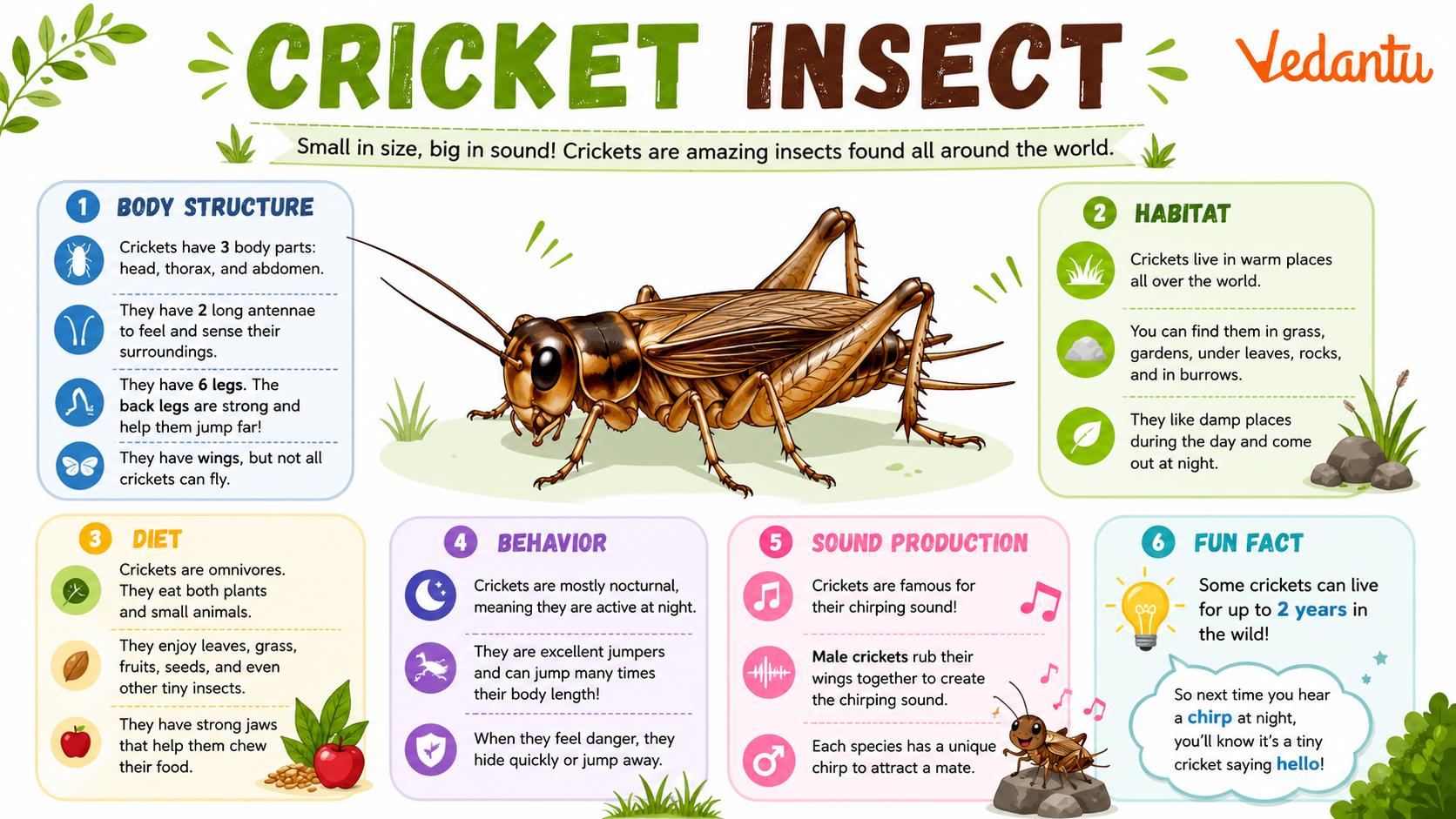
Quick Facts About Cricket Insect
| Feature | Details |
|---|---|
| Common Name | Cricket |
| Scientific Family | Gryllidae |
| Animal Group | Insect |
| Size | 1–5 cm long (varies by species) |
| Habitat | Fields, forests, gardens, caves, houses |
| Diet | Plants, leaves, seeds, small insects |
| Activity | Mainly nocturnal |
| Special Feature | Chirping sound by rubbing wings |
Appearance and Physical Characteristics
- Long, thin antennae longer than their body.
- Strong hind legs for jumping long distances.
- Usually brown, black, or green in colour.
- Three main body parts: head, thorax, and abdomen.
- Two wings – front wings help in chirping.
Cricket Insect Habitat and Distribution
The Cricket insect habitat is very wide. These insects can survive in many environments as long as there is warmth and food.
- Grasslands and meadows
- Forests and farms
- Under rocks and logs
- Inside burrows in the soil
- Sometimes inside houses
Diet and Feeding Habits
The Cricket insect diet makes them omnivores. They eat both plants and small animals.
Leaves, grass, seeds, fruits, and crops.
Small insects, larvae, and even dead insects.
Use strong jaws to chew food.
Important food source for birds, frogs, and reptiles.
Behaviour and Lifestyle
- Mostly active at night (nocturnal).
- Hide during the day to avoid predators.
- Jump quickly to escape danger.
- Communicate using chirping sounds.
- Males chirp to attract females and mark territory.
Sound or Call
Cricket Insect Life Cycle
- Egg Stage: Female lays eggs in soil or plant stems.
- Nymph Stage: Young crickets hatch looking like small adults but without wings.
- Molting: Nymphs shed their outer skin several times as they grow.
- Adult Stage: Wings fully develop, and males begin chirping.
What Makes Cricket Insect Special?
Produce sound without vocal cords.
Chirp rate can help estimate temperature.
Can jump many times their body length.
Have ears on their front legs.
Importance and Role in Nature
Feed birds, reptiles, amphibians, and small mammals.
Eat decaying plants and insects, helping soil health.
Help control insect populations.
Used in research to study insect behaviour and sound.
Amazing Cricket Insect Facts
- There are over 2,400 species of crickets worldwide.
- Some crickets live in caves and never see sunlight.
- Crickets can hear through tiny organs on their legs.
- Their chirping becomes faster in warm weather.
- Some cultures consider crickets a symbol of good luck.
- Certain species are eaten as protein-rich food.
Fun Facts for Kids
FAQs on Cricket Insect: Fascinating Facts, Habitat, and Behavior
1. What is a cricket insect?
A cricket insect is a small jumping insect known for its chirping sound and long antennae.
- Crickets belong to the family Gryllidae.
- They are related to grasshoppers and katydids.
- They have long legs for jumping and thin, sensitive antennae.
- Crickets are famous for the chirping sound males make at night.
2. Why do crickets chirp?
Crickets chirp mainly to attract mates and communicate with other crickets.
- Male cricket insects rub their wings together to make sound.
- This sound-making process is called stridulation.
- They chirp to attract female crickets.
- Chirping can also warn other males to stay away.
3. Where do crickets live?
Crickets live in many places around the world, especially in warm and grassy areas.
- They are found in gardens, fields, and forests.
- Some species live inside houses and buildings.
- Crickets prefer warm climates but can adapt to different environments.
- They hide under rocks, logs, and leaves during the day.
4. What do cricket insects eat?
Crickets are omnivores, which means they eat both plants and small insects.
- They feed on leaves, grass, and fruits.
- Some crickets eat dead insects or organic matter.
- House crickets may chew on fabric or paper.
- Their diet helps recycle nutrients in nature.
5. How long do crickets live?
Most crickets live for about 2 to 3 months depending on the species and environment.
- Their life cycle includes egg, nymph, and adult stages.
- Baby crickets are called nymphs.
- Nymphs look like small adults without wings.
- They grow by shedding their outer skin several times.
6. Are crickets harmful to humans?
Crickets are generally harmless to humans and rarely bite.
- They do not spread serious diseases.
- Some house crickets may damage clothes or paper.
- Outdoor crickets are helpful in the ecosystem.
- They serve as food for birds, frogs, and reptiles.
7. How do crickets make their chirping sound?
Crickets make their chirping sound by rubbing their wings together.
- One wing has a rough edge called a file.
- The other wing has a scraper called a scraper.
- Rubbing them together creates the famous chirp.
- The faster they chirp, the warmer the temperature usually is.
8. What are the different types of crickets?
There are many types of crickets found around the world.
- House crickets often live indoors.
- Field crickets are commonly found outdoors.
- Mole crickets dig tunnels underground.
- Tree crickets live in bushes and trees.
9. Why are crickets important in nature?
Crickets play an important role in keeping the ecosystem balanced.
- They break down organic matter and recycle nutrients.
- Crickets are a key food source for many animals.
- Their chirping is part of the natural nighttime soundscape.
- They help scientists study insect behavior and temperature changes.
10. Can you keep a cricket as a pet?
Yes, you can keep a cricket as a pet if you provide proper care and habitat.
- Use a small container with air holes.
- Provide food like vegetables and grains.
- Keep the habitat warm and clean.
- Make sure they have space to move and hide.
