






Budgerigar Facts, Lifespan, Diet, Behavior, and Care Tips
The Budgerigar, often called a “budgie,” is one of the most popular pet birds in the world. Native to Australia, these small parrots are loved for their bright colours, playful nature, and friendly personality. Budgerigar facts reveal that they are intelligent, social birds that can even learn to mimic human speech. Let’s explore the Budgerigar habitat, diet, characteristics, life cycle, and interesting facts in a fun and easy way!
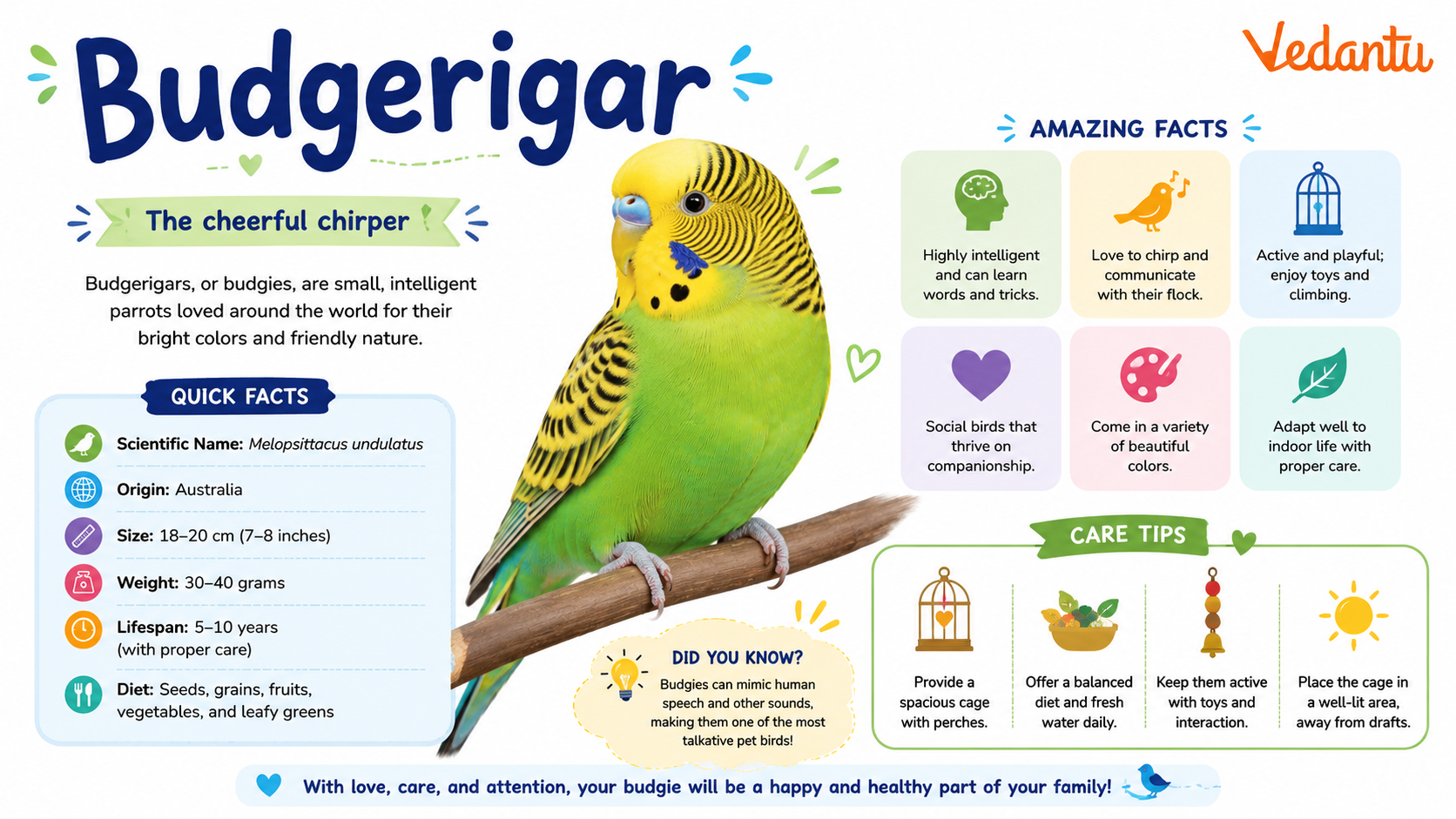
Quick Facts and Statistics
| Feature | Details |
|---|---|
| Common Name | Budgerigar (Budgie) |
| Scientific Name | Melopsittacus undulatus |
| Animal Group | Bird (Parrot family) |
| Size | About 18 cm long |
| Weight | 30–40 grams |
| Lifespan | 5–10 years (can live longer with good care) |
| Habitat | Grasslands and open woodlands |
| Diet | Seeds, fruits, vegetables |
| Young One | Chick |
| Found In | Australia (wild), Worldwide (as pets) |
Appearance and Physical Characteristics
- Small and slim body with a long, pointed tail.
- Bright green body with a yellow head (wild type).
- Black wavy markings on wings and back.
- Curved beak for cracking seeds.
- Strong feet with two toes forward and two backward for gripping.
Habitat and Distribution
The natural Budgerigar habitat includes dry grasslands, scrublands, and open woodlands in Australia.
- Prefer warm and dry climates.
- Often live near water sources.
- Travel in large flocks in the wild.
- Nest in tree holes.
Diet and Feeding Habits
The Budgerigar diet mainly includes:
- Grass seeds (favourite food in the wild)
- Fruits and leafy vegetables
- Millet and grains
In the food chain, they act as seed eaters and are prey for larger birds and animals.
Behaviour and Lifestyle
- Highly social and live in flocks.
- Active during the day (diurnal).
- Communicate through chirps and whistles.
- Playful and curious by nature.
Temperament and Domestic Life
Life Cycle and Reproduction
- Egg Stage: Female lays 4–6 white eggs in a nest.
- Incubation: Eggs hatch after about 18 days.
- Chick Stage: Chicks are born blind and featherless.
- Fledgling: Young birds leave the nest in about 4–5 weeks.
- Adult: Reach maturity at around 6 months.
Flight Adaptations
- Lightweight body for easy flight.
- Strong chest muscles for flapping wings.
- Long tail helps in balance and steering.
- Sharp eyesight for spotting food from above.
Sound or Call
Budgerigars are known for their cheerful chirping and chattering sounds. They use calls to:
- Communicate with flock members.
- Warn about danger.
- Attract mates.
What Makes Budgerigar Special?
Importance and Role in Nature
Amazing Facts About Budgerigar
- Budgies are one of the most popular pet birds in the world.
- They can turn their heads up to 180 degrees.
- Wild budgies are mostly green and yellow.
- They sleep standing on one leg.
- Budgies have excellent colour vision.
- They can fly long distances in search of water.
Interesting Facts About Budgerigar
Fun Facts for Kids
FAQs on Budgerigar Bird: Complete Guide to This Colorful Pet Parakeet
1. What is a Budgerigar?
A Budgerigar, often called a budgie or parakeet, is a small, colorful pet bird known for being friendly and playful.
- Scientific name: Melopsittacus undulatus
- Native to: Australia
- Size: About 7–8 inches long
- Popular as: A beginner-friendly pet bird
2. Where do Budgerigars live in the wild?
Budgerigars naturally live in the dry grasslands and open woodlands of Australia.
- Habitat: Grasslands, savannas, and scrublands
- Climate: Warm and dry areas
- Behavior: Travel in large flocks for safety
3. What do Budgerigars eat?
Budgerigars eat a mix of seeds, fruits, and vegetables to stay healthy.
- Main diet: Seeds and pellets
- Fresh foods: Carrots, spinach, apples
- Occasional treats: Small pieces of fruit
4. Can Budgerigars talk or mimic sounds?
Yes, Budgerigars can talk and mimic human speech with training and patience.
- They copy words and simple phrases
- They respond best to repetition
- Males often learn to talk more clearly than females
5. How long do Budgerigars live?
A healthy Budgerigar can live between 5 to 10 years, and sometimes longer with good care.
- Proper diet increases lifespan
- Clean cage and fresh water are important
- Regular vet check-ups help prevent illness
6. Are Budgerigars good pets for kids?
Budgerigars are great pets for kids because they are gentle, small, and easy to care for.
- Friendly and social birds
- Do not need a lot of space
- Enjoy interaction and playtime
7. How do you take care of a Budgerigar?
Taking care of a Budgerigar means providing food, water, and daily attention.
- Give a spacious bird cage
- Provide toys for mental stimulation
- Clean the cage weekly
- Offer fresh food and water daily
8. What colors do Budgerigars come in?
Budgerigars come in many bright and beautiful colors.
- Common wild color: Green and yellow
- Pet varieties: Blue, white, yellow, violet
- Patterns: Stripes and spots on wings
9. How can you tell if a Budgerigar is male or female?
You can tell a Budgerigar’s gender by looking at the color of the cere (the area above the beak).
- Males usually have a blue cere
- Females often have a brown or beige cere
- Young birds may have lighter colors
10. Do Budgerigars need company?
Budgerigars are social birds and enjoy having company from humans or other budgies.
- They prefer living in pairs or groups
- Need daily interaction and playtime
- Can become lonely without attention
