




A constriction of the chromosome is
(a) Centromere
(b) Centrosome
(c) Centriole
(d) Chromosome
Answer
 Verified
627.9k+ views
Hint: This region contains a specific DNA sequence, to which is bound by two discs of protein known as kinetochore. This is a unique feature of all eukaryotic chromosomes which is necessary for the stability of the chromosome. This is required for the segregation of the centromere during meiosis and mitosis.
Complete step by step answer:
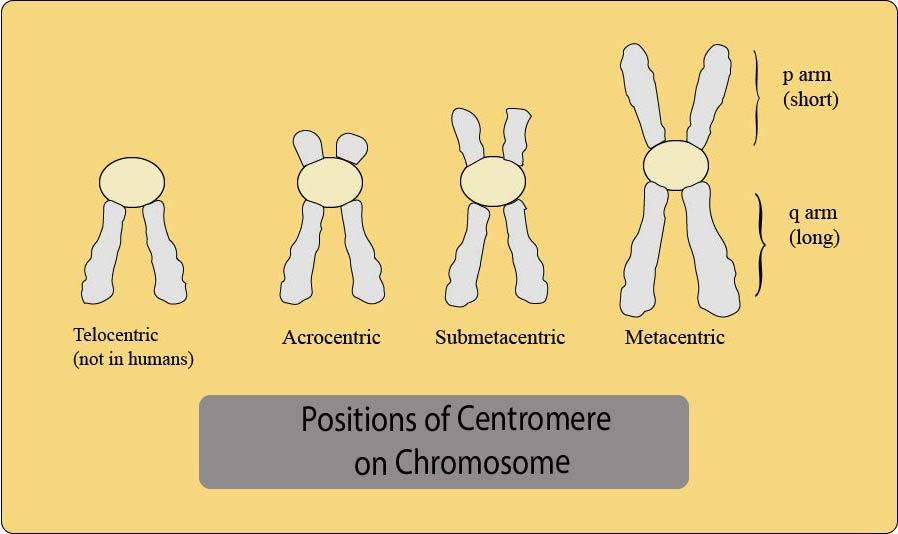
The centromere is the region where two sister chromatids of a chromosome appear to be joined or held together during mitotic metaphase. When chromosomes are stained they typically show a dark sustained region that is the centromere. The centromere is also known as the primary constriction. During mitosis, the centromere that’s shared by the sister chromatids must divide in order that the chromatids can migrate to opposite poles of the cell. On the other hand, during the first mitotic division, the centromere of sister chromatids must remain intact. Thus, the centromere is an important component of chromosome structure and segregation.
So, the correct answer is ‘Centromere.’
Additional Information:
- One chromosome has one centromere which is of size varying from 200bp to 40kb composed of repetitive DNA sequences.
- Based on the position of the centromere chromosome is classified into four types:
Telocentric
Acrocentric
Sub-Metacentric
Metacentric
- Each chromosome in karyotype is divided into two regions or arm p and q separated by a centromere.
- Arm p and q are divided into numbered bands and interband regions based on the pattern of staining. - Telomeres are chromosome tips having repeated sequences and act as a sort of biological clock and this part is being whittled down at each mitosis.
Note:
- Homologous chromosomes are made from sister chromatids joined at the centromere.
- The discs of protein kinetochore serve as points of attachment for microtubules that move the chromosome during cell division.
- Chromosomes exist in two different states before DNA replication, chromosomes have one chromatid after DNA replication chromosomes have two sister chromatids held together at the centromere.
Complete step by step answer:
The centromere is the region where two sister chromatids of a chromosome appear to be joined or held together during mitotic metaphase. When chromosomes are stained they typically show a dark sustained region that is the centromere. The centromere is also known as the primary constriction. During mitosis, the centromere that’s shared by the sister chromatids must divide in order that the chromatids can migrate to opposite poles of the cell. On the other hand, during the first mitotic division, the centromere of sister chromatids must remain intact. Thus, the centromere is an important component of chromosome structure and segregation.
So, the correct answer is ‘Centromere.’
Additional Information:
- One chromosome has one centromere which is of size varying from 200bp to 40kb composed of repetitive DNA sequences.
- Based on the position of the centromere chromosome is classified into four types:
Telocentric
Acrocentric
Sub-Metacentric
Metacentric
- Each chromosome in karyotype is divided into two regions or arm p and q separated by a centromere.
- Arm p and q are divided into numbered bands and interband regions based on the pattern of staining. - Telomeres are chromosome tips having repeated sequences and act as a sort of biological clock and this part is being whittled down at each mitosis.
Note:
- Homologous chromosomes are made from sister chromatids joined at the centromere.
- The discs of protein kinetochore serve as points of attachment for microtubules that move the chromosome during cell division.
- Chromosomes exist in two different states before DNA replication, chromosomes have one chromatid after DNA replication chromosomes have two sister chromatids held together at the centromere.
Recently Updated Pages
Master Class 12 Business Studies: Engaging Questions & Answers for Success

Master Class 12 Chemistry: Engaging Questions & Answers for Success
Master Class 12 Biology: Engaging Questions & Answers for Success
Class 12 Question and Answer - Your Ultimate Solutions Guide
Master Class 11 English: Engaging Questions & Answers for Success
Master Class 11 Social Science: Engaging Questions & Answers for Success
Trending doubts
Which are the Top 10 Largest Countries of the World?
Draw a labelled sketch of the human eye class 12 physics CBSE
Differentiate between homogeneous and heterogeneous class 12 chemistry CBSE
Differentiate between Pyramid of energy and pyramid class 12 biology CBSE
Why is the cell called the structural and functional class 12 biology CBSE
Draw the diagram of the pyramid of energy Explain In class 12 biology CBSE