









Global Warming: Causes, Health Risks, and the Greenhouse Effect
Global warming is the gradual increase in Earth’s average temperature due to the buildup of greenhouse gases in the atmosphere. It is mainly caused by burning fossil fuels, deforestation, industrial activity, agriculture, and urbanisation.
Global Warming Definition
Global warming refers to the gradual increase in Earth’s average temperature over a long period, mainly due to greenhouse gases released by human activities such as:
burning fossil fuels like coal, oil, and natural gas
cutting down forests
industrial emissions
agriculture
increasing energy use in cities and industries
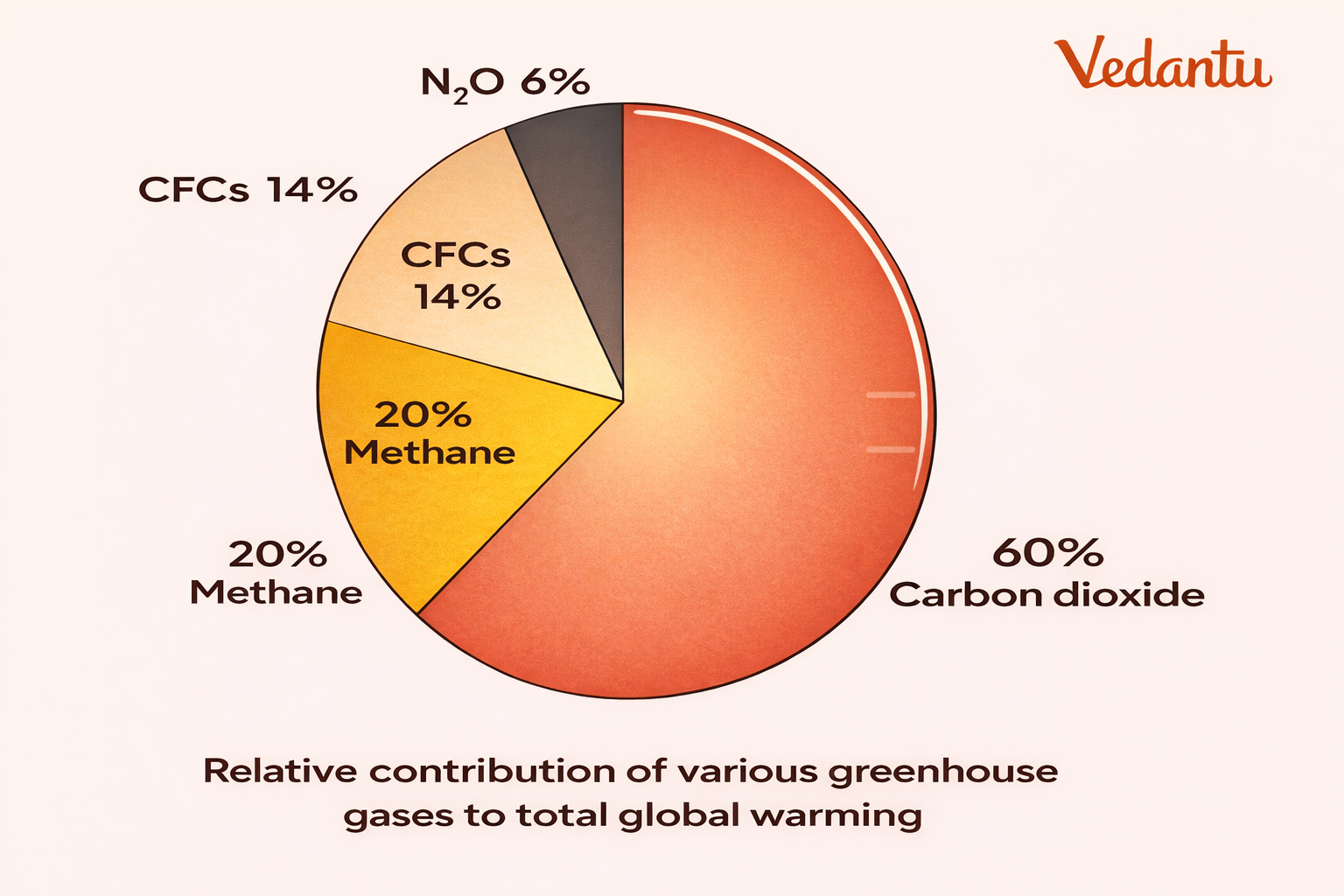
The major greenhouse gases involved are carbon dioxide (CO2), methane (CH4), and nitrous oxide (N2O). These gases strengthen the greenhouse effect and lead to global warming.
Global Warming: An Overview
Global warming is the long-term increase in the Earth’s average surface temperature. It happens mainly because of the rise in greenhouse gases in the atmosphere due to human activities such as burning fossil fuels, deforestation, industrial processes, agriculture, and rapid urbanisation. These gases trap heat and prevent part of it from escaping back into space, making the Earth warmer over time.
Global warming is one of the most important environmental topics for students because it is directly connected with climate, ecosystems, biodiversity, agriculture, weather changes, and human health.
Global Warming Diagram
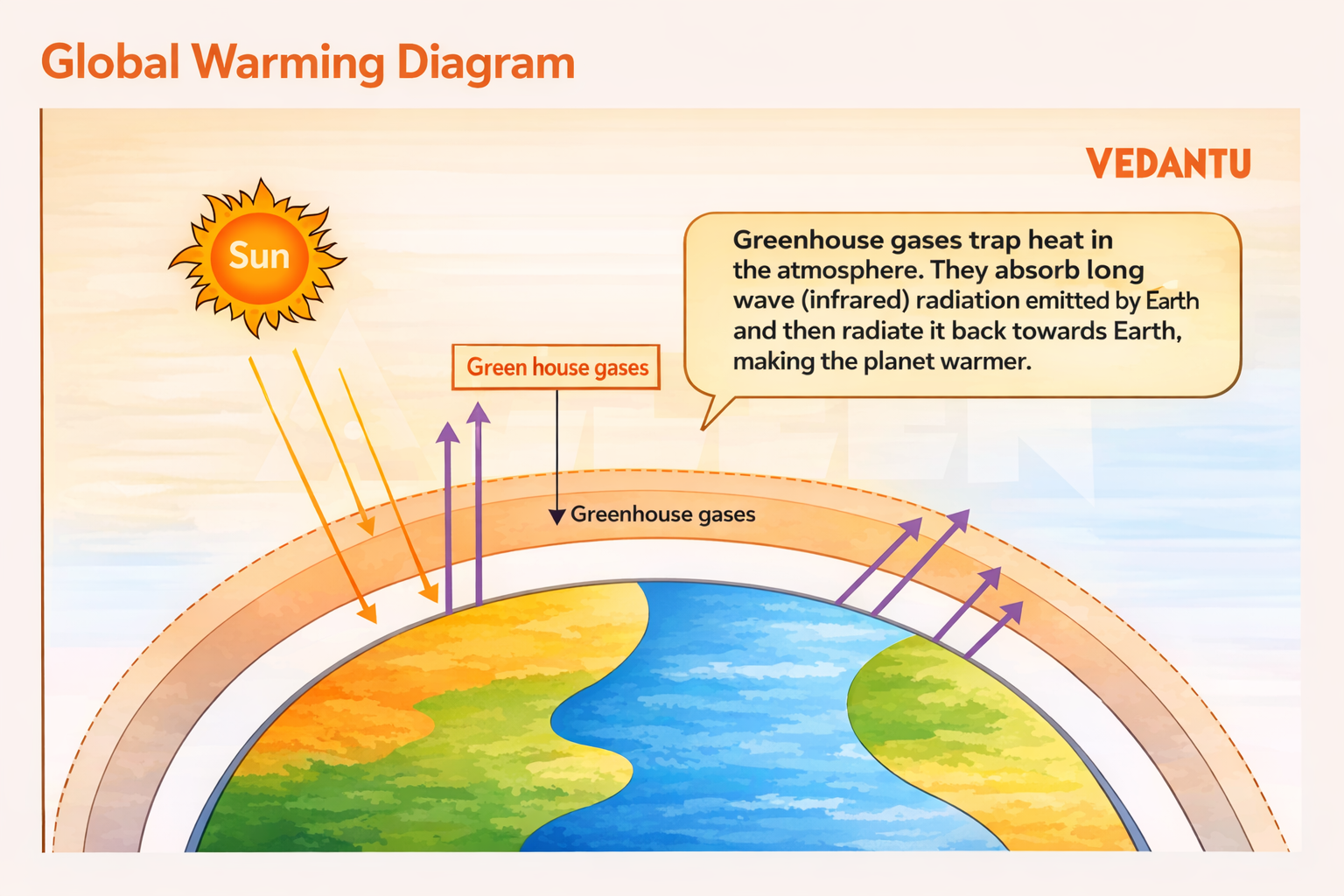
Greenhouse Effect and Global Warming
The greenhouse effect is the basic reason behind global warming.
How the Greenhouse Effect Works
The greenhouse effect is necessary for life because it keeps Earth warm enough to support living organisms. But when greenhouse gases increase beyond normal levels, the greenhouse effect becomes too strong and causes global warming.
Causes of Global Warming
The causes of global warming can be divided into two major categories:
Man-made causes
Natural causes
The current rapid increase in global temperature is mainly linked to human activities.
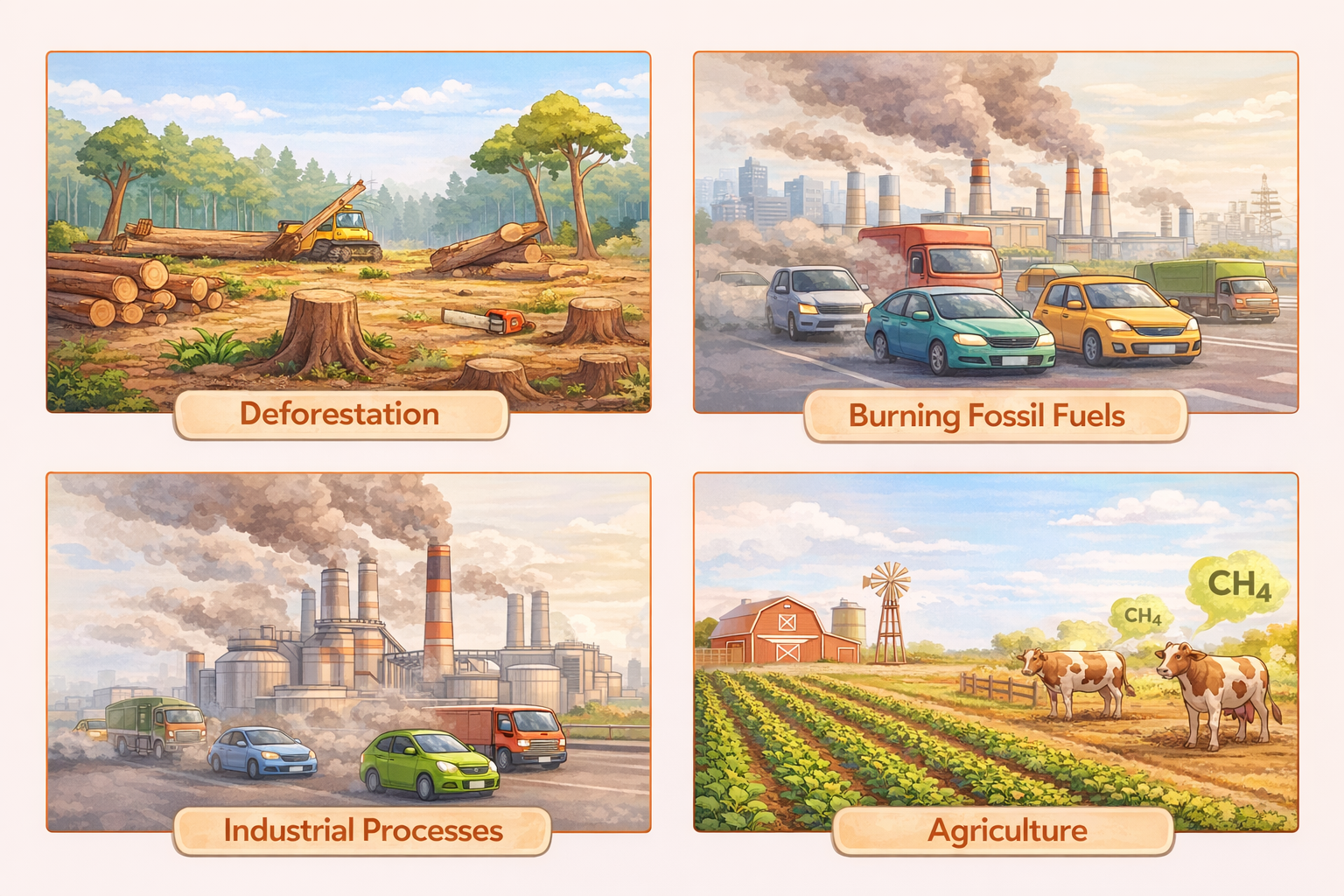
Man-Made Causes of Global Warming
1. Deforestation
Forests absorb carbon dioxide from the atmosphere and are called carbon sinks. When forests are cut down:
fewer trees remain to absorb CO2
more carbon stays in the atmosphere
greenhouse gas concentration rises
Deforestation for agriculture, development, and urban expansion is one of the major causes of global warming.
2. Burning Fossil Fuels
Burning coal, petroleum, and natural gas for electricity, transport, and industrial use is the largest source of greenhouse gas emissions.
This releases:
carbon dioxide
methane
other pollutants
Vehicles, factories, thermal power plants, and machines all add to global warming through fossil fuel use.
3. Industrial Processes
Many industrial activities release large amounts of greenhouse gases.
Examples include:
cement production
chemical manufacturing
heavy industries
synthetic chemical production
These industrial emissions increase atmospheric greenhouse gas levels and contribute to warming.
4. Agriculture
Agriculture is also an important source of greenhouse gases.
Main Agricultural Contributors
livestock farming releases methane
rice cultivation produces methane
fertilisers release nitrous oxide
Since methane and nitrous oxide are very strong greenhouse gases, agriculture has a major role in global warming.
5. Industrialisation and Urbanisation
Rapid industrial growth and city expansion increase:
energy demand
electricity use
construction activity
transport emissions
fossil fuel consumption
Urbanisation also reduces green cover and increases pollution, making it another major cause of global warming.
Natural Causes of Global Warming
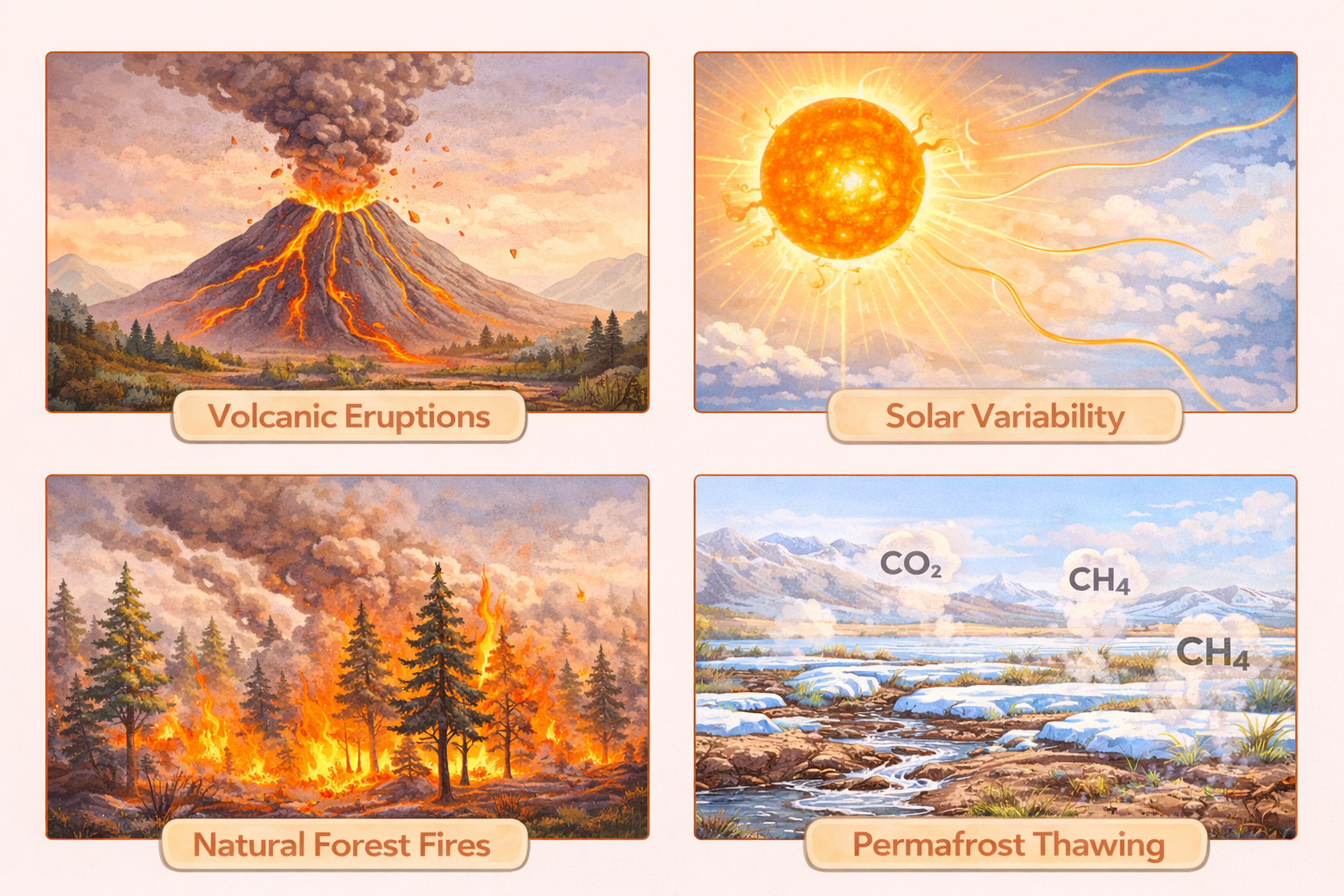
Natural factors can also affect Earth’s climate, but their contribution to current global warming is much smaller than human causes.
1. Solar Variability
The energy coming from the Sun changes slightly over long time periods. These changes can influence Earth’s climate patterns to some extent, but they are not the main reason behind present-day global warming.
2. Volcanic Activity
Volcanic eruptions release:
ash
sulphur dioxide
gases and particles
These substances may reflect sunlight and can sometimes cool the Earth temporarily. So volcanic activity does affect climate, but its long-term role in global warming is small compared with human emissions.
3. Natural Greenhouse Gas Emissions
Natural events such as:
volcanic eruptions
wildfires
decomposition of organic matter
also release greenhouse gases like CO2, CH4, and N2O.
However, these emissions are usually balanced by natural absorption through:
photosynthesis
ocean uptake
ecological cycles
That is why natural emissions alone do not explain the rapid warming observed today.
Causes of Global Warming at a Glance
Effects of Global Warming
Global warming has serious effects on climate, ecosystems, water, biodiversity, and human life.
1. Rising Temperatures
The most direct effect of global warming is the increase in global temperature.
This causes:
more frequent heat waves
hotter summers
increased health risks
greater stress on water and agriculture
Elderly people and those with existing health conditions are especially affected.
2. Melting Ice Caps and Glaciers
As temperatures rise, glaciers and ice caps melt faster.
This leads to:
loss of polar ice
habitat loss for animals such as polar bears
increased contribution to sea level rise
disturbance in cold-region ecosystems
3. Sea Level Rise
Sea level rises due to:
melting glaciers and polar ice
expansion of seawater as it warms
This creates serious problems for coastal areas, such as:
flooding
erosion
Saltwater entering freshwater supplies
movement of coastal populations
Sea level rise is one of the most dangerous long-term effects of global warming.
4. Extreme Weather Events
Global warming increases the frequency and intensity of extreme events such as:
hurricanes
droughts
wildfires
heavy rainfall
storms
heat waves
These events damage infrastructure, crops, habitats, and human lives.
5. Changes in Precipitation Patterns
Global warming changes rainfall patterns across regions.
As a result:
some areas get heavy rain and floods
some areas suffer long droughts
landslides become more common
agriculture and water supply are affected
food security becomes weaker
6. Loss of Biodiversity
Climate change disturbs habitats and affects ecosystems.
It changes:
migration patterns
breeding cycles
flowering seasons
food chains
species survival
Many species are already facing decline or extinction because of habitat loss and changing climate conditions.
7. Health Risks
Global warming increases many health problems, including:
heat-related illnesses
breathing problems due to air pollution
spread of diseases like malaria and dengue
nutritional stress due to food shortages
disaster-related trauma and stress
Children, elderly people, and vulnerable communities are often affected the most.
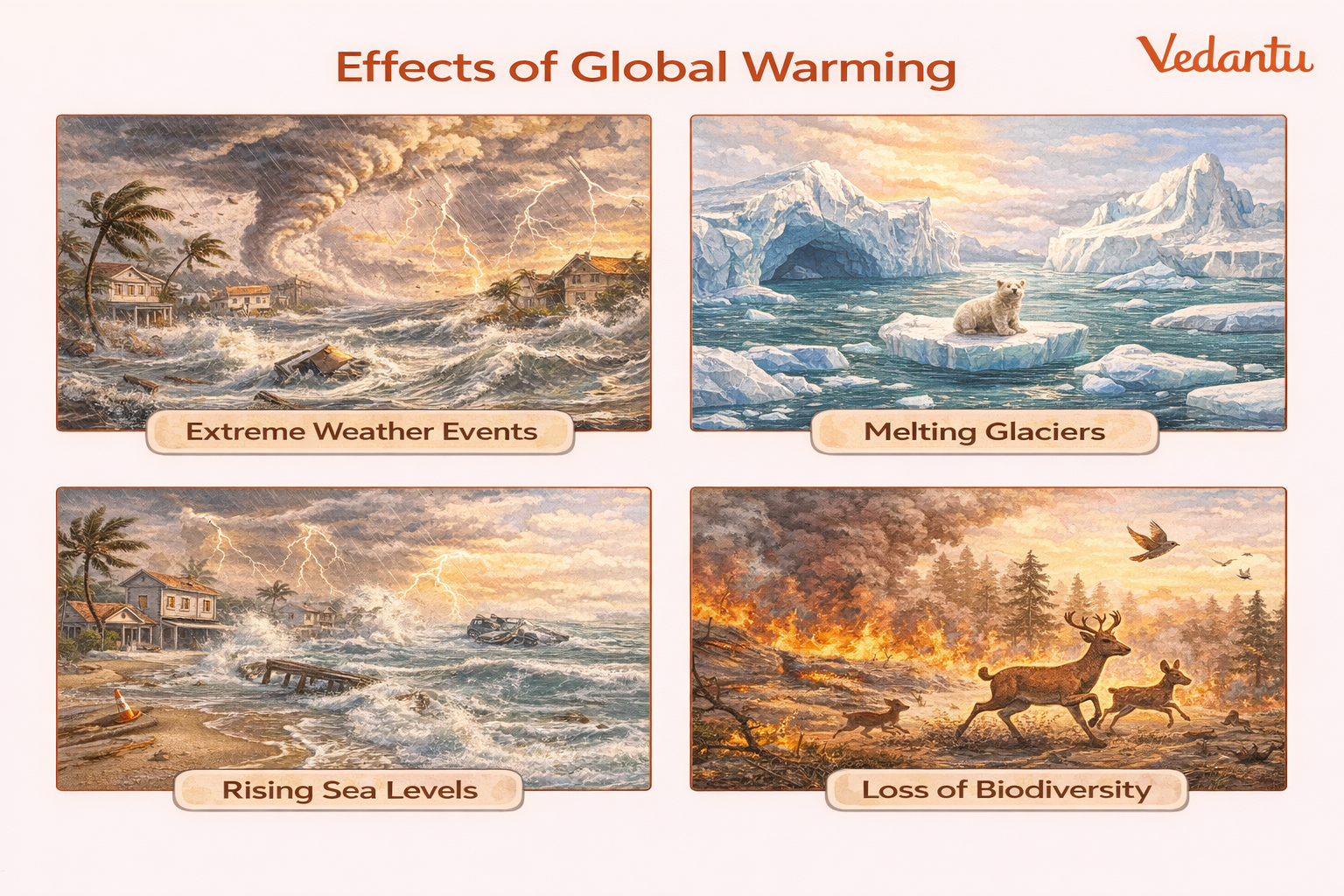
Effects of Global Warming Table
Difference Between Global Warming and Climate Change
Global warming is the increase in temperature, while climate change includes the larger changes caused by that warming.
How to Reduce Global Warming?
A stronger student-friendly page should also include solutions.
Ways to Reduce Global Warming
reduce fossil fuel use
switch to solar and wind energy
stop deforestation
plant more trees
use public transport
save electricity
use energy-efficient devices
control industrial emissions
improve waste management
adopt climate-friendly farming
These steps can reduce greenhouse gas emissions and help slow global warming.
Important Points to Remember
Global warming is the long-term rise in Earth’s average temperature.
It is mainly caused by greenhouse gases in the atmosphere.
CO2, CH4, and N2O are important greenhouse gases.
Human activities are the main reason behind present warming.
Deforestation and fossil fuels are major causes.
Effects include melting glaciers, sea level rise, biodiversity loss, and extreme weather.
Global warming is linked to the enhanced greenhouse effect.
Also Read – Related Topics
Conclusion
Global warming is the gradual increase in Earth’s average surface temperature caused mainly by the rise in greenhouse gases in the atmosphere. Human activities such as burning fossil fuels, deforestation, industrialisation, and agriculture are the main drivers of this problem.
Its effects include rising temperatures, glacier melting, sea level rise, biodiversity loss, changing rainfall, extreme weather, and health risks. Understanding global warming is important for exams as well as for developing awareness about one of the biggest environmental challenges in the world.
FAQs on Global Warming: Definition, Causes and Effects
1. What is global warming in simple words?
Global warming is the gradual increase in Earth’s temperature due to greenhouse gases trapping more heat in the atmosphere.
2. What are the main causes of global warming?
The main causes are burning fossil fuels, deforestation, industrial processes, agriculture, and urbanisation.
3. Which gases are mainly responsible for global warming?
The main greenhouse gases are carbon dioxide, methane, and nitrous oxide.
4. What is the greenhouse effect?
The greenhouse effect is the process in which gases in the atmosphere trap heat and keep Earth warm.
5. What are the major effects of global warming?
Major effects include rising temperatures, glacier melting, sea level rise, biodiversity loss, extreme weather, and health risks.
6. Is global warming caused only by humans?
Natural causes also affect climate, but present global warming is mainly driven by human activities.
7. How does global warming affect biodiversity?
It changes habitats, migration, breeding cycles, and can push many species toward extinction.
8. How does global warming affect human health?
It increases heat illness, air pollution problems, and the spread of diseases like malaria and dengue.
9. Why is sea level rise linked to global warming?
Because glaciers melt and ocean water expands when temperature increases.
10. How can we reduce global warming?
We can reduce it by using clean energy, planting trees, reducing pollution, and saving energy.
