








What Is the Difference Between Habitat and Ecological Niche for NEET?
The concept of ecological niche is essential in biology and helps explain real-world ecological processes and NEET exam-level questions effectively. A deep understanding of ecological niche is key for cracking questions on species, habitat, adaptation, and competition in NEET 2027 and beyond.
Understanding Ecological Niche
Ecological niche refers to the functional role or “profession” of a species within its ecosystem. It encompasses how a species uses resources, its habitat, feeding habits, and interactions with other organisms. This concept is important in areas like species distribution, niche vs habitat clarification, and understanding competition and adaptation.
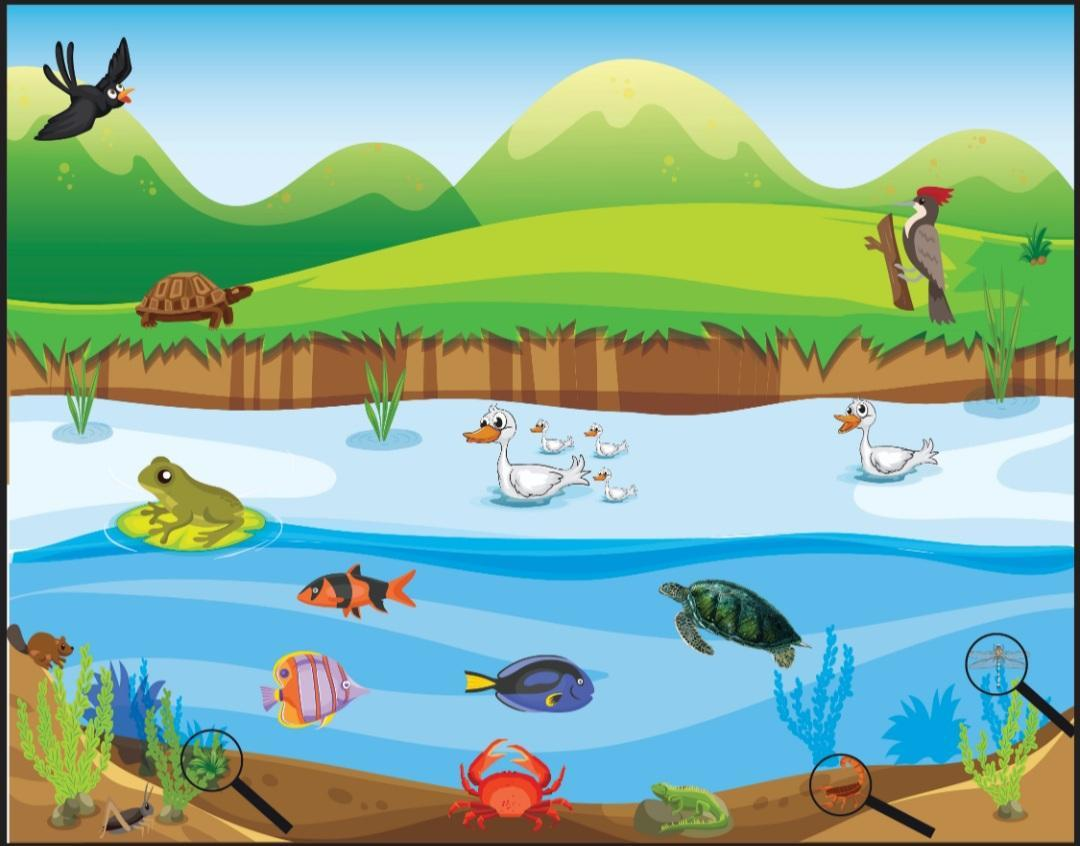
Here’s a helpful table to understand ecological niche, and difference from habitat, better:
Ecological Niche vs Habitat Table
| Aspect | Habitat | Ecological Niche |
|---|---|---|
| Meaning | Address – where a species lives | Profession – the role, lifestyle, & interactions of the species in ecosystem |
| Scope | Physical/Geographical Area | Includes habitat, food, time of activity, and relationships |
| Example | Pond (habitat of frog) | Frog as predator of insects, prey to snakes – its niche |
| Exam Trap | Confusing microhabitat with niche | Forgetting function includes interactions |
Types of Ecological Niche
- Spatial (Habitat) Niche: Where a species lives (e.g., owl hunts at night, eagle hunts by day in same forest).
- Trophic Niche: The species’ feeding role or position in food web (e.g., primary consumer vs secondary consumer in a pond).
- Hypervolume Niche: As per Hutchinson’s concept, it’s the n-dimensional space of environmental factors affecting survival of a species (temperature, humidity, pH, etc.).
Habitat vs Ecological Niche (Exam Focus)
In NEET MCQs, always remember: Habitat is “address”, niche is “profession.” For instance, two birds can share the same tree (habitat) but feed on different insects and seeds, and thus occupy different ecological niches.
Previous Years’ NEET-Style Questions
- Q1. Which statement best defines ecological niche?
(A) The place where an organism lives
(B) The role and position a species has in its environment
(C) The food preferences of an organism
(D) The geographical area a population occupies
Answer: (B) - Q2. No two species can occupy exactly the same ecological niche in the same habitat. This is known as:
(A) Gause’s principle
(B) Allen’s rule
(C) Adaptive radiation
(D) Biogeography
Answer: (A) - Q3. In a pond, two fish live in the same area but eat different foods. This illustrates:
(A) Habitat partitioning
(B) Niche differentiation
(C) Food chain length
(D) Sympatric speciation
Answer: (B)
Mnemonic & Diagram for Niche
Mnemonic: Niche = Needs & Interactions Create Habitat Engagement. Also, think of “Niche as Profession, Habitat as Address” for instant recall in MCQs. Refer to the diagram above for Hutchinson’s niche hypervolume concept.
Common Mistakes to Avoid
- Confusing ecological niche with just habitat – remember, niche includes food, activity, and relationships.
- Forgetting no two species have identical ecological niches in the same ecosystem.
- Ignoring key words like “role” and “function” in exam questions on ecological niche.
Real-World Applications
The concept of ecological niche helps explain biodiversity, survival strategies, adaptation, and species conservation. In medical research, agriculture, and environmental science, understanding niches is vital for sustaining ecosystems. Vedantu connects NEET topics like this to real-life—helping students visualize exam concepts practically.
In this article, we explored ecological niche, its definition, types, the all-important niche vs habitat difference, PYQ practice, and real-life relevance. To boost your NEET Biology confidence, keep strengthening your concepts and practice with Vedantu.
Related NEET-Biology Concept Links
- Biotic and Abiotic – Connects niche to ecosystem factors.
- Ecosystem – Provides context in which ecological niches exist.
- Types of Relationships Between Organisms – Explores how niches involve feeding and interaction strategies.
- Habitat – Understand the “address” aspect, and how it compares to niche.
- Animal Adaptations – See how adaptations are linked to niche occupation.
- Ecological Succession – Learn how niches can change over time.
- Biodiversity and Conservation MCQs – Practice NEET questions where niche and habitat play key roles.
- Our Environment – Explore niche/habitat in a broader environment context.
- Difference Between Environment and Ecosystem – Supports clarity for assertion-reason/matrix NEET questions.
- Adaptation and Habitats – Direct link between adaptation, niche, and survival in NEET exam context.
FAQs on Ecological Niche: Meaning, Types, and Differences Explained
1. What is ecological niche in NEET?
An ecological niche in NEET refers to the functional role that a species plays within its ecosystem, encompassing its habitat, the resources it uses, and its interactions with other organisms. It highlights how a species fits and survives in its environment, differentiating it from just the place it lives, or habitat. Understanding this concept is vital for answering NEET questions that ask about species roles and ecosystem dynamics.
2. How to memorize the difference between habitat and niche quickly?
To quickly memorize the difference: think of the habitat as the address where an organism lives, while the niche is its profession or role in the ecosystem. The habitat is the physical place such as a forest or pond, and the niche includes how the organism obtains food, its behavior, and interactions. Using this analogy helps avoid confusion and is frequently tested in NEET MCQs.
3. Can one species have more than one niche?
Generally, one species has a single specific ecological niche that defines its role in an ecosystem. However, depending on environmental conditions or life stages, a species might occupy slightly different niches (called niche plasticity). But for NEET-level understanding, treat ecological niche as unique per species to avoid confusion in exam questions.
4. What are the types of ecological niche with examples?
There are three main types of ecological niches:
1. Spatial (Habitat) Niche – the physical space occupied, e.g., different species of millipedes living under various parts of a fallen log.
2. Trophic Niche – role related to feeding habits, e.g., aquatic birds like Notonecta as predators and Corixa feeding on decaying matter.
3. Hypervolume Niche – based on multiple environmental factors like temperature and humidity, represented as an n-dimensional space (Hutchinson’s concept).
5. Why are ecological niche questions important for NEET?
Ecological niche questions are important in NEET because they test understanding of basic ecology concepts critical to biodiversity, species interactions, and ecosystem stability. Knowing the niche helps differentiate similar terms like habitat, supports answering assertion-reason and MCQs accurately, and is frequently linked with other ecology topics in the syllabus.
6. Why do most students confuse niche and habitat in MCQs?
Students often confuse niche and habitat because both relate to where an organism lives, but the key difference is that habitat is the physical location (‘address’), while niche is the species' functional role or ‘profession’ in the ecosystem. Misunderstanding this causes errors in NEET MCQs and assertion-based questions where subtle distinctions are tested.
7. How do I ensure I use the right examples for niche in the NEET exam?
To use correct examples for ecological niche in NEET:
• Focus on examples highlighting the species’ role or function, not just location.
• Use classic examples like the Galapagos finches (different beak types for feeding niches) or the aquatic birds Notonecta and Corixa (different feeding strategies).
• Avoid mixing examples of habitat with niche roles to maintain clarity.
8. What are common mistakes made in “types of niche” questions?
Common mistakes in “types of niche” questions include:
• Confusing the spatial (habitat) niche with the trophic niche.
• Mixing up fundamental vs realized niches.
• Using irrelevant or vague examples.
• Overlooking the hypervolume concept (multidimensional environmental factors).
Understanding definitions and memorizing typical examples help avoid these pitfalls.
9. How can I quickly sketch a niche diagram for visual MCQs?
To quickly sketch a simple ecological niche diagram for NEET:
• Draw a box or oval representing the habitat (spatial niche).
• Inside, indicate the species’ role (e.g., feeding arrows pointing to food sources).
• Show overlapping niches to explain segregation or competition.
• Label components clearly: habitat, niche, trophic level.
This quick sketch reinforces visual memory and aids in diagram-based MCQs.
10. Do NEET examiners set traps using “niche” in assertion-reason questions?
Yes, NEET examiners often design assertion-reason questions that test subtle distinctions between niche and related terms like habitat or fundamental vs realized niche. Trap questions may include reversed definitions, confusing examples, or roles. Careful reading and understanding of syllabus-defined terms is essential to avoid being misled.
11. What is the difference between fundamental niche and realized niche?
The fundamental niche is the entire set of environmental conditions under which a species can survive and reproduce without competition, while the realized niche is the actual conditions and functions the species occupies when competition and other biotic pressures are present. NEET questions often require knowing this distinction to explain species distribution and competition.
12. How does niche segregation help species coexist in the same habitat?
Niche segregation reduces competition among species by allowing them to occupy different roles or use different resources within the same habitat. This separation can be spatial, trophic, or temporal, enabling multiple species to coexist efficiently and maintaining biodiversity. This concept is frequently applied in NEET ecology questions on community interactions.
