



Gifts of Grace: Honouring Our Vocations Class 9 English Chapter 2 Solutions
Reflect and Respond (Page 57)
I. Given below are four riddles. Read and identify who these people are.
1. In furrows deep, secrets I sow, as time passes, I watch them grow.
Who am I? __________.
Answer: Farmer
2. From wheel to kiln, my skill is born; step by step, an art takes form.
Who am I? __________.
Answer: Potter
3. I lay foundations, brick by brick, to build a house; it’s me you pick.
Who am I? __________.
Answer: Mason (builder)
4. I work with pots, pans, and spice, creating dishes that taste so nice.
Who am I? __________.
Answer: Cook (chef)
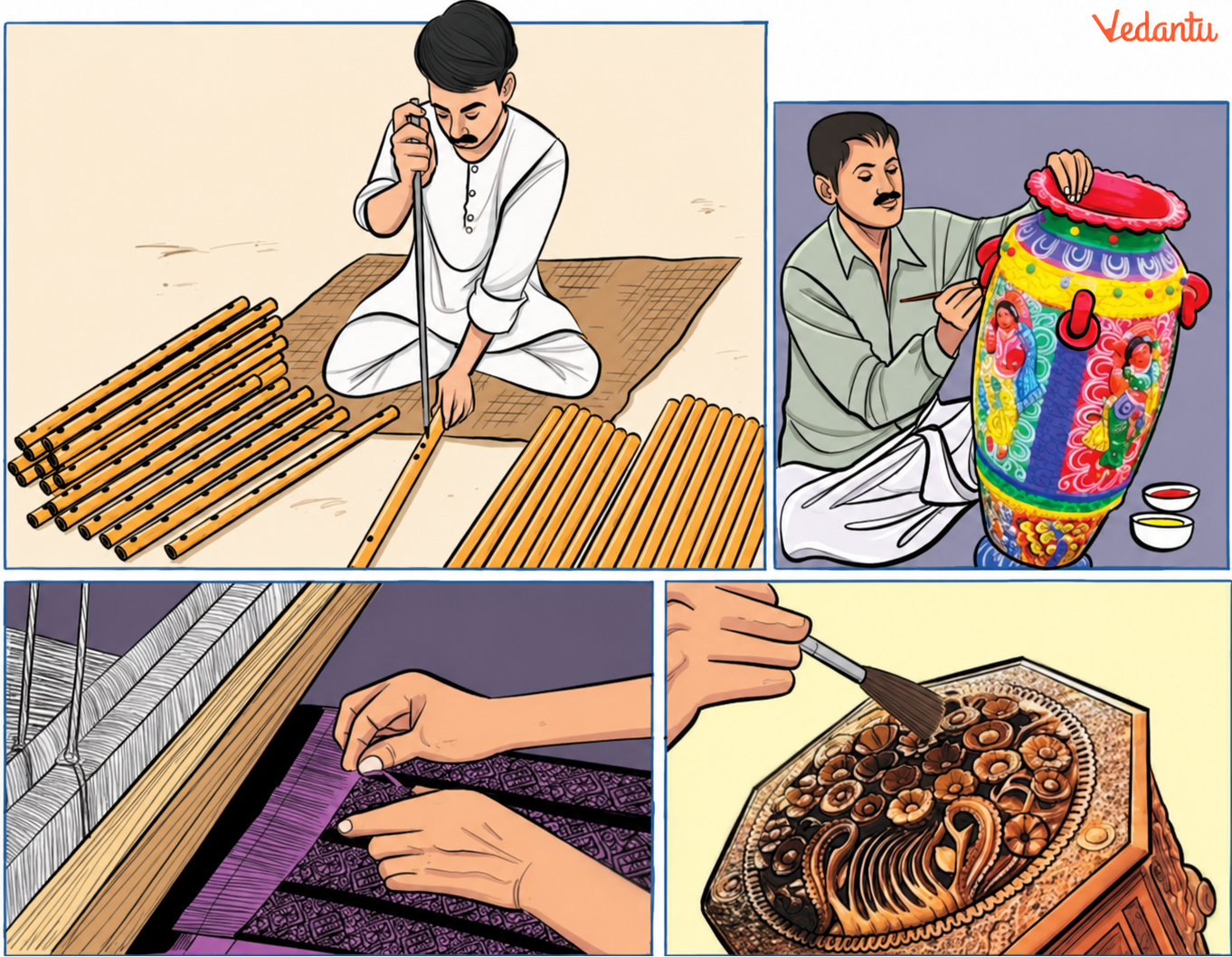
II. What is the role and relevance of the people you identified in the riddles? How do they contribute to society? Discuss with your classmates and teacher.
Answer:
Farmers grow crops such as grains, vegetables, and fruits that provide food for society. Their work helps maintain a regular food supply and supports the basic needs of people.
Potters make useful objects such as pots, utensils, and containers from clay. They also create decorative items that preserve traditional art and craftsmanship.
Masons construct houses, schools, roads, and other structures. Their skills help create the buildings and infrastructure needed for communities to function.
Cooks prepare meals from different ingredients and make food suitable for people to eat. Their work supports our daily needs while also keeping food traditions and flavours alive.
Check Your Understanding (Pages 60-61)
I. Based on your understanding of the poem, state whether the following statements are true or false. Also, rectify the false statements.
1. The poem highlights the skilled work of craftspeople.
Answer: True. The poem appreciates the skill of craftspeople and describes how they use colours, patterns, and creativity in their work.
2. The poet shares that musicians express emotions through their instruments.
Answer: True. The poem refers to artisans playing instruments such as the lute, showing how music becomes a way of expressing their feelings.
3. The carpenters in the poem are admired for their logical work.
Answer: True. The carpenters are appreciated for their careful and precise work, particularly the accuracy with which they take and use measurements.
4. The electricians in the poem are recognised for their crucial role in lighting up lives.
Answer: True. The poem highlights the important work of electricians who handle wiring, repair electrical problems, and help bring light into people’s lives.
5. The poem pays homage to shoemakers who manufacture quality footwear.
Answer: True. The poet appreciates shoemakers for creating good-quality footwear that enables people to walk, dance, run, and move comfortably.
6. The poem celebrates the patriotism of the people of Bharat.
Answer: False. The poem celebrates the different vocations and the valuable work people perform for the growth and development of Bharat.
7. The poet feels that each vocation deserves to be respected.
Answer: True. The poem shows that every vocation has its own value and contribution and therefore deserves appreciation and respect.
II. Let us appreciate the poem.
Rhyme Scheme is the pattern of rhymes at the end of each line in a poem. It is usually marked with letters (A, B, C, etc.). Lines that rhyme get the same letter.
Example:
The sky is blue. (A)
I think of you. (A)
The stars above. (B)
Are filled with love. (B)
The way lines are arranged and broken in a poem is called Lineation. It controls rhythm, emphasis, and meaning.
Example:
She stood there
quiet
but strong.
1. Rhyme Scheme and Lineation
(i) Does the poem strictly adhere to a rhyme scheme, or is it in free verse?
Answer: The poem is written in free verse and does not follow a fixed or regular rhyme scheme. The ending words of the lines do not follow a consistent rhyming pattern.
(ii) What is the impact of the varying length of lines in the poem?
Answer: The different line lengths reflect the variety of occupations and activities described in the poem. This irregular structure gives the poem a natural rhythm and highlights the unique nature of each vocation.
(iii) What is the pattern in the structure of most lines of the poem?
Answer: Most lines introduce a particular artisan or worker and then describe their work, skills, or feelings towards their vocation. This pattern helps the poet give importance to each worker and their contribution.
2. Speaker
(i) Who appears to be the speaker and what is her/his role here?
Answer: The speaker appears to be an observer who notices and appreciates the different people working across Bharat. The speaker’s role is to celebrate their occupations and show how every vocation contributes to society.
3. Tone and Mood
(i) Fill in the blanks with suitable options from the box given below.
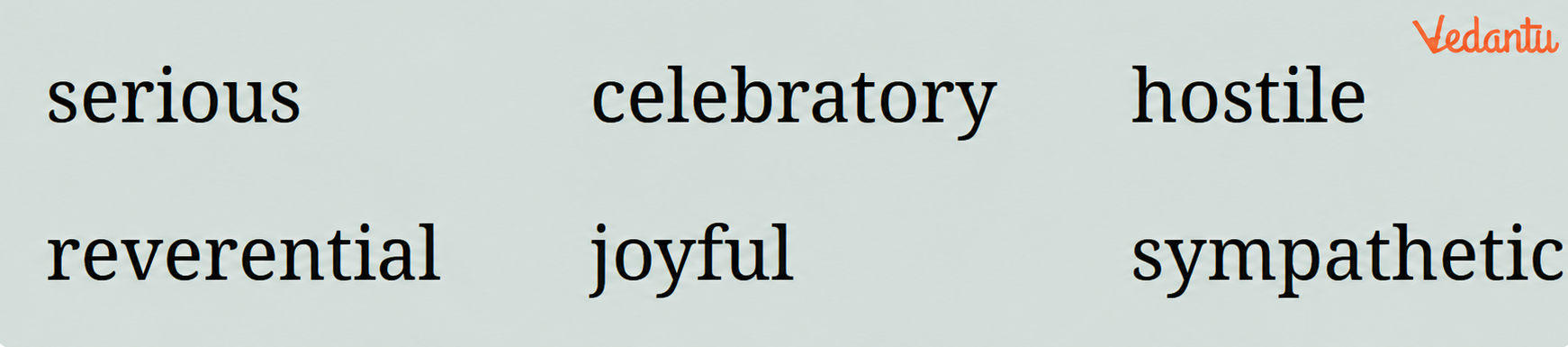
A. The tone is __________ and __________ , depicting a sense of admiration and respect for the artisans and craftspersons.
B. There is a __________ mood throughout the poem, capturing the vibrancy and richness of cultural traditions and skills.
Answer:
A. serious, reverential
B. joyful
Reverential means showing deep respect and admiration.
4. Imagery is a literary device that uses descriptive language to create vivid pictures in the reader’s mind. It appeals to our senses-sight, sound, touch, taste, and smell-so that writing feels more real and engaging.
Example: The golden sun melts into the quiet sea.
(i) Select any two descriptions from the poem that evoke visual images.
Answer:
Two descriptions that create visual images are:
“craft woven with colours and myriad hues”
“the boatmen gathering their nets from the shore”
(ii) Fill in the blanks with suitable phrases.
The poem includes auditory imagery through mentions of artisans with lutes, __________ , and __________ , emphasising the sounds associated with each vocation.
Answer: humming, singing
5. A metaphor is a figure of speech where one thing is described as if it were another, to highlight similarities and create vivid meaning. Unlike a simile (which uses like or as), a metaphor makes a direct comparison.
Example: Time is a thief.
Metaphor:
(i) State whether the following sentence is true or false.
The mention of ‘delicious singing’ of the cook is a metaphor because it implies that the quality of the singing is so enjoyable or pleasing that it can be equated to the experience of tasting something delicious.
Answer: True. “Delicious singing” is a metaphor because the poet describes a sound using a quality usually associated with taste, making the singing seem especially pleasant.
6. Personification is a figure of speech in which non-human things are given human qualities, feelings, or actions. Writers use it to make descriptions more vivid and relatable.
Example: The wind whispered.
Personification
(i) Select the line that tells us that the poet personifies vocations by attributing humanlike qualities to them.
Answer: The line “I hear Bharat celebrating” personifies Bharat by giving the nation the human ability to celebrate.
7. Repetition is a literary device and rhetorical technique where words, phrases, or structures are used more than once to create emphasis, rhythm, or clarity. Writers and speakers use repetition to make ideas memorable and powerful.
Example: We will rise, we will rise, we will rise again.
Repetition
(i) Why might the poet have begun and ended with the same line ‘I hear Bharat celebrating, the varied vocations I hear!’?
Answer: The repeated line strengthens the central message of the poem. It emphasises that the diverse occupations of people together form a celebration of Bharat and creates unity between the beginning and ending of the poem.
8. Alliteration is a literary device where the same consonant sound is repeated at the beginning of nearby words. It creates rhythm, musicality, and makes phrases more memorable. Importantly, it’s about the sound, not just the letter.
Example: Busy bees buzzed brightly.
Alliteration
(i) Identify two examples of alliteration from the poem.
Answer: Two examples of alliteration are “craft” and “colours” and “work with” and “wires.” The repeated beginning sounds add rhythm and musical quality to the poem.
9. Symbolism is a literary device where an object, character, or event represents a deeper meaning beyond its literal sense. Writers use symbols to add layers of meaning, making their work richer and more thought-provoking.
Example: The flag fluttered high.
Symbolism
(i) Each vocation in the poem symbolises something more than just a job. What does it symbolise?
Answer: Each vocation represents the worker’s identity, skill, dignity, and contribution to society. Together, these occupations symbolise the diversity, unity, and hardworking spirit of Bharat.
Critical Reflection (Pages 62-63)
I. Read the extract given below and answer the questions that follow.
The shoemakers affirming the quality of their work, for the feet that walk, dance, run, jump, return home.
The delicious singing of the cook, or the rhythm of the designer, mason, each celebrating what belongs to them and to none else,
Question 1. The poet says that the shoemakers ‘affirm’ the quality of their work. What does ‘affirm’ refer to here?
(i) to make adjustments in
(ii) to declare with confidence
(iii) to label the goods
(iv) to justify the efforts
Answer: (ii) to declare with confidence
Question 2. What do quality shoes help with, according to the poet?
Answer: Quality shoes help people comfortably walk, dance, run, jump, and return home.
Question 3. What does ‘return home’ symbolise besides the literal act of returning?
Answer: “Return home” can symbolise reaching a place of safety, comfort, rest, and belonging after completing the day’s activities.
Question 4. Identify the phrase that tells us that every worker’s contribution is distinct.
Answer: The phrase is “Each celebrating what belongs to them and to none else.”
Question 5. Complete the following with suitable words. …for the feet that walk, dance, run, jump, return home refers to __________ .
Answer: It refers to the shoemakers who make quality footwear for people to walk, dance, run, jump, and move comfortably.
II. Answer the following questions.
Question 1. Why does the poet say, ‘I hear Bharat celebrating, the varied vocations I hear’?
Answer: The poet says this because the different workers perform their duties with skill, pride, and enthusiasm. Their varied contributions together create a sense of celebration across Bharat.
Question 2. What does the electrician ‘humming’ while getting ready for work suggest?
Answer: The electrician humming suggests that the person approaches the work with happiness, enthusiasm, and a positive attitude.
Question 3. Explain the significance of the line, ‘The voice of their vocation is the voice of their identity.’
Answer: The line means that a person’s vocation reflects their skills, abilities, dedication, and sense of self. Their work becomes an important part of how they express their identity.
Question 4. Do you think the role of all the people belonging to different vocations is important in our daily lives? Support your answer with a reason.
Answer: Yes, every vocation is important because different workers provide services and products that make our daily lives easier. Farmers provide food, builders provide shelter, electricians provide essential electrical services, and many others meet important needs.
Question 5. Why is the poet celebrating all the vocations in the poem? Explain by giving examples from your context.
Answer: The poet celebrates all vocations because every occupation requires skill and contributes to society in its own way. For example, a tailor makes clothes, a carpenter creates useful furniture, and a cook prepares food. Their work deserves appreciation because society depends on such contributions.
Question 6. How does the poet use sensory imagery to bring out the beauty of everyday work?
Answer: The poet uses sounds and visual details to make everyday work vivid. Words such as “humming” and “singing” create a sense of sound, while descriptions of colours and myriad hues create visual images. These details make ordinary work appear lively and meaningful.
Vocabulary in Context (Pages 63-64)
I. People of different vocations are being described in the poem. Match the vocations given in the box below with the descriptions that follow.

1. A person who studies or grows garden plants: __________.
Answer: Horticulturist
2. A trained female community health worker: __________.
Answer: ASHA worker
3. A producer of raw silk: __________.
Answer: Sericulturist
4. A person whose job is making or selling sweets and chocolates: __________.
Answer: Confectioner
5. A metalworker who specialises in working with precious metals: __________.
Answer: Goldsmith
6. A person who fuses materials: __________.
Answer: Welder
Did you know? (Page 63)
Accredited Social Health Activist (ASHA) workers are community health workers associated with India’s public health system. They help connect communities, especially in rural areas, with essential healthcare services.
II. Identify the word from Column 2 that is not a synonym of the words given in Column 1.
Answer:
Listen and Respond (Pages 64-65)
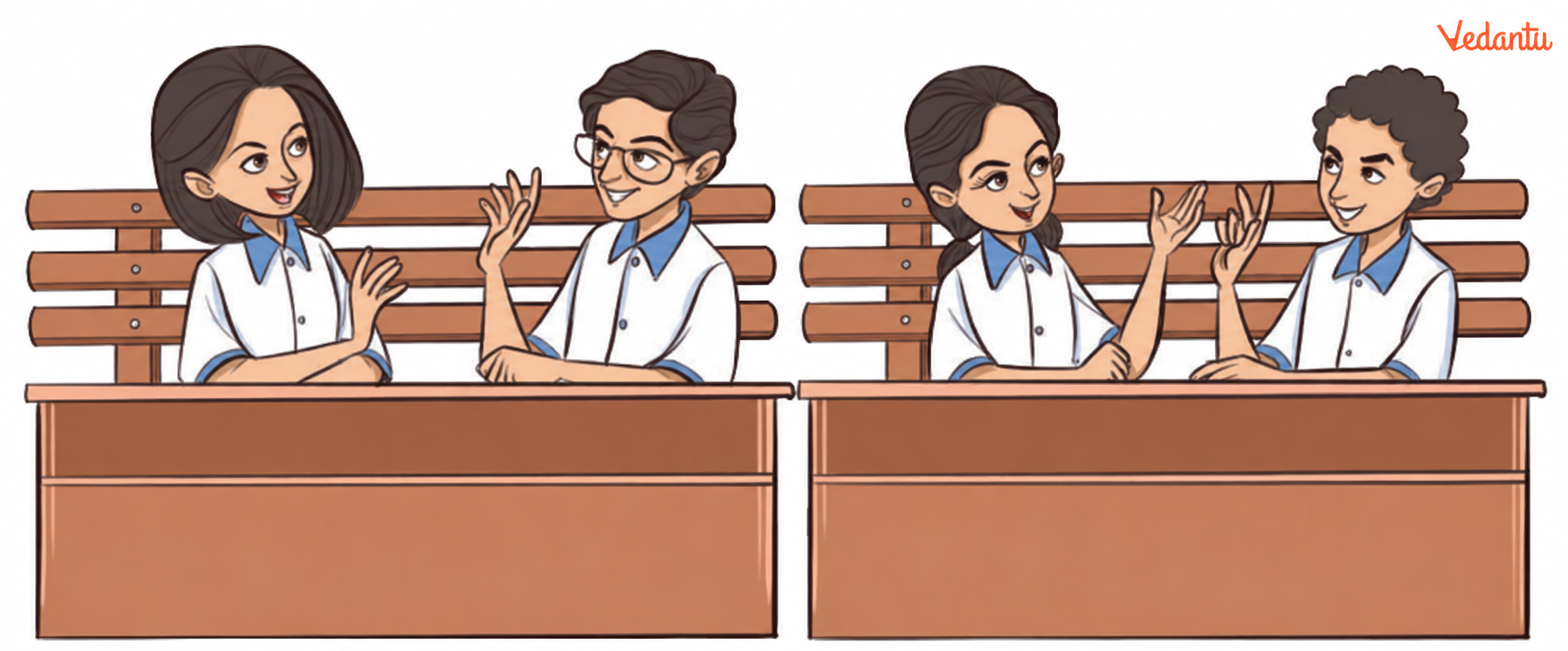
I. You will listen to two friends, a boy and a girl, discussing the occupations of their parents. As you listen, answer the following question in two to three words only. (Transcript for teacher on page 262)
What does the boy use to understand the details of the tools?
Answer: Toy cars.
II. You will listen to the girl and the boy once again. As you listen, answer the questions by selecting the correct option.
Question 1. The girl is __________ about taking food for her mother at the factory.
(i) happy
(ii) boastful
(iii) unsure
Answer: (i) happy
Question 2. The boy thinks that the job of the girl’s mother carries a lot of __________ .
(i) luck
(ii) risk
(iii) responsibility
Answer: (iii) responsibility
Question 3. The girl __________ why the boy is good at science exhibitions.
(i) wonders
(ii) questions
(iii) realises
Answer: (i) wonders
Question 4. The girl shares her __________ about joining the weekend discussion on tools.
(i) doubts
(ii) wish
(iii) ideas
Answer: (ii) wish
Speaking Activity (Page 65)
The poet speaks of several occupations in the poem.
Create groups of five. Allot the role of any five vocations that the poet talks about. Each student in the group will represent one vocation.
Each student speaks for 1-2 minutes about their vocation-who they are, what they do, where they work, what kind of experiences they have at work, what problems they face, and a message for all.
Answer:
Student 1: Hello everyone! I am a craftsperson. I create beautiful objects using different colours and designs. My work requires patience, creativity, and attention to detail. Although finding suitable materials can sometimes be difficult, I enjoy preserving traditional art. My message is to value and respect handmade work.
Student 2: Good morning! I am a chef. I prepare different kinds of meals in my kitchen using various ingredients. The work can become busy and tiring, especially during rush hours, but I enjoy creating food for others. My message is to respect the effort behind every meal.
Student 3: Hello friends! I am a fisherman. I work near the sea and use nets to catch fish. The sea can sometimes be rough and unpredictable, making my work challenging. Still, I enjoy my connection with nature. My message is to value both nature and hard work.
Student 4: Good morning, everyone! I am a mason. I build houses, walls, and other structures using bricks, cement, and other materials. My work is physically demanding, especially when I have to work outdoors. I feel proud when I see a strong structure completed. My message is to build everything with a strong foundation.
Student 5: Hello everyone! I am a shoemaker. I make footwear that helps people walk, run, dance, and move comfortably. My work requires patience and careful craftsmanship. Although working for long hours can be tiring, I take pride in producing good-quality footwear. My message is to move forward with confidence.
Writing Task (Pages 66-67)
Poster making is the art of designing a visual display that communicates a message clearly and attractively. Posters combine text and images to inform, persuade, or advertise, and they are widely used in schools, campaigns, and events.
Key Features of a Good Poster
Title/Heading – It should be short, clear, and attention-grabbing.
Message/Content – Use simple and understandable language.
Images/Illustrations – Pictures, symbols, or drawings can make the poster more attractive.
Layout – Arrange the content and visuals neatly.
Colour & Creativity – Use an appealing design to attract attention.
Brevity – Keep the message short and impactful.
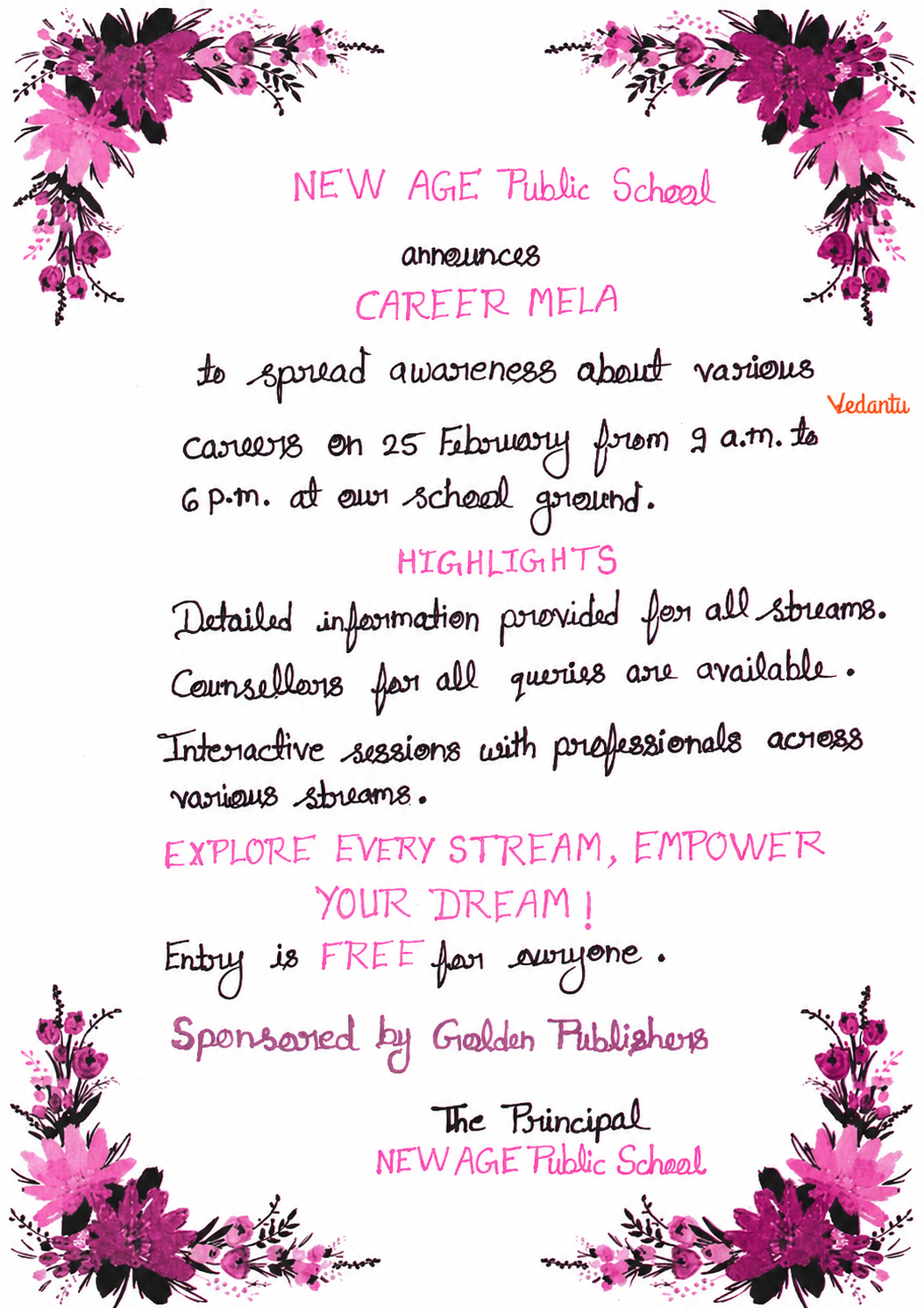
I. Your school will be organising a ‘Career Mela’ in which students are to be made familiar with the different career options. Complete the poster for the event given below.
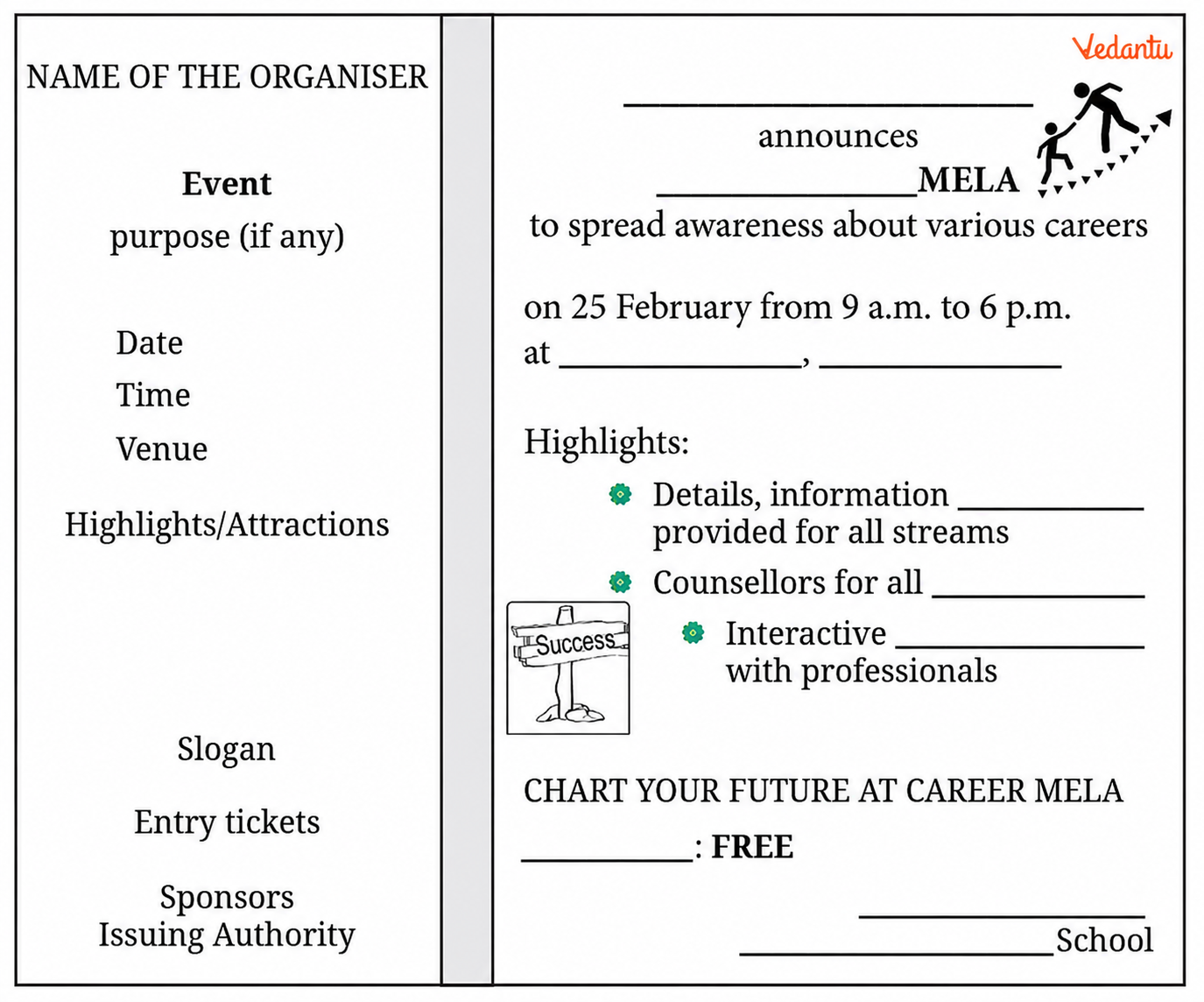
A poster is used to announce an event. It has the following features:
placed in a box
visually attractive
letters of different fonts and sizes
proportionate spacing
word limit: 50
Learning Beyond the Text (Pages 67-68)
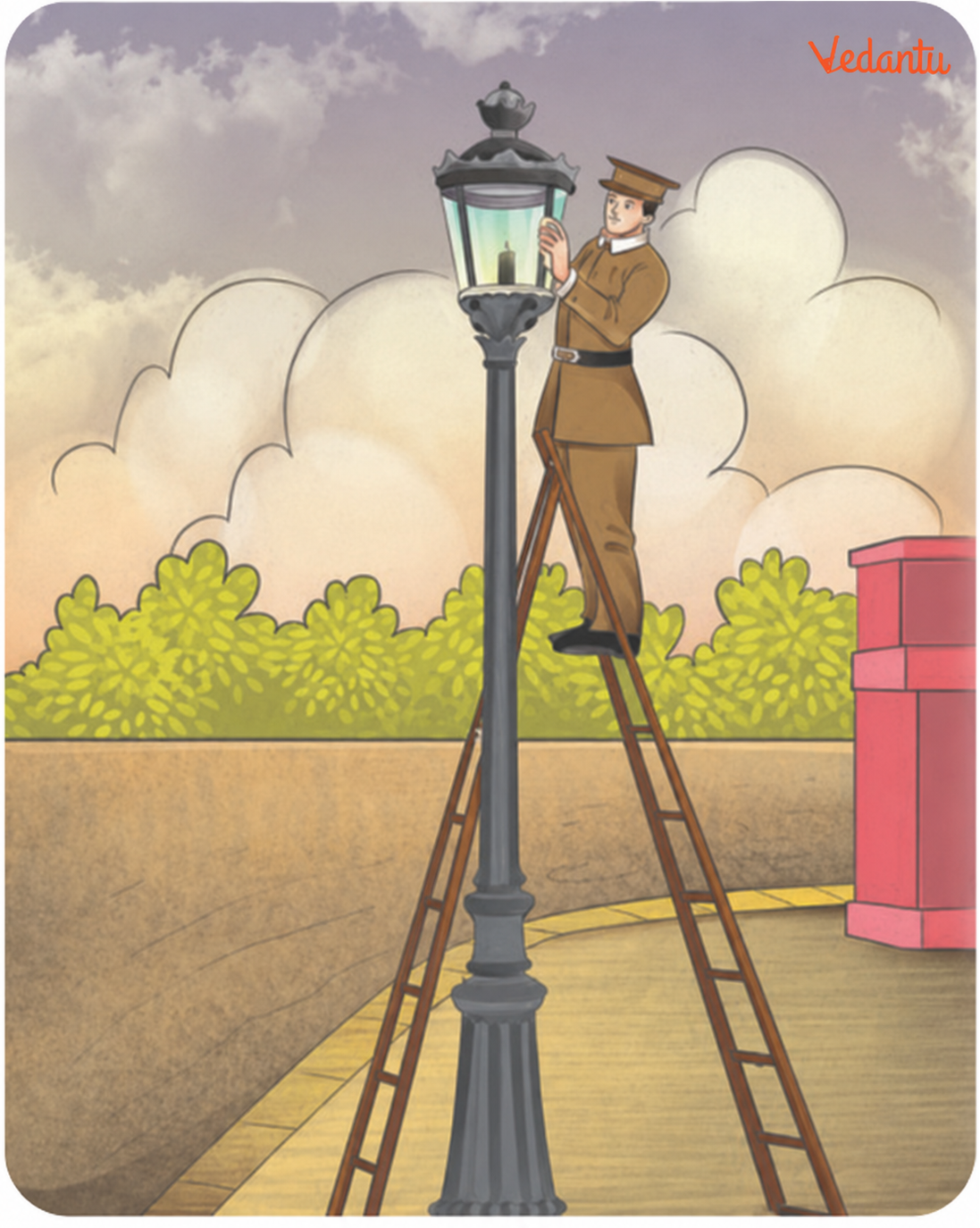
I. You must have read poems and songs related to childhood fascination about different vocations in English and in your own language. Now, read and enjoy the poem given below.
Answer:
My tea is nearly ready, and the sun has
left the sky;
It’s time to take the window to see Leerie going by;
For every night at tea-time and before you take your seat;
With lantern and with ladder he comes posting up the street.
Now Tom would be a driver, and Maria go to sea, And my papa’s a banker and as rich as he can be;
But I, when I am stronger and can choose what I’m to do,
O Leerie, I’ll go round at night and light the lamps with you!
For we are very lucky, with a lamp before the door, And Leerie stops to light it as he lights so many more;
And O! before you hurry by with ladder and with light,
O Leerie, see a little child and nod to him to-night!
R. L. STEVENSON
II. Visit the website https://www.msde.gov.in/. Collect information on any one vocation of your choice.
Prepare a presentation explaining the following.
Reason for your choice
How is it helpful to society and self?
Answer:
Presentation on a Vocation
Good morning, everyone. Today, I would like to speak about the vocation of an electrician.
I chose this vocation because electricians play an important role in keeping homes, schools, hospitals, offices, and other places connected to electricity. Their work requires technical knowledge, problem-solving skills, and careful handling of electrical systems.
Electricians are helpful to society because they install, maintain, and repair electrical connections. For an individual, this vocation can provide useful technical skills, a sense of responsibility, and the satisfaction of solving practical problems for others.
III. A Japanese Haiku
Make up your mind, Snail!
You are half inside your house, and halfway out!
Haiku is a traditional Japanese poetry form.
A very short poem consisting of 17-syllable verses divided into three lines, with five syllables in the first, seven syllables in the second, and five syllables in the third.
Now, create a Haiku poem and share it with your classmates and teacher.
Answer:
Here is a Haiku about a worker:
Strong hands build the house (5 syllables)
Brick by brick it grows so tall (7 syllables)
A home for us all (5 syllables)
Related Study Materials for Class 9 English Chapter 2 Gifts of Grace: Honouring Our Vocations (Poem)
Class 9 English Chapter-wise Solutions For Prose & Poem
Important Study Materials for Class 9 English
Class 9 English Chapter 2 Gifts of Grace: Honouring Our Vocations
The Class 9 English Chapter 2 question answers for Gifts of Grace: Honouring Our Vocations cover the poem’s riddles, literary devices, critical reflection, vocabulary, listening, speaking, writing, and activities.
The solutions are presented in a clear format to help students understand how different vocations are valued in the poem and prepare their answers with confidence. Students studying the Kaveri textbook can use these Class 9 English Kaveri chapter 2 question answer solutions for learning, revision, and textbook practice.
FAQs on NCERT Solutions for Class 9 English Chapter 2 Gifts of Grace: Honouring Our Vocations (Poem) 2026-27
1. Why does the poet describe different occupations in Gifts of Grace: Honouring Our Vocations?
The poet brings together occupations such as farming, carpentry, fishing, cooking, masonry, and shoemaking to show that every kind of work has its own skill and purpose. By presenting these workers with appreciation, the poem reminds us that their everyday efforts contribute to the life and progress of society.
2. Where can I find Class 9 English Chapter 2 question answers?
Students can find the complete Class 9 English Chapter 2 question answers here at Vedantu, covering the textbook exercises from Reflect and Respond to Learning Beyond the Text. The answers are arranged by section and page number in the chapter.
3. What is the main message of Gifts of Grace: Honouring Our Vocations?
The poem conveys that every honest vocation has value and deserves respect. It presents the work of farmers, craftspersons, electricians, shoemakers, masons, cooks, and others as meaningful contributions to society.
4. Which book contains Class 9 English Chapter 2 Gifts of Grace: Honouring Our Vocations?
Gifts of Grace: Honouring Our Vocations is a poem from the Class 9 English Kaveri textbook. Therefore, students looking specifically for the Class 9 English Kaveri Chapter 2 question answers should refer to the solutions based on this textbook.
5. Are these Class 9 English Chapter 2 solutions useful for revision?
Yes. The solutions bring together the poem-based questions, literary appreciation, vocabulary, listening tasks, speaking activity, writing task, and learning-beyond-the-text exercises. Students can use them to revise the chapter before classroom tests and examinations.
6. Can I use these Class 9 English Chapter 2 question-answer PDF solutions for exam preparation?
Yes. A PDF version can be useful for keeping the Class 9 English Chapter 2 question-answer material together for quick revision. However, students should also read the poem and understand its ideas instead of relying only on memorised answers.
7. What literary devices are covered in Gifts of Grace: Honouring Our Vocations?
The chapter-based exercises discuss literary elements such as metaphor, personification, repetition, alliteration, symbolism, imagery, rhyme scheme, and lineation. These questions help students understand how the poet presents different occupations through language and poetic techniques.
8. Are these answers for Class 9 English Moments Chapter 2?
No. Gifts of Grace: Honouring Our Vocations belongs to the Kaveri English textbook, not Moments. Students searching for Class 9 English Moments Chapter 2 question answers in short should refer to the relevant chapter from the Moments textbook instead.
9. What types of questions are included in Class 9 English Chapter 2?
The chapter includes riddles, true-or-false questions, literary appreciation, extract-based questions, short-answer questions, vocabulary exercises, listening questions, speaking activities, poster writing, and creative tasks such as writing a Haiku.
10. Is this chapter also useful for Class 9 English Chapter 2 Part 2 question answers?
The solutions provided here are specifically for Gifts of Grace: Honouring Our Vocations, as presented in the Class 9 English Kaveri textbook. Students should check the textbook name and chapter title when searching for Part 2 or similarly named study material.
