




Which of the following is a horseshoe magnet?
(A)
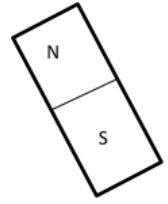
(B)
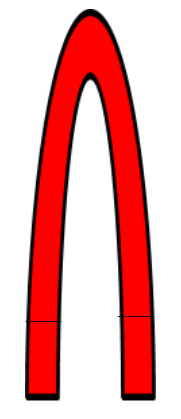
(C)

(D)
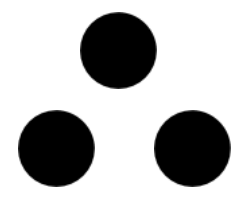
Answer
 Verified
262.8k+ views
Hint: In this question, we have to find which one is the horseshoe magnet. To solve this question we have to have information about the horseshoe magnet. So, now we are going to learn about horseshoe magnet and we will find out which option is correct.
Complete answer:
A horseshoe magnet is made in the shape of a horseshoe. The horseshoe magnet has its North and South poles at its two ends. This kind of shape of this magnet was made to make the two poles at the smallest distance from each other because it gives the strongest value of magnetic field. One quality of this magnet is that it stays magnetized when it is placed opposite to an electromagnet.
The purpose of making horseshoe shape is to place the two poles closest to each other. This gives the highest value of magnetic field and the flux through both the poles will be the same. Electromagnets can also be made in horseshoe shape. For an electromagnet, two wounded coils are placed on two legs of U shape and they are connected by wires. We can convert a bar magnet into a horseshoe by bending it.
Hence, from the above explanation we can see that option (B) is correct.
Note: As we know that a magnet can be made in C shape which is quite similar to horseshoe magnet. But horseshoe magnet is used rather than this one because horseshoe magnet has a large amount of magnetic field around the poles for given dimensions. These days the horseshoe magnet has large parallel sides and it looks like a U shape.
Complete answer:
A horseshoe magnet is made in the shape of a horseshoe. The horseshoe magnet has its North and South poles at its two ends. This kind of shape of this magnet was made to make the two poles at the smallest distance from each other because it gives the strongest value of magnetic field. One quality of this magnet is that it stays magnetized when it is placed opposite to an electromagnet.
The purpose of making horseshoe shape is to place the two poles closest to each other. This gives the highest value of magnetic field and the flux through both the poles will be the same. Electromagnets can also be made in horseshoe shape. For an electromagnet, two wounded coils are placed on two legs of U shape and they are connected by wires. We can convert a bar magnet into a horseshoe by bending it.
Hence, from the above explanation we can see that option (B) is correct.
Note: As we know that a magnet can be made in C shape which is quite similar to horseshoe magnet. But horseshoe magnet is used rather than this one because horseshoe magnet has a large amount of magnetic field around the poles for given dimensions. These days the horseshoe magnet has large parallel sides and it looks like a U shape.
Recently Updated Pages
Circuit Switching vs Packet Switching: Key Differences Explained

JEE Extractive Metallurgy Important Concepts and Tips for Exam Preparation
JEE Atomic Structure and Chemical Bonding important Concepts and Tips
JEE Amino Acids and Peptides Important Concepts and Tips for Exam Preparation
Electricity and Magnetism Explained: Key Concepts & Applications
JEE Energetics Important Concepts and Tips for Exam Preparation
Trending doubts
JEE Main 2026: Exam Dates, Session 2 Updates, City Slip, Admit Card & Latest News
JEE Main Participating Colleges 2026 - A Complete List of Top Colleges
Hybridisation in Chemistry – Concept, Types & Applications
Understanding the Electric Field of a Uniformly Charged Ring
Derivation of Equation of Trajectory Explained for Students
Understanding Atomic Structure for Beginners
Other Pages
CBSE Class 12 Physics Question Paper 2026: Download SET-wise PDF with Answer Key & Analysis
JEE Advanced 2026 Notification Out with Exam Date, Registration (Extended), Syllabus and More
JEE Advanced Marks vs Ranks 2025: Understanding Category-wise Qualifying Marks and Previous Year Cut-offs
JEE Advanced Weightage Chapter Wise 2026 for Physics, Chemistry, and Mathematics
JEE Advanced Marks vs Rank 2025 - Predict Your IIT Rank Based on Score
How to Convert a Galvanometer into an Ammeter or Voltmeter