




Assertion: $PbC{l_2} $ is more stable than $PbC{l_4} $
Reason: $PbC{l_4} $ is a powerful oxidizing agent.
(A) Both assertion and reason are correct and the reason is the correct explanation for assertion
(B) Both assertion and reason are correct but the reason is not the correct explanation for assertion
(C) the assertion is correct but the reason is incorrect
(D) the assertion is incorrect but the reason is correct
Answer
 Verified
584.3k+ views
Hint: Pb has electronic configuration: $\left[{Xe}\right]4{f^{14}}5{d^{10}}6{s^2}6{p^2}$. Its s electrons are more strongly held that p electrons. Thus, it loses two p-electrons to form stable $PbC{l_2} $ and can also lose 2 s-electrons to form less stable $PbC{l_4} $. $PbC{l_4}$ being less stable easily gets converted to $PbC{l_2}$ while another reactant gets oxidized.
Complete step by step solution:
We have been given that: $PbC{l_2} $is more stable than $PbC{l_4} $,
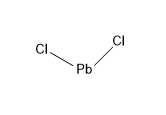
The inert pair effect is the tendency of two electrons in the outermost atomic s orbital to remain unionized or unshared in compounds of post-transition metals, out of which (Pb) lead is one.
The term inert pair effect is often used in relation to the increasing stability of oxidation states, that are two less than the group valency for the heavier elements of groups 13, 14, 15 and 16.
The s electrons are more tightly bound to the nucleus and therefore more difficult to ionize,
Due to inert pair effect, the higher oxidation state of an element is not stable as we move down the group. In other words, $P {b^ {+ 4}} $ is less stable than $P {b^ {+ 2}} $, hence $PbC{l_4} $ is also less stable.
Now, $PbC{l_4} $ is a powerful oxidizing agent.

As we go down in a group 14 elements of the periodic table, we observe that +4 oxidation state decreases while that of +2 oxidation state increases due to inert pair effect. So, the outermost s-orbital electrons show reluctance to take part in the reaction. This leads to greater stability of +2 oxidation state in group 14 elements.
Instead of losing 4 electrons[2 electrons from S and 2 from P orbitals}, they tend to lose the p orbitals electrons, hence Pb+4 can easily gain 2 electrons to form more stable Pb+2 ions.
Pb(lead) show +2 oxidation state and easily gets reduced and therefore oxides others
Hence PbCl4 is the stronger oxidizing agent.
So, we can say that both assertion and reason are correct but the reason is not the correct explanation for the assertion.
Therefore, option (b) is correct.
Note: Due to the poor shielding effect of d block and f block (it means due to poor contraction of d block) electrons in the s orbital are more strongly held in the upper period of the same group. So, s electrons are inert and cannot be removed and give a valency of 4. Hence, Pb forms 2 ions instead of 4 and $PbC{l_2}$ becomes stable.
Complete step by step solution:
We have been given that: $PbC{l_2} $is more stable than $PbC{l_4} $,
The inert pair effect is the tendency of two electrons in the outermost atomic s orbital to remain unionized or unshared in compounds of post-transition metals, out of which (Pb) lead is one.
The term inert pair effect is often used in relation to the increasing stability of oxidation states, that are two less than the group valency for the heavier elements of groups 13, 14, 15 and 16.
The s electrons are more tightly bound to the nucleus and therefore more difficult to ionize,
Due to inert pair effect, the higher oxidation state of an element is not stable as we move down the group. In other words, $P {b^ {+ 4}} $ is less stable than $P {b^ {+ 2}} $, hence $PbC{l_4} $ is also less stable.
Now, $PbC{l_4} $ is a powerful oxidizing agent.
As we go down in a group 14 elements of the periodic table, we observe that +4 oxidation state decreases while that of +2 oxidation state increases due to inert pair effect. So, the outermost s-orbital electrons show reluctance to take part in the reaction. This leads to greater stability of +2 oxidation state in group 14 elements.
Instead of losing 4 electrons[2 electrons from S and 2 from P orbitals}, they tend to lose the p orbitals electrons, hence Pb+4 can easily gain 2 electrons to form more stable Pb+2 ions.
Pb(lead) show +2 oxidation state and easily gets reduced and therefore oxides others
Hence PbCl4 is the stronger oxidizing agent.
So, we can say that both assertion and reason are correct but the reason is not the correct explanation for the assertion.
Therefore, option (b) is correct.
Note: Due to the poor shielding effect of d block and f block (it means due to poor contraction of d block) electrons in the s orbital are more strongly held in the upper period of the same group. So, s electrons are inert and cannot be removed and give a valency of 4. Hence, Pb forms 2 ions instead of 4 and $PbC{l_2}$ becomes stable.
Recently Updated Pages
Number of sigma and pi bonds in C2 molecule isare A class 11 chemistry JEE_Main

10g of hydrogen and 64g of oxygen were filled in a class 11 chemistry JEE_Main
If CH3COOH Ka105 reacts with NaOH at 298 K then find class 11 chemistry JEE_Main
JEE Main 2023 (February 1st Shift 2) Physics Question Paper with Answer Key
JEE Main 2023 (February 1st Shift 1) Maths Question Paper with Answer Key
JEE Main 2023 (February 1st Shift 2) Chemistry Question Paper with Answer Key
Trending doubts
JEE Main 2026: Exam Dates, Session 2 Updates, City Slip, Admit Card & Latest News
Understanding the Electric Field of a Uniformly Charged Ring
Understanding Atomic Structure for Beginners
Electron Gain Enthalpy and Electron Affinity Explained
Derivation of Equation of Trajectory Explained for Students
Understanding the Different Types of Solutions in Chemistry
Other Pages
JEE Advanced Percentile vs Marks 2026: JEE Main Cutoff, AIR & IIT Admission Guide
JEE Advanced 2026 Notification Out with Exam Date, Registration (Extended), Syllabus and More
NCERT Solutions For Class 11 Chemistry In Hindi Chapter 1 Some Basic Concepts Of Chemistry - 2026-27 Free PDF Download (Sign-in Required)
How to Convert a Galvanometer into an Ammeter or Voltmeter
JEE Advanced Weightage Chapter Wise 2026 for Physics, Chemistry, and Mathematics
What Are Current and Potential Difference in Electricity?
JEE Advanced Percentile vs Marks 2026: JEE Main Cutoff, AIR & IIT Admission Guide
JEE Advanced 2026 Notification Out with Exam Date, Registration (Extended), Syllabus and More
NCERT Solutions For Class 11 Chemistry In Hindi Chapter 1 Some Basic Concepts Of Chemistry - 2026-27 Free PDF Download (Sign-in Required)